Outdoor Planters for Commercial Streets and Public Spaces
 16
16  Share
Share
Summary
Commercial outdoor planters are large, durable planting containers used in streets, plazas, hotels, parks, real estate projects, shopping centers, campuses, and other public environments. They do more than hold plants. In public space design, outdoor planters can soften hard paving, define pedestrian areas, guide movement, separate dining or seating zones, improve streetscape identity, and create a more welcoming commercial environment.
For project buyers, the right planter should match the site’s size, climate, foot traffic, maintenance plan, installation method, and overall furniture style. Important choices include material, dimensions, drainage, color, surface finish, fixed or movable design, planter-and-bench combinations, and whether the planters should coordinate with trash bins, park benches, bicycle racks, and other urban furniture.
This guide explains how to choose commercial outdoor planters for public space projects and how LVEN supports project-based planter customization and bulk supply.
What Are Commercial Outdoor Planters?
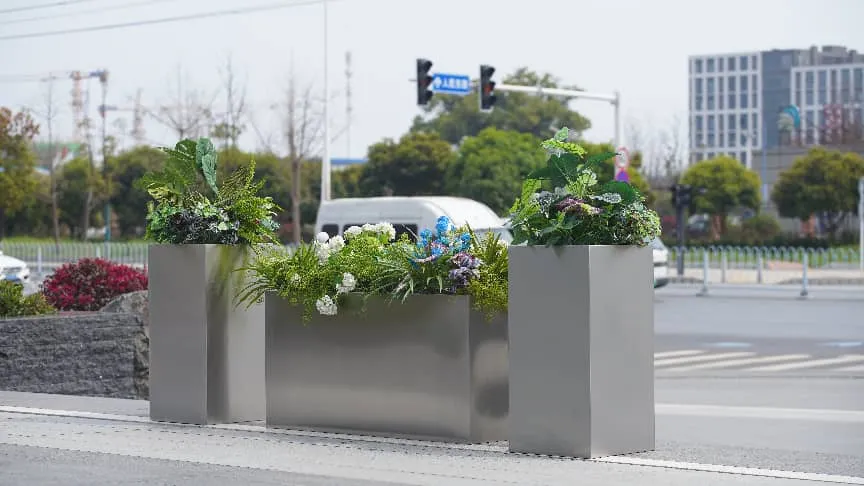
Commercial outdoor planters are project-grade containers designed for planting in public, commercial, municipal, and semi-public outdoor spaces. Compared with garden pots used in private homes, these planters usually require stronger structure, better weather resistance, larger size options, safer edges, easier maintenance, and a design style that fits the surrounding public furniture system.
They are commonly used in:
① Commercial streets and pedestrian areas
② Shopping centers and retail plazas
③ Hotel entrances and resort walkways
④ Real estate landscapes and residential communities
⑤ Municipal roads and public squares
⑥ Parks, scenic areas and waterfronts
⑦ Schools, campuses and public buildings
⑧ Outdoor dining, parklets and temporary public space projects
A well-selected planter can perform several roles at once. It can support greenery, divide space, protect pedestrian areas, create visual order, and improve the commercial atmosphere of a street or plaza. This is why commercial outdoor planters should be selected as part of a public space furniture system, not as isolated decorative items.
Why Outdoor Planters Matter in Public Spaces?
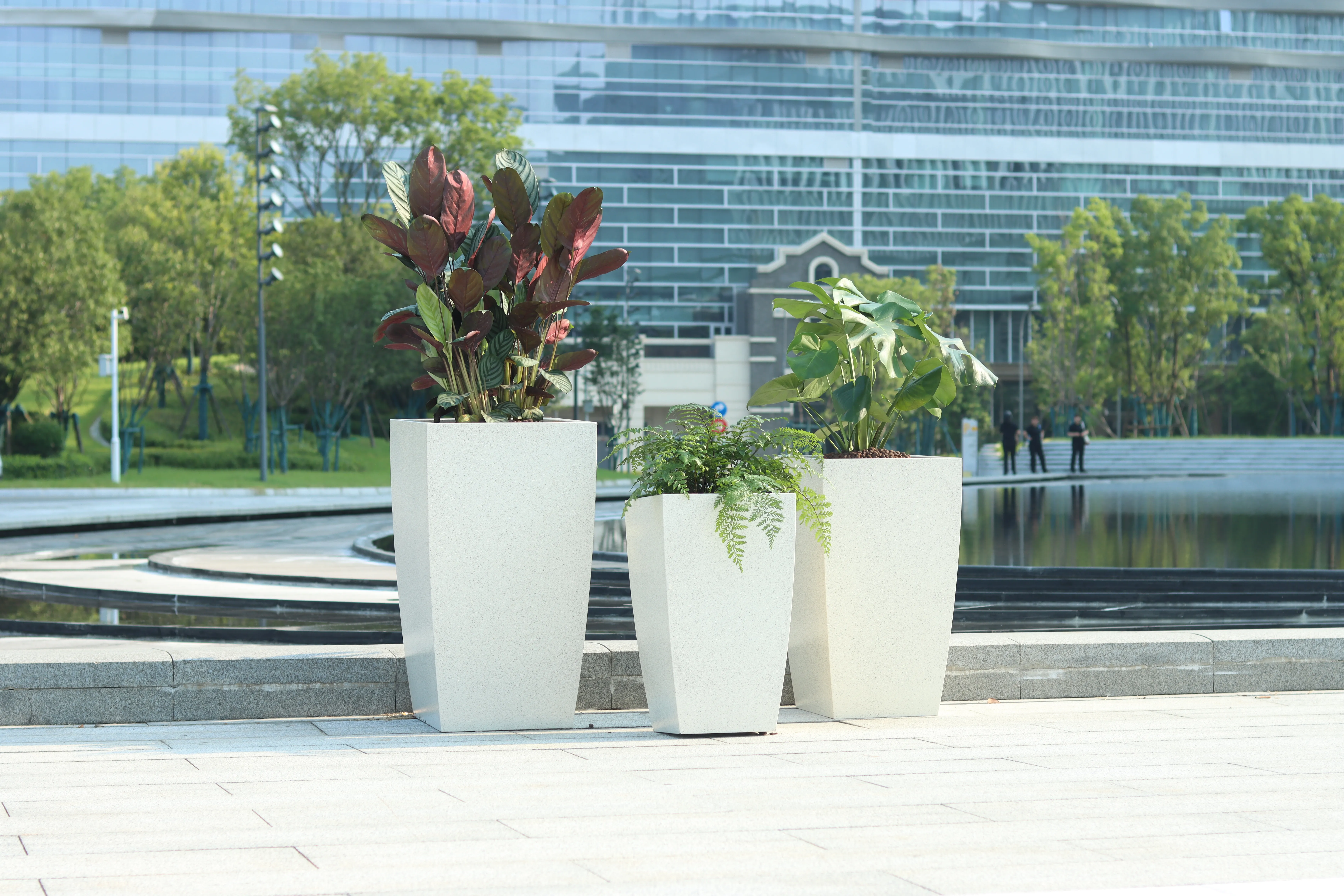
Outdoor planters are often treated as landscape accessories, but in commercial and public space projects, they have a more strategic role. They help turn hard urban surfaces into places that feel more human, comfortable, and organized.
The U.S. EPA describes planter boxes as a type of green infrastructure often found in downtown areas. These planters can collect and absorb runoff from streets, sidewalks, and parking lots, while also helping beautify city streets where space is limited.
For public space projects, planters can provide:
Function | Project Value |
Greening | Adds plants to paved urban areas where ground planting is limited |
Space division | Creates soft boundaries between walking, seating, dining, and traffic zones |
Visual improvement | Helps commercial streets and plazas look more finished |
Pedestrian guidance | Organizes movement without using hard barriers |
Safety support | Can help separate people from vehicle or service areas when properly designed |
Brand atmosphere | Supports hotels, retail streets, and real estate projects with a unified look |
Flexible landscape | Allows greenery to be added without major ground construction |
For commercial streets, outdoor planters can also influence how people experience storefronts, outdoor dining zones, seating areas, and pedestrian paths. They are not only “green decoration”; they are tools for shaping the use of space.
How to Choose the Right Urban Furniture Planters?
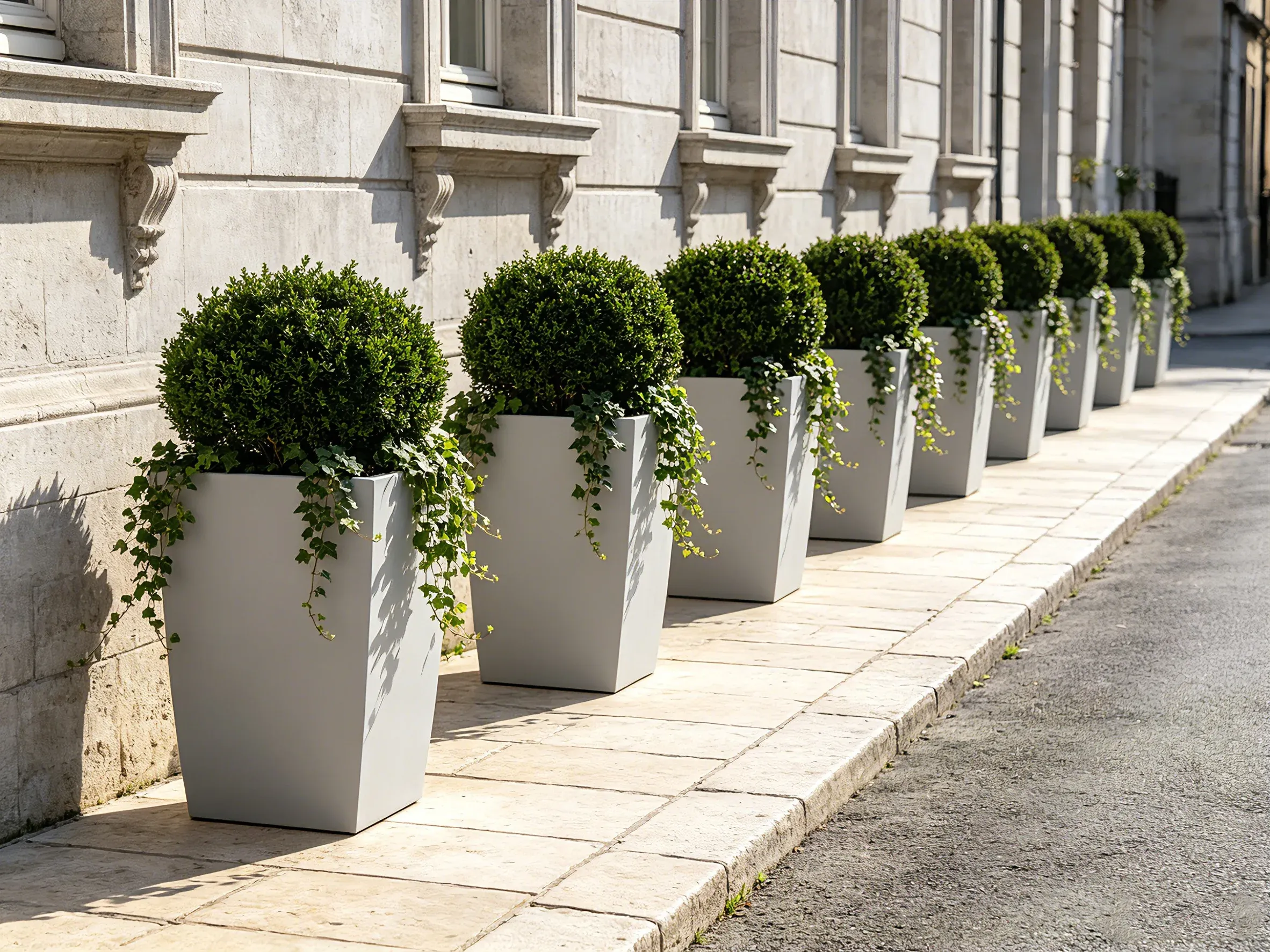
Choosing the right urban furniture for a project starts with the site, not the product catalog. The same planter may work well in a hotel entrance but fail in a busy municipal sidewalk if it blocks movement or is difficult to maintain.
Before selecting outdoor planters, buyers should clarify:
① What is the project type: commercial street, hotel, park, plaza, municipal road, school, or real estate community?
② Is the planter used mainly for greenery, space division, seating integration, or traffic guidance?
③ Will it be placed in full sun, shade, coastal air, high humidity, strong wind, or heavy pedestrian traffic?
④ Does it need to be fixed to the ground or movable?
⑤ Will local maintenance teams handle watering, cleaning, drainage, and plant replacement?
⑥ Should the planter match benches, trash bins, bicycle racks, and other public furniture?
⑦ Is the project focused on premium appearance, long-term durability, budget control, or fast delivery?
NACTO notes that parklets often incorporate seating, greenery, and/or bike racks to create vibrant community spaces on retail streets and commercial areas. This supports a useful planning idea: planters often work best when they are coordinated with seating, pedestrian flow, and other public furniture, instead of being placed randomly.
Metal Planters vs Other Outdoor Planter Materials
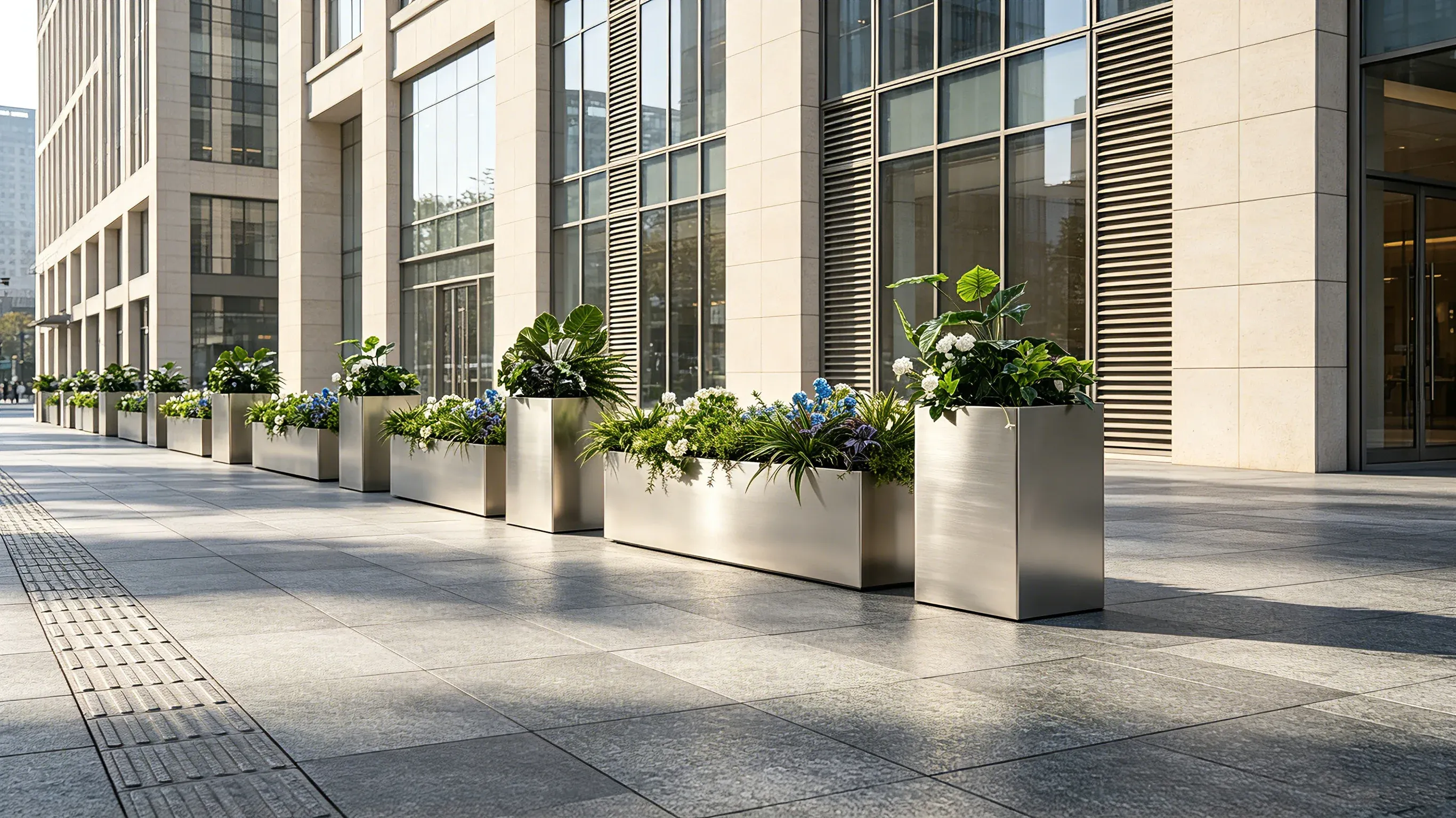
Material selection affects durability, weight, appearance, cost, and maintenance. For commercial outdoor planters, metal is often preferred because it can provide a clean modern look, strong structure, and good customization flexibility.
Material | Best For | Advantages | Buyer’s Notes |
Galvanized steel | Municipal roads, commercial streets, public spaces | Strong, cost-effective, easy to powder coat | Check coating quality and drainage design |
Stainless steel | Hotels, premium plazas, commercial buildings | Clean appearance, corrosion resistance | Higher cost; suitable for high-end spaces |
Aluminum | Commercial landscapes, rooftop areas, movable layouts | Lightweight, rust-resistant, modern look | Confirm thickness and reinforcement |
Corten steel | Landscape projects, modern plazas | Natural weathered look | Needs careful design to control staining |
Fiberglass / FRP | Lightweight commercial decoration | Flexible shapes and finishes | Not always suitable for heavy public impact |
Concrete | Permanent landscapes, large outdoor zones | Heavy, stable, durable | Difficult to move and higher handling cost |
Wood / wood-look panels | Parks, resorts, natural landscapes | Warm appearance | Natural wood needs more maintenance outdoors |
For public and commercial projects, metal planters are often a practical choice because they can be customized in size, color, surface finish, and structure. Galvanized steel offers good value for large public space orders. Stainless steel is better for premium entrances or high-humidity environments. Aluminum is useful when lighter weight matters.
A common mistake is choosing only by appearance. Large outdoor planters must also handle soil weight, water load, plant roots, drainage, movement, and possible public impact. Buyers should confirm material thickness, inner reinforcement, base structure, drainage holes, coating system, and whether the planter will be used with an inner liner.
Size, Shape and Layout Options for Public Space Planters
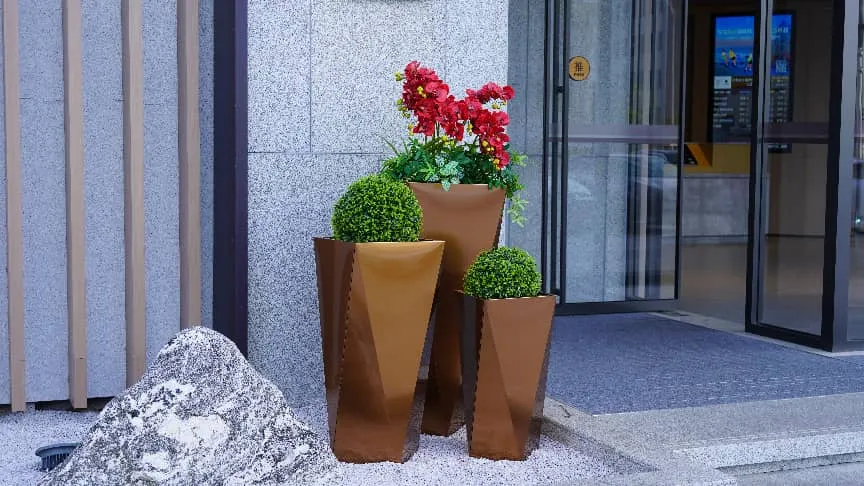
The size of a planter should match both the plant type and the public space layout. A planter that is too small may look weak in a large plaza. A planter that is too large may block entrances, pedestrian flow, or storefront visibility.
Planter Type | Common Use | Best Application |
Tall outdoor planters | Entrances, hotel fronts, building corners | Creates vertical visual focus |
Rectangular outdoor planters | Streets, sidewalks, patios, commercial zones | Good for space division and linear layouts |
Square planters | Plazas, intersections, seating zones | Stable visual balance and flexible placement |
Large outdoor planter | Public squares, scenic areas, real estate projects | Suitable for trees or large landscape plants |
Low planter boxes | Outdoor dining, walkway edges, parklets | Defines space without blocking views |
Planters with seating | Commercial streets, plaza rest areas, parks | Combines greenery and public seating |
Modular planter systems | Urban renewal, mixed-use developments | Allows repeatable layouts across the project |
For commercial streets, rectangular outdoor planters are especially useful because they can form neat edges along storefronts, pedestrian zones, outdoor dining areas, or temporary seating spaces. For hotels and real estate projects, larger planters often create a stronger entrance image.
Drainage should never be ignored. If water cannot drain properly, the planter may damage plants, create odor, stain paving, or increase maintenance work. Buyers should confirm whether the planter needs drainage holes, raised feet, inner liner, overflow control, or a closed-bottom structure depending on site requirements.
Fixed, Movable and Modular Outdoor Planters
Installation method should be decided before production because it affects the base design, structure, packaging, and site layout.
Type | Best For | Advantages | Notes |
Freestanding planters | Commercial streets, hotels, plazas | Easy to place and adjust | Must be stable enough for wind and public use |
Fixed planters | Municipal streets, permanent public spaces | Safer and harder to move | Requires installation planning |
Planters with wheels | Hotels, retail areas, event spaces | Flexible layout changes | Wheels need locking function |
Heavy-duty large planters | Public squares, road edges, traffic guidance | Strong boundary effect | Harder to move after planting |
Modular planters | Commercial zones, urban renewal projects | Repeated layout and style consistency | Needs planning for alignment and spacing |
Movable planters are useful when commercial spaces need seasonal layout changes. Fixed planters are better when the planter is part of a permanent streetscape or safety boundary. Modular planters are a good option when buyers need a unified design across several areas or project phases.
Planters with Seating for Commercial Streets and Plazas
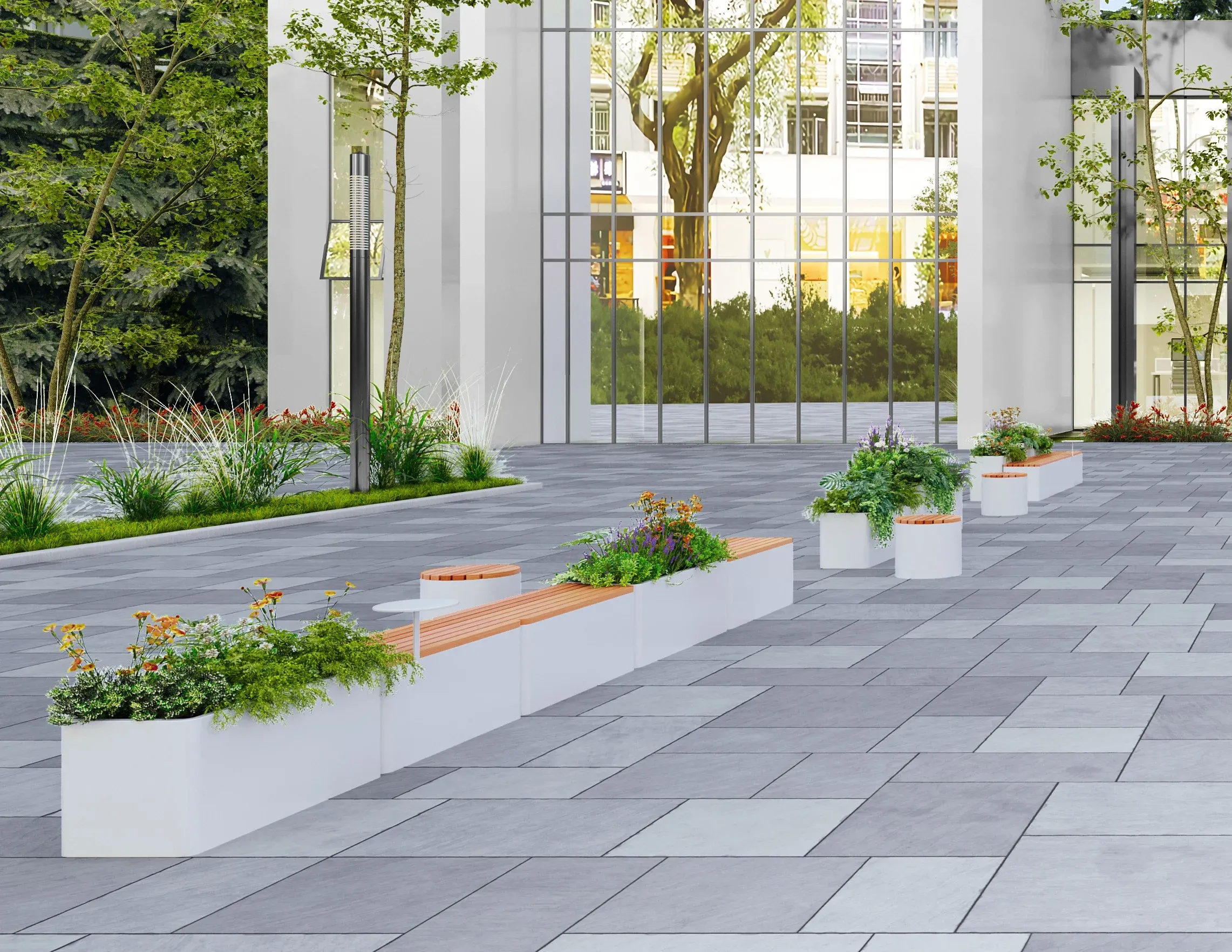
Planters with seating are becoming more popular in public space design because they combine greenery and rest areas in one product. Instead of placing a bench and planter separately, a combined unit can save space and create a stronger visual connection.
Planter seating is useful for:
① Commercial streets with limited sidewalk width
② Retail plazas and shopping centers
③ Hotel entrances and outdoor waiting areas
④ Park entrances and scenic rest points
⑤ Real estate landscape spaces
⑥ School and campus outdoor areas
⑦ Urban renewal and pocket plaza projects
A good planter-seat module should consider seat height, seating surface material, planter depth, soil load, drainage, edge safety, structural reinforcement, and cleaning access. If the seating uses wood, PS plastic wood, or WPC, buyers should also confirm UV resistance, color stability, screw fixing, and whether slats can be replaced.
LVEN’s planter page specifically notes that planters can be integrated with seating to create a “greenery + resting” public space module suitable for commercial streets, park entrances, plazas, and scenic areas.
Color, Surface Finish and Style Consistency
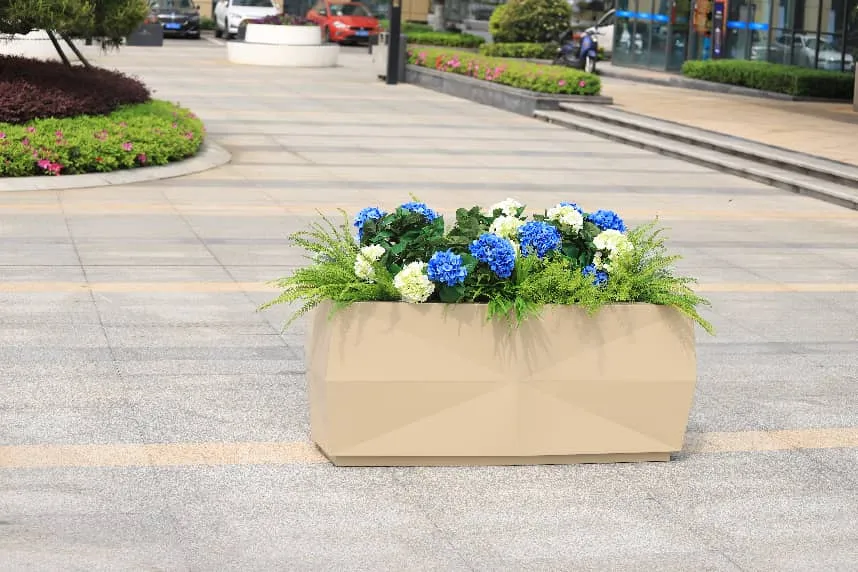
For public space projects, color and finish are not small details. They determine whether the planters look like part of the environment or like unrelated objects placed after construction.
Common surface options include:
① Solid powder-coated colors
② Dark grey, black, white, bronze, or custom project colors
③ Wood grain finish
④ Stone texture finish
⑤ Stainless steel finish
⑥ Metallic finish
⑦ Custom branding or logo panels
For commercial projects, planters should usually coordinate with benches, trash bins, bicycle racks, ashtrays, tree benches, and other urban furniture. The goal is not to make every item identical, but to create a shared material language and visual rhythm.
LVEN’s planter page states that its outdoor planters can be customized by size, material, color, surface finish, structure, and branding, with options such as wood grain, stone texture, powder-coated colors, and metallic finishes. It also notes that planters can be coordinated with trash bins, park benches, bicycle racks, and other public furniture in color, material, and design style.
Outdoor Planter Procurement Checklist
Use this checklist before requesting a quote or confirming a project order.
Buying Item | What to Confirm | Why It Matters |
Application | Commercial street, hotel, plaza, park, real estate, municipal road | Determines size, style, and durability |
Main function | Greening, space division, seating, traffic guidance, brand image | Prevents wrong product selection |
Material | Galvanized steel, stainless steel, aluminum, corten steel, wood-look | Affects cost, appearance, and maintenance |
Size | Length, width, height, soil depth | Affects planting, placement, and visual scale |
Shape | Rectangular, square, tall, round, modular | Affects layout and circulation |
Mobility | Fixed, movable, freestanding, wheeled | Affects site flexibility and safety |
Drainage | Drainage holes, inner liner, closed bottom, overflow plan | Prevents water damage and plant failure |
Surface finish | Powder coating, wood grain, stone texture, metallic finish | Affects weather resistance and style |
Seating option | With bench, without bench, modular seating | Adds public resting function |
Color matching | Match benches, bins, racks, building façade, brand palette | Creates a unified project image |
Packaging | Carton, pallet, protective wrap, export crate | Reduces transport damage |
Quantity and timeline | Sample, bulk order, phased delivery | Helps control project schedule |
A good procurement process should answer three questions: Does the planter fit the site? Can it survive the environment? Does it match the project’s wider public furniture system?
How LVEN Supports Outdoor Planter Projects?
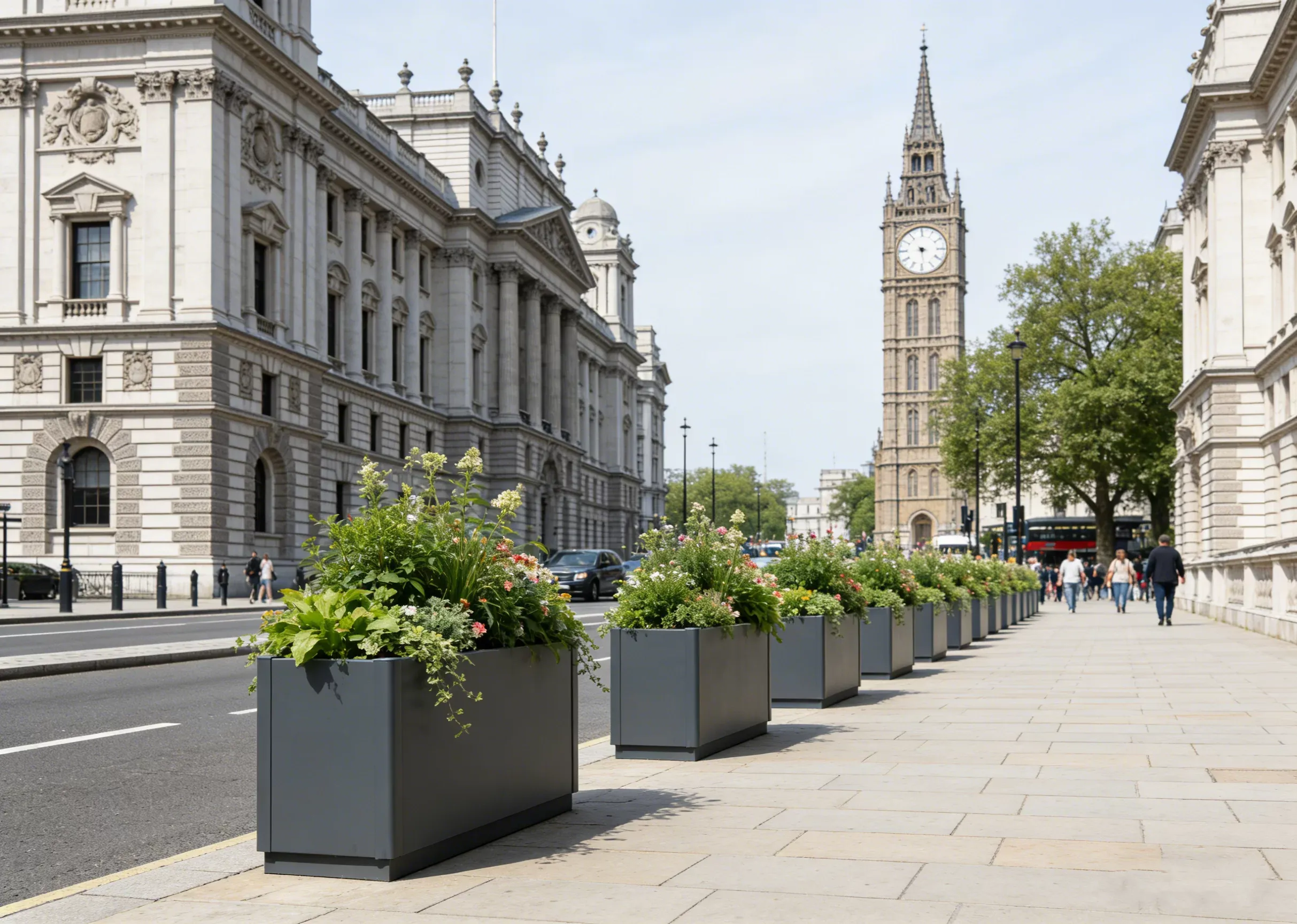
LVEN supplies commercial outdoor planters as part of its urban furniture product range, together with outdoor trash bins, park benches, picnic tables, recycling bins, ashtrays, tree benches, bicycle racks, and other public space furniture. Its website positions LVEN as a manufacturer for public space projects, with 14+ years of experience, export to 60+ countries, and OEM/ODM support.
For planter projects, LVEN can support:
① Standard and customized outdoor planters
② Metal planters and metal planter boxes
③ Galvanized steel, stainless steel, and aluminum options
④ Size, material, color, surface finish, structure, and branding customization
⑤ Planters with seating for public rest areas
⑥ Fixed, movable, and project-based layout solutions
⑦ Matching with trash bins, benches, bicycle racks, and other public furniture
⑧ Bulk production, export packaging, and project coordination
For commercial streets, hotels, real estate projects, parks, and municipal spaces, this one-stop supply model helps buyers reduce sourcing complexity and keep the outdoor furniture style consistent.
FAQ About Outdoor Planters
What are commercial outdoor planters?
Commercial outdoor planters are durable planting containers designed for public and commercial environments such as streets, plazas, hotels, parks, shopping centers, campuses, and real estate landscapes. They are usually larger and stronger than residential planters and can be customized by size, material, color, finish, and structure.
What material is best for outdoor planters?
For public space projects, galvanized steel, stainless steel, and aluminum are common choices. Galvanized steel is cost-effective for municipal and commercial projects. Stainless steel offers a premium look and stronger corrosion resistance. Aluminum is lighter and suitable for many commercial landscape applications.
Are metal planters good for public spaces?
Yes. Metal planters are suitable for public spaces because they offer strong structure, clean appearance, customizable finishes, and good durability when properly coated or fabricated. Buyers should confirm drainage, material thickness, surface treatment, and reinforcement.
Can outdoor planters be used as space dividers?
Yes. Rectangular outdoor planters and large outdoor planter boxes are often used to separate dining areas, guide pedestrian movement, define storefront boundaries, or create soft barriers in commercial streets and plazas.
Can planters be combined with seating?
Yes. Planters can be integrated with benches to create greenery and seating modules. This is useful for commercial streets, plazas, park entrances, scenic areas, hotel spaces, and real estate landscapes where both plants and resting areas are needed.
Should outdoor planters be fixed or movable?
Fixed planters are better for permanent municipal or streetscape projects. Movable planters are better for hotels, retail areas, outdoor dining, event spaces, and commercial layouts that change seasonally.
Can commercial outdoor planters be customized?
Yes. Commercial outdoor planters can be customized by size, material, color, surface finish, drainage, inner liner, logo, seating integration, mobility, and packaging. For bulk projects, buyers should provide drawings, dimensions, quantity, application scenario, and delivery timeline.
Conclusion
Outdoor planters are not only containers for plants. In commercial streets and public spaces, they help organize movement, soften hard paving, improve the visitor experience, support greenery, divide functional zones, and strengthen the overall image of a project.
For buyers, the best commercial outdoor planters should be selected according to site use, material, size, shape, drainage, color, mobility, seating options, and maintenance plan. Metal planters are often practical for public projects because they provide strength, customization flexibility, and long-term outdoor performance. Planters with seating can add more value by combining greenery with public resting functions.
LVEN supports outdoor planter projects with standard models, customized solutions, metal planter boxes, planter seating, color and surface finish options, OEM/ODM service, and coordinated public furniture packages for commercial streets, hotels, parks, real estate developments, municipal roads, schools, and public spaces.
Contents