Park Bench Buying Guide: Materials, Structure and Public Space Applications
 23
23  Share
Share
Summary
Choosing the right park bench is not only about style. For public parks, streets, plazas, scenic areas, campuses, commercial centers, residential communities, and municipal projects, benches must support daily public use, outdoor exposure, safety, comfort, maintenance efficiency, and long-term visual consistency.
A good purchasing decision should consider material, structure, backrest type, armrests, bench length, installation method, surface treatment, local climate, expected user behavior, and bulk order requirements. For project buyers, contractors, distributors, and municipal purchasers, the best bench is not always the most expensive model. It is the one that fits the site, lasts long enough, is easy to maintain, and matches the wider public furniture system.
This guide explains how to choose commercial park benches for different public space applications and includes practical selection tables for faster project decisions.
What Makes a Park Bench Suitable for Public Projects?
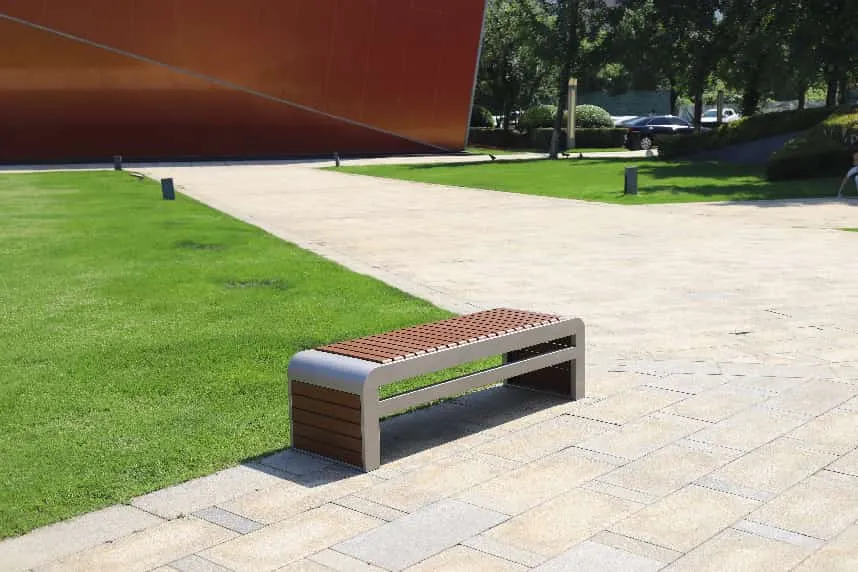
A park bench for public use must do more than provide a place to sit. It needs to remain stable under repeated use, resist outdoor weather, match the surrounding space, and be easy for maintenance teams to clean, inspect, and repair.
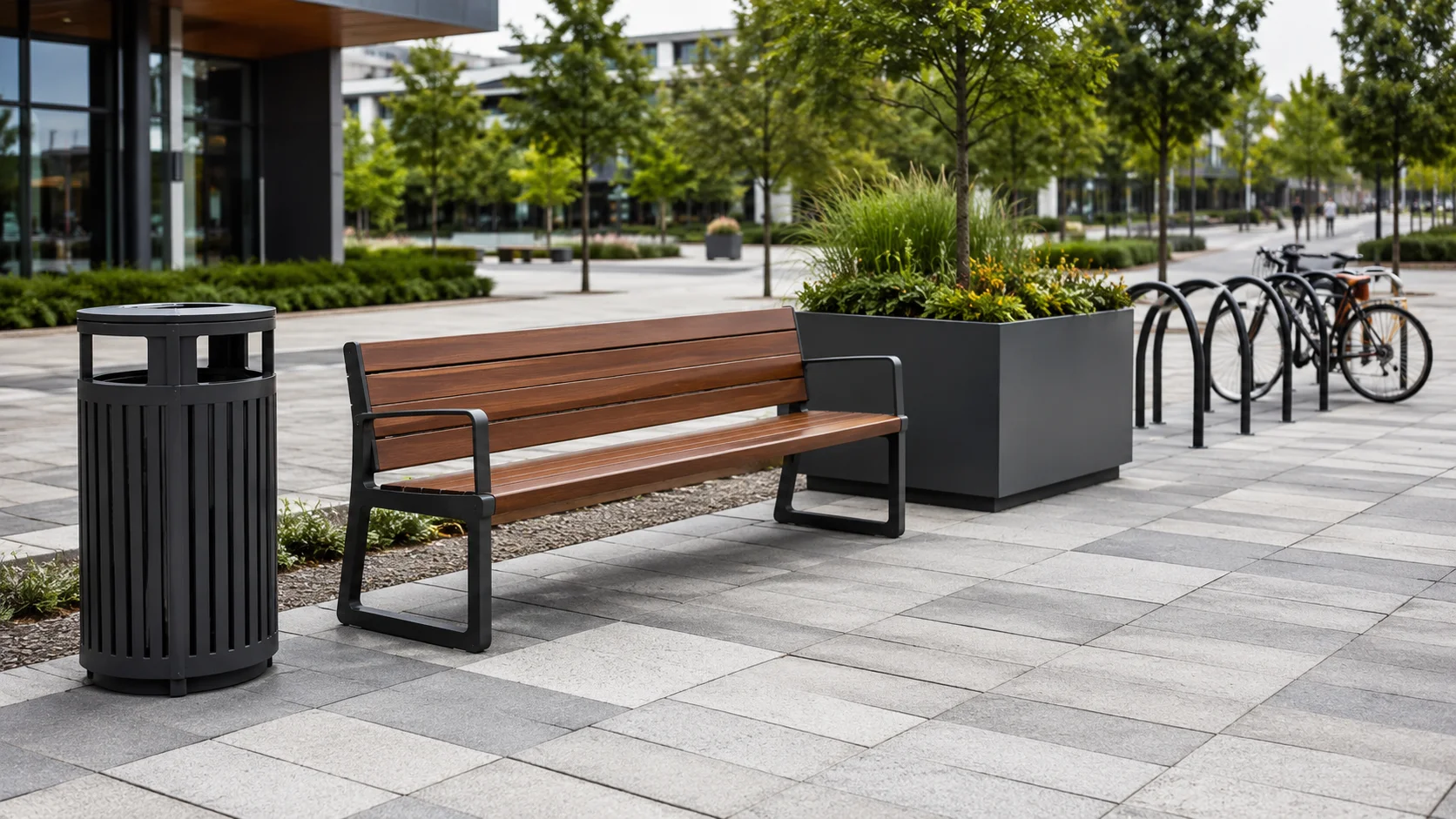
For residential gardens or private patios, comfort and appearance may be enough. For commercial park benches, the requirements are different. A bench may be used by hundreds of people every week. It may face rain, sunlight, humidity, dust, vandalism, impact, cleaning chemicals, and seasonal temperature changes. It may also need to coordinate with trash bins, planters, bicycle racks, picnic tables, and other public furniture.
A project-grade bench should usually meet these conditions:
Requirement | Why It Matters for Buyers |
Structural stability | Prevents wobbling, deformation, and safety risks |
Weather resistance | Reduces rust, cracking, fading, and early replacement |
Comfortable seating | Encourages people to stay, rest, and use the space |
Suitable installation | Keeps the bench stable and correctly positioned |
Easy maintenance | Reduces cleaning and repair workload |
Visual consistency | Helps benches match the project’s landscape or architectural style |
Bulk order reliability | Ensures stable quality across multiple project phases |
In street and sidewalk environments, placement also matters. NACTO explains that sidewalks include different zones, including a pedestrian through zone and a street furniture or curb zone. For outdoor benches, this means seating should be placed where it supports public use without blocking clear walking movement.
How to Choose Park Benches by Material?
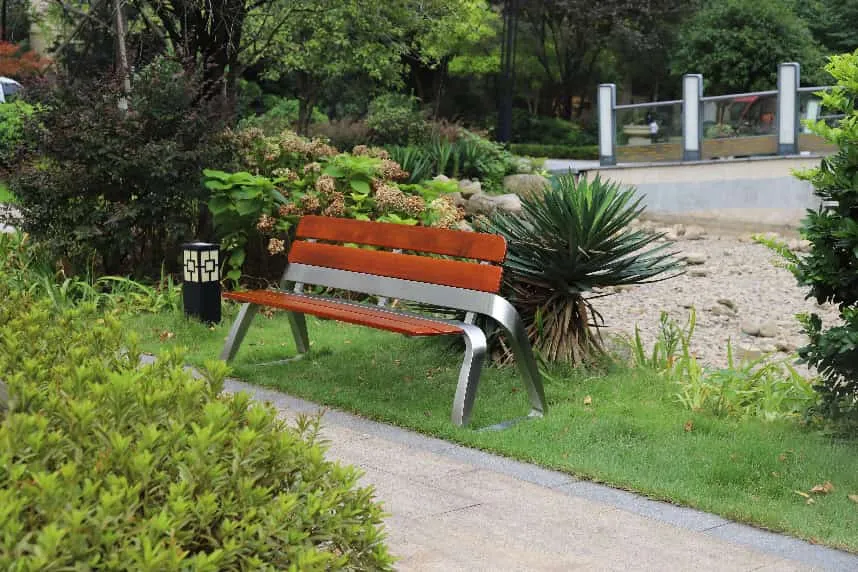
Material selection affects cost, durability, appearance, comfort, shipping, and maintenance. The best material depends on the site environment and project purpose, not only the buyer’s preferred look.
Material | Common Use | Advantages | Points to Check |
Galvanized steel | Municipal parks, streets, schools, commercial areas | Strong, cost-effective, easy to powder coat | Coating quality, weld protection, steel thickness |
Stainless steel | Premium public spaces, hotels, commercial entrances | Clean appearance, better corrosion resistance | Grade, surface finish, maintenance method |
Carbon steel | Heavy-duty public seating | Strong frame, flexible design | Requires strong anti-corrosion treatment |
Cast aluminum | Classic park benches, decorative seating | Good shape flexibility, corrosion resistance | Casting quality, frame strength |
Natural wood | Parks, scenic areas, landscape projects | Warm touch, natural appearance | Species, finishing, moisture protection, maintenance |
PS plastic wood / WPC | Parks, plazas, communities, commercial outdoor seating | Wood-like look with lower maintenance pressure | UV resistance, color stability, fixing method |
Steel + wood or plastic wood | Most public seating projects | Combines structural strength and warmer appearance | Joint design, screw quality, replaceable slats |
For commercial park benches, metal frames are often preferred because they provide stronger structure and better long-term stability. Wood, WPC, or plastic wood slats can improve comfort and create a warmer appearance. For public projects, the strongest solution is often a mixed-material structure: metal for the frame, and wood or wood-look material for the seating surface.
Is Wooden Street Furniture Good for Outdoor Seating?
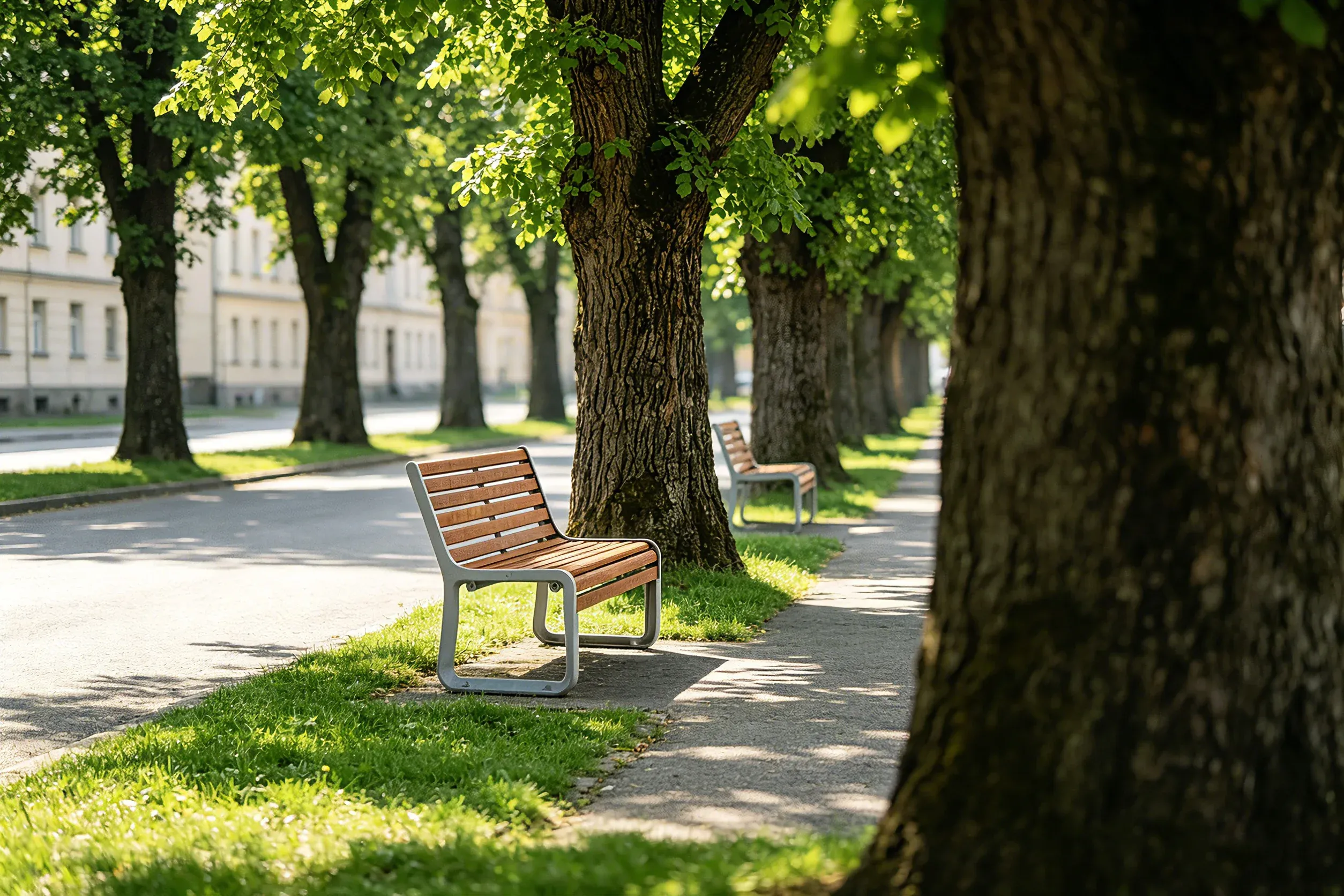
Wooden street furniture can be a good choice when the project needs a natural, warm, and landscape-friendly appearance. It works well in parks, scenic areas, waterfronts, garden paths, resorts, and public spaces where the seating should feel softer than all-metal furniture.
However, buyers should understand the maintenance logic. Wood is a natural material affected by moisture, sunlight, temperature, and biological exposure. The USDA Forest Products Laboratory’s Wood Handbook explains wood properties and design considerations for architects and engineers, including moisture-related behavior and wood-based product applications. For outdoor benches, this supports a practical conclusion: wood can perform well outdoors, but only when species, finishing, detailing, and maintenance are properly planned.
Wooden or wood-look bench options can be grouped like this:
Option | Best For | Maintenance Level | Buyer’s Note |
Natural hardwood | Premium parks and scenic spaces | Medium to high | Needs coating, cleaning, and periodic maintenance |
Treated softwood | Budget landscape seating | Medium | Lower cost but may need more care |
PS plastic wood | Public benches with lower maintenance needs | Low to medium | Stable appearance, good for repeated outdoor use |
WPC | Parks, plazas, commercial outdoor areas | Low to medium | Good wood-like appearance, less natural variation |
Metal + wood-look finish | Modern commercial spaces | Low | Visual wood effect, easier cleaning |
For buyers asking “is wooden street furniture good?”, the answer is yes when it is used correctly. For high-traffic or low-maintenance projects, metal frames with plastic wood or WPC seating are often more practical than fully wooden benches.
Bench Structure: Backrest, Backless, Armrests and Frame Design
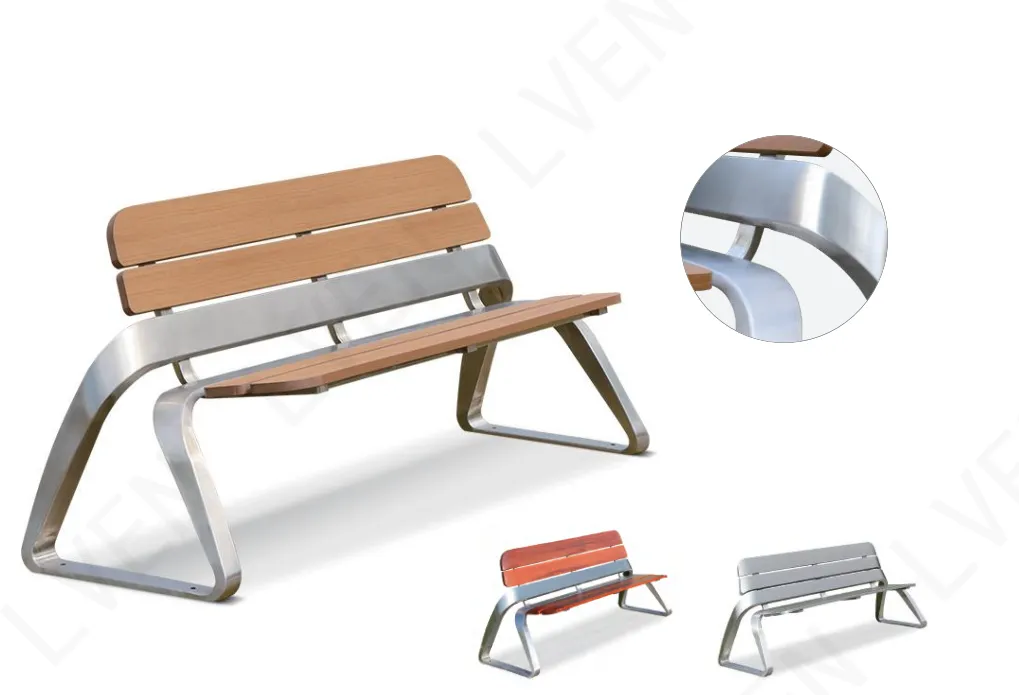
The structure of a park bench affects comfort, accessibility, traffic flow, and maintenance. A beautiful bench with the wrong structure may not work well in the actual site.
Benches with Backrests
Benches with backrests are suitable for parks, scenic areas, elderly-friendly spaces, gardens, transit waiting areas, and places where users are expected to sit for longer periods. They provide more comfort and support.
When accessibility or inclusive design is part of the project requirement, bench dimensions should be reviewed carefully. The U.S. Access Board’s ADA and ABA bench criteria include technical references such as 17–19 inches for bench seat height and specific back support requirements in relevant built-in seating contexts. These standards may not apply to every outdoor bench project, but they are useful references for buyers designing public seating with broader user needs in mind.
Backless Park Benches
Backless benches are often used in plazas, commercial districts, wide walkways, shopping streets, courtyards, and flexible public areas. They allow users to sit from either side and do not visually block open space. They are also useful when pedestrian movement comes from multiple directions.
Benches with Armrests
Armrests help some users sit down and stand up more easily. They can also discourage people from lying across the full bench, which may be relevant in some municipal or transit environments. However, too many armrests may reduce flexible seating and make wheelchair transfer more difficult in some cases. For mixed public spaces, buyers may consider combining benches with and without armrests.
Frame and Support Design
A strong frame is the foundation of long-term performance. Buyers should check:
① Frame material and thickness
② Welding quality
③ Load-bearing structure
④ Number and position of support legs
⑤ Anti-loosening hardware
⑥ Edge finishing and safety
⑦ Slat fixing method
⑧ Replaceable seat components
⑨ Surface treatment at joints and drilled holes
For outdoor benches, structural details are more important than they appear in catalog images. Weak joints, thin frames, poor screws, and insufficient coating at edges often cause problems before the seating surface itself fails.
Park Bench Length and Seating Capacity
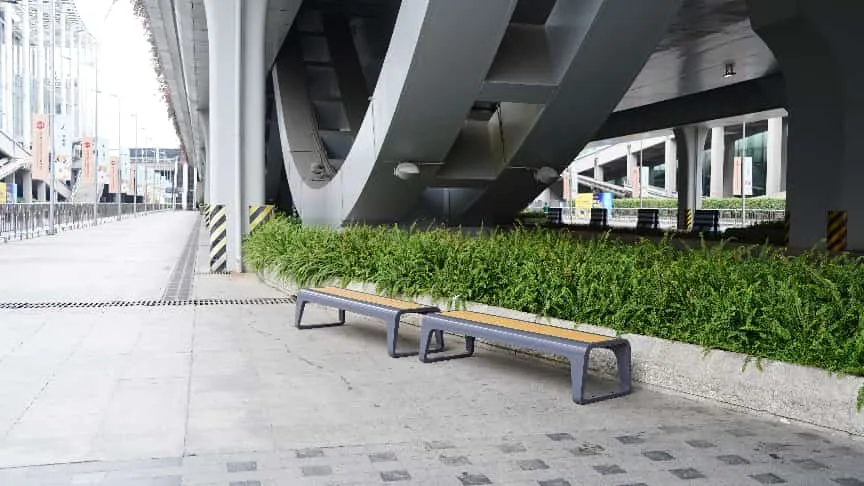
Bench length should be selected according to the site, expected user behavior, and available space. Longer does not always mean better. A long bench may provide more seating, but it can also become difficult to place, ship, install, or maintain.
Bench Length | Typical Seating Capacity | Suitable Application |
1200 mm | 2 people | Small gardens, corridors, compact areas |
1500 mm | 2–3 people | Parks, communities, schools, scenic areas |
1800 mm | 3–4 people | Public parks, streets, campuses, commercial areas |
2000 mm+ | 4+ people | Large plazas, waterfronts, wide public spaces |
Modular seating | Flexible | Commercial districts, urban renewal, custom projects |
For most commercial park benches, 1500 mm and 1800 mm are common choices because they balance comfort, seating capacity, shipping convenience, and installation flexibility. For parks and scenic areas, 1800 mm benches can create more comfortable rest points. For narrow streets or entrances, shorter benches may prevent crowding.
Installation Methods for Outdoor Benches
Installation affects safety, theft prevention, flexibility, and long-term stability.
Installation Method | Best For | Advantages | Notes |
Freestanding | Parks, plazas, flexible spaces | Easy to move and reposition | Needs stable weight and base design |
Surface-mounted | Streets, schools, municipal projects | More secure and anti-theft | Requires anchor bolts and ground preparation |
Embedded installation | Permanent public projects | Very stable | Harder to relocate or replace |
Wall-mounted / integrated seating | Narrow or architectural spaces | Saves ground space | Limited flexibility |
Modular seating systems | Commercial plazas, urban renewal projects | Flexible layout and visual impact | Needs careful planning |
For street benches, fixed installation is often preferred. For commercial areas, freestanding or modular seating can work if the layout may change. For parks, the choice depends on ground type, maintenance routes, landscape design, and security requirements.
Public Space Applications: Where Different Benches Work Best
Different public spaces require different bench designs. A bench for a quiet park path is not necessarily suitable for a busy commercial street.
Application | Recommended Bench Type | Key Selection Logic |
Public parks | Backrest benches, wood-look benches, tree benches | Comfort, landscape fit, durability |
Scenic areas | Natural wood or wood-look benches | Better visual integration |
Commercial plazas | Backless benches, modular seating, modern metal benches | Open flow, modern appearance, easy cleaning |
Streets and sidewalks | Slim benches, fixed benches | Space efficiency and pedestrian clearance |
Schools and campuses | Durable metal + plastic wood benches | Safety, maintenance, repeated use |
Hotels and resorts | Premium wood or stainless steel benches | Brand image and comfort |
Residential communities | Backrest benches, simple outdoor benches | Comfort and cost balance |
Transit stops | Benches with backrests and armrests | Waiting comfort and structured seating |
Good bench selection starts with user behavior. In parks, people rest and stay longer. In plazas, they may sit briefly, meet friends, or move in different directions. In schools, benches need to withstand frequent daily use. In commercial areas, seating also contributes to the image of the space.
How Long Do Outdoor Park Benches Last?
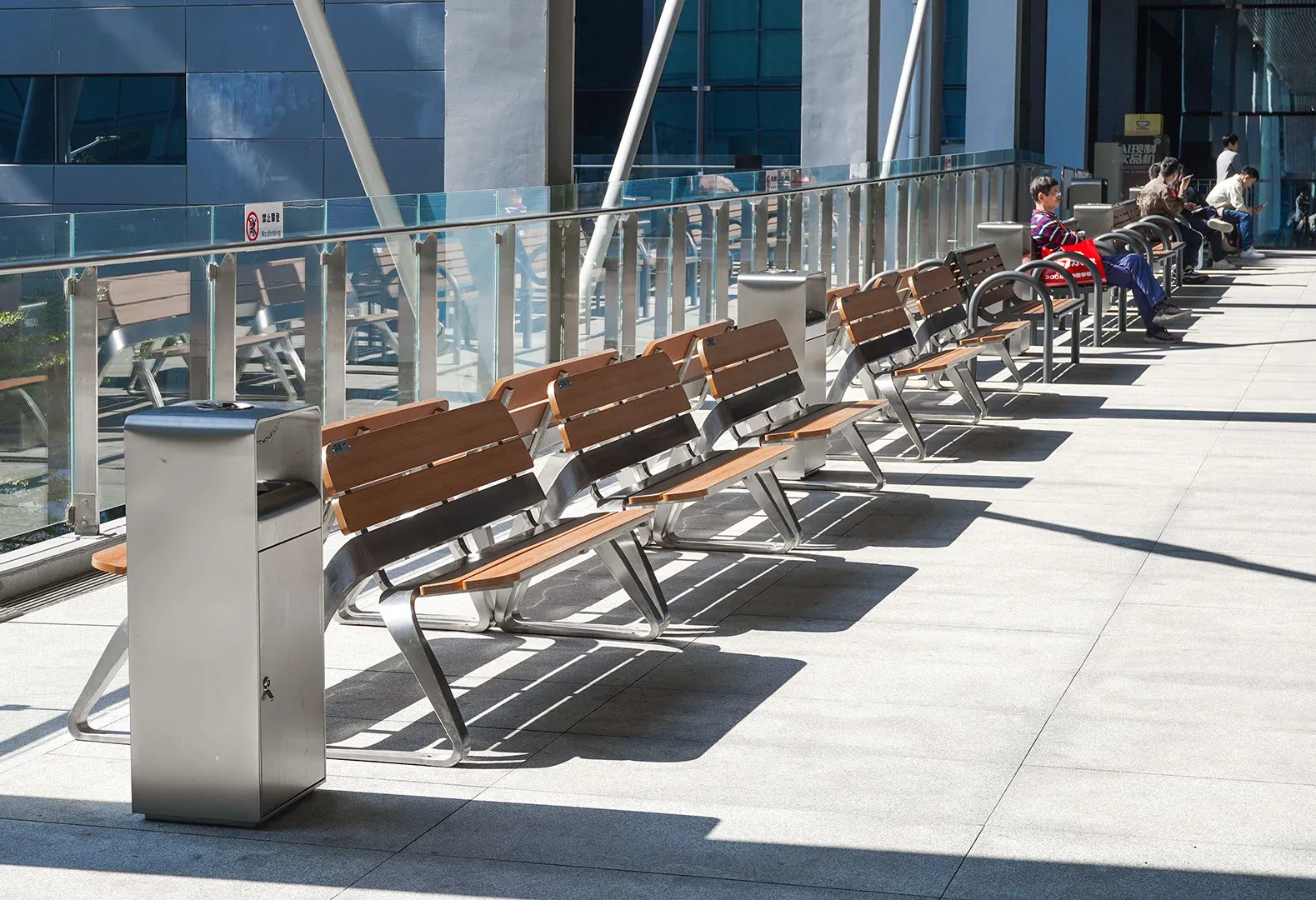
The service life of outdoor park benches depends on material, coating, installation, climate, usage intensity, and maintenance. A well-made metal bench with proper surface treatment can last many years, while a poorly protected bench may show rust, fading, cracking, or loosened parts much earlier.
Powder coating is often used for outdoor metal furniture because it provides a durable finish. The Powder Coating Institute notes that powder coatings are engineered for resistance to corrosion, UV damage, and physical wear, helping extend product life and reduce recoating needs.
Factors that affect bench life include:
① Coastal or high-humidity exposure
② UV intensity and temperature change
③ Cleaning frequency
④ Coating thickness and quality
⑤ Weld and joint protection
⑥ Ground contact and drainage
⑦ Whether screws and slats are replaceable
⑧ Public use intensity and possible impact
Instead of asking only “how long will this bench last?”, buyers should ask: what material, coating, structure, and maintenance plan will make the bench last in this specific environment?
Maintenance Cost and Bulk Procurement Checklist
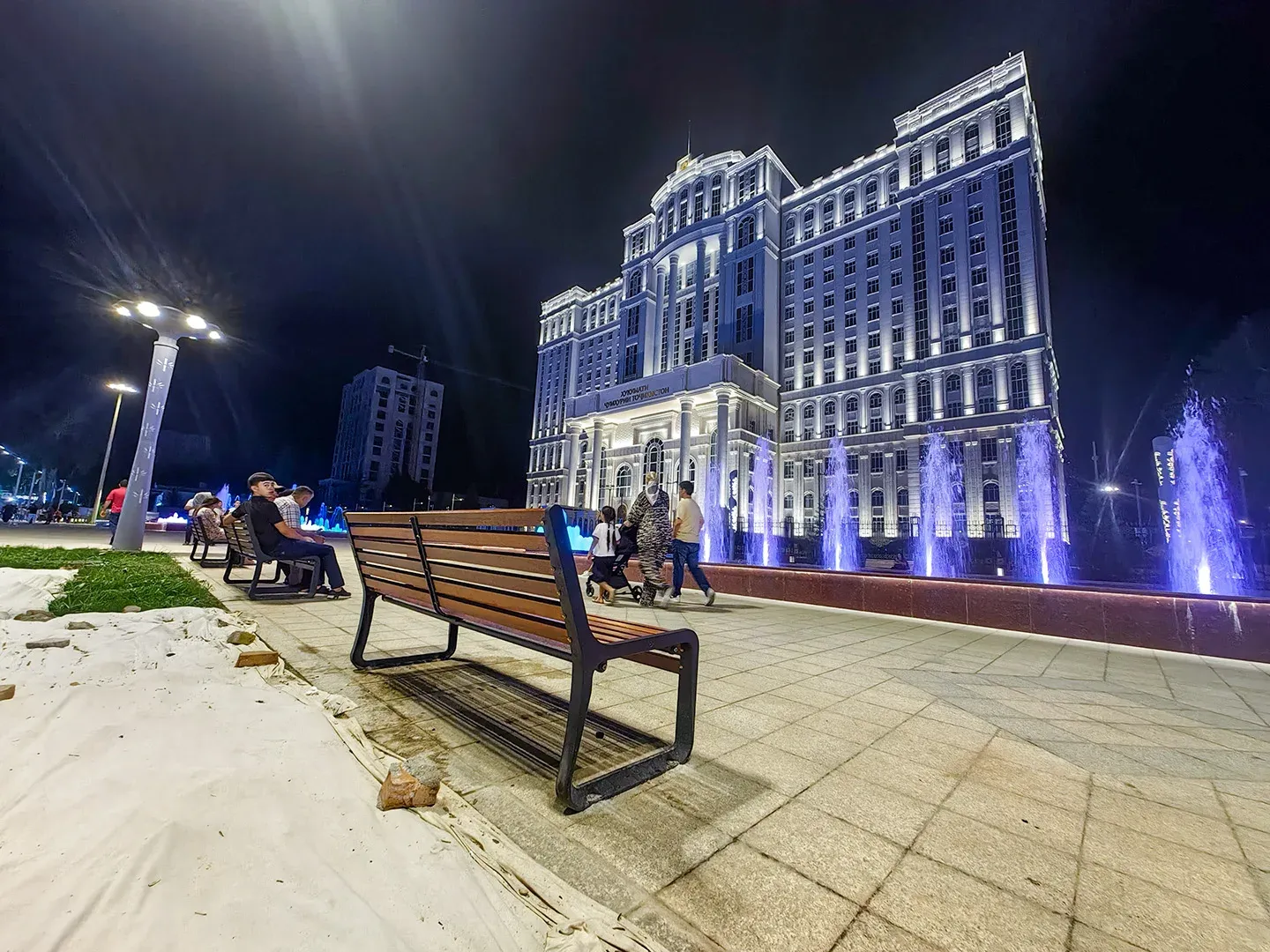
Maintenance cost is often underestimated in park bench procurement. A lower unit price may become more expensive if benches need frequent repainting, screw replacement, slat repair, rust treatment, or early replacement.
Before placing a bulk order, buyers should confirm:
Buying Item | What to Check | Why It Matters |
Site environment | Coastal, humid, dry, hot, snowy, shaded, high-UV | Determines material and coating |
User behavior | Short rest, long sitting, high traffic, children, elderly users | Determines structure and comfort |
Material | Galvanized steel, stainless steel, cast aluminum, wood, WPC, PS plastic wood | Affects durability and cost |
Bench type | Backrest, backless, armrests, modular, tree bench | Affects comfort and placement |
Length | 1200, 1500, 1800, 2000 mm or custom | Affects seating capacity and layout |
Installation | Freestanding, surface-mounted, embedded | Affects safety and flexibility |
Surface finish | Powder coating, stainless finish, wood oil, wood grain | Affects maintenance and appearance |
Replaceable parts | Seat slats, bolts, armrests, feet | Reduces long-term repair cost |
Packaging | Assembled, knock-down, carton, pallet, crate | Affects shipping and installation |
Bulk consistency | Color, dimensions, welding, coating, packing | Prevents project quality variation |
Supplier support | Drawings, samples, QC, spare parts, repeat orders | Supports long-term cooperation |
For distributors and contractors, repeatability is especially important. A buyer may not only need one batch. Future phases, replacement orders, and project extensions require stable size, color, material, and construction details.
How LVEN Supports Park Bench Projects?
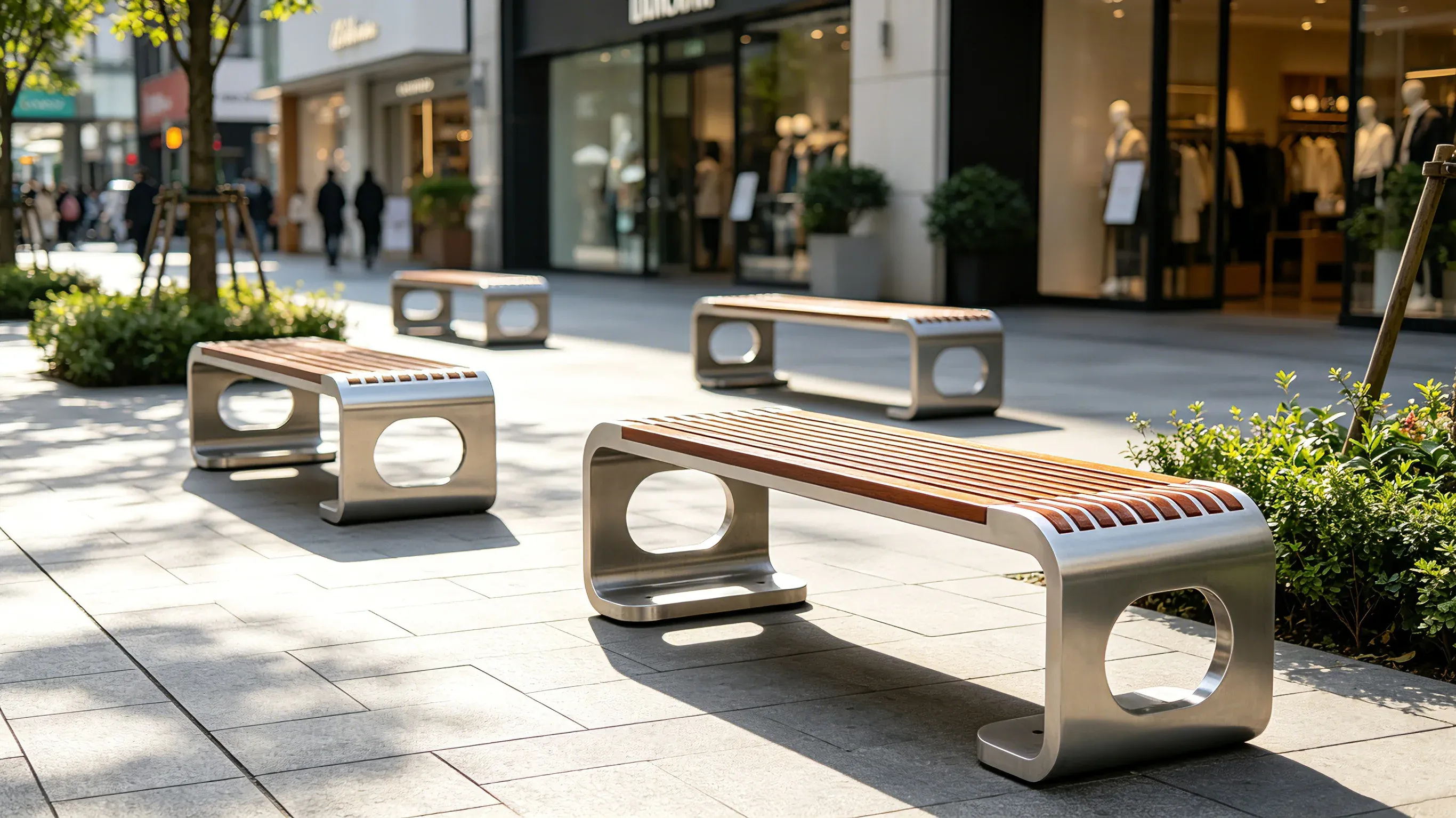
LVEN supplies park benches and seating products for long-term outdoor use. Its park bench page emphasizes load-bearing stability, weather resistance, lower long-term maintenance costs, and options such as benches with backrests, backless benches, armrests, modular seating, custom size, material, color, surface finish, and coordinated design with other public furniture.
LVEN’s broader urban furniture range includes outdoor trash bins, picnic tables, park benches, planters, indoor trash bins, recycling bins, dog trash bins, ashtrays, tree benches, bicycle racks, and related public facility products, making it easier for buyers to coordinate benches with a complete public space furniture package.
For project buyers, LVEN can support:
① Standard and customized park benches
② Backrest, backless, armrest, and modular options
③ Material selection based on climate and budget
④ Galvanized steel, stainless steel, carbon steel, cast aluminum, natural wood, plastic wood, and WPC options
⑤ Outdoor powder coating and custom colors
⑥ Coordination with trash bins, planters, bicycle racks, and picnic tables
⑦ OEM/ODM production for distributors and project clients
⑧ Bulk order quality control and export packaging
LVEN’s internal project process also covers requirement communication, product solution confirmation, sampling, batch production, quality control, shipping support, and after-sales cooperation, which is important for buyers managing public space projects across multiple locations.
FAQ About Park Benches
How do I choose park benches for a public space?
Start with the site type, expected users, sitting time, climate, installation method, maintenance plan, and visual style. Parks usually need comfortable benches with backrests, while plazas and commercial areas may use backless or modular benches for more flexible movement.
What is the best material for outdoor benches?
For public projects, metal frames with wood, WPC, or plastic wood seating are often practical. Galvanized steel and carbon steel are cost-effective for many projects, stainless steel works well for premium or humid environments, and cast aluminum is suitable for decorative outdoor benches.
Are wooden park benches good?
Wooden benches are good for natural and landscape spaces, but they require more maintenance than metal or plastic wood options. For lower maintenance, buyers can choose metal frames with PS plastic wood or WPC seating surfaces.
Should park benches have backrests?
Backrest benches are better for resting areas, scenic spaces, elderly-friendly zones, and places where users sit longer. Backless benches are better for plazas, commercial streets, and flexible spaces where users may approach from different directions.
Are armrests necessary for outdoor benches?
Armrests can improve support and help some users sit down or stand up. They can also help organize seating behavior. However, projects should consider whether armrests reduce flexibility or affect transfer space for users with mobility needs.
What length should a park bench be?
Common bench lengths include 1200 mm, 1500 mm, and 1800 mm. For most public projects, 1500 mm or 1800 mm provides a good balance of comfort, capacity, shipping, and installation convenience.
Can commercial park benches be customized?
Yes. Commercial park benches can be customized by size, material, color, surface finish, armrest design, backrest type, installation method, logo, packaging, and project style. Customization based on mature models is often faster and more stable for bulk orders.
Conclusion
A park bench is a small product, but it has a direct influence on how people experience a public space. The right bench can make a park more comfortable, a commercial plaza more welcoming, a campus more functional, and a streetscape more complete.
For buyers, the key is to evaluate commercial park benches by material, structure, backrest type, armrests, length, installation, surface treatment, maintenance cost, and project consistency. Natural wood can provide warmth, metal frames provide strength, and WPC or plastic wood can reduce maintenance pressure. Backrest benches improve comfort, while backless and modular benches give public spaces more flexibility.
LVEN supports park bench projects with standard models, custom options, OEM/ODM manufacturing, material guidance, outdoor powder coating, bulk quality control, and coordinated public furniture solutions for parks, streets, plazas, campuses, hotels, scenic areas, and commercial environments.
Contents