Galvanized Steel vs Stainless Steel Outdoor Trash Bins: Which Is Better?
 28
28  Share
Share
Summary
For outdoor trash bins used in parks, streets, commercial areas, schools, scenic spots, and municipal projects, material choice directly affects corrosion resistance, appearance, cost, maintenance, and service life. Galvanized steel and stainless steel are two of the most common metal options, but they are not used for exactly the same purpose.
A galvanized steel trash bin is usually a cost-effective choice for municipal projects, commercial streets, parks, and general outdoor public spaces, especially when combined with proper powder coating. A stainless steel outdoor trash bin is often preferred for humid, coastal, premium, or high-end commercial environments where corrosion resistance and a clean metal appearance are more important.
This guide compares galvanized steel, stainless steel 304, and stainless steel 316, helping buyers choose the right material based on environment, budget, appearance, maintenance, and project requirements.
hat Is a Galvanized Steel Trash Bin?
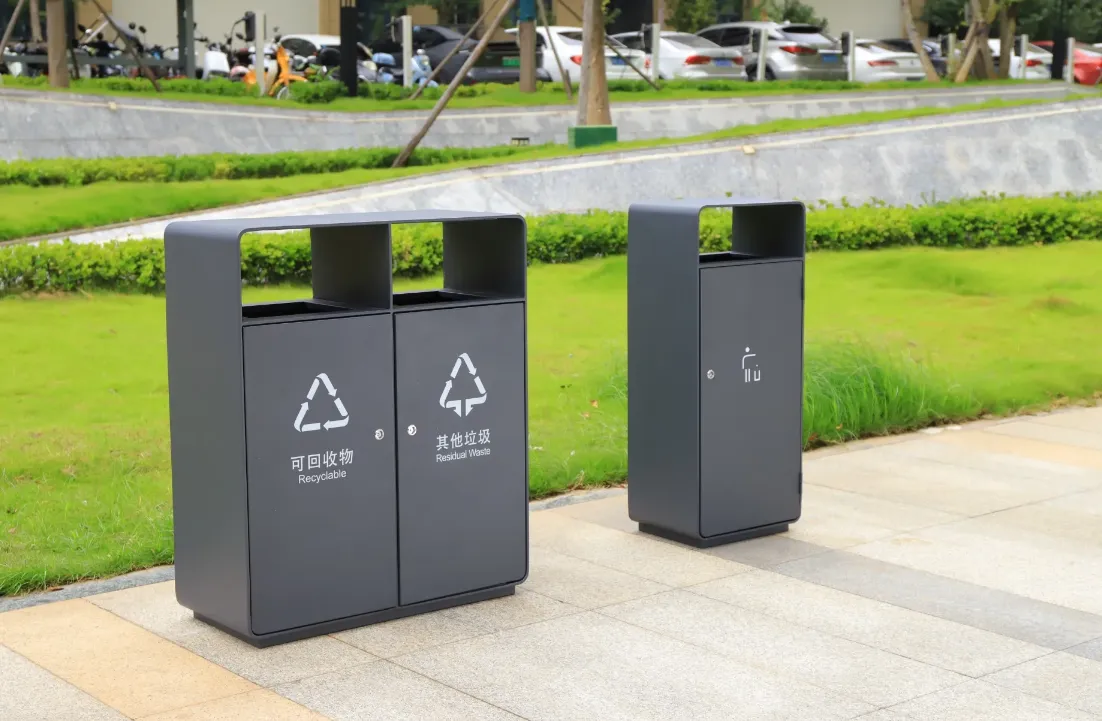
A galvanized steel trash bin is made from steel that has been protected with a zinc layer. The purpose of galvanizing is to reduce corrosion and extend the life of the steel in outdoor environments. In public furniture manufacturing, galvanized steel is commonly used for outdoor trash bins, recycling receptacles, park bins, commercial waste bins, and other outdoor metal trash bin structures.
The key advantage of galvanized steel is value. It offers good structural strength at a more controlled cost, making it suitable for projects that need many bins across parks, streets, communities, commercial centers, or municipal areas. When the galvanized steel structure is combined with outdoor powder coating, the product can achieve better weather resistance, color consistency, and visual adaptability.
The American Galvanizers Association explains that zinc coatings protect steel because zinc acts anodically and sacrifices itself before the underlying steel corrodes. Hot-dip galvanizing also provides multiple forms of protection, including barrier protection and cathodic protection. This is why galvanized steel is widely used for outdoor steel corrosion protection.
For buyers, the main point is simple: a galvanized steel trash bin is often a practical option when the project needs durable metal construction, flexible colors, and a reasonable procurement budget.
What Is a Stainless Steel Outdoor Trash Bin?
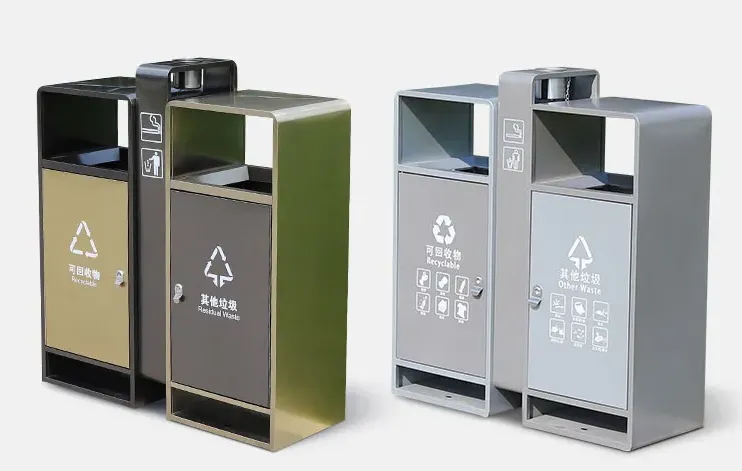
A stainless steel outdoor trash bin is made from corrosion-resistant stainless steel, usually 304 or 316 grade for project applications. Stainless steel contains chromium, which helps form a passive protective layer on the surface. This gives stainless steel better resistance to rust and staining than ordinary steel.
However, stainless steel is not “maintenance-free” in every environment. Salt, moisture, pollution, chemicals, scratches, and poor cleaning can still affect the surface over time. The difference is that stainless steel generally offers stronger corrosion resistance and a cleaner metal appearance than painted or coated steel.
304 Stainless Steel Trash Bins
304 stainless steel is widely used for outdoor and semi-outdoor public furniture. It is suitable for many humid, commercial, and urban environments. It offers a clean appearance, good corrosion resistance, and a premium look, especially for hotels, office buildings, commercial centers, transport spaces, and public entrances.
316 Stainless Steel Trash Bins
316 stainless steel contains molybdenum, which improves resistance to pitting corrosion, especially in chloride-rich environments such as coastal areas, marine locations, and high-salt atmospheres. The International Molybdenum Association explains that molybdenum significantly enhances stainless steel corrosion resistance and improves pitting resistance when chromium is also present.
For coastal or high-humidity projects, 316 stainless steel is usually the stronger material choice, although the cost is higher than 304 stainless steel and galvanized steel.
Galvanized Steel vs Stainless Steel Outdoor Trash Bins: Quick Comparison
Factor | Galvanized Steel Trash Bin | 304 Stainless Steel Trash Bin | 316 Stainless Steel Trash Bin |
Corrosion resistance | Good with zinc protection and proper coating | Better for humid and urban environments | Best among the three for coastal and chloride exposure |
Cost | Lower to medium | Medium to high | Highest |
Appearance | Usually powder coated or finished with wood grain / color coating | Clean metallic appearance | Premium metallic appearance |
Color flexibility | Very strong; easy to powder coat | Can be brushed, polished, colored, or coated | Similar to 304, often used for demanding environments |
Best use | Parks, streets, municipal projects, commercial outdoor areas | Commercial spaces, hotels, public buildings, urban areas | Coastal, high-humidity, marine, premium outdoor projects |
Maintenance | Coating inspection and cleaning needed | Regular cleaning to avoid surface contamination | Regular cleaning still needed, but better corrosion resistance |
Customization | Strong for colors, shapes, logos, capacity, finish | Strong for premium appearance and logo options | Strong but higher material cost |
Procurement value | Best for cost-controlled large projects | Good balance of appearance and durability | Best for harsh environments |
The best material is not always the most expensive one. Buyers should choose based on environment, project positioning, expected life span, maintenance capability, and budget.
Corrosion Resistance: Which Outdoor Metal Trash Bin Performs Better?
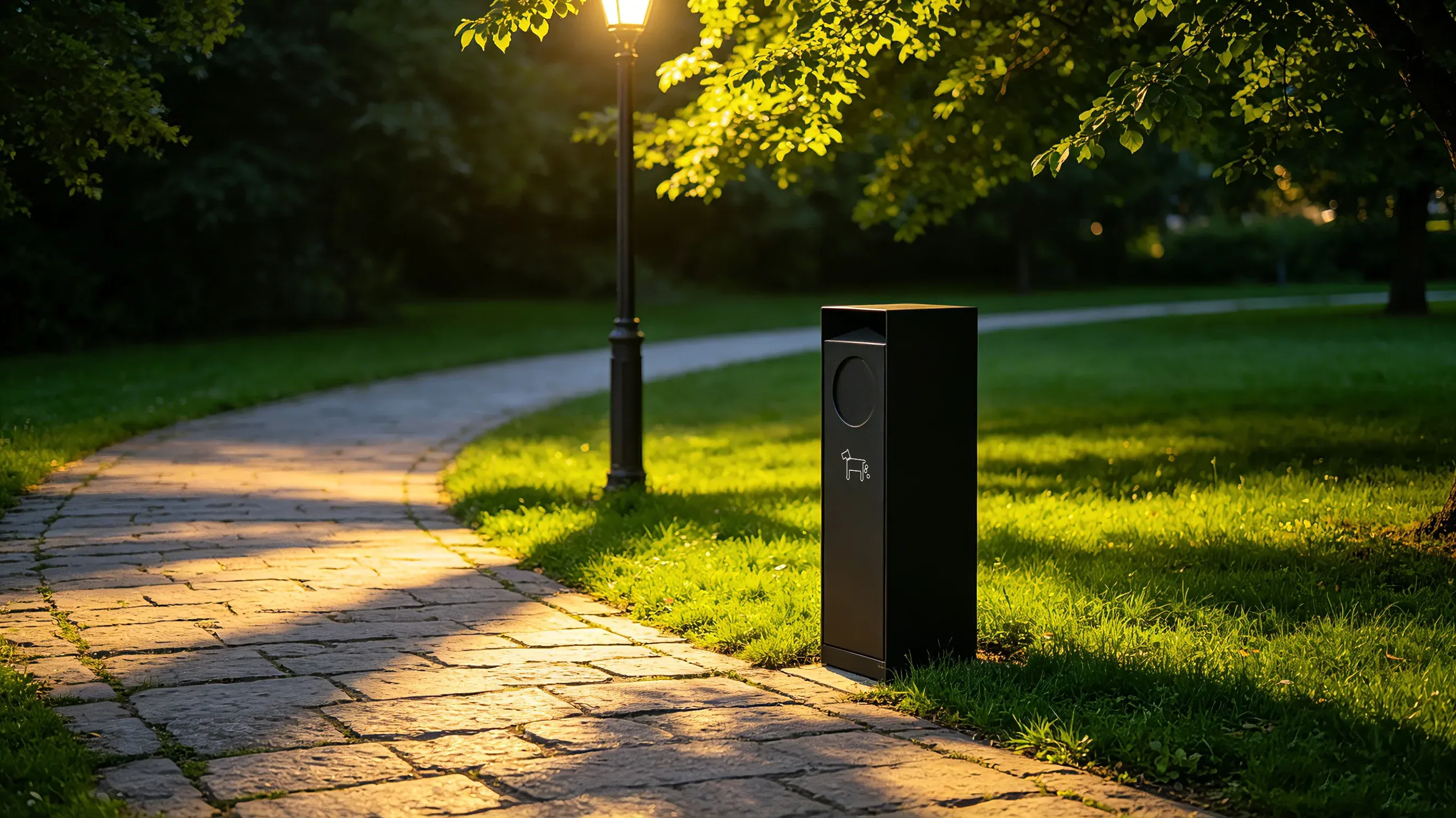
Corrosion resistance is usually the first concern when comparing outdoor metal trash bin materials. But the answer depends on the environment.
General Outdoor Environments
For parks, streets, commercial plazas, schools, and residential communities in normal outdoor environments, galvanized steel with quality outdoor powder coating is often sufficient. It provides a strong structure, good corrosion protection, and flexible design options.
The Powder Coating Institute notes that powder-coated finishes can help reduce scratches, chipping, abrasions, corrosion, fading, and other wear issues, and powder coating is used on outdoor products where durability matters.
High-Humidity and Rainy Areas
In high-humidity or rainy areas, both coated galvanized steel and 304 stainless steel can be used. The better choice depends on project budget, appearance requirements, and maintenance expectations. If the project needs a colored finish or wood-look panels, galvanized steel with powder coating may be more practical. If the project needs a clean metal look, 304 stainless steel may be better.
Coastal or High-Salt Environments
For coastal areas, beachfront spaces, marine climates, and high-salt environments, 316 stainless steel is usually preferred. Stainless steel 304 can still suffer from tea staining or pitting in chloride-rich conditions if cleaning is poor or the surface finish is unsuitable.
The British Stainless Steel Association notes that stainless steel selection for seawater applications requires caution, and low-carbon 316L types can help reduce additional corrosion risks in welded structures. This does not mean every trash bin must use 316L, but it supports the general buyer logic: chloride-rich environments require stronger stainless steel grades and better fabrication control.
Cost Comparison for Galvanized Steel and Stainless Steel Trash Bins
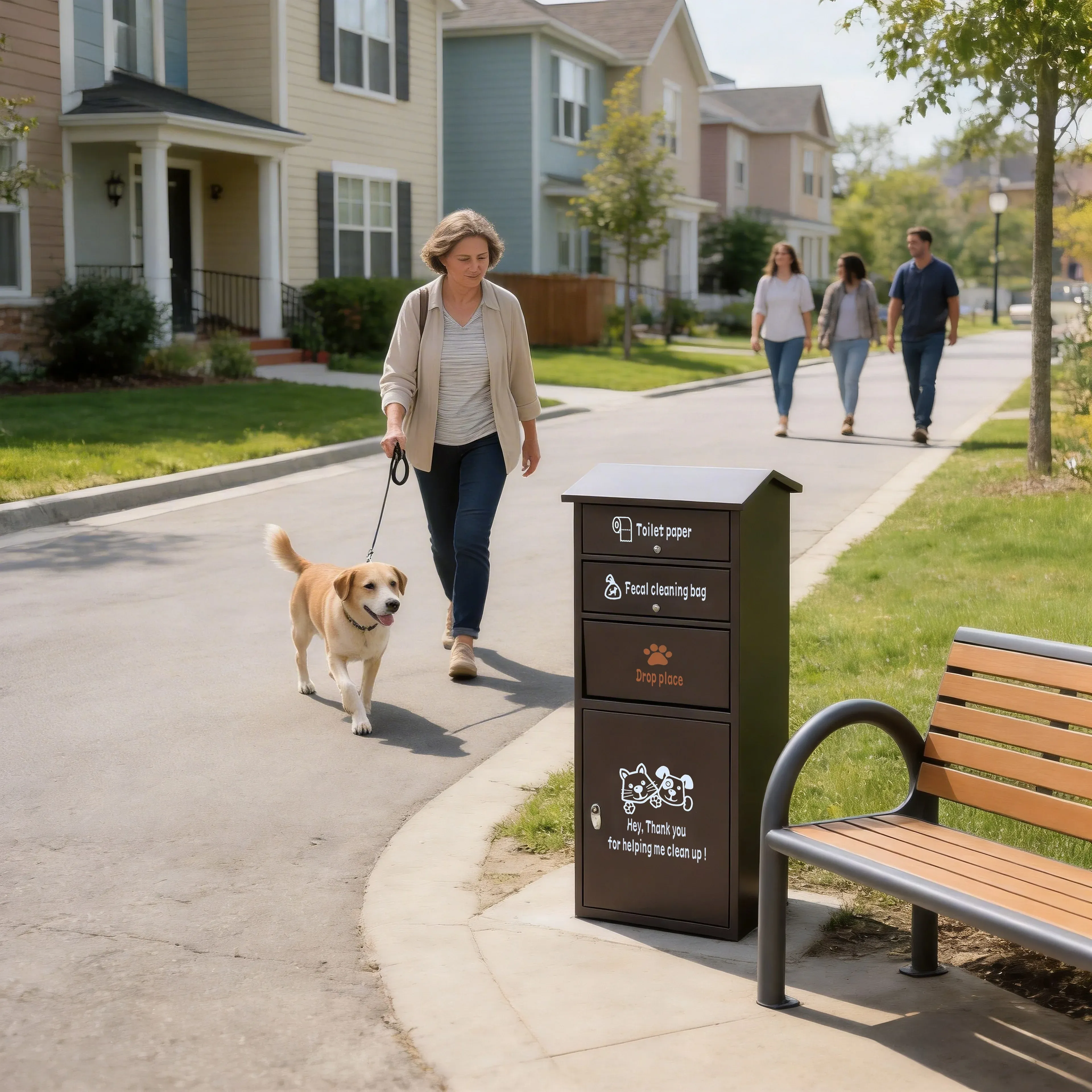
Cost is one of the strongest reasons buyers choose a galvanized steel trash bin. For large municipal projects, parks, commercial streets, schools, and community developments, buyers often need dozens or hundreds of units. In these cases, material cost, coating cost, packaging, shipping volume, and replacement planning all matter.
Galvanized Steel Cost Logic
Galvanized steel is usually more cost-friendly. It allows buyers to control the budget while still getting a strong metal structure. It is also easier to customize with colors, wood grain effects, and project-specific finishes.
Stainless Steel Cost Logic
A stainless steel outdoor trash bin usually costs more because the base material is more expensive. 316 stainless steel costs more than 304 stainless steel because of its stronger alloy composition and better corrosion performance. However, the higher cost can be justified in coastal, humid, or premium environments where corrosion risk and appearance requirements are higher.
Project Cost Should Include Maintenance
The cheapest unit price is not always the lowest project cost. Buyers should also consider:
① Expected service life
② Cleaning frequency
③ Coating repair needs
④ Risk of rust or surface staining
⑤ Replacement cost
⑥ Spare parts availability
⑦ Whether the material matches the rest of the public furniture
For long-term projects, the better choice is the material that keeps maintenance predictable.
Appearance and Maintenance Differences
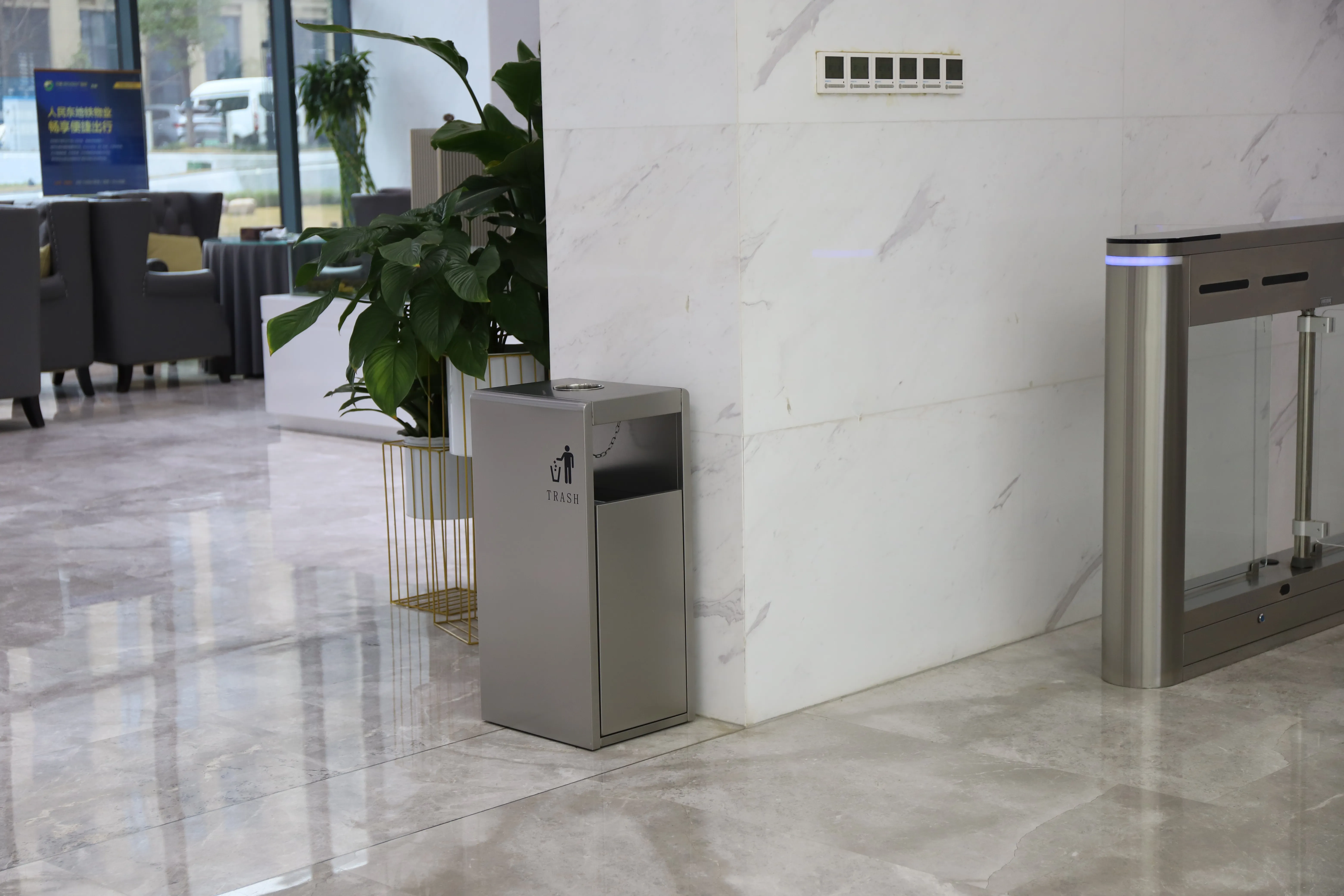
Material choice also affects how the bin looks after months or years of public use.
Galvanized Steel Trash Bin Appearance
Galvanized steel bins are usually powder coated, painted, or combined with wood-look panels. This makes them highly flexible for different project styles. They can be black, grey, green, brown, wood grain, stone pattern, or custom brand colors.
Maintenance mainly focuses on the coating condition. If the surface is scratched deeply or the coating is damaged at edges, joints, holes, or welded areas, repairs should be handled early to reduce corrosion risk.
Stainless Steel Outdoor Trash Bin Appearance
Stainless steel bins look cleaner and more premium. They are often used in commercial areas, hotels, office buildings, public buildings, and modern urban spaces. However, fingerprints, water marks, pollution, and salt deposits may still appear on the surface.
Maintenance usually requires regular cleaning with suitable methods. Harsh chemicals, chloride cleaners, and abrasive tools should be avoided because they can damage the surface or increase staining risk.
Which Looks Better?
There is no universal answer. Stainless steel looks better in premium, modern, or architectural spaces. Galvanized steel with powder coating looks better when the project needs color matching, landscape integration, or a warmer public furniture system.
Best Material by Application Scenario
Application Scenario | Recommended Material | Reason |
Municipal street projects | Galvanized steel + outdoor powder coating | Cost-effective, strong, easy to standardize |
Public parks | Galvanized steel + wood-look panels or plastic wood | Good visual integration and controlled cost |
Commercial plazas | 304 stainless steel or powder-coated galvanized steel | Choose based on design style and budget |
Hotels and office entrances | 304 stainless steel or premium coated steel | Clean appearance and better brand image |
Coastal parks or seaside streets | 316 stainless steel | Better resistance to chloride-rich conditions |
High-humidity tropical areas | 304/316 stainless steel or upgraded coating system | Depends on budget and exposure level |
Schools and campuses | Galvanized steel or 304 stainless steel | Balance durability, maintenance, and cost |
Scenic areas | Galvanized steel + wood grain / plastic wood | Blends better with landscape settings |
Large distributor orders | Galvanized steel standard models | Easier price control and bulk customization |
For most public space projects, galvanized steel is the more economical and flexible choice. Stainless steel becomes more attractive when the project has higher environmental risk, stronger appearance requirements, or a longer expected service life.
What About Wooden or Wood-Look Street Furniture?
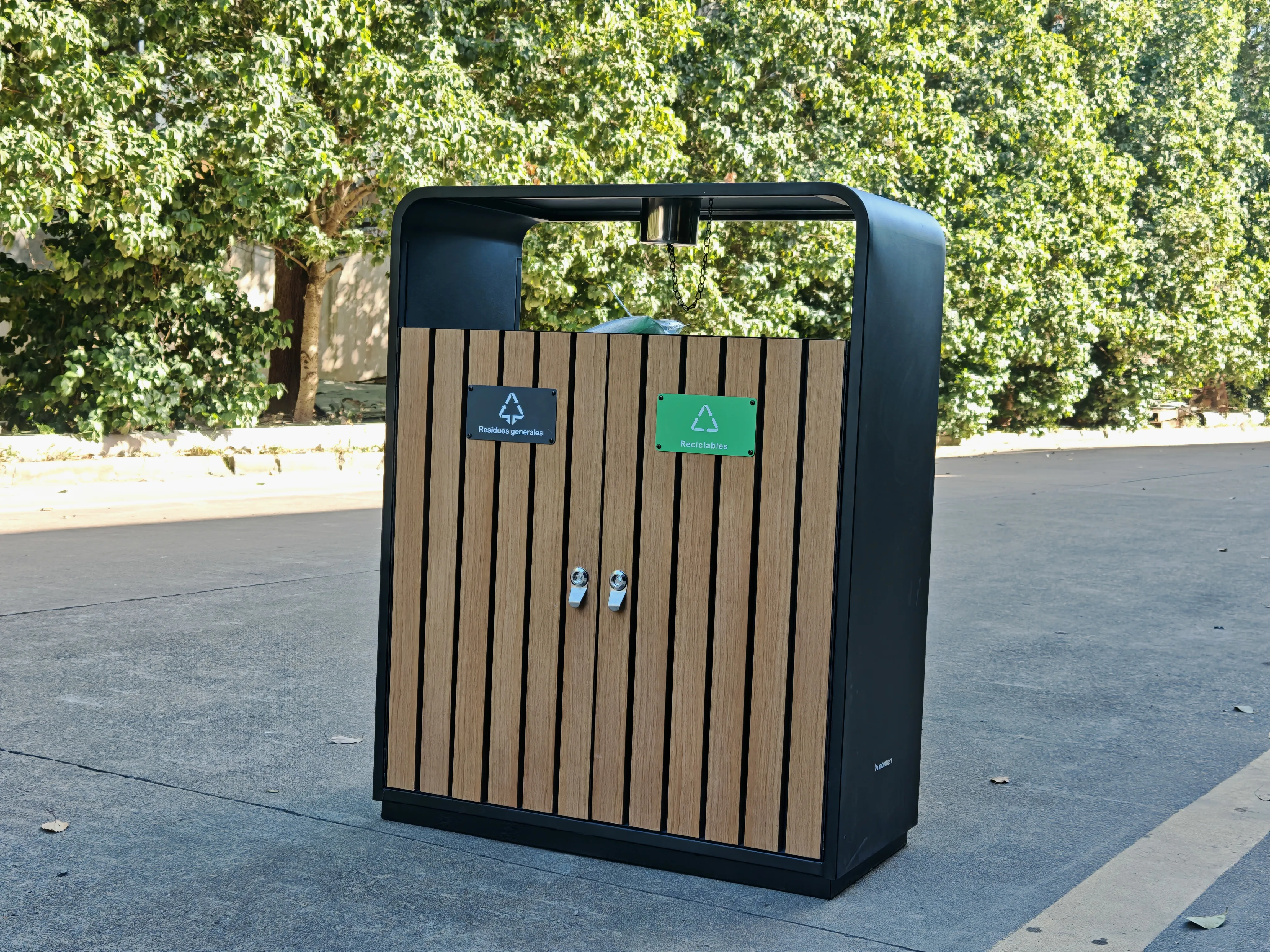
Some buyers ask whether wooden street furniture is good for outdoor trash bins. The answer depends on whether wood is used as the main structure or as a decorative/functional panel.
Natural wood can create a warm and landscape-friendly appearance, but it requires more maintenance outdoors. It may need sealing, repainting, or replacement depending on climate and usage. For outdoor trash bins, natural wood is usually better used as a panel or accent, not as the only structural material.
Wood-look alternatives such as PS plastic wood, WPC, or wood grain metal finishes can offer a similar visual effect with lower maintenance pressure. For parks, scenic areas, commercial streets, and residential communities, a metal frame with wood-look panels is often more practical than a fully wooden bin.
The key material judgment is the same: choose the structure for strength and durability, then choose the finish for appearance and project style.
How LVEN Helps Buyers Choose the Right Trash Bin Material?
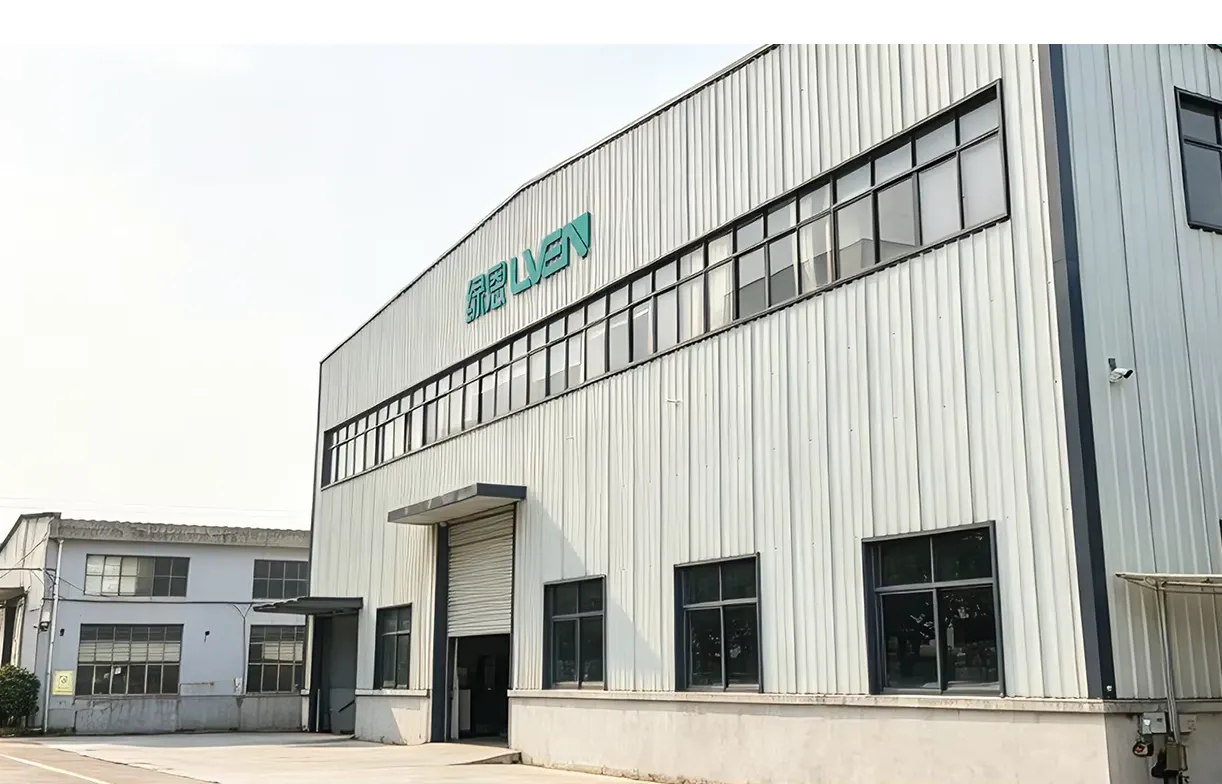
LVEN supplies outdoor trash bins, recycling bins, single bins, dog trash bins, ashtrays, park benches, planters, bicycle racks, and other urban furniture products for public space projects. For outdoor trash bins, LVEN’s product page includes galvanized steel, stainless steel, aluminum, and plastic wood combinations, as well as custom options for size, color, powder coating, and style.
LVEN’s outdoor trash bin FAQ also suggests 304 or 316 stainless steel for coastal or harsh environments when budget allows. For tighter budgets, it mentions galvanized sheet or stainless steel with zinc-rich primer and weather-resistant powder coating as a way to extend product life.
For project buyers, LVEN can support material selection based on:
① Outdoor or indoor use
② Coastal, humid, hot, dry, or high-UV environment
③ Municipal, commercial, park, hotel, or school application
④ Required capacity and installation method
⑤ Budget range
⑥ Desired appearance and color system
⑦ Logo and sorting label requirements
⑧ Bulk order and export packaging needs
This helps buyers avoid choosing material only by unit price. Instead, the project can balance durability, cost, appearance, and long-term maintenance.
FAQ About Outdoor Trash Bin Materials
What material is best for outdoor trash bins?
For general public spaces, galvanized steel with outdoor powder coating is often a practical choice because it balances cost, strength, and customization. For premium, humid, or coastal environments, stainless steel outdoor trash bins—especially 316 stainless steel—may be a better option.
Is galvanized steel good for outdoor trash bins?
Yes. A galvanized steel trash bin is suitable for many outdoor public projects when properly coated and maintained. It is commonly used for parks, streets, schools, commercial areas, and municipal projects because it offers good strength and cost control.
Is stainless steel better than galvanized steel for outdoor bins?
Stainless steel has better corrosion resistance and a cleaner metal appearance, especially in humid or premium environments. However, it is more expensive. Galvanized steel may be better for large projects where budget control, color customization, and bulk supply are more important.
Should I choose 304 or 316 stainless steel?
Choose 304 stainless steel for many urban, commercial, and humid environments. Choose 316 stainless steel for coastal, marine, high-salt, or more demanding outdoor environments where chloride corrosion risk is higher.
Can galvanized steel trash bins be used near the coast?
They can be used if the coating system is upgraded and maintenance is planned carefully, but 316 stainless steel is usually a safer choice for long-term coastal or high-salt exposure. If budget is limited, buyers should discuss zinc-rich primer, weather-resistant powder coating, and coating thickness with the supplier.
Does stainless steel rust outdoors?
Stainless steel is corrosion-resistant, but not completely immune to staining or corrosion. Salt, pollution, poor cleaning, scratches, and unsuitable chemicals can affect the surface. Regular cleaning and correct grade selection are important.
Are wood-look outdoor trash bins durable?
Wood-look bins can be durable when the main structure is metal and the wood-look part is made from PS plastic wood, WPC, or treated panels. This is often more practical than a fully wooden structure for public outdoor use.
Conclusion: Which Material Should You Choose?
There is no single best material for every outdoor trash bin project. The right choice depends on environment, budget, appearance, maintenance, and expected service life.
Choose a galvanized steel trash bin if the project needs cost control, strong structure, flexible colors, and large-volume supply for parks, streets, schools, communities, or commercial areas.
Choose a 304 stainless steel outdoor trash bin if the project needs a cleaner metal appearance, better corrosion resistance, and a more premium look for urban commercial or public building environments.
Choose a 316 stainless steel trash bin if the project is located in a coastal, high-humidity, marine, or chloride-rich environment where corrosion resistance is more important than initial cost.
For many buyers, the best solution is not choosing material in isolation. It is combining the right base material, coating system, structure, liner, opening design, and maintenance plan.
Contents