Litter Bins vs Wheelie Bin Housings for Public Projects
 11
 Share
Choose a litter bin with a removable liner when a compact public disposal point and bag or liner collection suit the site. Consider a wheelie bin housing when the operation benefits from a wheeled container that can be removed, exchanged or taken to compatible collection equipment. Both can serve pedestrians in public spaces. The important difference is the container and servicing process behind the opening.
For landscape architects, contractors and municipal buyers, a litter bin vs wheelie bin housing comparison should follow the waste from disposal to collection. The outer cabinet is only part of the system. Its dimensions, internal container, removal route and collection arrangements must work together if the installation is to remain practical after handover.
Litter Bin vs Wheelie Bin Housing: What Is the Difference?
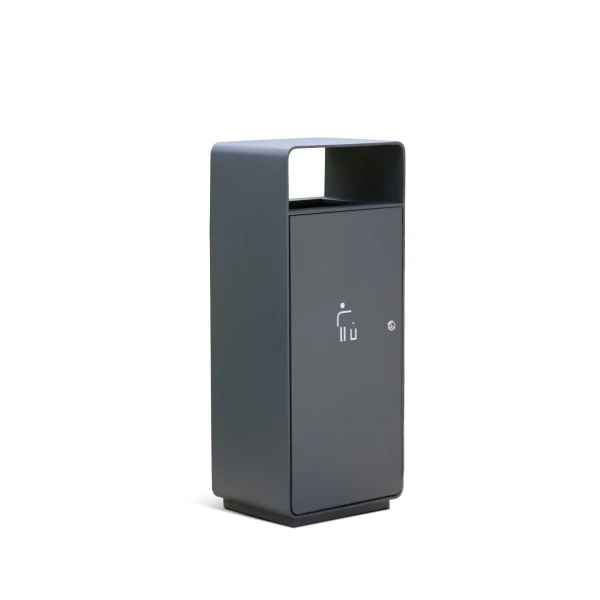
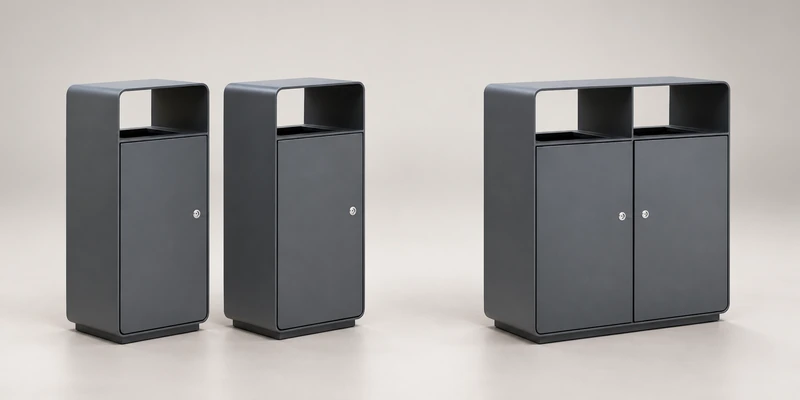
In this comparison, a litter bin is a public-facing receptacle emptied by removing a bag or rigid inner liner. A wheelie bin housing is an outer enclosure designed to contain a wheeled waste container. The housing usually remains installed while the inner bin is brought out for servicing. Some manufacturers offer alternative inserts for the same enclosure, so the specified collection configuration matters more than the product name alone.
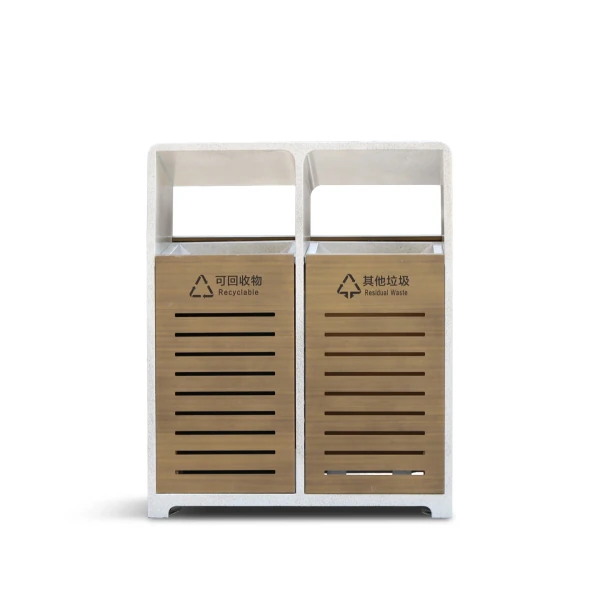
The distinction is not simply public use versus hidden storage. A housing can incorporate a covered litter opening, recycling aperture and public-facing labels. Alternatively, a screen or corral can conceal a group of wheelie bins in a collection area. These are different arrangements with different access requirements. Identify whether users will deposit directly through the enclosure or open a storage area to reach the container.
For a liner-based receptacle, review how the bag or liner is withdrawn and moved to the collection cart. For a wheelie housing, review how the inner container exits, where it travels and how it is emptied. Wheeled removal may change the handling task, but the route and equipment still determine whether the arrangement works for the crew.
| Procurement question | Litter bin with bag or rigid liner | Housing for a wheeled container |
|---|---|---|
| What contains the waste? | A bag, liner or specified internal receptacle | The approved wheelie bin inside the enclosure |
| What normally leaves during servicing? | The bag or inner liner | The wheeled container, or its contents through the agreed process |
| What space must be checked? | Door or lid operation, liner removal and worker position | Door operation, container withdrawal and the onward rolling route |
| What must match the collection system? | Bags, liners and the crew's handling method | Container model, route, storage and collection equipment |
| Can the public use it directly? | Yes, through the specified disposal opening | Yes, where the housing has a suitable public deposit opening |
When Is a Public Waste Bin the Better Fit?
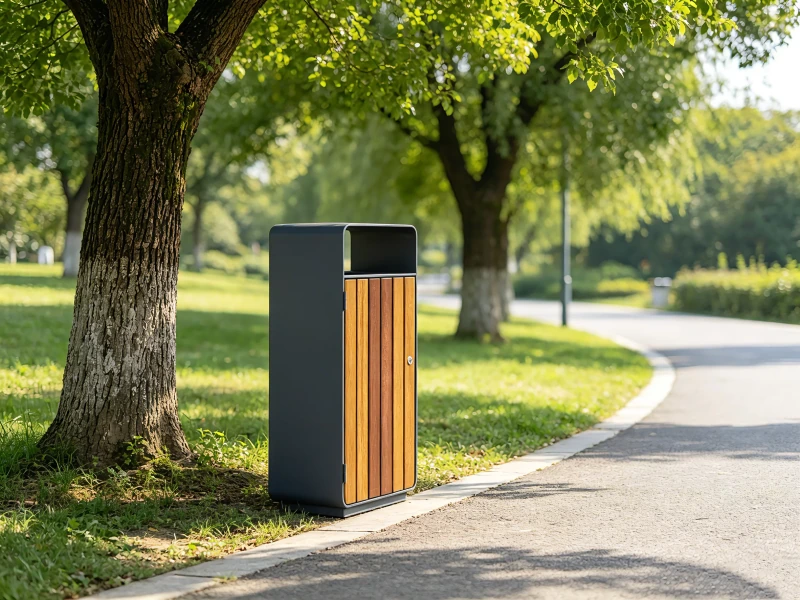 public waste bin positioned beside a tree-lined park path" width="800" height="600" border="0" vspace="0" style="max-width:100%;object-fit:contain;width:800px;height:600px;display:block;margin:0 auto;"/>
A liner-based public waste bin is often suitable beside seating, at a landscape entrance or along a pedestrian route where the collection team already uses bags or a small service cart. The receptacle can provide a defined disposal point without introducing a large wheeled container at every location. Its capacity still needs to cover the waste generated between planned visits.
Consider a series of modest collection points distributed through a park. Staff may travel along a route, empty each liner and consolidate the waste at a separate service area. In that arrangement, a larger wheelie housing at every bench may add equipment and occupy space without improving the collection process. A larger container may instead be useful at the consolidation point or a consistently busy food-service area.
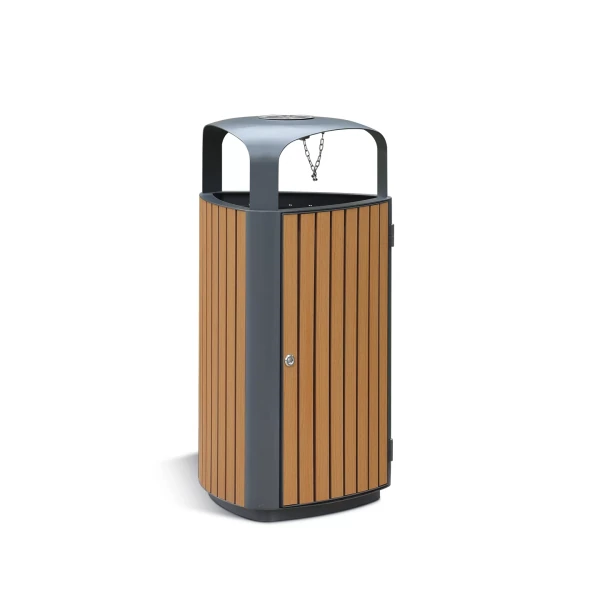
The product should support the actual emptying method. LVEN's OTM-04BM, for example, is a 50-litre outdoor receptacle with a lockable service door and removable metal inner liner. Its published external dimensions are 40 × 30 × 95 cm. This is a specific model reference for a compact collection point, rather than a size standard for all public bins.
Check the sample with the intended bag and collection equipment. A small footprint is useful only if the opening is visible, the liner can be removed and staff have room to work. If the bin repeatedly fills before the next visit, review the waste volume and route frequency together. A different service arrangement may be needed, rather than simply a taller version of the same receptacle.
When Do Wheelie Bin Housings Suit Public Spaces?
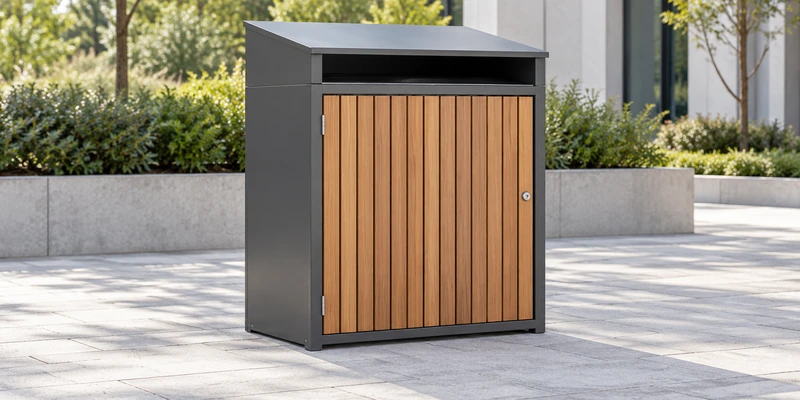
AI-generated generic wheelie-bin housing concept; not an LVEN catalogue product.
Wheelie bin housings for public spaces deserve consideration where waste volumes and the collection route justify a larger removable container. Busy visitor destinations, refreshment areas and some streetscape locations may benefit from exchanging a wheeled bin or rolling it to an established collection point. The operational benefit depends on a workable route and a crew equipped to handle the container.
Manufacturer examples demonstrate that housings can be designed for direct public disposal. Botton + Gardiner's bin-housing range describes uses on footpaths, streets and entrances, including 120-litre and 240-litre options. Glasdon's wheelie-bin housings likewise include public litter applications with deposit apertures. Those capacities and features belong to the specified manufacturers' products; they do not establish compatibility for another enclosure.
Distinguish a public litter housing from a storage screen in the brief. A litter housing needs an opening positioned over the intended container and instructions people can understand on approach. A screen serving a collection yard may prioritise access to several bins, screening height and collection logistics. A cabinet that hides waste attractively is not automatically suitable for passing pedestrians.
Also decide what happens while the inner bin is away. With an exchange system, a spare container must be available, stored and returned in the correct configuration. With an empty-and-return system, the housing may be temporarily without its collection container. The crew needs a practical way to manage that interval so litter does not accumulate inside an empty enclosure.
How Much Space Do Litter Bins and Wheelie Bin Housings Need?
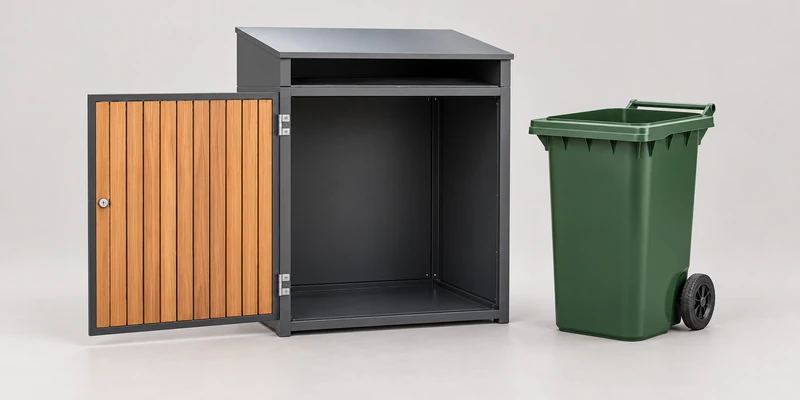
AI-generated service-access concept; not an LVEN product or a container-compatibility drawing.
Measure both the installed equipment and the complete servicing movement. For a conventional litter bin, this includes the open door or raised lid, the withdrawn liner and the worker's position. For a wheelie bin housing, add the space to pull the container clear, tilt or steer it as intended, and turn towards the onward route. The closed cabinet dimensions are the starting point.
A wheeled container needs a usable path from the housing to its destination. Assess surface condition, changes in level, gradients, thresholds, tight turns and nearby doors. Include the point where staff meet the collection vehicle or transfer the bin into storage. A housing that fits beside a wall may still fail operationally if the container cannot pass through the next gate.
Take the actual container through the proposed route before a large installation. If the housing is not yet available, use the supplier's confirmed external and service-clearance drawings, then verify the complete assembly with a sample. Nominal 120-litre or 240-litre capacity does not describe the external enclosure, its door swing or the space needed for handling.
On a public site, collection access must coexist with the pedestrian layout. Review whether an open service door crosses a busy approach and whether servicing can take place without blocking an entrance. Coordinate the working area with the site team and applicable local requirements. A neat elevation drawing cannot resolve conflicts that only appear when the door and container move.
What Compatibility Checks Do Commercial Outdoor Trash Receptacles Need?
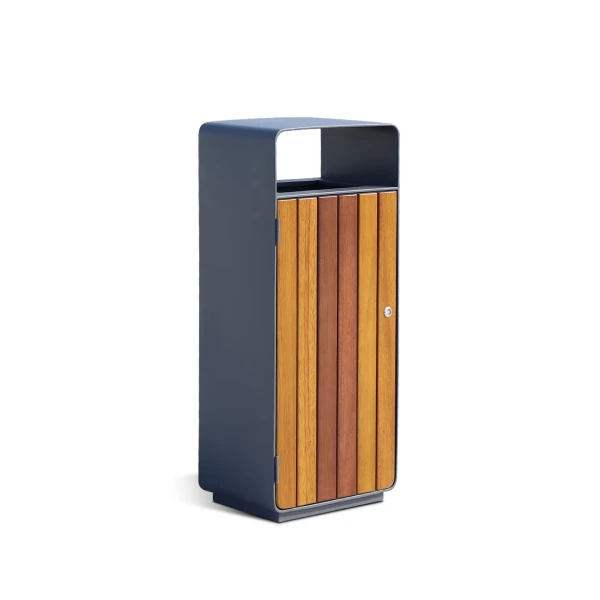
For commercial outdoor trash receptacles with rigid liners, check liner dimensions, bag retention, withdrawal direction and the collection method. The usable opening and internal fittings must allow the specified container to be removed and returned. Bags also need enough material to fit the retention arrangement without slipping into the enclosure during use.
For a wheelie housing, identify the exact inner-bin make, model and external dimensions. Include wheel and axle projections, handle position, lid arrangement and any required clearance above the container. Confirm how the deposit opening directs litter into it. Waste that misses the inner bin becomes an additional cleaning task and can interfere with removal.
The lid arrangement deserves explicit attention. Some housings are configured around a container with its lid removed or held in a specified position; others use a different access design. Follow the approved assembly for that model. Purchasing an enclosure and a wheeled bin independently on the basis of litre capacity alone leaves important fit details unresolved.
Finally, check the collection equipment separately. A container fitting inside the housing does not prove that it matches a vehicle lifting interface or the contractor's operating system. Obtain acceptance from the waste operator for the selected container and collection method. Where manual handling remains part of the process, assess the actual load, route and working sequence rather than assuming wheels remove every handling task.
How Should Public Bin Enclosures Be Specified for a Project?
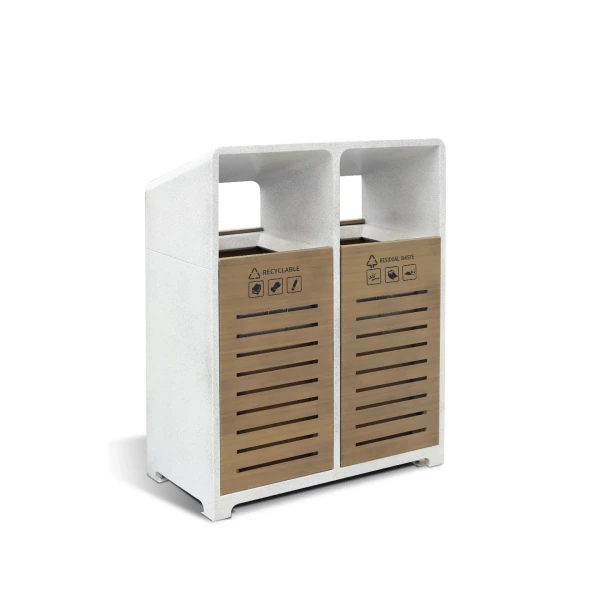
Write the specification around the service arrangement. State whether the requirement is a public receptacle with a removable liner, a housing for an identified wheeled container, or a screen for a collection area. Then define the waste streams, quantities, capacity by stream, site environment and collection frequency. This gives bidders a common task to price.
Ask the quotation to identify the outer enclosure and inner container separately. Record what is included: liners or wheeled bins, locks and keys, labels, fixing hardware, delivery and installation support. For existing wheelie bins, provide the actual container information rather than asking for an enclosure for a “standard” bin. Obtain drawings covering both the closed assembly and its servicing position.
Maintenance access is also part of procurement. Inspect the door, hinges, lock, liner supports, deposit area and base, then ask which components can be replaced and how the surfaces are cleaned. Recent designs such as Street Furniture Australia's Aria Bin highlight replaceable panels as a product feature. If that capability matters to the project, include it as a verified requirement rather than assuming all enclosures offer it.
For LVEN public-receptacle procurement, start with the outdoor trash-bin range and single-bin range. Compare the listed models against the required liner access, external dimensions and site appearance. Treat a wheelie-bin housing as a separate specification requiring supplier-confirmed container compatibility and service drawings; a door on a litter bin does not identify a wheeled-bin system.
Send the site plan, available space, waste streams and collection method through the LVEN project contact page when selecting public litter bins. The most useful brief explains how the crew will remove the waste as clearly as how pedestrians will deposit it. That allows the proposed product to be assessed as part of a working public-space collection system.
FAQ About Litter Bins and Wheelie Bin Housings
Is a wheelie bin housing only for back-of-house storage?
No. Some housings have public deposit apertures and labels for use on streets, footpaths and other public sites. Others are screens or storage enclosures. Check the opening design, intended users and collection process of the actual product.
Will any 240-litre wheelie bin fit a 240-litre housing?
Litre capacity alone does not prove fit. Confirm the approved container, external dimensions, wheels, handles, lid arrangement and removal clearances. The housing supplier and waste operator should accept the intended assembly and service method before the order is placed.
Is a wheelie bin housing always cheaper to service than a litter bin?
No universal cost advantage follows from the format. Compare the collection interval, container handling, travel route, equipment, cleaning and spare-container requirements. A wheeled system is useful when those arrangements suit the site; a liner-based route can remain practical for distributed smaller collection points.
Contents