Where Should Office Recycling Stations Be Placed?
 10
 Share
Place office recycling stations where people finish using materials: beside refreshment areas, near printers and along shared routes. Pair recycling with general waste, while preserving clear approaches and enough space for collection.
For facilities managers, office administrators and fit-out teams, office recycling station placement connects two everyday journeys: the employee disposing of an item and the cleaner removing it. A cabinet can look well positioned on a furniture plan yet become difficult to use when a meeting finishes, the lunch queue forms or its service door opens. Plan around those moments before ordering containers.
The right layout makes disposal convenient, matches the materials accepted by the collection provider and gives cleaning teams a workable service route.
Where Should Office Recycling Stations Go in Each Office Area?
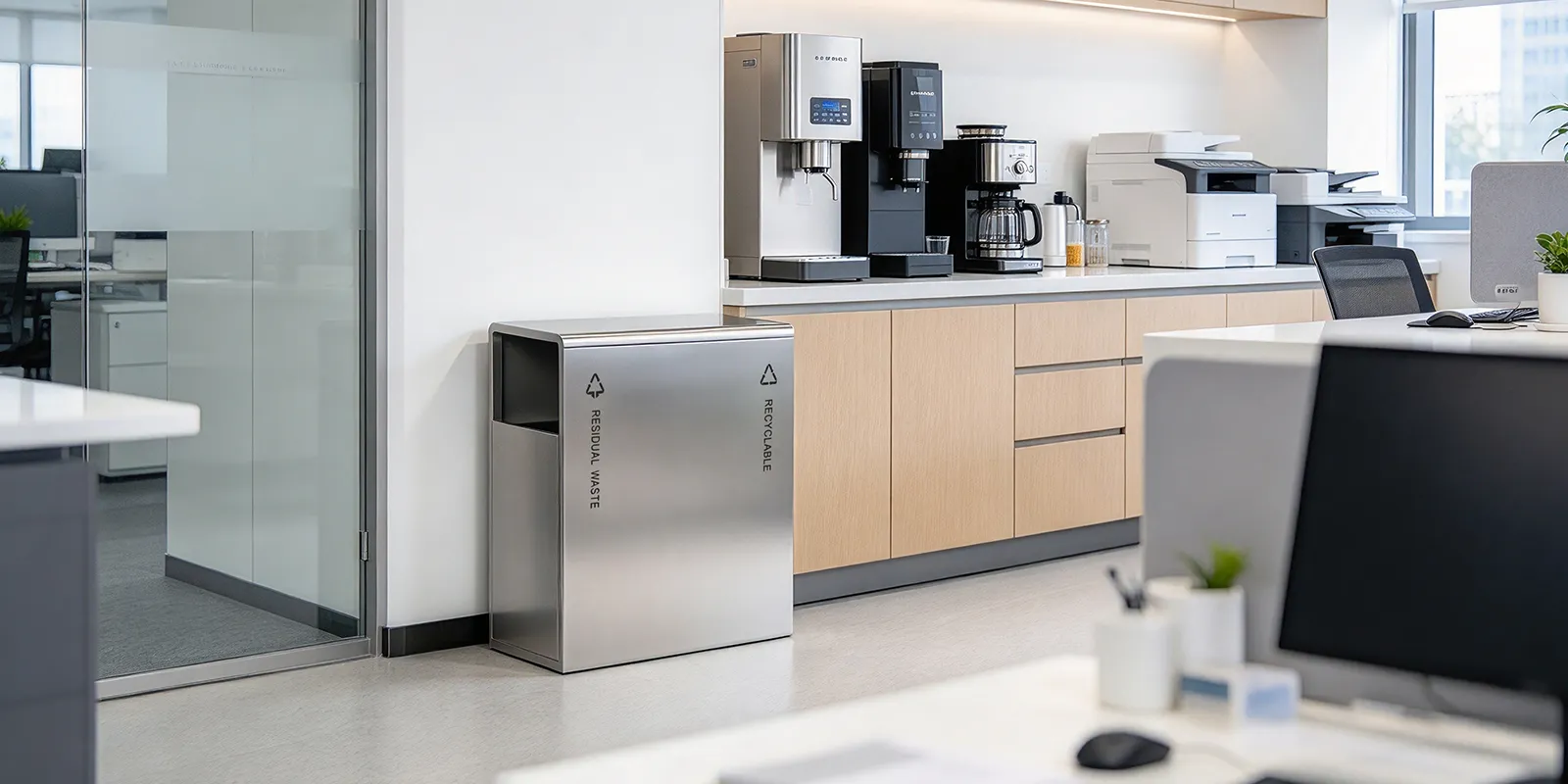
Start with the activities that generate waste, then identify a visible disposal point along the route people already use. The following table provides a starting layout for a site review.
| Office area | Location to assess | Waste-stream decision | Operating check |
|---|---|---|---|
| Kitchen or break room | On the route from refreshments and seating to disposal | Accepted containers and general waste; food waste where separately collected | Access during lunch, remaining liquids and timely removal |
| Print or copy area | Beside the finishing or discard point | Accepted paper, with confidential documents handled separately | Paper handling and nearby disposal for non-paper items |
| Desk cluster | A visible shared route serving the occupied work area | Building-approved recycling and general waste | Responsibility for transferring waste from desks |
| Meeting-room foyer | Near refreshments or the departure route | Cups, bottles, paper and other materials generated by meetings | Simultaneous breaks and responsibility for resetting the area |
| Mail or delivery area | Beside the unpacking workflow | Accepted packaging and residual waste | Bulky cardboard handling and storage arrangements |
In a kitchen or break room, follow the route from food preparation and seating to the disposal point. Leave space for someone to sort items while another person passes. An open dishwasher, refrigerator door or lunch queue should not hide the openings. Agree how remaining drinks are emptied so liquids are not routinely poured into collection bags.
Near printers, paper collection belongs close to the output or finishing area where unwanted sheets arise. Confidential documents should remain within the organisation’s secure destruction process. A standard paper-recycling opening must not become an informal destination for sensitive records. Provide a convenient option for non-paper items without making the paper stream ambiguous.
Meeting areas require observation during changeovers. Visitors may leave carrying cups, bottles and handouts at the same time. Adjacent rooms can share a foyer station if its location and capacity serve simultaneous breaks. The number of rooms alone does not establish how many disposal points are needed.
Check access during the hours when each area is used. A container behind an access-controlled door may serve one team while remaining unavailable to visitors or employees elsewhere on the floor. Include reception and shared facilities in the review where they generate waste outside normal departmental routines.
Should Centralized Office Recycling Bins Replace Desk Bins?
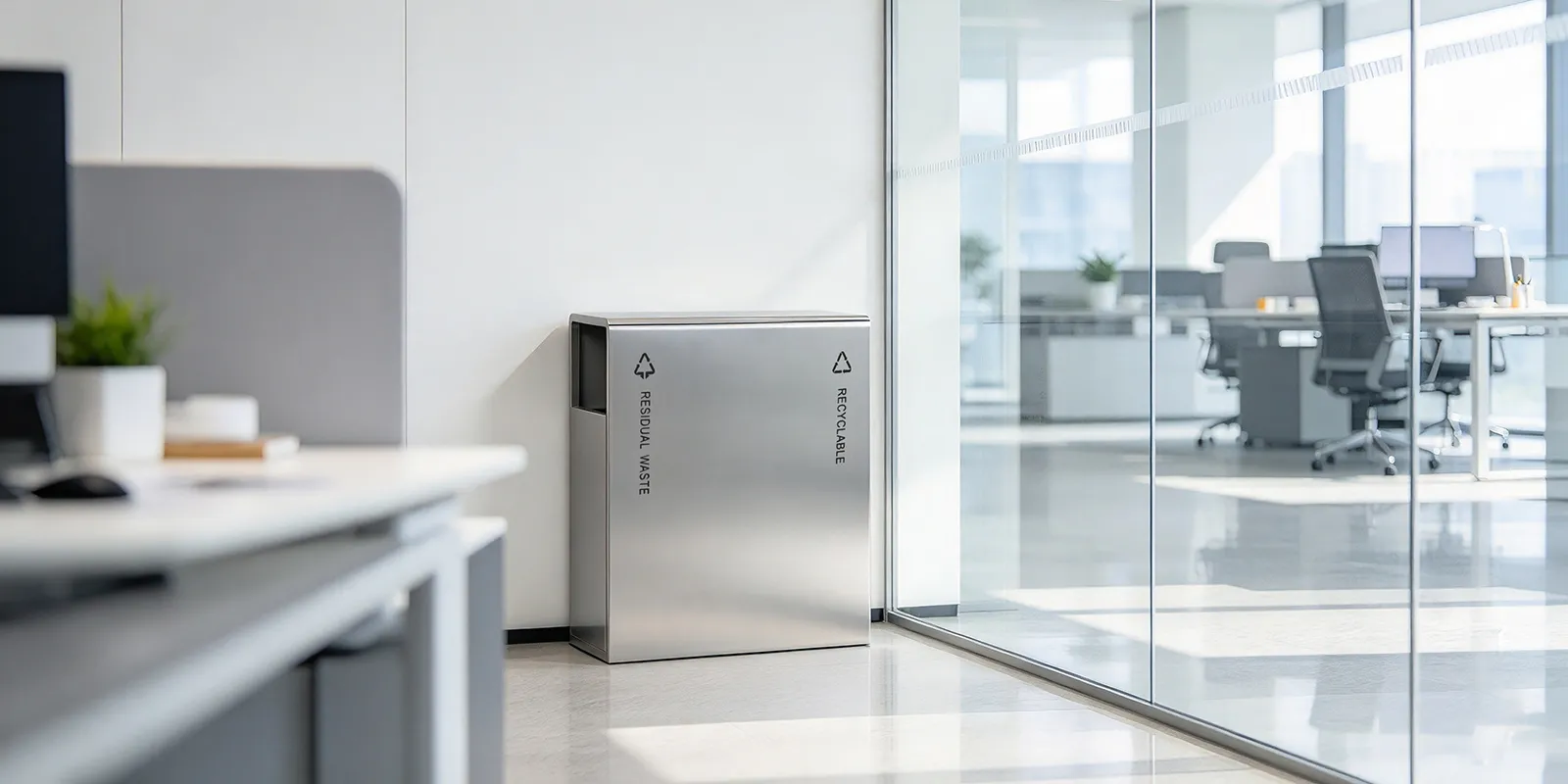
Centralized office recycling bins can bring collection into shared locations, but removing desk bins also changes responsibilities. Decide who transfers materials from workstations, who cleans any retained personal containers and how exceptions are handled. Without that agreement, food packaging may remain at desks or appear beside the nearest printer.
The University of Washington’s MiniMax programme provides a useful operating example. Employees empty their workstation containers into centrally located recycling, landfill or compost containers. Shared desks typically do not receive the same personal-bin arrangement because no designated individual is responsible for emptying and cleaning them. The example shows how equipment and service responsibilities work together; it does not establish that every office should remove all desk bins.
For a hybrid workplace, assess busy attendance days and hot-desking areas separately. A shared disposal point beside a lightly occupied department may not serve the main desk cluster. A printer used by several teams can also generate material when nearby desks are empty.
Where desk-side paper collection remains useful, define its onward route. Paper and other materials should not become an unsorted mixture that someone must separate later. Establish a convenient central option, explain the responsibilities and trial the arrangement with one team before extending it.
Retain or adapt individual arrangements where work tasks or access requirements justify them. The objective is a usable collection system across the workplace, with responsibilities that employees and cleaners understand.
How Should Commercial Recycling Bins Be Grouped and Labelled?
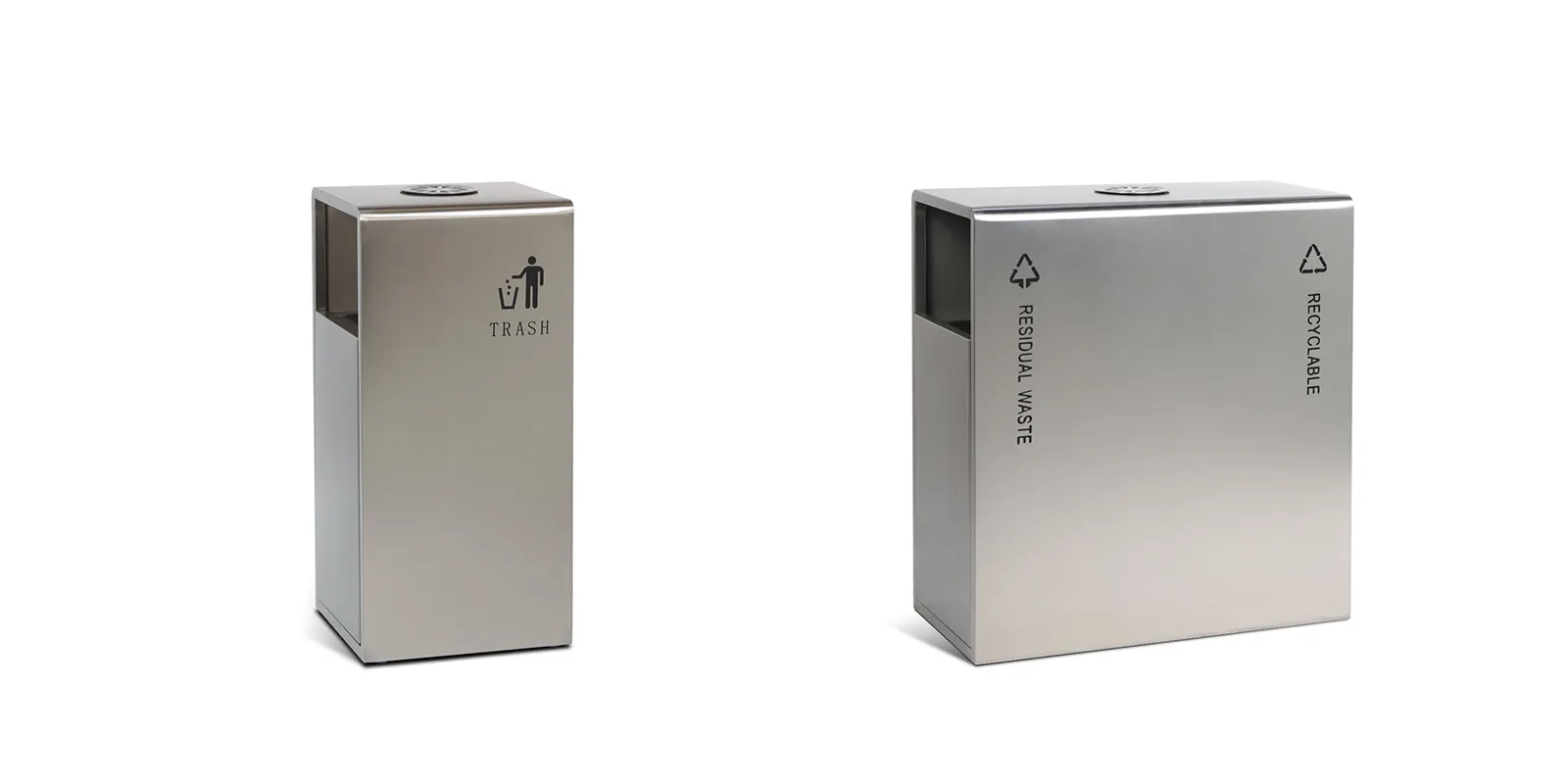
Keep the accepted disposal choices at the same decision point. The US EPA’s commercial-building waste guide recommends placing trash and recycling together and using clear signs with pictures. Apply that principle to the building’s collection agreement: the appropriate choices might be general waste and mixed recycling, or separate paper, containers and general waste. Include food waste only where a separate collection service supports it.
For commercial recycling bins, keep the order of openings consistent wherever the same streams are offered. If a kitchen station places accepted containers on the left and general waste on the right, repeating that arrangement helps users recognise their options elsewhere. A print-area station can have a different configuration where the materials collected are different.
Use short stream names and pictures of items actually discarded nearby. Colour should reinforce the instruction rather than carry it alone. Employees and visitors may be familiar with different colour conventions, particularly in offices with international teams.
Kitchen labels need to resolve common uncertainties, such as drink cups, food-soiled packaging and containers holding liquid. Ask the collection provider which materials are accepted and what preparation is required. A generic recycling symbol cannot explain whether the specific cup supplied in the office belongs in that stream.
During sample inspection, follow each opening to its internal container. A multi compartment recycling bin needs the intended internal separation and a clear way for cleaners to identify each stream. Continue that check through the collection cart and building storage area. Materials separated by employees should remain separate wherever the provider requires them to be collected independently.
Can Office Waste Recycling Stations Be Serviced Without Blocking Work?
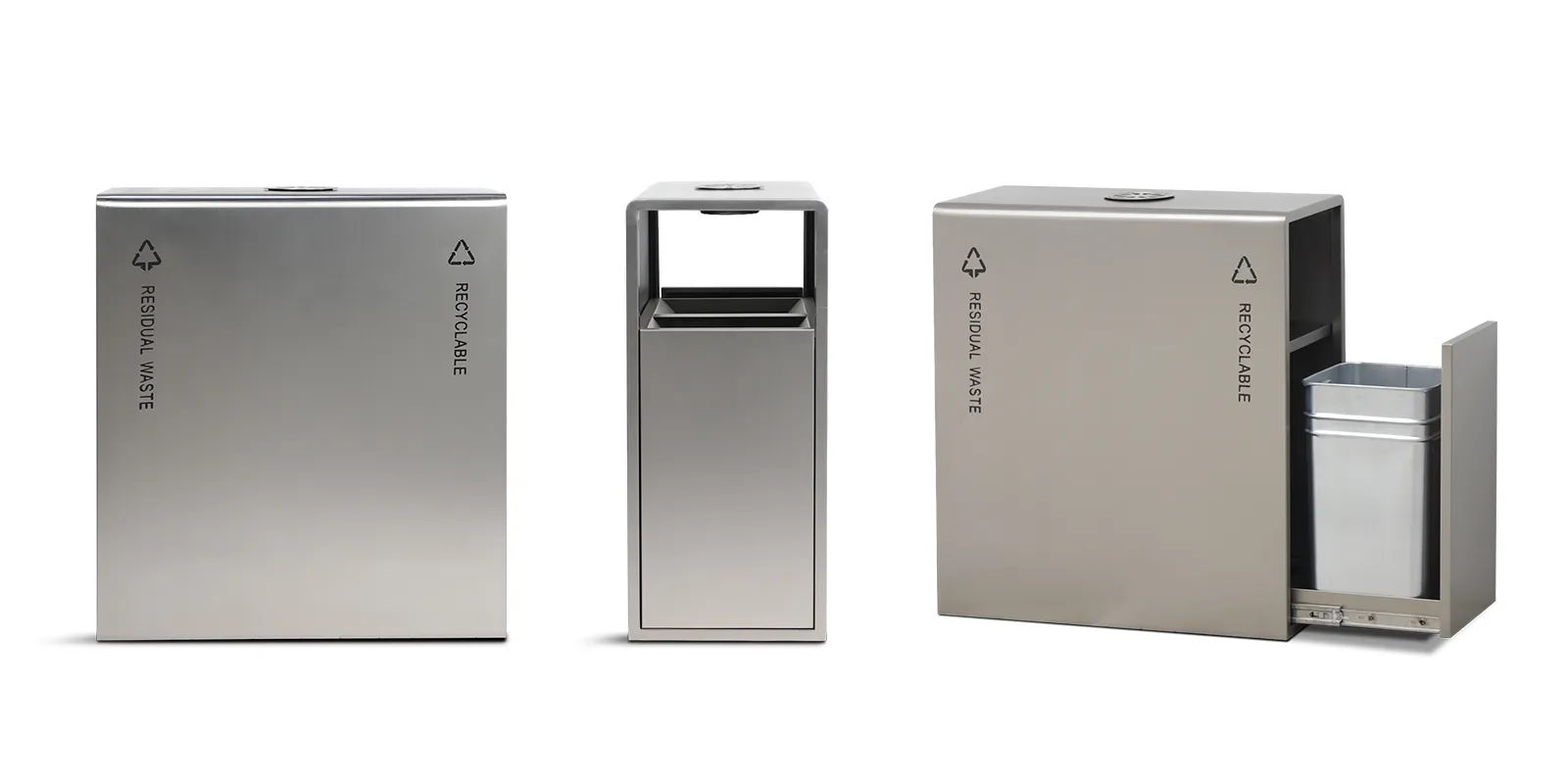
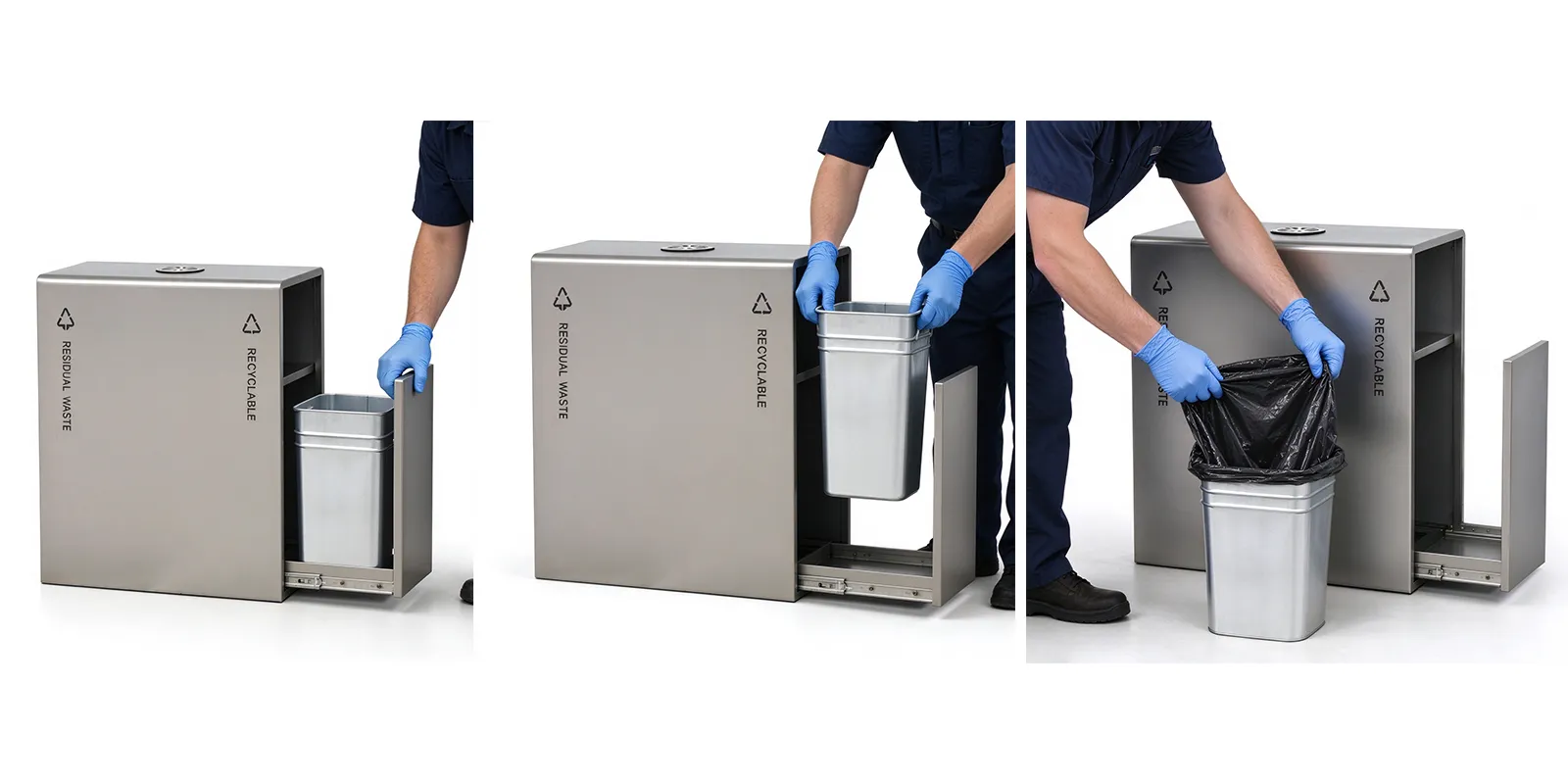
Draw the collection route on the same plan as employee movement. For office waste recycling stations, include the open door or removed lid, the liner withdrawal direction and the cleaner’s working position. A cabinet that fits neatly inside a recess when closed may be difficult to empty if its liner projects into a doorway or lunch queue.
For commercial indoor trash cans with pull-out liners, allow space for both the full liner and the person removing it. LVEN’s OTX-28 indoor bin is available as a 25-litre single unit measuring 36 × 33 × 75 cm or a dual unit with two 25-litre compartments measuring 68 × 33 × 75 cm. The stainless-steel shell houses galvanized inner liners accessed through a pull-out arrangement. These are closed-product dimensions; confirm the additional servicing clearance for the selected configuration.
Check the route onward to the cart, service lift and agreed storage point. Doors, turns, thresholds and changes in floor finish affect how containers and collected bags are moved. Where collection crosses a busy shared area, agree a practical service window with the cleaning contractor.
Ask the cleaning team to test the intended bag with a representative load. Check whether it stays retained, releases without catching and can be replaced without moving nearby furniture. Examine cleaning access beneath the opening and around internal supports.
Capacity should be assessed per stream and against the collection interval. A paper compartment may present a handling problem before it appears full, while wet packaging can require earlier attention. Increasing the station’s total capacity will not necessarily resolve either issue.
Have the building team review the final position against applicable circulation, accessibility and fire-safety requirements before fixing the layout.
How Do You Test an Office Recycling Station Placement Plan?
Trial the proposed arrangement in one representative area before ordering a building-wide quantity. Include employees, the cleaning contractor and the person responsible for the waste service. Use the intended labels, bags and collection routine so the test reflects how the installation will operate.
Record each compartment’s condition immediately before servicing: approximate fullness, recurring incorrect items, loose material nearby and any obstructed access. Note occupancy and unusual activity, including training sessions or meetings that bring additional visitors. An office-wide average can otherwise hide one overloaded disposal point.
Interpret the observations before changing equipment. Material left beside a full opening may indicate insufficient capacity or late collection. A largely empty station that people walk past may be poorly visible or inconveniently positioned. Repeated disposal of the same incorrect item can reveal unclear labels or a mismatch between the items used in the office and the collection provider’s rules.
Look at the individual compartment rather than the combined volume. If drinks containers repeatedly fill their section while the paper compartment remains almost empty, additional paper capacity offers little benefit. Reallocate capacity where the design permits, adjust the collection interval or review the station’s position against the actual source of those containers.
Change the relevant variable and observe again under comparable conditions. Moving the unit, replacing labels and increasing collection frequency simultaneously makes the reason for any improvement difficult to identify.
Keep a short record of the accepted location, configuration and service responsibility. Use that record when extending the arrangement to other floors, while checking differences in occupancy, access and waste-generating activities.
What Should an Office Recycling Bin Procurement Schedule Include?
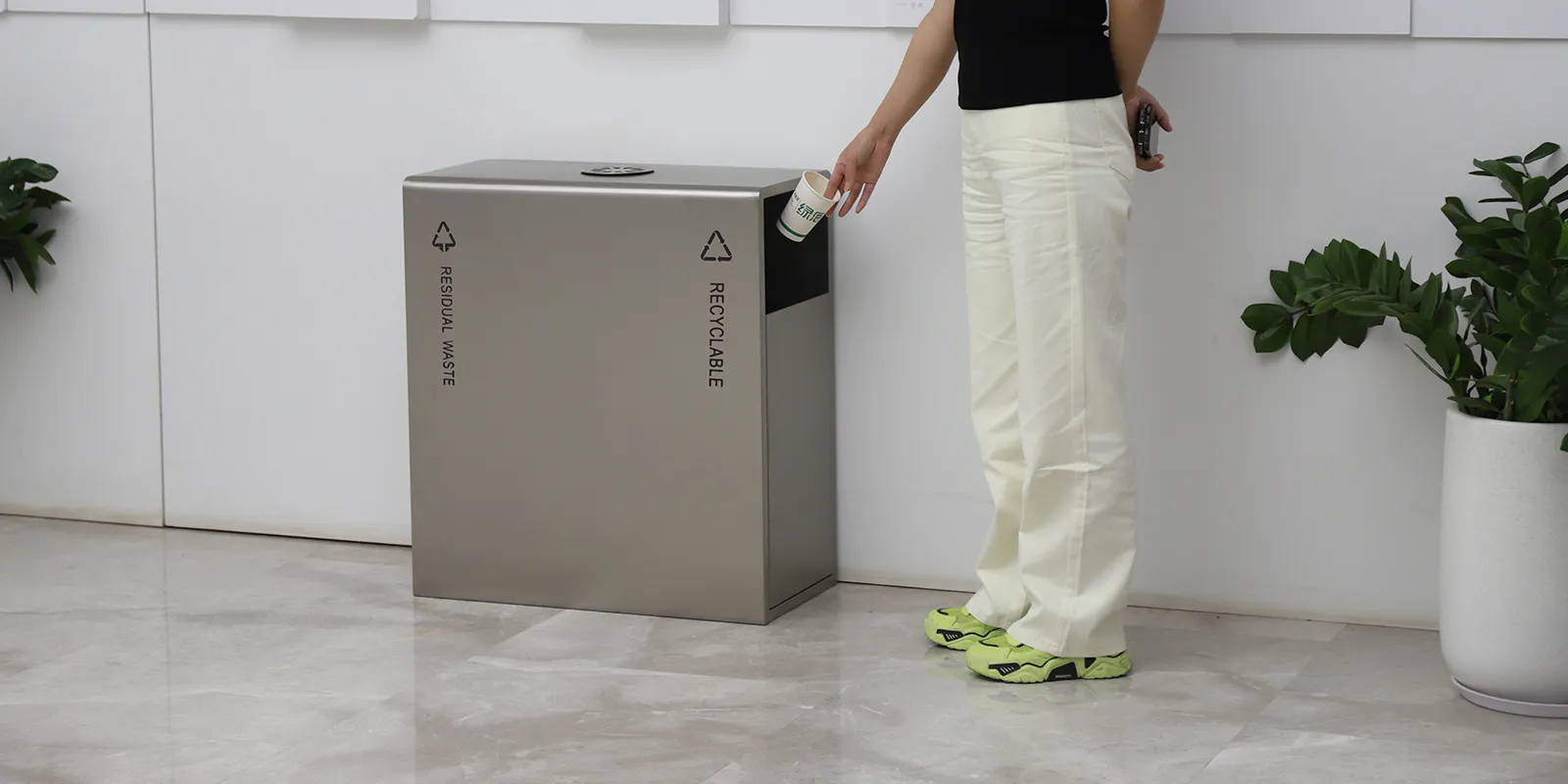
Give every collection point a reference that appears on the floor plan, quotation and cleaning instructions. For each reference, record the waste streams, capacity required per stream, available footprint, service-access direction and responsible collection team.
A request for “ten recycling stations” leaves important decisions unresolved. Suppliers need to know whether those units serve kitchens, print areas or shared workspaces, and whether the same internal configuration suits every location.
When specifying custom recycling bins, attach drawings showing the closed cabinet and its servicing position. Confirm opening sizes, label artwork, finishes, liner arrangements and sample-approval requirements. Select bags and internal containers together rather than assuming compatibility from litre capacity alone.
Where several floors must match, retain the approved drawings and artwork for repeat orders. Consistent external appearance can still accommodate different capacity allocations, provided the waste streams remain clearly identified and the collection procedure reflects those differences.
LVEN’s indoor trash bins and recycling-bin range provide starting points for matching equipment to the approved layout. Discuss the required dimensions, materials, openings, labels and branding against the selected model, with the final configuration confirmed before production.
Send LVEN the floor plan, stream list, quantities and collection routine so the quotation addresses the way the office operates. Include photographs of restricted locations and the required liner-removal direction where space is limited.
FAQ About Office Recycling Station Placement
Should trash and recycling bins be next to each other?
Usually, provide both choices at the same disposal point so users can sort without searching for another container. Match the available streams to the materials generated nearby and the collection service. Specialist collections, such as confidential paper, may need a separate controlled arrangement.
How many recycling stations does an office need?
Use occupied work areas, waste-generating locations and the collection interval to establish an initial layout. Employee count alone is insufficient. Check busy attendance days, meeting-room peaks, access between departments and whether individual compartments reach their working limit before the next collection.
Should office recycling bins be hidden in cupboards?
An integrated cupboard arrangement can work when users can recognise the correct opening and cleaners can remove the containers easily. Test the complete installation, including labels, cabinet doors and liner withdrawal. A concealed position becomes ineffective if people cannot find it or staff must move furniture to service it.
Should every office recycling station have identical compartments?
Keep names, signs and compartment order consistent wherever the same disposal choices are offered. Capacity and the number of containers can vary by location. A paper-heavy print area and a beverage-heavy kitchen may need different allocations while remaining part of the same collection programme.
Contents