What Size Trash Bags Fit Commercial Waste Bins?
 24
 Share
To find the right commercial trash bag size, measure the rim the bag must fit over and the depth it must reach. For a standard flat bag, start with half the rim perimeter for bag width. For length, allow for the bin depth, the material needed to reach across the bottom, and enough extra material to secure the bag at the rim. Then test the closest suitable stock size with a representative load. Imperial Brady
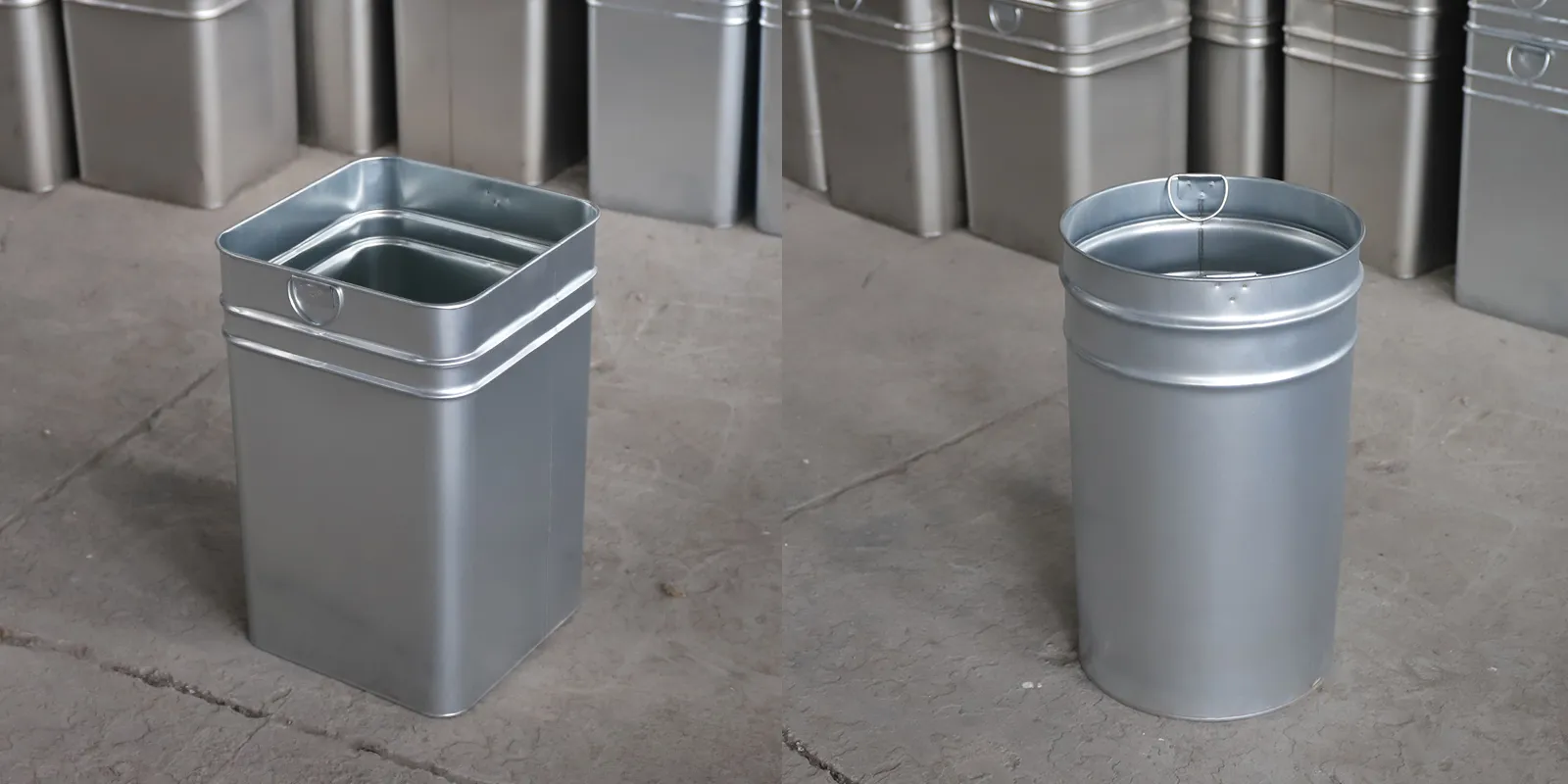
If the waste bin has a removable inner bucket, measure the bucket. If it holds the bag on a frame, measure the frame and the depth available below it. The liter or gallon rating can narrow your search, but it cannot tell you whether the bag will seat properly or come out easily when full.
Why Bin Capacity Alone Cannot Determine Commercial Trash Bag Size?
Two bins with the same capacity can need different bags. A tall, narrow bin may need more bag length, while a shorter, wider bin may need a wider opening. Buying a longer bag will not fix a mouth that cannot pass over the rim.
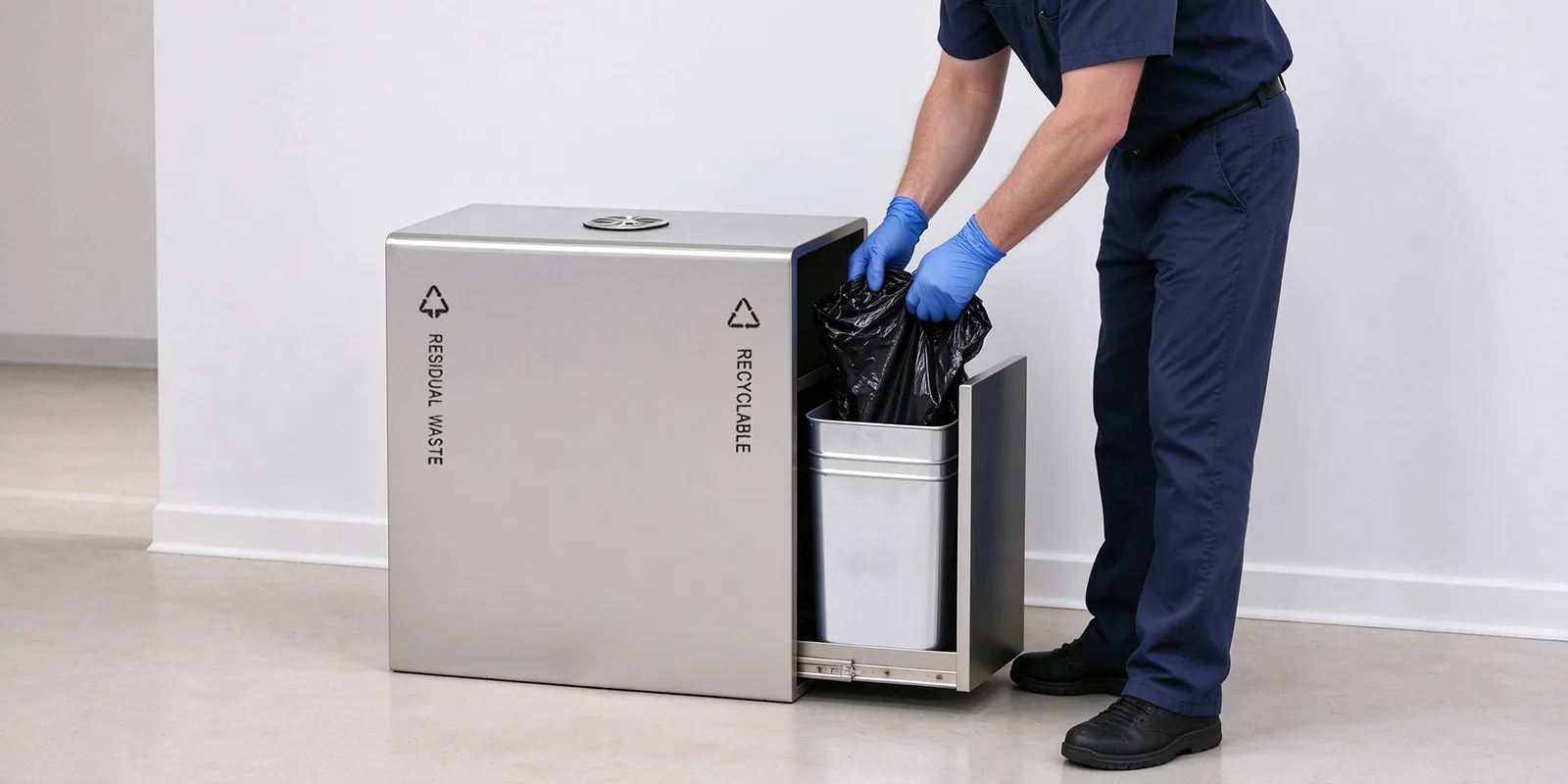
This matters especially for commercial indoor trash cans with an outer cabinet. LVEN’s OTX-28 indoor trash bin, for example, is listed in a 25 L single version and a dual version with two 25 L compartments. It uses a pull-out drawer for access to the inner bucket. The product page shows the overall cabinet dimensions; to select a bag, measure the inner bucket in the configuration being supplied. For the dual version, check each bucket separately. Indoor Trash Bin
If a bag already works reliably at your site, use its supplier product code and dimensions as a starting point. Keep a sample from the approved case. It gives staff something to compare against if a replacement bag arrives with the same gallon rating but a different width, fold or closure.
How to Measure Commercial Trash Bins for Bag Fit?
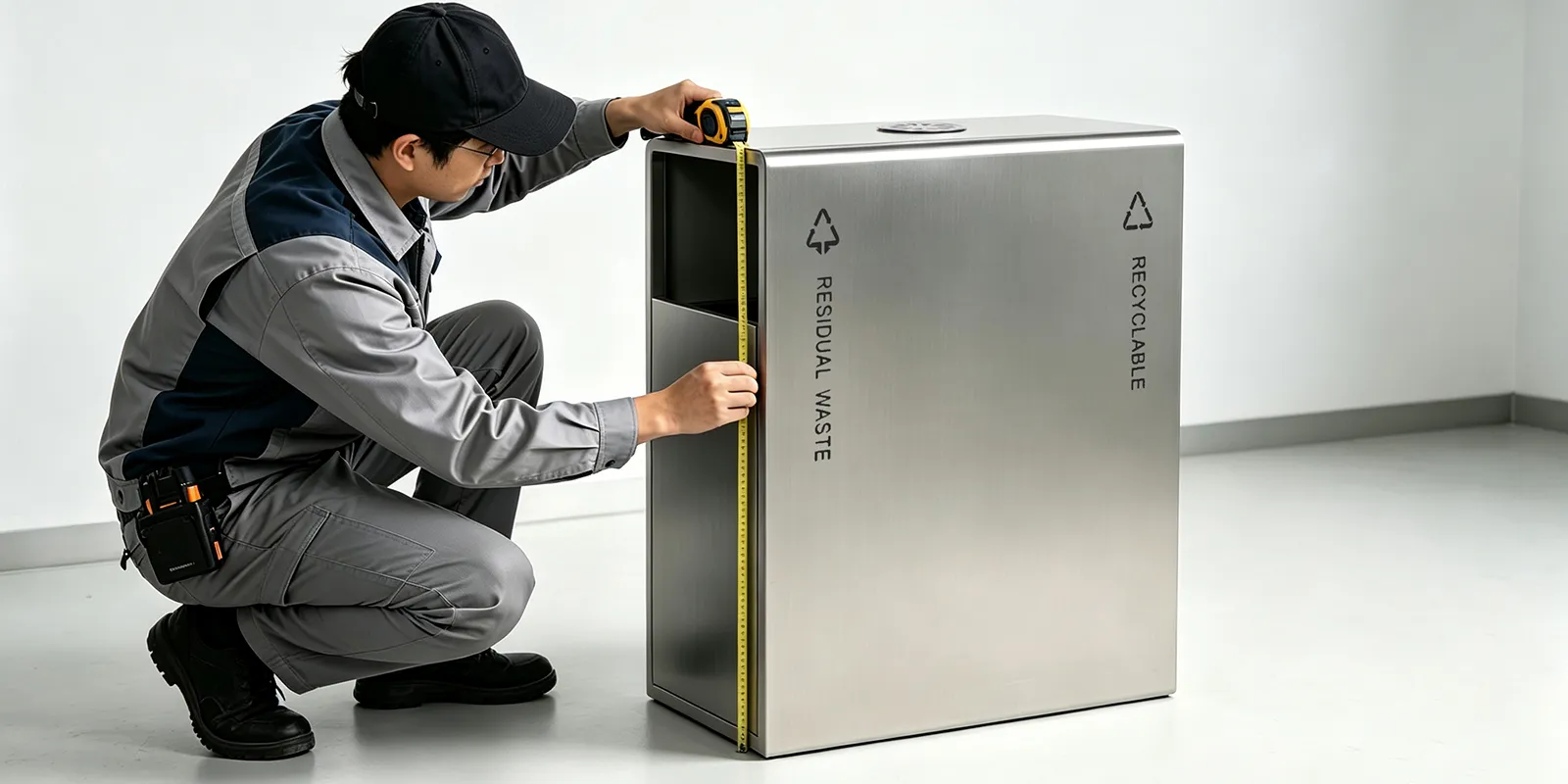
Start with an empty, clean bin. On a cabinet model, open the service door or drawer and remove the inner bucket if the design allows. Identify where the bag actually folds over, clips in or sits beneath a retaining ring. Take three measurements before you compare bag sizes:
• Rim perimeter. Wrap a flexible tape around the path the bag must pass over. Include any projecting lip the bag has to clear. For a round rim, you can also measure its diameter. For a rectangular bucket, record both top dimensions. A direct perimeter measurement is more useful if the corners are rounded or the rim is irregular.
• Usable height and base dimensions. Measure from the inside bottom to the point where the bag is secured. If the bucket tapers, record the base separately. If the bin uses a sack frame instead of a bucket, confirm how far the bag can hang and whether the design supports it from below.
• Removal opening. Check the opening through which the loaded bag or inner bucket must pass. Note any lid, drawer, handle or nearby wall that limits clearance. A bag may fit the rim when empty but bulge enough to catch on the service opening once loaded.
Record the current bag’s unused dimensions if you have one on hand. For a gusseted bag, ask the supplier whether the stated width includes the side folds. For a drawstring bag, ask how wide the mouth opens in use. Those details matter when two packages list similar dimensions but the bags open differently.
Commercial Trash Bag Size Formulas for Round and Rectangular Bins
The Aluf Plastics Bag Choosing Guide provides a starting method for conventional liners. Its length estimates include 4 in (10.16 cm) for overhang. Use the same unit for all measurements, and compare the result with the supplier’s stated flat width × length. These estimates are most useful for straight-sided containers; for a tapered or irregular bucket, use the measured perimeter for width and check length on the actual sample. alufplastics.com
| Bin shape | Starting flat bag width | Starting bag length |
|---|---|---|
| Round | Measured rim circumference ÷ 2, or about 1.57 × rim diameter | Usable height + half the diameter + 4 in (10.16 cm) |
| Square or rectangular | Measured rim perimeter ÷ 2; for a regular rectangle, add the two top side lengths | Usable height + half the shorter side + 4 in (10.16 cm) |
Rectangular example. A straight-sided bucket measures 30 × 25 cm at the rim and 60 cm deep. The estimated bag width is 55 cm, and the estimated length is 82.7 cm. If the supplier offers a 60 × 85 cm flat bag, shortlist it for a fit test.
Round example. A round bucket has a 35 cm rim diameter and a 60 cm usable depth. The estimate is approximately 55 cm wide × 87.7 cm long. A 60 × 90 cm flat bag is one candidate to test if that size is available.
These examples illustrate the calculation; they are not specifications for an LVEN model. If the closest stock size barely meets the estimate, ask for its dimensional tolerance and test the next suitable size as well. Check that the extra material can sit neatly under the retainer and still leave enough to tie the bag after removal.
Why Commercial Bin Liners Slip, Split or Get Stuck?
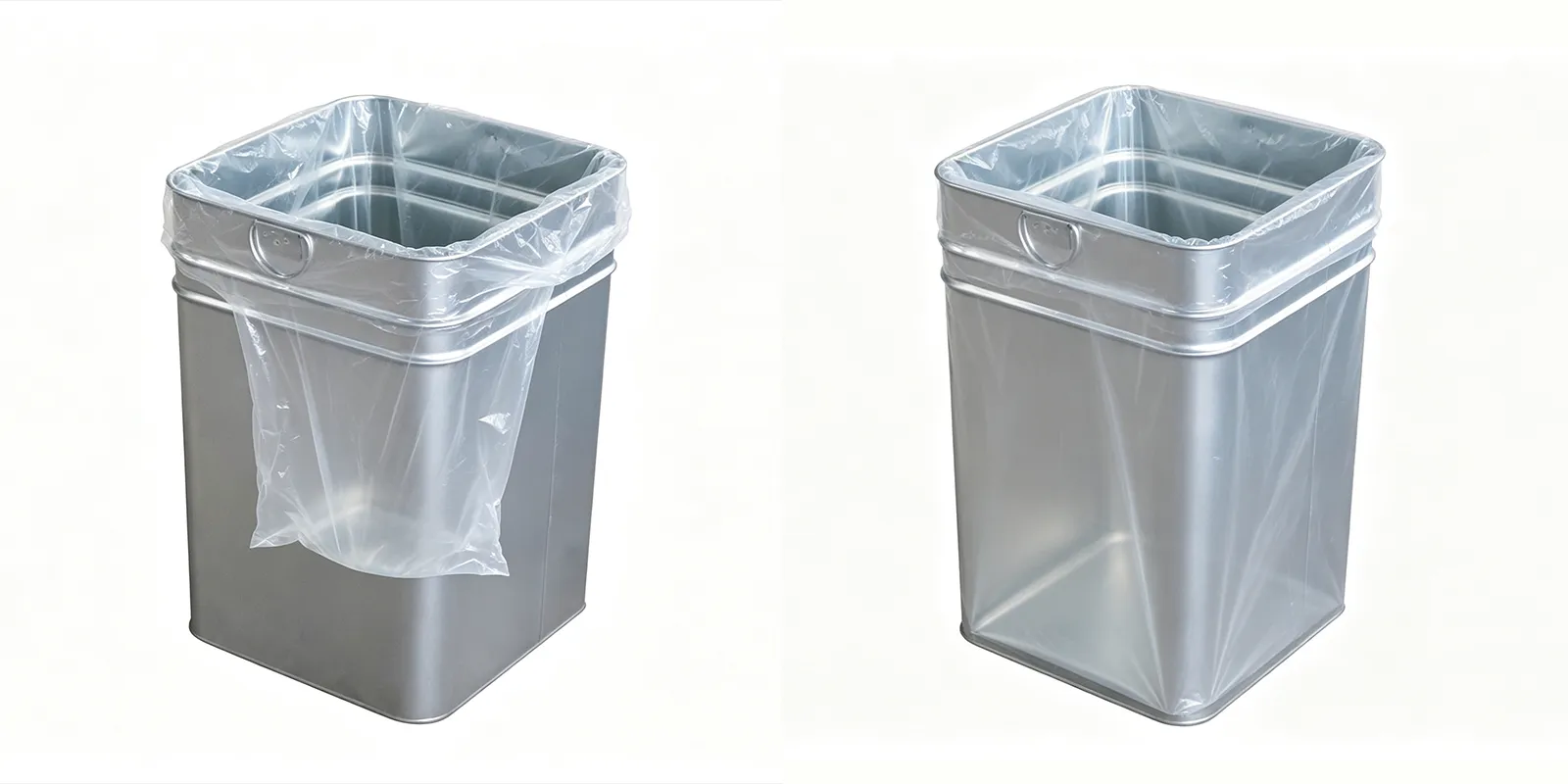
Identify when and where the failure occurs before changing size or thickness. A bag that slips while waste is being added points to a different problem from one that tears as staff pull it through a service door.
| What happens | What to check first |
|---|---|
| The bag slips inside the bin | In a rigid bucket, check that the bag reaches the bottom and the cuff stays secured. A short bag can pull its own cuff off the rim when the load settles. If the bottom already rests on the base, check how the ring or clamp holds the bag. |
| The bag tears at the rim or near the top | Check whether the mouth is stretched tight, the retainer pinches the film, or the bag snags during removal. Inspect the rim and the service opening for damage or rough edges. |
| The bag punctures or leaks lower down | Look for a sharp edge inside the bucket, rigid packaging pressing against the film, or a leak at the bottom seal. Give the bag supplier the product code and describe the load before switching to thicker film. |
| A full bag gets stuck during removal | Check whether the load bulges beyond the opening or catches under a lip. Test the normal collection fill level and try removing the bag along the actual service path before deciding it needs to be wider. |
Use clean items similar in size and shape to the waste collected at that point. A liner that works with office paper may behave differently in a meeting foyer where cups and rigid containers accumulate between rounds. A trial with an empty bag cannot show that difference.
How to Choose Commercial Trash Bag Thickness After Confirming Size?
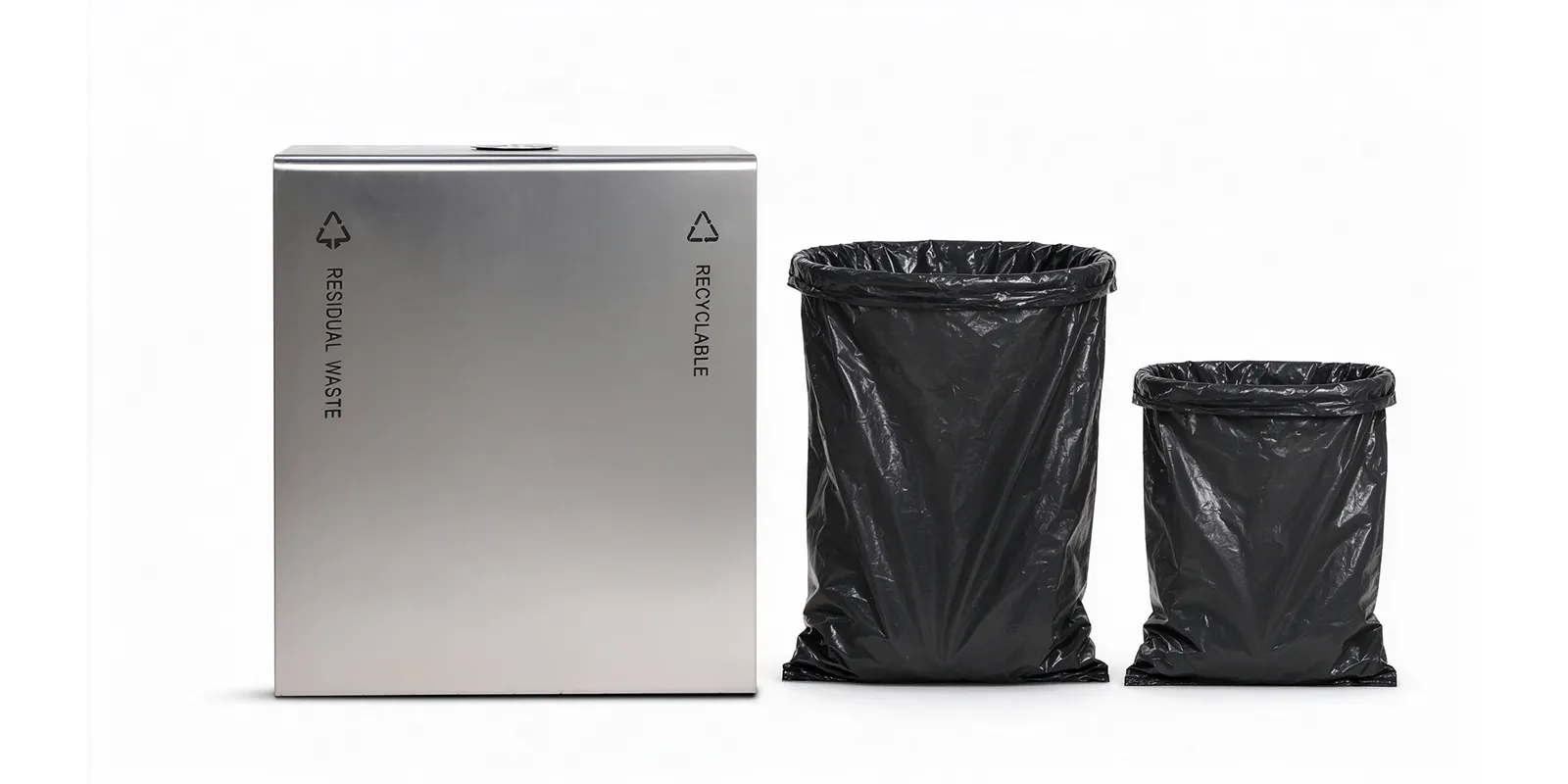
Once the bag fits, select the film and seal for the waste. Dry paper, damp food packaging and rigid containers place different demands on a bag, even if they go into identical bins. Tell the supplier what the bag will hold and how staff remove it, then ask for a sample of the proposed grade.
As a starting point, high-density liners may suit light, non-sharp waste, while linear low-density liners are often considered when stretch and puncture resistance matter. Check the specifications of the actual product: film type and thickness alone cannot establish whether the seal will hold or the bag will survive removal. Inteplast’s high-density and linear low-density liner ranges illustrate why material and performance should be checked at product level. Inteplast Group
When comparing quotes, confirm the units. One mil equals 25.4 microns. Also record the bottom seal, closure style and exact supplier product code. If the site changes waste streams or switches suppliers, repeat the loaded trial before assuming that another bag with the same dimensions will perform the same way. Ace-Pak Products Guide
How to Confirm Commercial Trash Bag Fit Before Buying in Bulk?
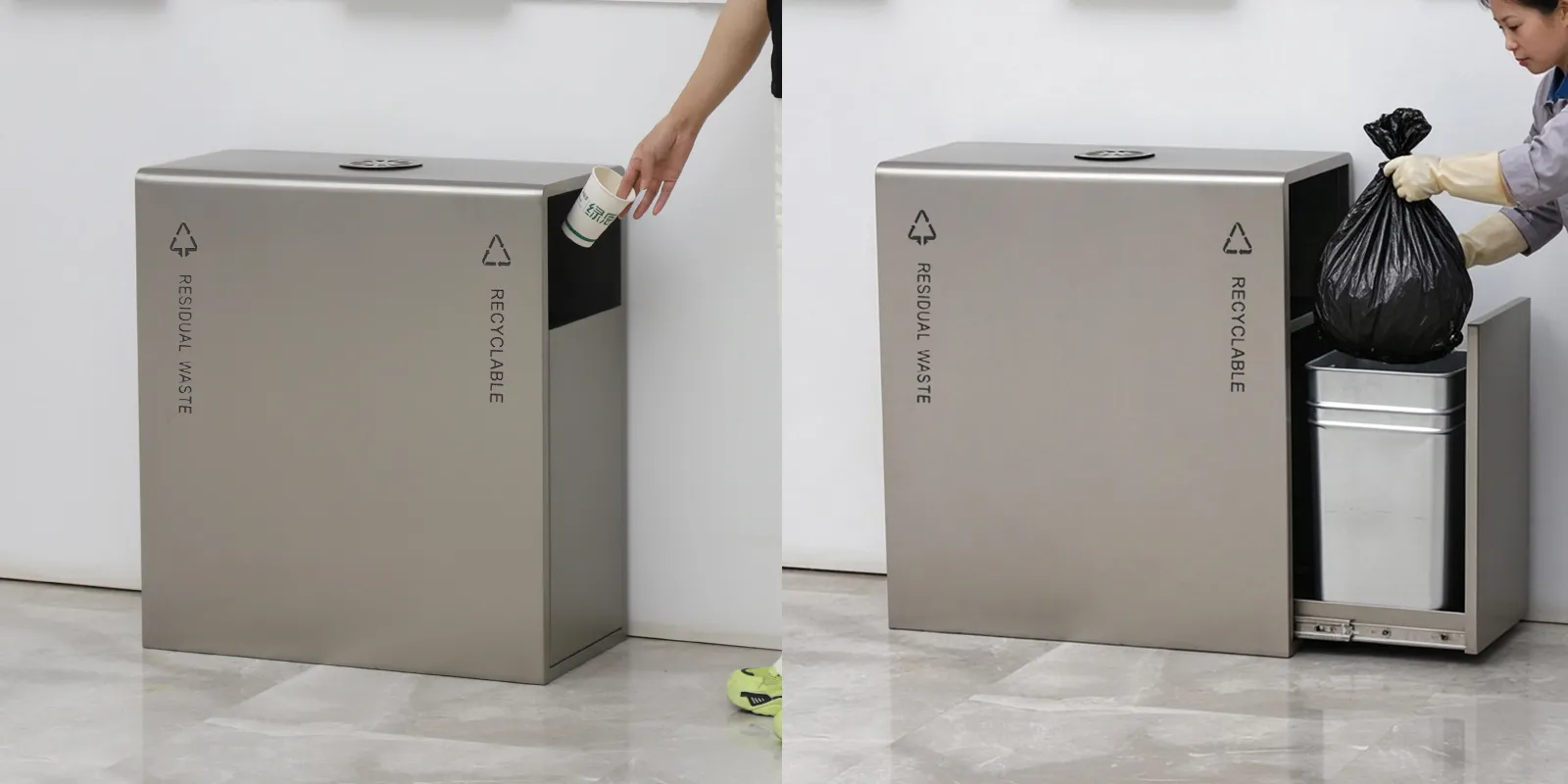
Approve the bin and bag together. Fit the bag using the normal retaining method, check that it reaches the bottom where a rigid bucket is used, and load it to a realistic collection level within the site’s handling limits. Then have the person who normally services the bin release the bag, remove it through the actual opening and tie it. The test passes when the bag stays seated during use, clears the opening without tearing, and can be closed with the material available.
Keep one purchasing record per bin model or compartment. Record the rim perimeter, usable depth and removal direction alongside the approved bag’s width, length, thickness, seal, closure and product code. A photo of the fitted cuff and another of the removal opening are useful when someone else reorders the bag or checks a substitute.
If you are specifying new waste bins, send LVEN the selected model and your project requirements and ask for the inner bucket or retaining frame dimensions and removal direction. Share those details with your bag supplier and approve a sample before ordering cases. If the bin configuration changes, check the fit again.
FAQs About Commercial Trash Bag Sizes
What size trash bag fits a 25 L commercial bin?
A 25 L rating alone does not identify a compatible bag. Measure the perimeter where the bag is secured and the usable depth. Shortlist a bag by its flat width and length, then check it in the actual bucket. Two 25 L bins can have different rim shapes and depths.
How much trash bag should fold over the rim?
The sizing method above starts with 4 in (10.16 cm) of overhang allowance. Use the amount that lets the bag stay secured under the actual rim or ring without bunching. Also check that there is enough material to close the bag after removal. A deep rim or a bulky load may need more length. alufplastics.com
Can one bag fit a dual-compartment recycling bin?
Where commercial recycling bins have separate inner buckets, fit one bag to each bucket so the waste streams stay separate. Measure both buckets, even if the cabinet looks symmetrical, and confirm any bag requirements with your collection provider.
How do I compare a gusseted trash bag with a flat bag?
Ask the supplier whether the published width is the face width before the side folds open or the equivalent flat width. Compare the usable mouth opening with your measured rim, then check length and fit on the bin. The first number on the box may describe different measurements for the two bag styles.
Contents