Choosing Trash Bins for Hotel Lobbies and Common Areas
 31
 Share
Choose hotel lobby trash cans by starting with three questions: Where do guests need to discard something? What are they likely to throw away? When can housekeeping reliably return? A compact bin may work well near reception, while a meeting foyer may need more capacity for one waste stream during a short conference break. Both can share a finish without sharing the same size or opening.
For a hotel opening or refurbishment, specify each bin together with its location, opening, liner and service clearance. The right unit is easy for guests to recognize and easy for staff to empty during a busy shift. This guide covers guest-facing entrances, elevator lobbies, lounges and meeting foyers.
Where Should Hotel Lobby Trash Cans Go?
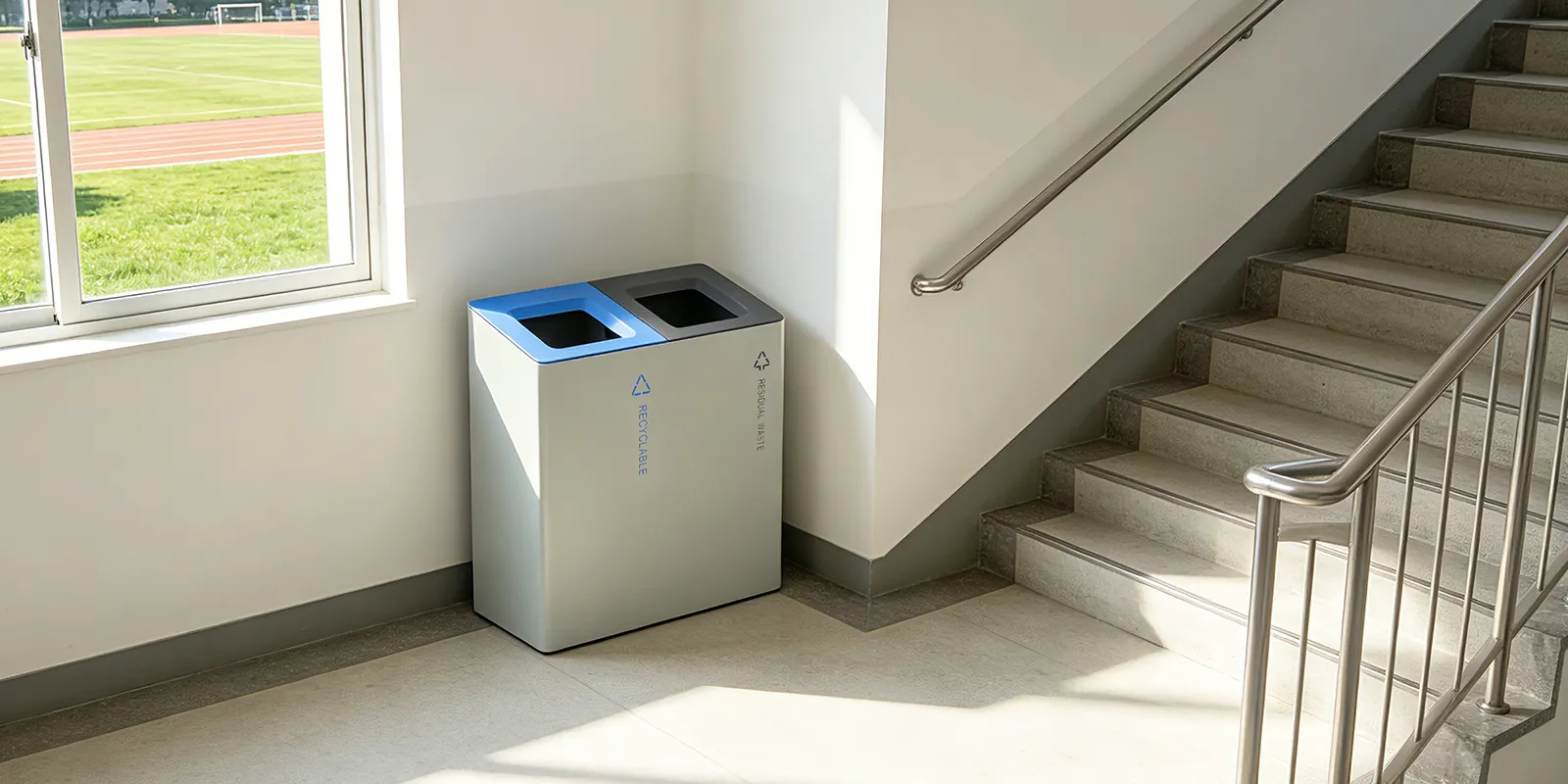
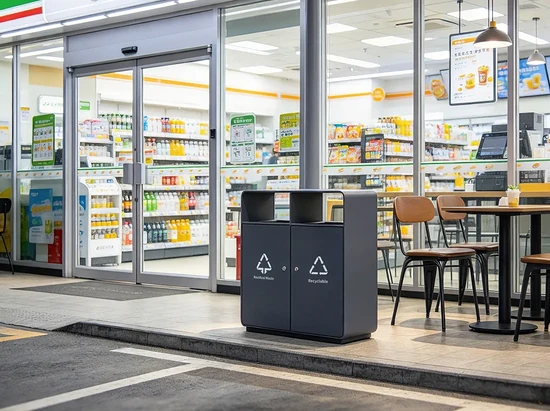
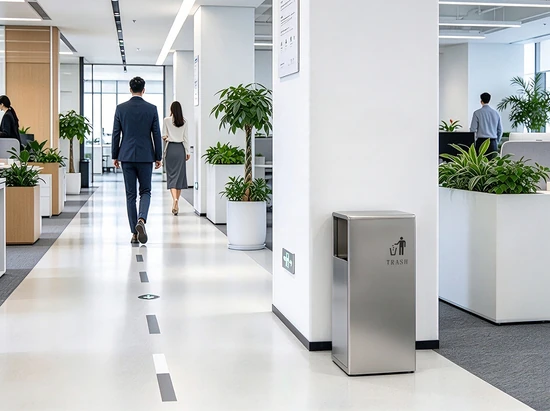
Place a bin where guests are likely to finish using an item or decide to discard it. A guest arriving with a takeaway cup may look for a bin just inside the entrance. A delegate leaving a meeting is more likely to use a station along the route out of the foyer. A bin hidden behind a planter or beyond a turn can be missed even when it looks well placed on a floor plan.
Review proposed locations during a busy check-in, group arrival or conference break. Those conditions reveal where queues extend, where trolleys turn and whether an otherwise convenient disposal point becomes awkward to approach.
| Hotel area | Where to test placement | What to check on site |
|---|---|---|
| Entrance and reception | Inside the entrance or along the approach to reception, visible before guests join the queue | Can a guest reach the opening without stopping in the door swing or crossing the queue? |
| Elevator lobby | Along a visible edge of the waiting area | Can guests with luggage approach the bin while others wait? Can staff open the unit without occupying the main route? |
| Lounge or seating area | Along the natural route out of the seating area | Is the opening easy to find from the seating area? Will bag changes or lid noise disturb nearby guests? |
| Meeting or banquet foyer | On the route guests take after a break or event | Does the station remain usable when a group leaves together? Can staff reach it before the next session? |
Mark both the cabinet footprint and the space needed to remove the liner on the floor plan. Then check them in the room with the furniture and equipment that will actually be there. Ask the project team to review applicable access and exit requirements against the proposed layout, including what happens while the bin is being serviced.
How Large Should Hotel Common Area Waste Bins Be?
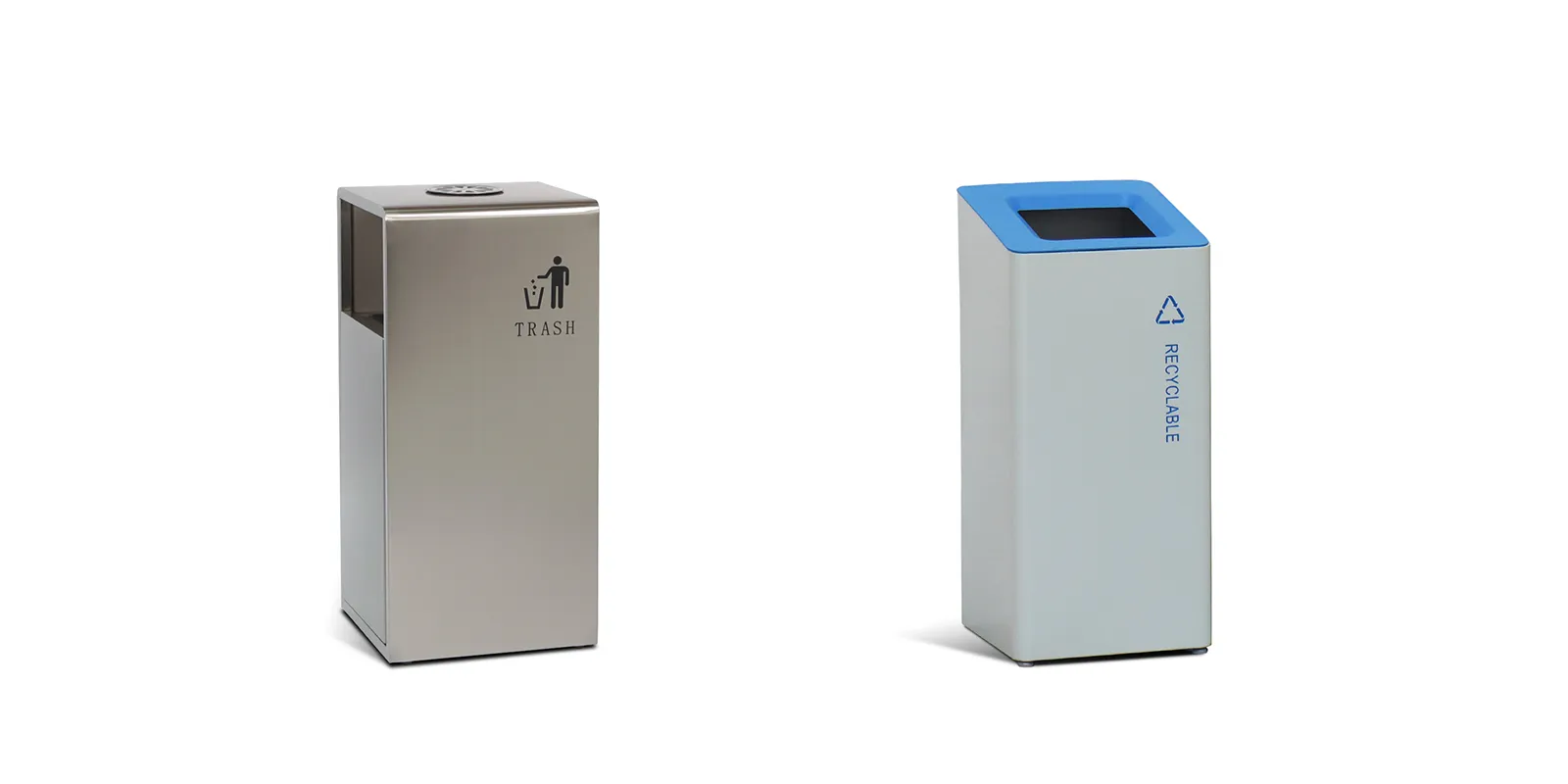
Size each compartment for what it receives between dependable collections. Room count alone tells you little about a meeting foyer that serves several events a day or a lounge where guests rarely bring drinks. If the hotel is operating, record the fill level just before a normal collection and again after a representative peak. Note the items that take up the most space and any reason staff change a bag before it is full.
Suppose a trial shows that a meeting foyer receives about 30 L of general waste during a break before housekeeping can return. A station with two 25 L compartments offers 50 L in total, but only 25 L for general waste. The spare space on the recycling side does not solve the problem. Test a larger general-waste compartment, a second disposal point along the same guest route, or a collection round timed to the event. If cups are getting stuck at the opening while the liner is still mostly empty, test the opening before buying a larger bin.
For comparison, LVEN’s OTX-28 stainless steel trash receptacle is listed as a 25 L single unit or a dual unit with two 25 L compartments. The OTB-37 indoor waste bin is listed in a 45 L single configuration and a dual configuration with two 45 L compartments. These are nominal compartment capacities. Check the inner liner and usable bag fit on the proposed configuration. Indoor Trash Bin
For a new hotel without operating data, use the planned event schedule, the packaging guests will actually encounter and the proposed housekeeping rounds to make a provisional selection. Test a sample with representative cups and bottles, then review the busiest locations after opening before repeating the specification across the property.
What Should Hotel Recycling Bins Collect?
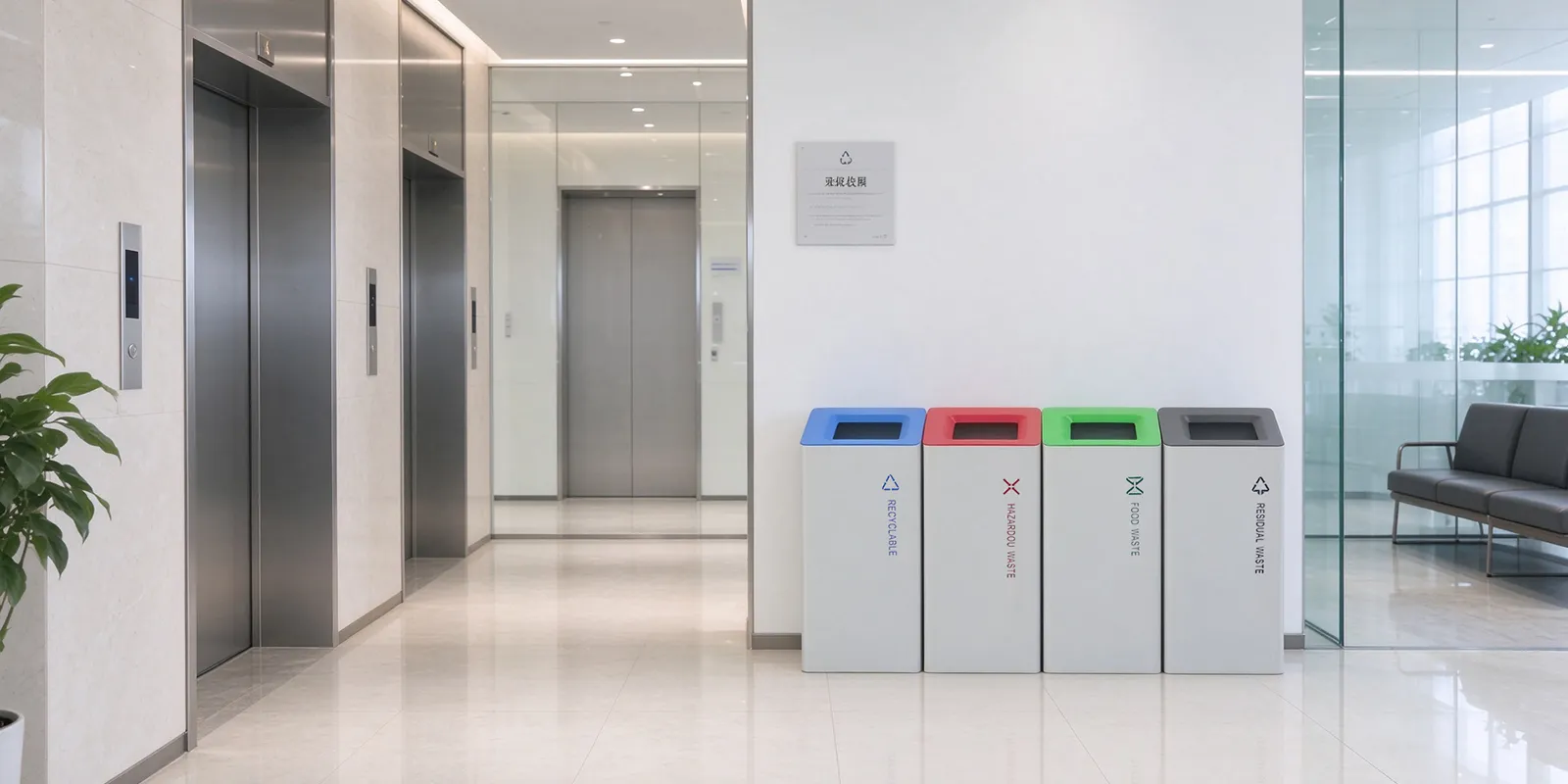
Start with what the hotel’s waste hauler accepts and what guests discard in each area. Bottles and cans may be a useful stream near a beverage point. Cups, lids and food-soiled packaging need separate confirmation. Ask the hauler how those exact items should be handled, and decide how leftover drinks will be managed before approving the labels.
Put recycling and general waste at the same decision point so guests can see both choices. Use short labels and recognizable images of the items guests receive at the property. Color can reinforce the instruction, but the wording and images should carry the meaning. The Regional District of Nanaimo’s hotel waste separation guide similarly recommends placing sorting options near where waste is generated and using images of common items on signs.
When comparing commercial recycling bins, check whether each stream has a suitable opening, enough capacity and a separate route through the housekeeping cart and storage area. An extra compartment is useful only if guests can identify what belongs in it and staff can keep its contents separate through collection. At a meeting foyer, ask event staff to watch what guests do during the first break. Their observations can show whether the problem is the label, the opening or the location.
How Should Commercial Indoor Trash Cans Balance Appearance and Cleaning?
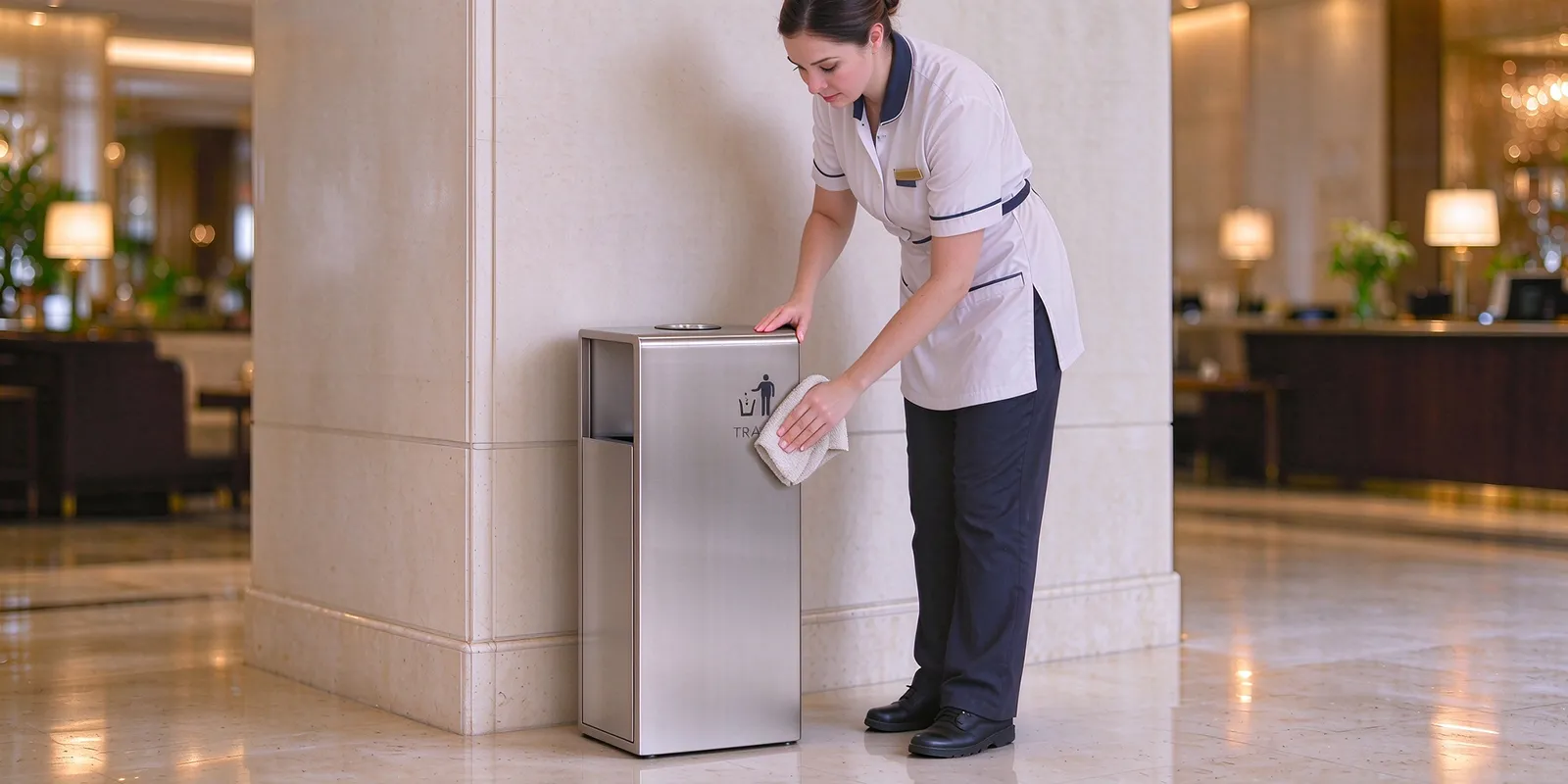
Approve the finish under the hotel’s actual lighting, then let housekeeping try cleaning the same sample. Stainless steel indoor trash cans can coordinate with elevator doors, hardware or reception details, but reflections, fingerprints and cleaning marks depend on the finish and where the unit sits. Inspect the area around the opening and the lower corners, where spills or contact with luggage are most likely to show.
Compare openings using the items guests will carry. An open top makes the disposal point easy to recognize. A more discreet opening can screen the liner from view, but it must still accept the hotel’s cups and bottles without guests having to push them through. Where a lid moves, test how it sounds in the lounge and whether staff can reach its underside during cleaning. Ask for cleaning instructions for the exact finish being quoted.
LVEN lists a stainless steel shell and galvanized inner liner for the OTX-28, and powder-coated galvanized steel for the OTB-37. Compare the two finishes beside the actual flooring or joinery if the choice is still open. If the project requires a particular stainless steel grade, coating specification or fire performance, request documentation for the quoted model and configuration before approving it. Indoor Trash Bin
Can Housekeeping Empty Hotel Lobby Waste Receptacles Without Disrupting Guests?
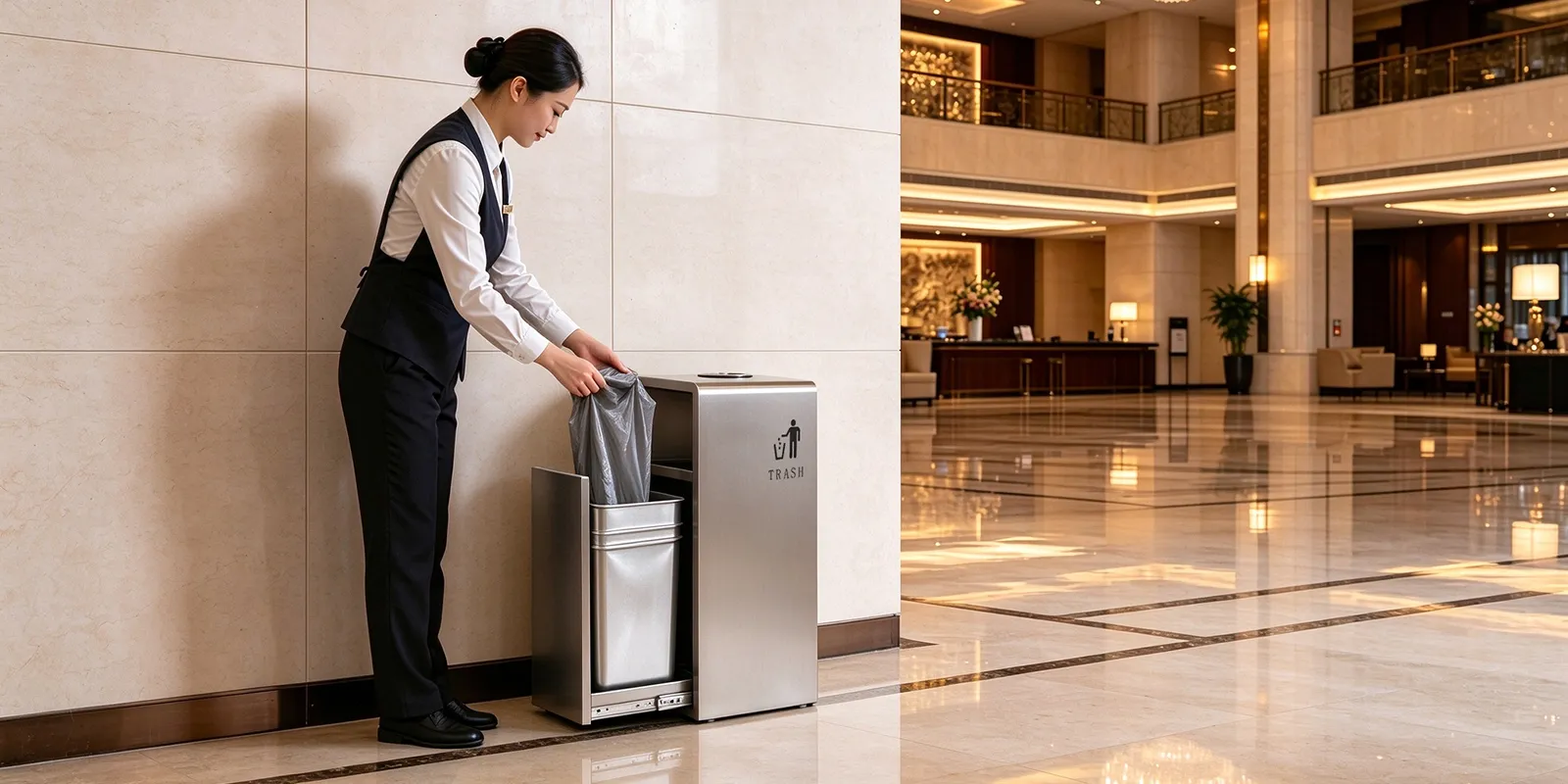
Run a full bag change with the intended bag, a representative load and the cart staff will use. Check whether the bag stays in place as items are dropped, whether it can be tied and removed without catching, and where the employee and cart need to stand. An empty liner can slide out easily in a showroom and still be awkward to handle once it holds bulky cups.
The OTX-28 uses a pull-out drawer for liner access, while the OTB-37 uses a flip-top structure for liner removal. For the first design, check the space in front of the cabinet. For the second, check the lifting space above it, especially under a counter, shelf or decorative panel. Use the actual furniture layout for both tests. Indoor Trash Bin
Walk the route from the bin to the service area. A station may work well for guests and still be a poor choice if the cart cannot turn beside it or if every collection conflicts with group check-in. Agree who reports a full bin, who handles an unscheduled collection and when event staff should request an extra round. During the trial, record spills, blocked openings, difficult bag changes and the time needed to service the point. These observations help you decide whether to change the product, its position or the collection schedule.
What Should the Hotel Trash Bin Specification Include?
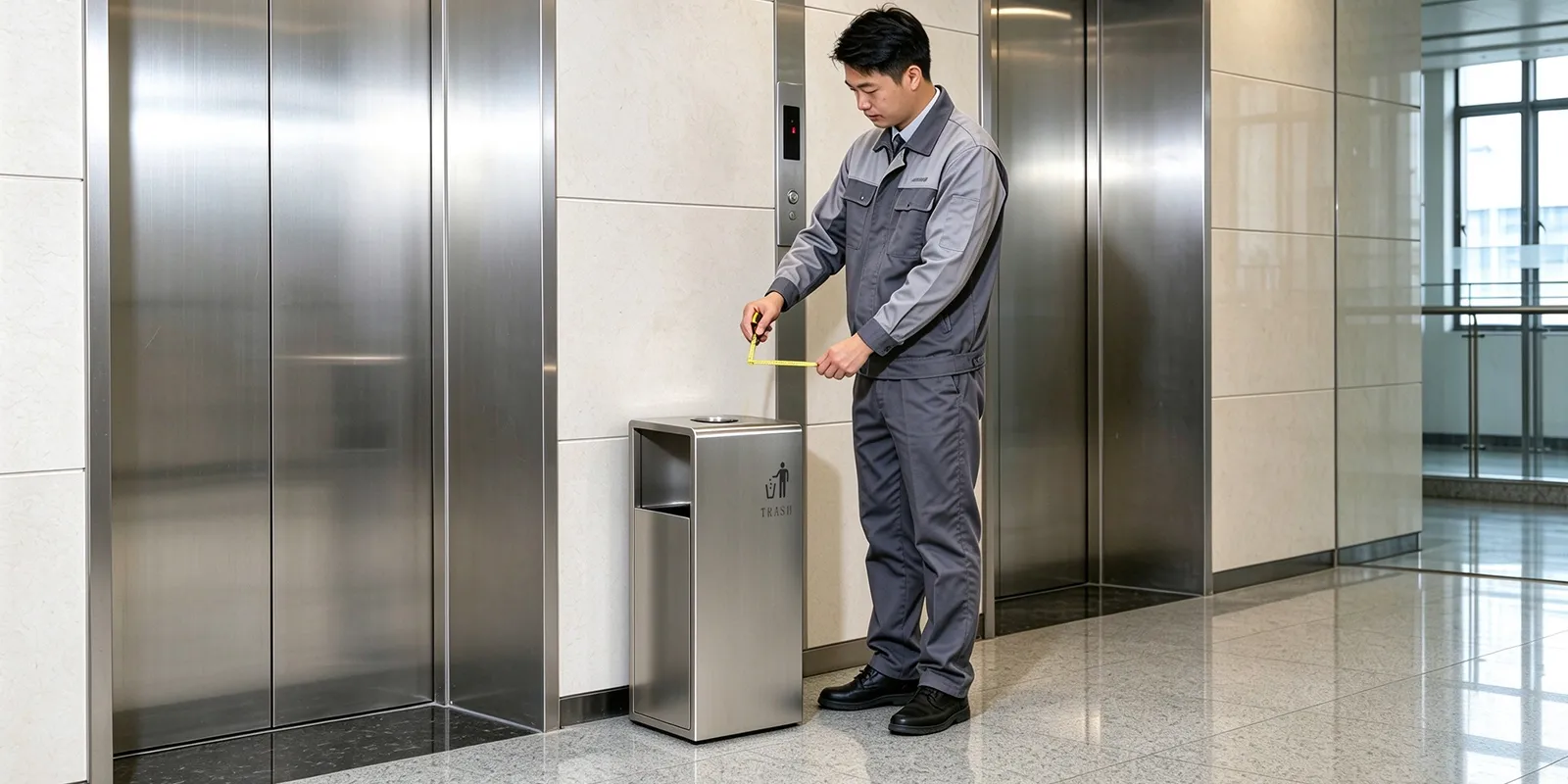
Add bins to the furniture, fixtures and equipment (FF&E) schedule by location. A line such as “stainless steel bin, quantity 12” leaves the supplier to guess the opening, capacity and service method. Use a location code and record the approved configuration for each point, even when several bins share a finish.
| Specification field | What to record before ordering |
|---|---|
| Location and quantity | Zone code, marked floor plan or site photo, and quantity at each point |
| Waste streams and capacity | Accepted items, number of compartments and required capacity per stream |
| Guest-facing details | Opening type and size, approved finish sample, label artwork and orientation |
| Housekeeping access | Liner removal direction, clearance in use, actual liner dimensions and approved bag fit |
| Sample approval | Items used in the drop test, outcome of a loaded bag change and any revisions required before the order |
Include the overall cabinet dimensions and ask which liners, lids or labels can be replaced separately. Review the same sample with the interior designer, housekeeping supervisor and purchasing team. The designer can confirm the finish and proportions; housekeeping can verify the bag change; purchasing can make sure the quote reflects the sample and the quantities by zone.
If you are comparing commercial indoor trash cans for a hotel project, send LVEN your bin schedule with location photos, waste streams, preferred finishes and expected service intervals. Ask for the proposed model, compartment capacity and liner access to be confirmed for each zone before approving the sample.
FAQs About Hotel Lobby Trash Cans
What size trash can is best for a hotel lobby?
There is no standard size for every lobby. Use the volume collected between dependable housekeeping rounds and check the largest items that must fit through the opening. For a dual bin, assess each compartment separately. If general waste fills early while recycling remains almost empty, changing the capacity balance or service timing may help more than increasing the total station size.
Should hotel common areas use open-top or lidded trash bins?
An open top is useful where guests need to discard items quickly and staff can service the bin regularly. A lidded or screened opening can make the contents less visible in a lounge or near reception. Test it with real cups and bottles, check how it sounds, and confirm that staff can clean around the opening. A lid does not replace timely collection of wet or food-soiled waste.
Can hotels use the same trash bin throughout their common areas?
A hotel can use a consistent finish and label style while varying the capacity, opening and service access by zone. A quiet seating area and a busy meeting foyer can look coordinated even if the foyer needs larger compartments or an extra collection round.
Can a hotel add recycling without replacing its existing lobby trash cans?
Yes, if there is room to place a clearly labeled recycling bin beside the existing trash can and the hauler can collect the stream separately. Test the pair during a busy period. If guests miss one of the openings or housekeeping cannot service both without obstructing the route, a combined station or a different location may work better.
Contents