How to Reduce Odors from Shared Dog Waste Bins?
 45
 Share
Quick answer: Empty shared dog waste bins before odors become a recurring complaint, replace damaged liners, clean residue that remains after collection and check for rain or irrigation entering the bin. If the smell persists after cleaning, inspect the ground and nearby surfaces before replacing the equipment.
For property managers, homeowners’ associations (HOAs) and park operators, effective dog waste bin odor control starts by comparing conditions before collection, after emptying and after cleaning. Those three observations help distinguish waste left too long from a leak, retained residue or a source outside the bin.
| When the odor occurs | What to check first | What to do next |
|---|---|---|
| The bin smells before it is full | Time since collection, condition of pickup bags and any loose waste | If bags are intact and the bin is clean, test an earlier collection |
| The smell remains immediately after emptying | Residue under the liner, beneath the lid or around the opening | Clean the affected surfaces and check how the liner is fitted and removed |
| Complaints increase after rain or irrigation | A wet liner, pooled water or a lid that does not close properly | Identify where water enters before changing the lid or bin |
| The bin is clean, but the area still smells | Abandoned bags, waste around the post and nearby surfaces | Include the surrounding area in the inspection and cleanup |
| The collection bag tears repeatedly | Bag fit, rough edges and the path used to lift it out | Correct the fit or have damaged hardware assessed |
Why Do Shared Dog Waste Bins Smell Before They Are Full?
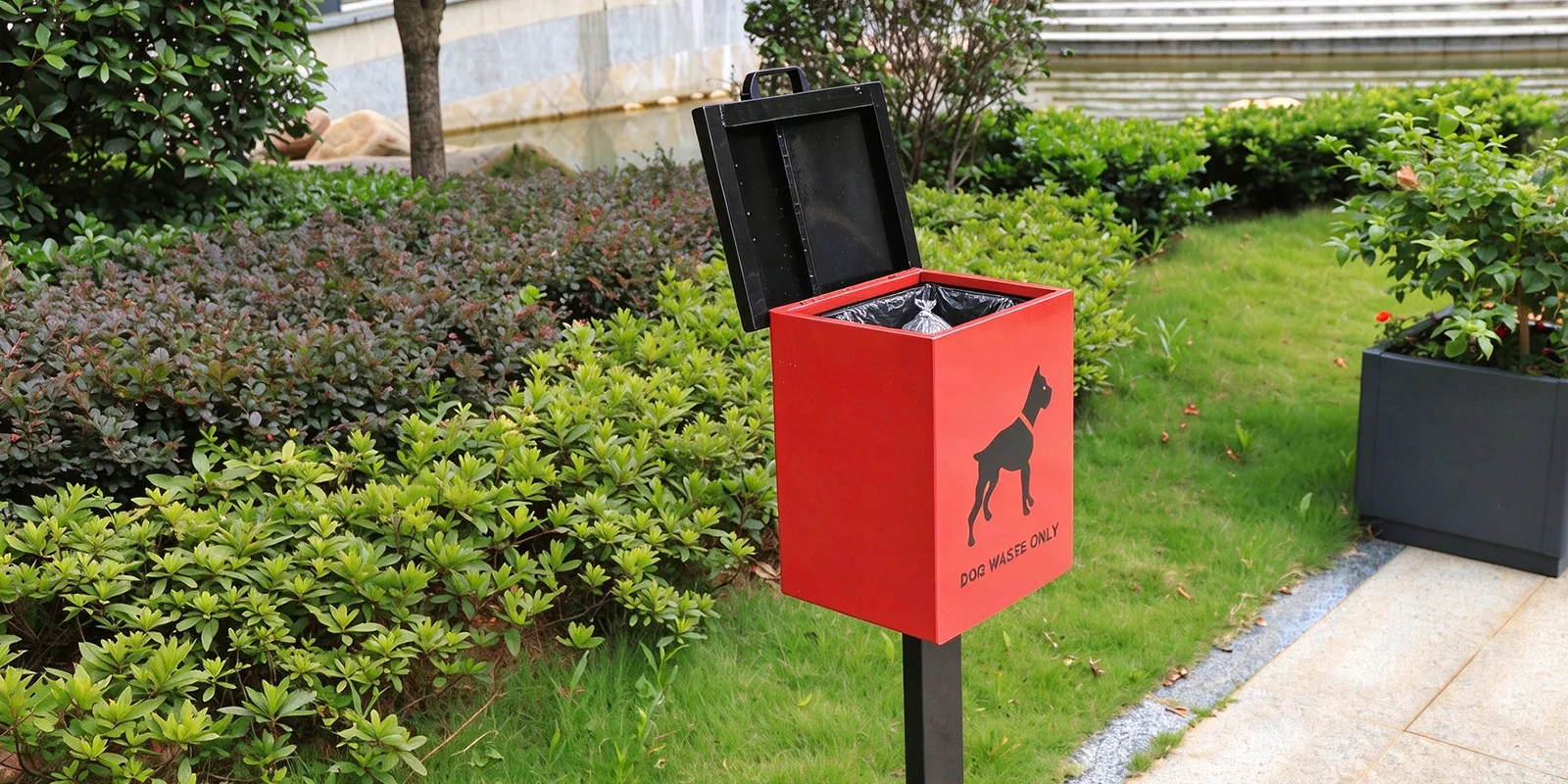
A fill check tells you how much space is left. It does not tell you how long the waste has been there. A lightly used bin along a residential path may hold only a few bags, but those bags can remain in place across several days. If complaints occur well before the container reaches capacity, compare the complaint time with the last complete collection.
Check how the waste is contained. The small pickup bags used by dog owners and the larger collection liner used by maintenance staff serve different purposes. Untied or torn pickup bags can leave residue around the opening. A damaged collection liner can allow waste to escape into the cabinet, where changing the bag alone will leave the source behind.
Note whether complaints coincide with heavy use, warm afternoons, rain or irrigation. These details give crews a better starting point than a general request to deodorize the bin. For example, a complaint that regularly follows weekend use calls for a check of the weekend service schedule; a complaint that returns after irrigation calls for a check of water entry.
Why Does a Dog Waste Bin Still Smell After Emptying?
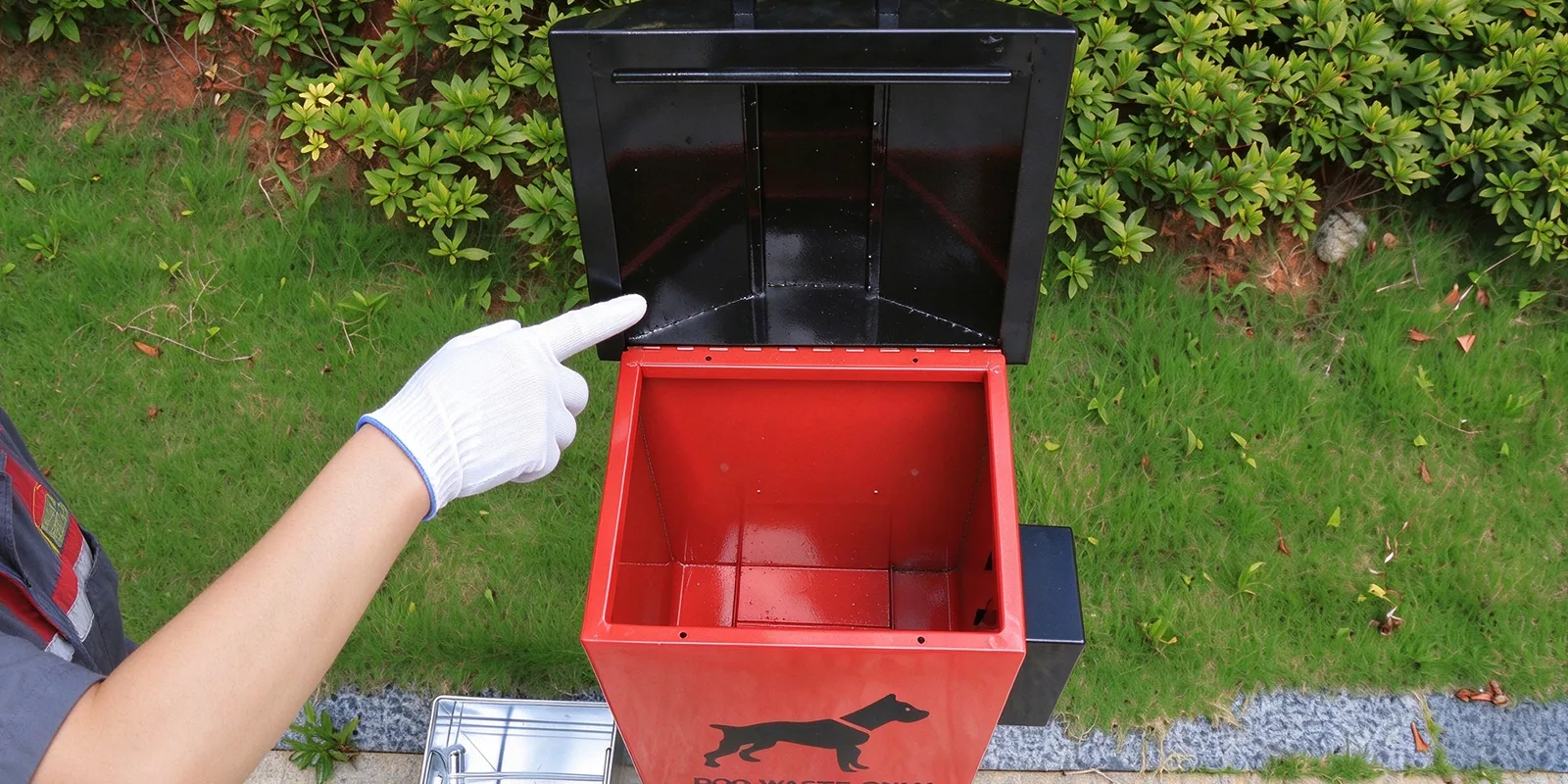
Inspect the accessible surfaces that remain after the collection bag is removed. Look beneath the lid, around the deposit opening and below the liner or inner container. Residue can stay on a support or in a corner even when the main container looks empty.
Pay particular attention to the way the collection bag comes out. If it repeatedly catches on the same edge, a small tear during removal can leave fresh residue after each service visit. Check whether the bag fits the container, whether it is held correctly and whether the crew can lift it clear of the opening without dragging it across hardware.
Compare the condition immediately after emptying with the condition after a complete clean. If cleaning resolves the problem, make residue removal an explicit part of the service scope. If the cabinet is clean and the smell remains outside it, check around the post, nearby planting and adjacent surfaces. A larger bin will not resolve waste that has been left beside the station.
How Should You Clean a Pet Waste Station to Reduce Odor?
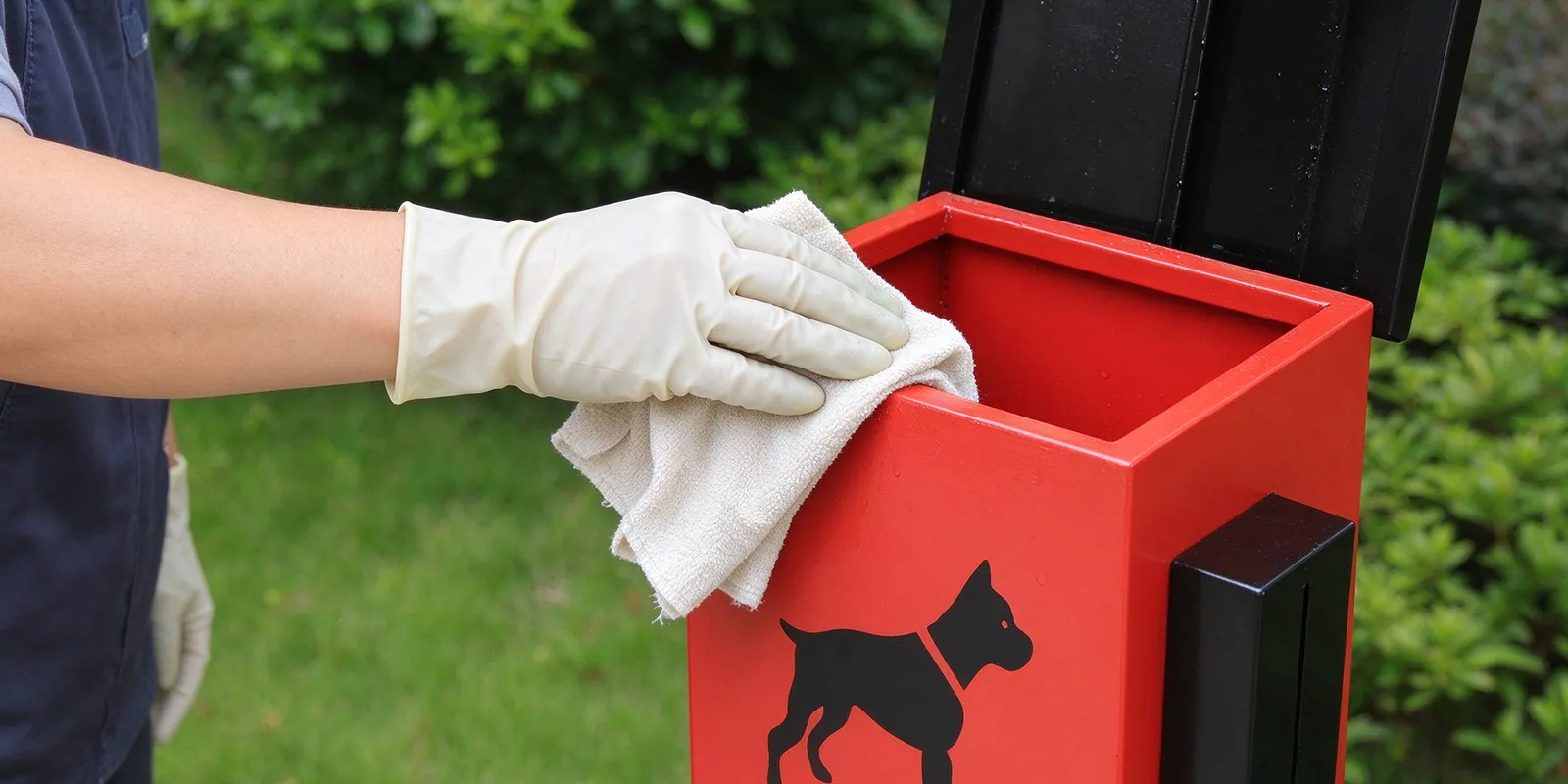
A complete visit includes emptying, inspecting, replacing the liner where applicable, cleaning affected surfaces and checking the immediate area. The University of Maryland Extension’s pet waste station brief identifies a reliable supply of pickup bags, bin liners and timely waste removal as core maintenance tasks. A site’s service agreement should also spell out who cleans the cabinet and clears waste around it.
Once the contents have been removed, clean accessible surfaces according to the equipment supplier’s care instructions and the cleaning product label. Pay attention to the underside of the lid and the edges of the opening, where residue can be missed during a quick bag change. Use the site’s approved cleaning and disposal procedures, including for any rinse water. Keep it out of storm drains, planting beds and public paths.
Before returning the bin to use, check that the replacement liner is supported, sits clear of the closure and can be removed through the intended access point. Refill pickup bags if the station has a dispenser. Record any damage that requires repair so it is addressed separately from routine cleaning.
Can an Outdoor Dog Waste Bin Lid Prevent Odors?
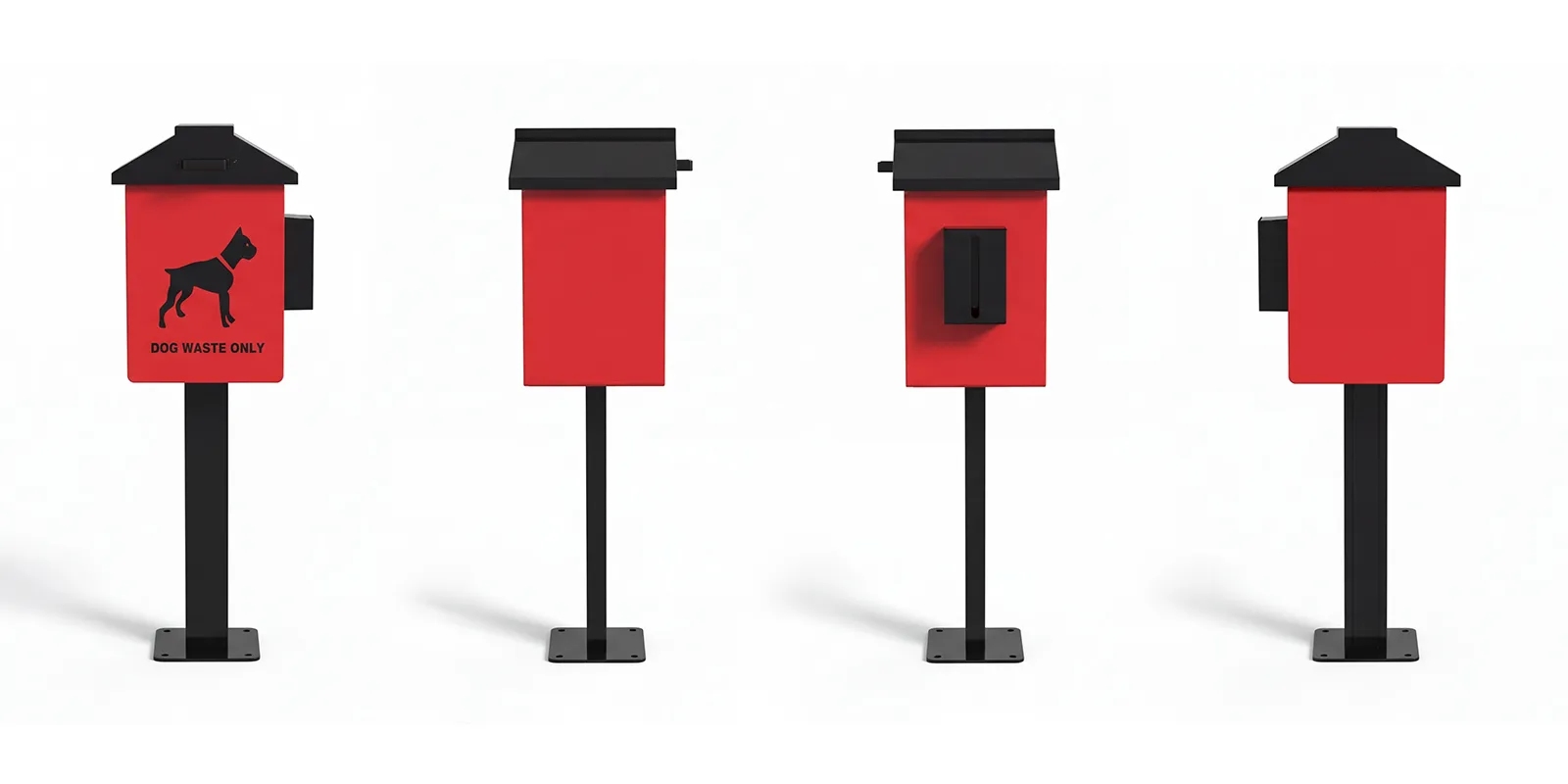
A cover can help limit direct exposure to rain, but its effect depends on the opening, the condition of the closure and the direction of the weather. A lid designed to shed rain does not necessarily seal in odors. Check whether the lid closes normally and whether a trapped bag, obstruction or worn component prevents it from seating as intended.
If the liner is wet, inspect the area after rain or irrigation. Water directed sideways by a sprinkler can reach an opening that is sheltered from overhead rain. Where the source is external, adjusting the irrigation or reviewing the station’s exposure may address the problem without changing the cabinet.
If the closure is damaged, document the fault and ask the supplier about repair or replacement options. For a new unit, specify the condition you need to address: rain reaching the opening, bags catching during removal or surfaces the crew cannot reach to clean. That gives the supplier a concrete requirement to review.
When Should Dog Waste Bins Be Emptied More Often or Added?
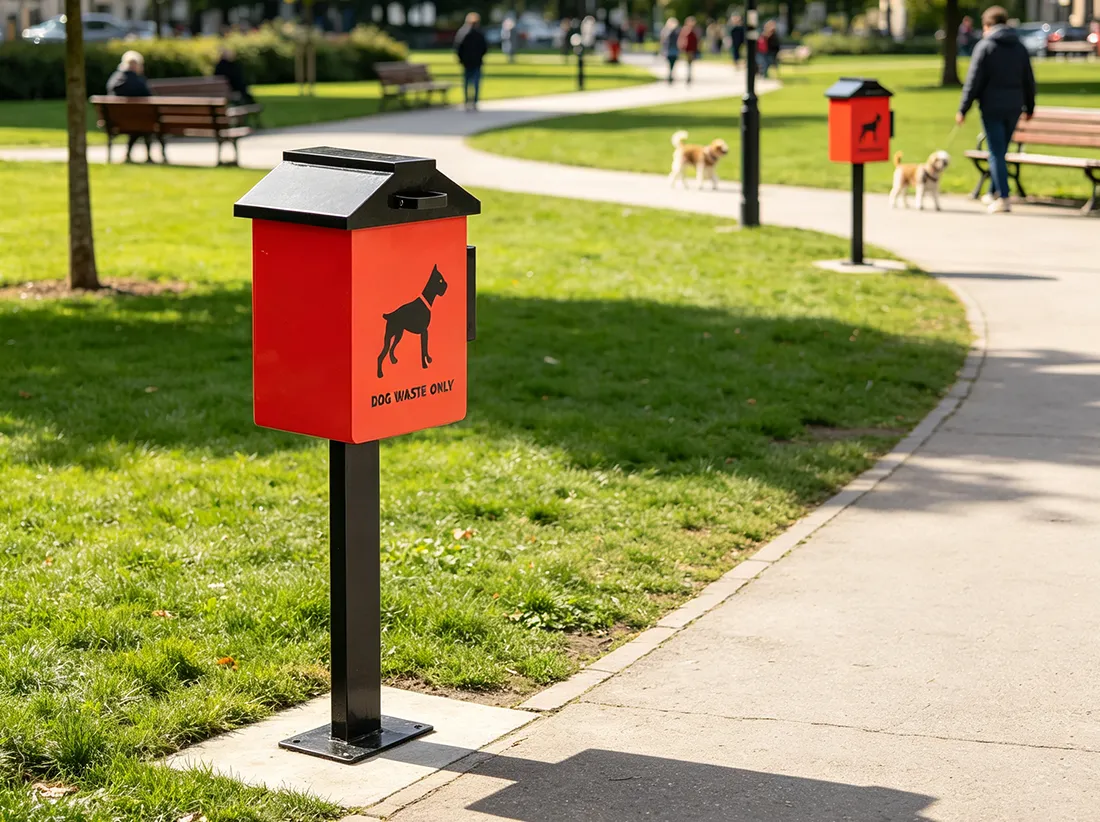
Separate inspection frequency from emptying frequency. A brief check between collections may reveal an empty dispenser, a blocked opening or a leaking bag. Emptying frequency should reflect how long waste remains on site and what the crew finds before each scheduled round.
If complaints consistently occur before the next collection, despite intact bags and a clean cabinet, try moving the collection earlier. Change the timing first and compare conditions on similar days. This helps determine whether a service adjustment addresses the problem before committing to new equipment.
Consider additional capacity when the usable space repeatedly runs out before the crew can reasonably return. If one station near a dog park entrance regularly overflows while another along the same route remains nearly empty, review the distribution of collection points. Adding another unit makes sense only if it serves the route people use and can be included in the maintenance schedule.
Capacity also affects the work of emptying the bin. Before choosing a larger model, check whether the crew can remove the filled liner through the opening and transfer it using the site’s collection equipment. A cabinet that holds more waste is useful only if staff can service it reliably.
What Should a Dog Waste Bin Odor-Control Review Record?
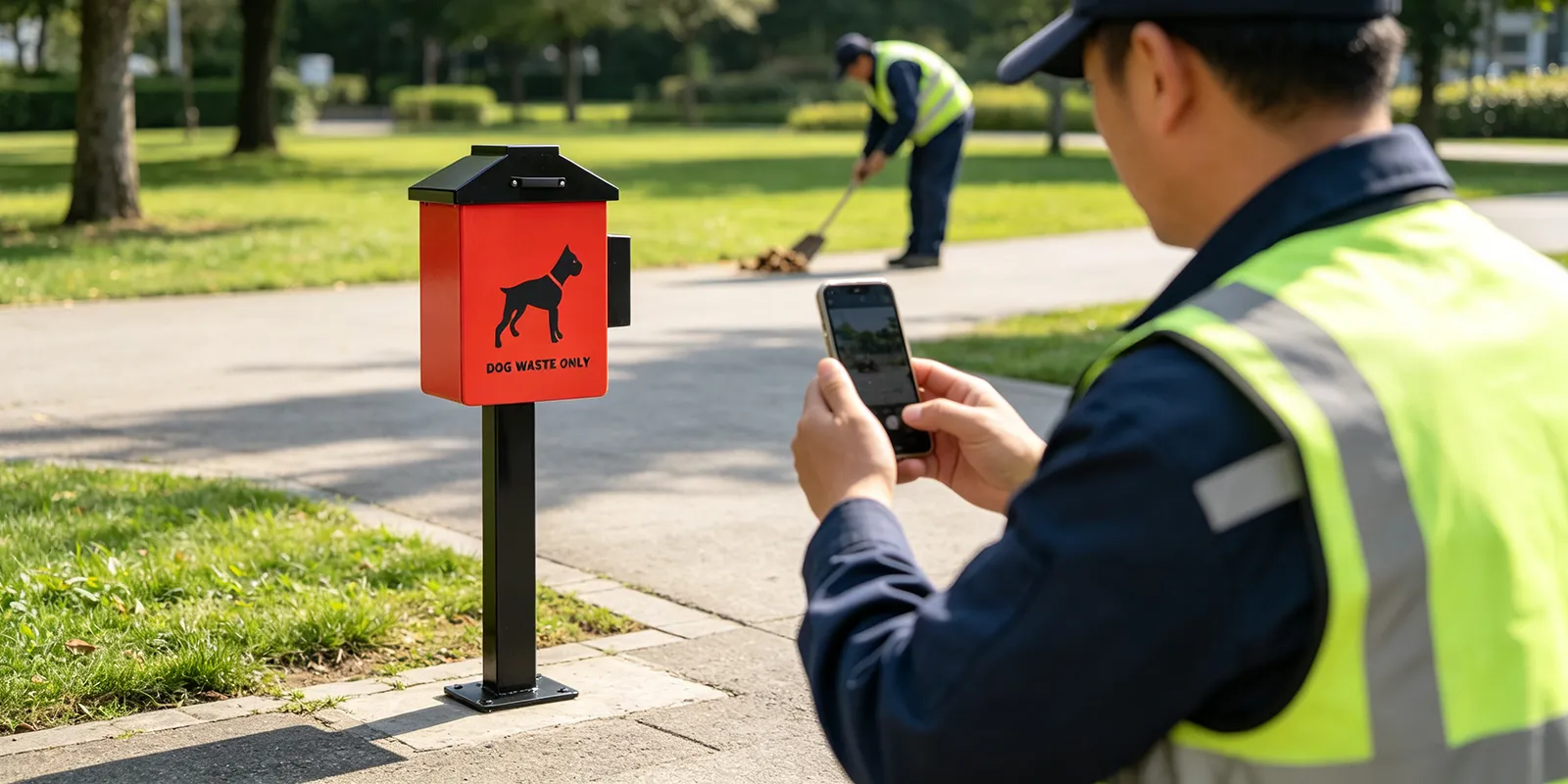
A short maintenance log should connect an observation to a decision. Record the station ID, location, complaint time, last collection, approximate fill level, bag condition, recent weather or irrigation, and any residue or waste nearby. Note the corrective action and the result at the next inspection.
For example, if a bin is only partly full when a complaint comes in, note whether the smell clears after emptying or only after cleaning. If it clears only after cleaning and the crew finds residue below a torn liner, review the liner fit and removal path first. That record is more useful to a contractor or supplier than a request for a larger or “smell-proof” bin.
When the review points to a replacement, compare the service requirements with the equipment. LVEN’s OTB-05W outdoor dog waste bin has a 12 L capacity, a powder-coated galvanized steel body, a house-shaped lid and a mounting post. Its listed overall dimensions are 32 × 25 × 105 cm. Use those figures to assess fit at the proposed location, then confirm the collection bag and access needed to empty and clean the selected configuration.
Explore LVEN’s dog waste bins or consult the dog waste station buying guide if the project also needs a bag dispenser, signage or a new mounting arrangement. For a quotation, send LVEN the station photos, site conditions, collection routine and required quantities. Include the recurring fault if you are replacing existing equipment.
FAQ About Shared Dog Waste Bin Odors
Will scented pickup bags solve a shared-bin odor problem?
Scented bags can add fragrance, but they do not remove waste left too long, stop a leak or clean contaminated surfaces. Prioritize bags that close reliably and fit their intended use. Check the larger collection liner separately if one is used.
Should we move a station after an odor complaint?
Inspect and service the existing point first. Consider relocation if the problem persists and the site itself contributes to it—for example, if irrigation repeatedly wets the opening or staff cannot reach the unit during collection. A new position should remain easy for dog walkers to find and for the crew to service.
Can ordinary litter go into a dedicated dog waste bin?
Follow the signs and the site’s collection arrangement. Where the bin is designated for dog waste, direct ordinary litter to the appropriate receptacle. Takeaway packaging and other bulky items can fill a small container quickly and make it harder to judge the capacity actually needed for dog waste.
What should residents include when reporting a dog waste station problem?
Report the station ID or location, the time and what is visible: overflow, an empty dispenser, a lid that will not close, a leaking bag or odor around an apparently empty bin. A photo taken without handling the waste can help the maintenance team decide what to bring and where to inspect.
Contents