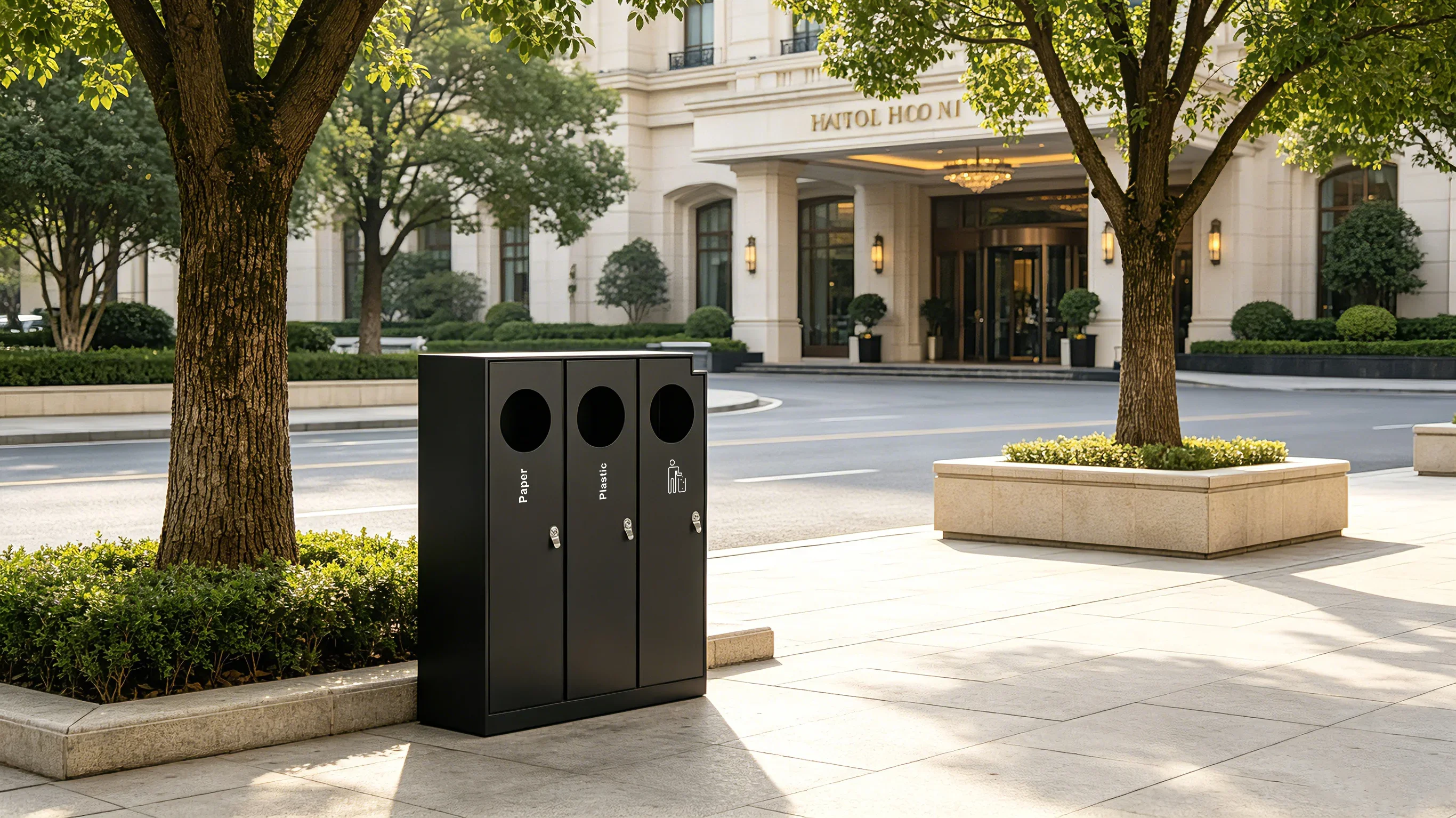
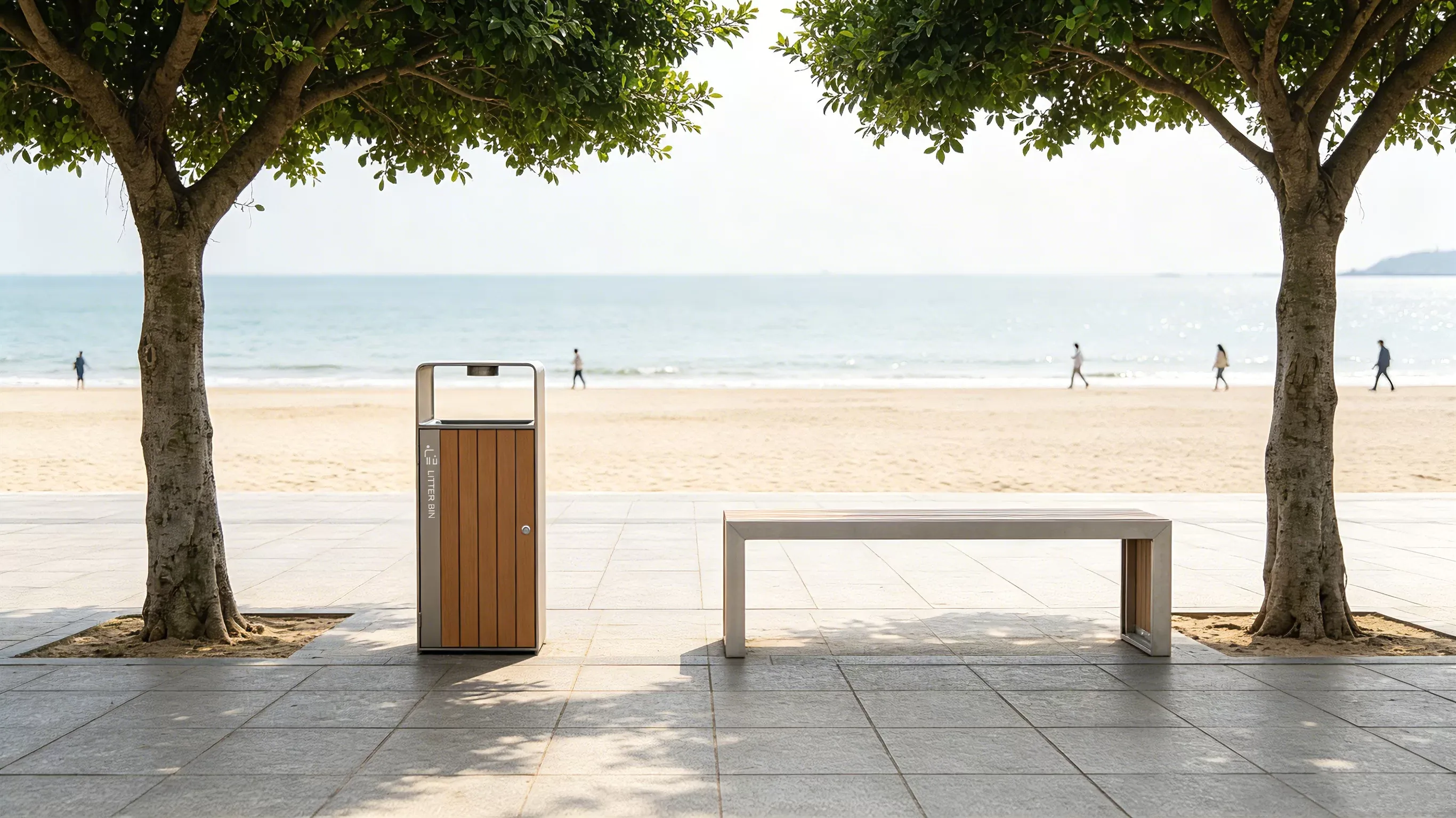
Dog Waste Station Buying Guide for Parks, HOAs and Communities
 12
12  Share
Share
Dog waste stations provide bags and a designated disposal point so pet owners can clean up after their dogs while using parks, walking paths and shared outdoor spaces.
For parks, homeowners’ associations and residential communities, however, purchasing a dog waste station involves more than selecting a post with a bag dispenser. The station must be positioned along real walking routes, withstand outdoor exposure, hold enough bags and waste, and remain easy for maintenance teams to refill and clean.
An inexpensive station placed in the wrong location may remain unused. A poorly designed dog waste bin may fill with rainwater, lose its liner or require frequent repairs. A dispenser that only accepts a difficult-to-source refill format can also create ongoing supply problems.
The right pet waste station should therefore be selected as part of a complete waste-management system. This guide explains how to compare configurations, materials, dispensers, receptacles, installation methods and maintenance requirements before buying.
What Is a Dog Waste Station?
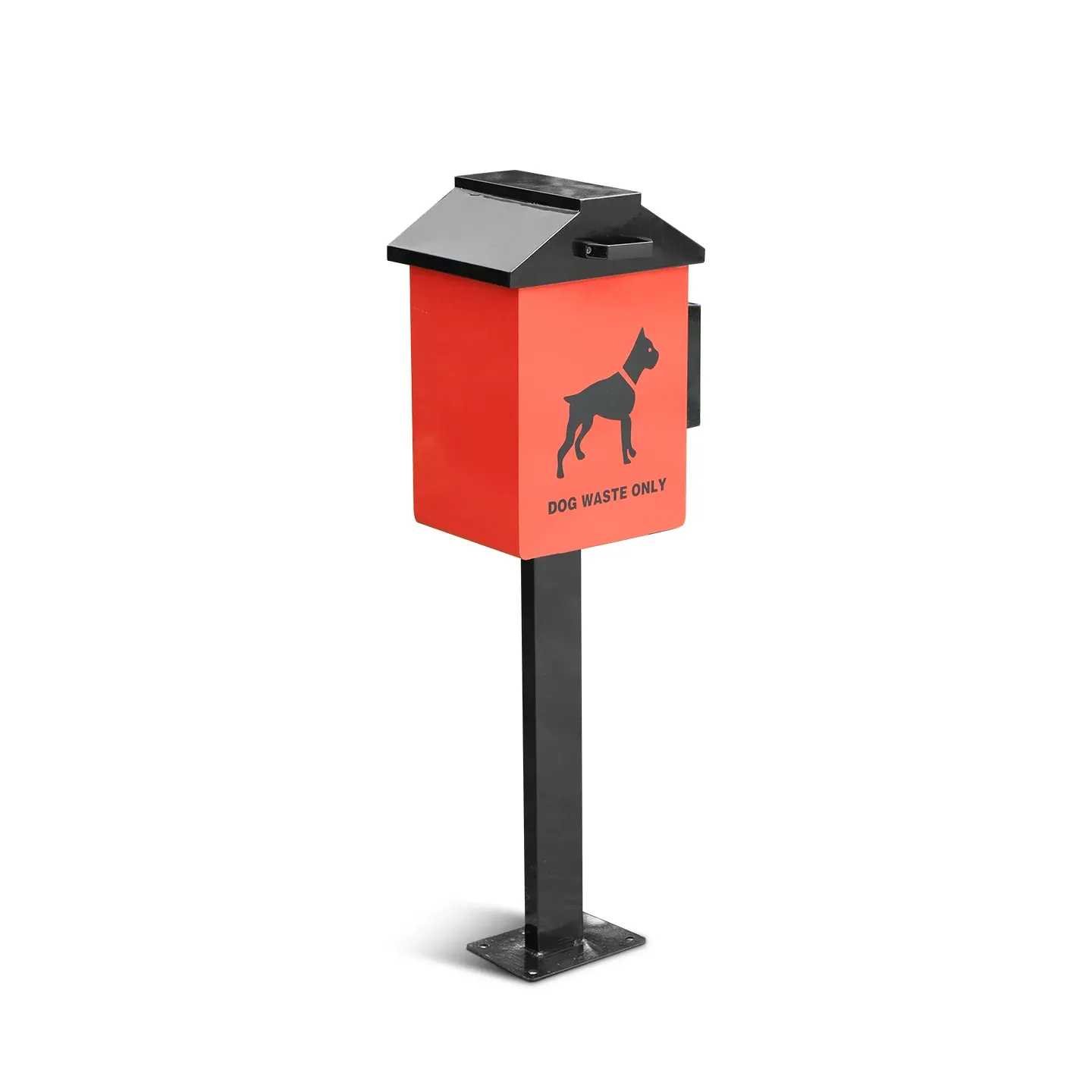
A dog waste station is an outdoor facility that provides pet waste bags and, depending on the configuration, a designated dog waste bin for disposal.
A complete commercial station normally includes:
① A supporting post;
② A dog waste bag dispenser;
③ A supply of compatible bags;
④ A waste receptacle;
⑤ A lid or controlled disposal opening;
⑥ A removable liner or liner holder;
⑦ A sign explaining the expected behavior;
⑧ Locks, hinges and installation hardware.
Some stations include all these components, while others only provide bags. The right configuration depends largely on whether suitable commercial trash bins are already available nearby.
A dog waste station should not be treated as an ordinary outdoor trash bin with an added sign. It must support frequent bag dispensing, prevent refill theft or over-dispensing, contain pet waste and remain convenient for both dog owners and maintenance personnel.
Which Dog Waste Station Configuration Do You Need?
Before comparing materials or prices, determine which station configuration suits the site.
Configuration | Main components | Best suited for |
Full dog waste station | Sign, post, dispenser and waste receptacle | Parks, communities and walking routes without nearby trash cans |
Mini pet waste station | Post, dispenser and compact receptacle | Smaller green spaces and lower-traffic areas |
Dispenser-only station | Post, sign and bag dispenser | Locations with an existing public waste bin nearby |
Wall-mounted dispenser | Dispenser fixed to a wall, fence or existing structure | Dog park entrances, building exits and enclosed pet areas |
Low-profile station | Lower post, dispenser and optional receptacle | Locations where visual impact or user reach is a concern |
Multi-function station | Dispenser combined with a larger or customized outdoor trash receptacle | High-traffic parks and coordinated public-space projects |
Choose a full station when no suitable bin is nearby
A full dog waste station gives users both the bag and the disposal point. It is usually the most appropriate option for:
① Park entrances;
② Community walking trails;
③ Dog park gates;
④ Residential green spaces;
⑤ Outdoor areas without existing park trash cans;
⑥ Routes where users would otherwise carry waste for a long distance.
The waste receptacle should be large enough for the expected level of use without becoming so large that waste remains in it for excessive periods and causes odor.
Choose a dispenser-only model when waste infrastructure already exists
Installing a second receptacle beside an existing outdoor trash bin may create unnecessary equipment and maintenance work.
A dispenser-only model may be sufficient when:
① A suitable public waste bin is within easy reach;
② Maintenance teams already empty nearby trash receptacles;
③ The existing bin has adequate capacity;
④ The walking route clearly leads users past the bin;
⑤ Local rules allow pet waste to be placed in the existing receptacle.
The existing bin should still be assessed for rain protection, liner retention and cleaning requirements.
Key Components to Compare Before Buying
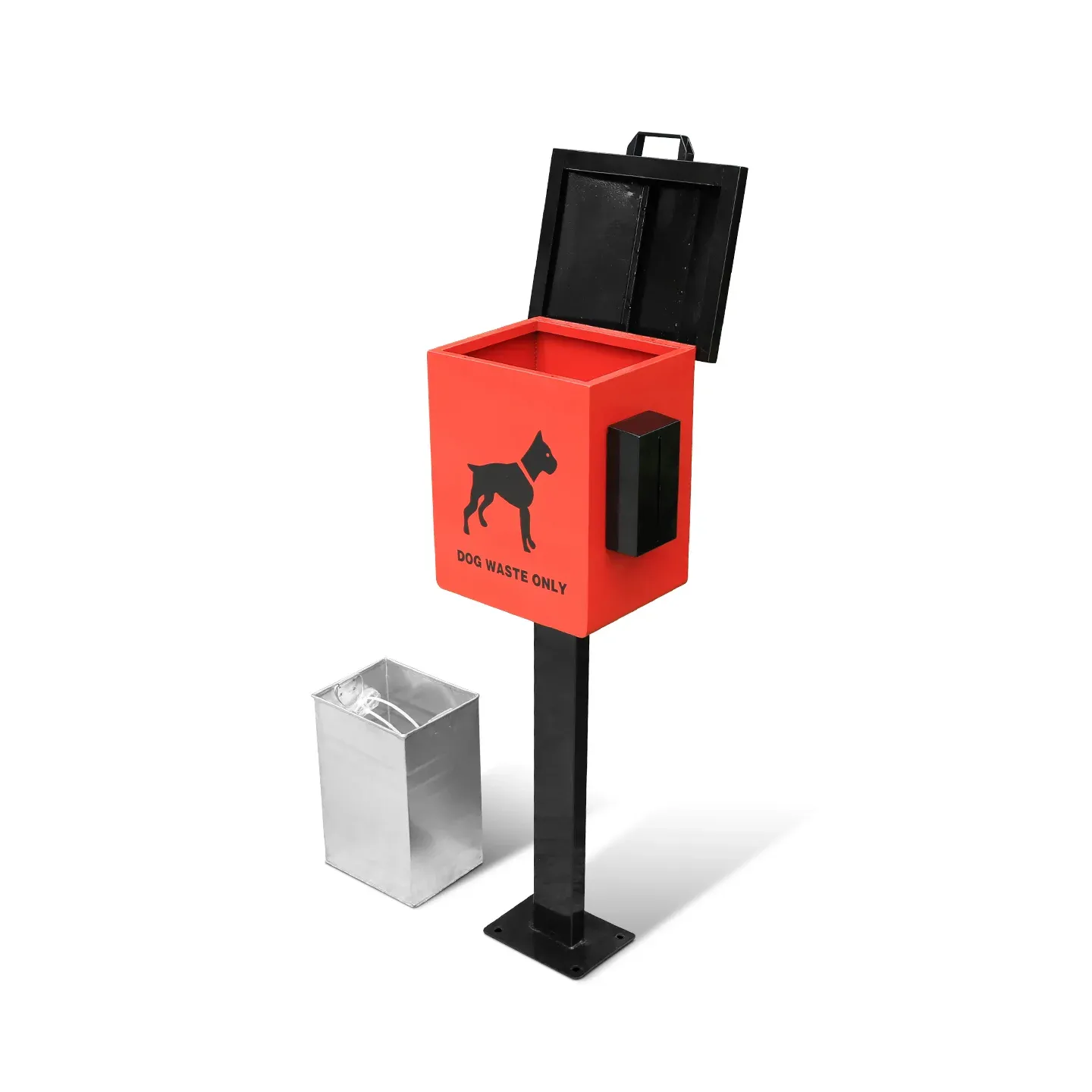
A commercial dog waste station should be evaluated component by component. Two stations may appear similar in product photos but differ significantly in structural stability, bag capacity and ease of maintenance.
Supporting Post
The post carries the dispenser, sign and waste receptacle. It must remain stable under repeated use, wind exposure and accidental impact.
Important factors include:
① Post shape and dimensions;
② Material thickness;
③ Galvanized or corrosion-resistant construction;
④ Outdoor powder-coated finish;
⑤ Connection points between components;
⑥ Ground installation method;
⑦ Availability of replacement posts.
Square or box-shaped posts generally provide a rigid mounting surface for dispensers and bins. Open-channel posts may be suitable for lighter configurations, but the final choice should reflect the weight and size of the complete station.
For high-traffic public spaces, confirm that the post will not twist or loosen when users pull bags from the dispenser or open the receptacle.
Bag Dispenser
The dog waste bag dispenser is one of the most frequently used parts of the station.
Compare:
① Dispenser material;
② Internal bag capacity;
③ Compatible refill format;
④ Bag dispensing opening;
⑤ Locking mechanism;
⑥ Weather protection;
⑦ Refill access;
⑧ Visibility of remaining bag supply;
⑨ Resistance to accidental over-dispensing.
Metal dispensers are often used for commercial outdoor applications because they provide better structural protection than lightweight consumer dispensers. Their performance still depends on material thickness, hinges, locks and surface treatment.
The dispenser should allow maintenance staff to replace bags quickly without requiring complicated tools or removing other station components.
Dog Waste Bin
The receptacle should contain used bags while remaining easy to empty and clean.
Important specifications include:
① Waste capacity;
② Lid design;
③ Disposal opening size;
④ Rain protection;
⑤ Liner-retaining ring or holder;
⑥ Side-opening or top-removal access;
⑦ Locking system;
⑧ Drainage;
⑨ Interior surface;
⑩ Replaceable components.
An open dog trash bin may allow rainwater, leaves and ordinary litter to enter. A covered design with a controlled disposal opening generally provides better protection and helps reduce misuse.
The liner must remain securely in place as waste is deposited. If it slips into the bin, cleaning becomes slower and the inner surface becomes contaminated.
Signage
A clear sign explains what the station is for and encourages users to clean up after their pets.
The sign may include:
① A simple cleanup reminder;
② Bag-use instructions;
③ Community or park regulations;
④ HOA or municipal branding;
⑤ Contact details for reporting problems;
⑥ Multilingual wording;
⑦ A station identification number.
High-contrast text and simple graphics are usually easier to understand from a distance. Custom signs can also help the pet waste station coordinate with other outdoor site furnishings.
What Material Is Best for an Outdoor Dog Waste Station?
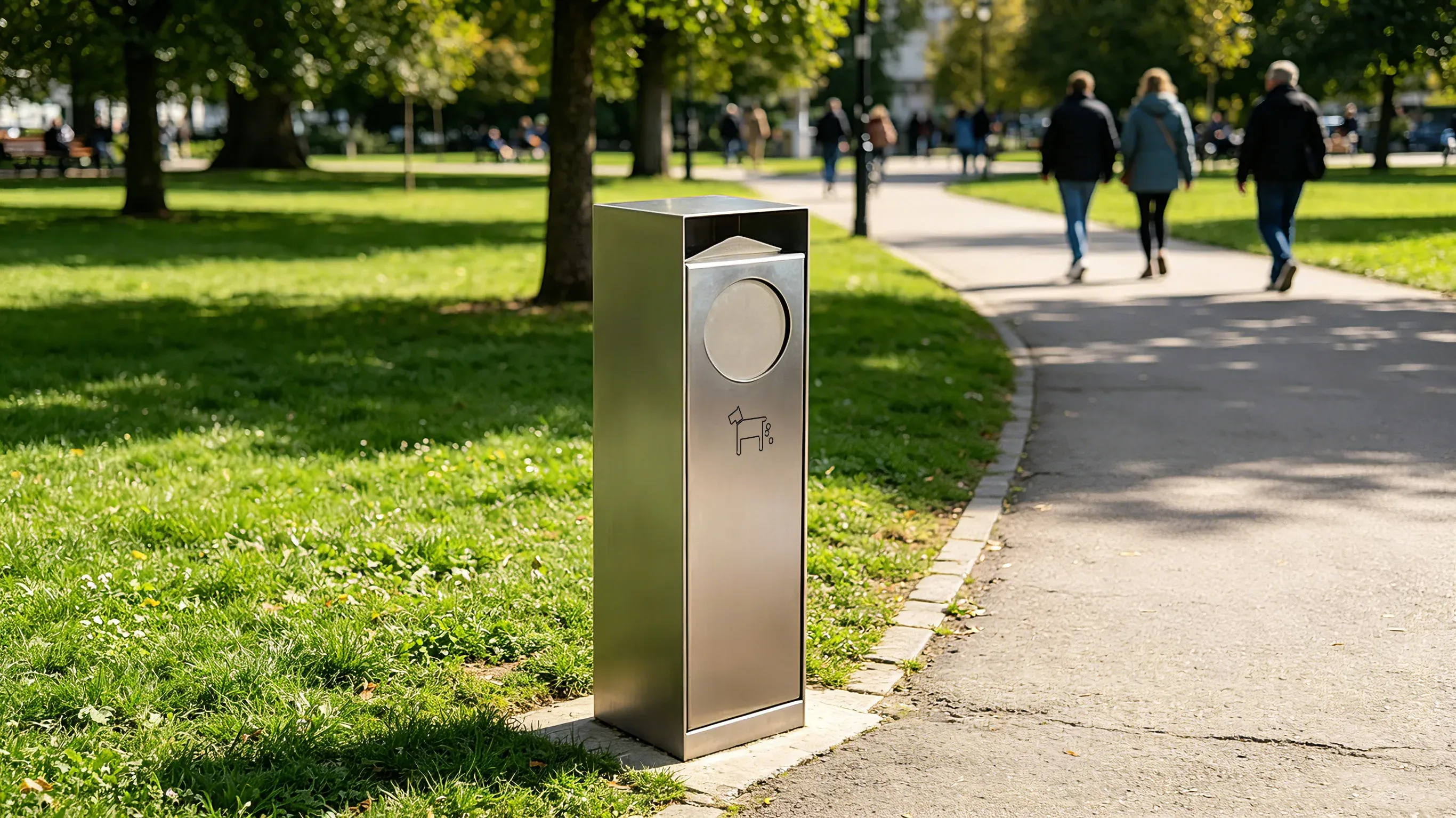
No single material is ideal for every environment. Buyers should compare corrosion resistance, structural strength, maintenance requirements and cost.
Galvanized steel
Galvanized steel is widely used for posts, waste receptacles and other commercial outdoor components.
Its advantages include:
① Good structural strength;
② Suitability for welded construction;
③ Competitive project cost;
④ Compatibility with outdoor powder coating;
⑤ Flexibility for custom sizes and shapes.
The durability of galvanized steel depends on fabrication quality and surface treatment. Cut edges, welds and drilled holes must be properly handled before coating.
Aluminum
Aluminum is often used for bag dispensers and lightweight receptacle components because it does not rust in the same way as ordinary steel.
It can be suitable where:
① Equipment weight needs to be reduced;
② Moisture exposure is frequent;
③ A clean, commercial appearance is required;
④ The component does not need the same impact resistance as a heavy steel structure.
Buyers should still confirm material thickness and connection strength. Thin aluminum may deform under impact or vandalism.
Stainless steel
Stainless steel may be considered for humid, coastal or premium commercial environments.
Potential benefits include:
① Strong corrosion resistance;
② Clean appearance;
③ Easy surface cleaning;
④ Suitability for long-term outdoor use.
The correct grade should be selected for the actual environment. Stainless steel can increase the initial cost, so it is often used selectively for fasteners, hinges or critical exposed parts rather than the entire station.
Plastic and composite materials
Plastic or recycled composite parts can reduce corrosion concerns and may be used for receptacles or decorative sections.
Buyers should confirm:
① UV resistance;
② Impact performance;
③ Temperature limitations;
④ Color stability;
⑤ Replacement availability;
⑥ Compatibility with the metal supporting structure.
Material names alone do not determine durability. A reliable station combines suitable materials with correct panel thickness, fastening, welding and outdoor finishing.
How to Choose the Right Dog Waste Bag System?
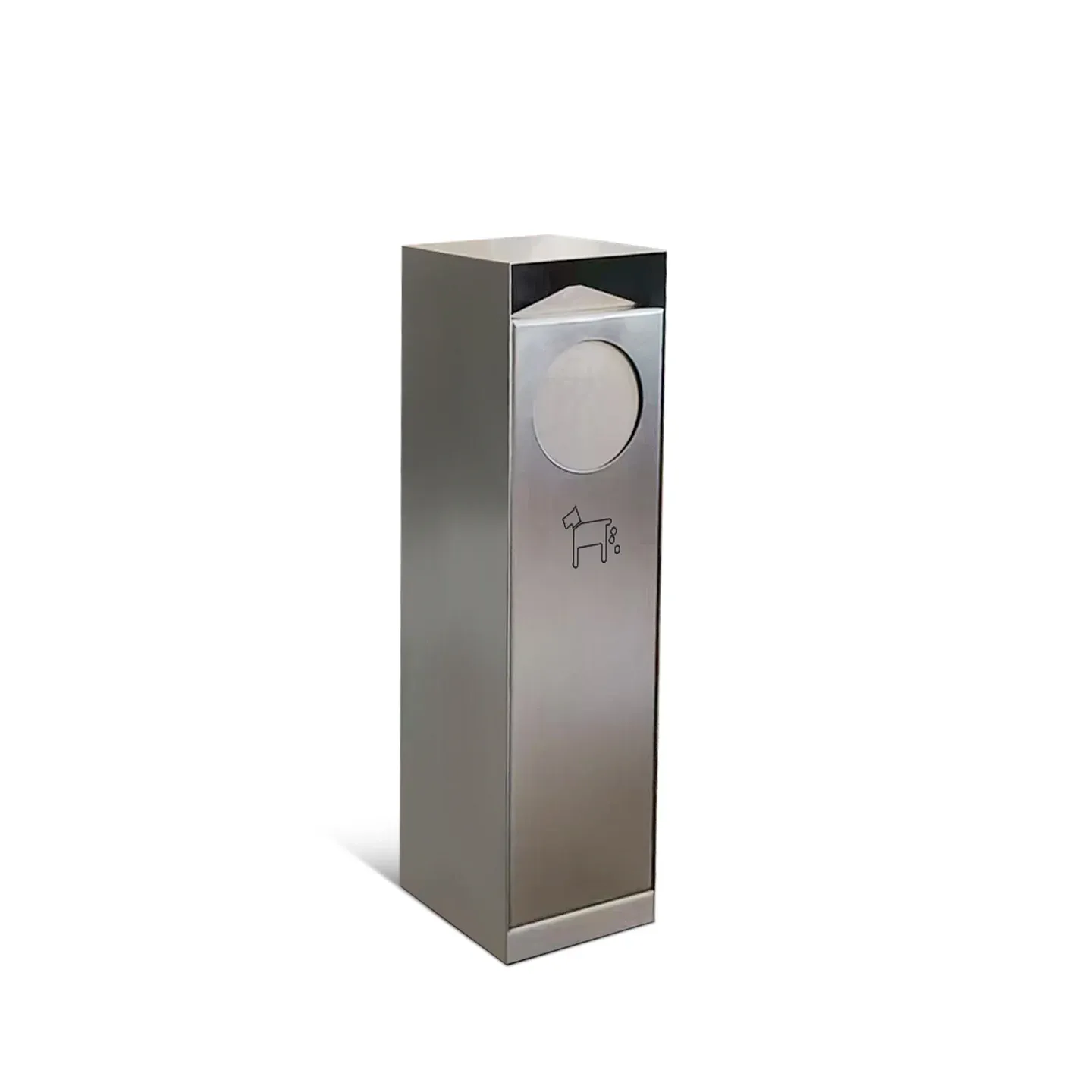
Refill compatibility is one of the most important—and most frequently overlooked—parts of purchasing a dog waste station.
Common bag systems include:
Roll bags
Roll bags are supplied on a continuous roll and dispensed individually through an opening.
They can provide high refill capacity, but buyers should confirm:
① Roll width;
② Roll diameter;
③ Core dimensions;
④ Perforation quality;
⑤ Bag thickness;
⑥ Dispenser opening size.
A roll that is too large may not fit inside the dispenser, while poor perforation can cause users to pull out several bags at once.
Header bags
Header bags are stacked or hung inside the dispenser and removed individually.
They can be easy to refill and control, but the mounting holes and dispenser design must match the bag format.
Tissue-style bags
These bags are packed so that one bag is presented after another. They may provide convenient dispensing, although refill packs must be compatible with the internal dispenser dimensions.
Tie-handle bags
Tie handles can make used bags easier to close and carry. They may require more material than simple flat bags, so annual operating cost should be evaluated.
Compostable bags
Compostable bags may support sustainability goals, but buyers should not assume they are suitable for every waste stream.
Before specifying them, confirm:
① Relevant material certification;
② Storage conditions;
③ Shelf life;
④ Local waste collection method;
⑤ Whether collected dog waste is actually processed in a compatible facility.
A compostable label does not automatically mean the bag will break down in a landfill or in ordinary outdoor conditions.
How Many Dog Waste Stations Do You Need?
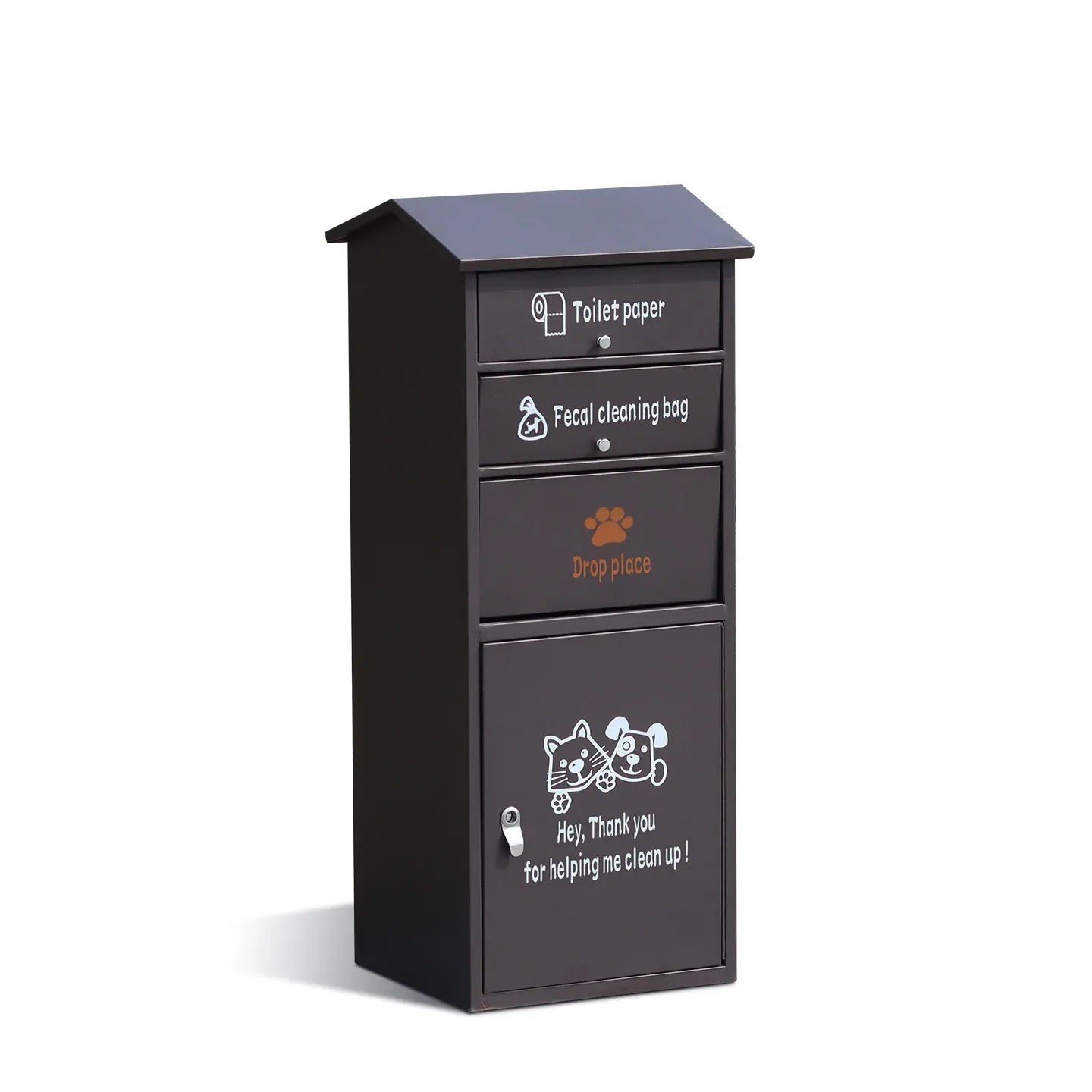
There is no universal number that works for every park or community.
A small property with one main walking route may need fewer stations than a larger site with several entrances, disconnected green spaces and multiple dog-walking areas.
Use the following planning process.
1. Map the actual walking routes
Identify where residents and visitors genuinely walk their dogs, including:
① Main entrances and exits;
② Side gates;
③ Internal footpaths;
④ Parking access routes;
⑤ Green-space boundaries;
⑥ Dog park entrances;
⑦ Informal shortcuts;
⑧ Areas near apartment buildings.
Planning only from a property map may overlook real user behavior.
2. Mark existing waste facilities
Record the location and capacity of existing park trash cans and commercial outdoor trash cans.
A nearby trash receptacle may allow the use of a dispenser-only station, but only when it is visible and convenient along the same walking route.
3. Identify problem areas
Review:
① Resident complaints;
② Areas with visible pet waste;
③ High dog-traffic zones;
④ Locations where bags are frequently left on the ground;
⑤ Long distances between existing stations;
⑥ Bins that regularly overflow.
These areas may need a new station, a larger receptacle or more frequent maintenance.
4. Start with a practical layout and adjust it
Initial station quantities should be treated as a planning estimate. After installation, record:
① Bag use;
② Refill frequency;
③ Waste-bin fill level;
④ Overflow events;
⑤ Complaints;
⑥ Underused stations.
A frequently empty dispenser may indicate high use, theft or over-dispensing. A station that remains nearly unused may be poorly positioned rather than unnecessary.
Where Should Dog Waste Stations Be Installed?
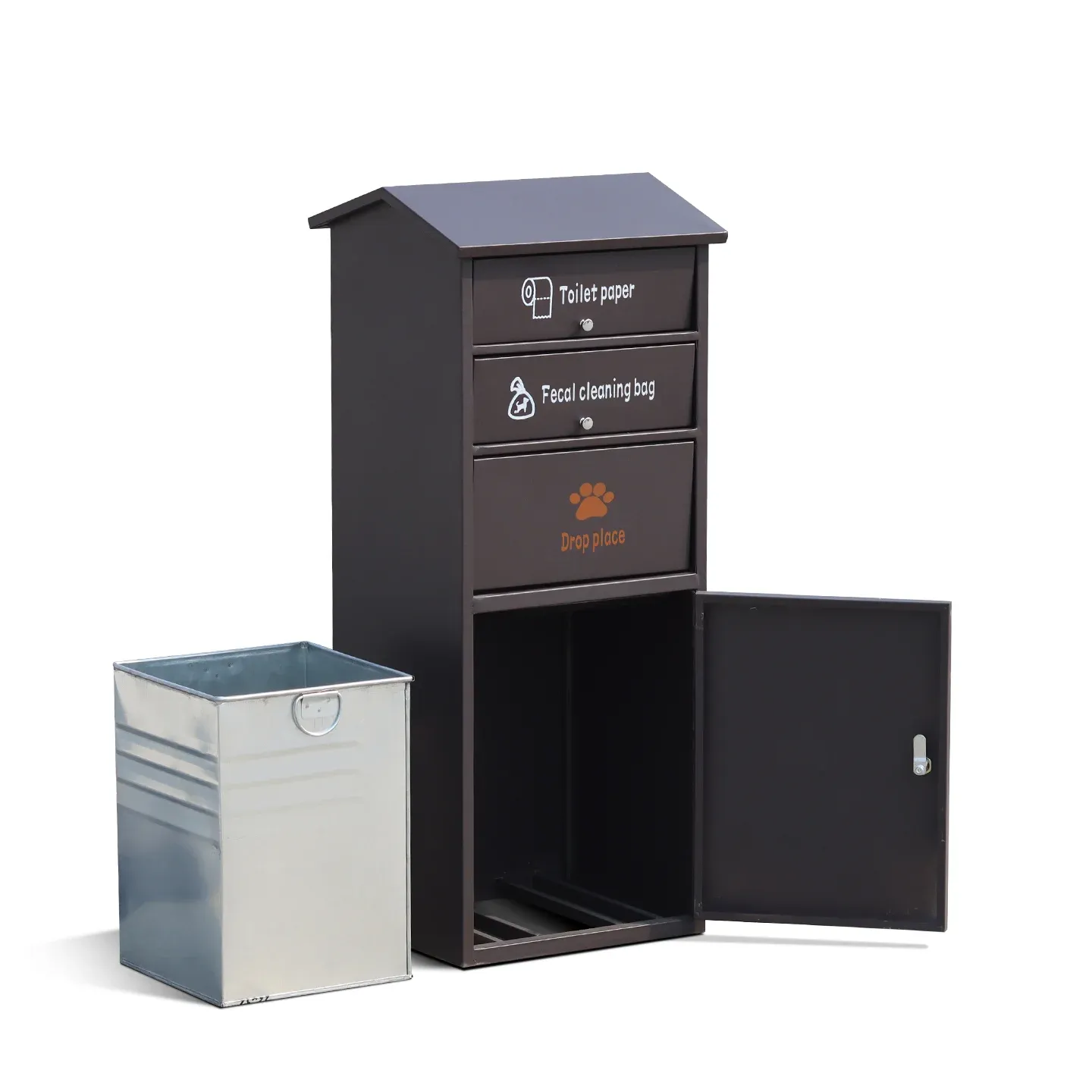
Good placement makes cleanup convenient at the moment dog owners need it.
Recommended locations
Consider installing stations at:
① Park entrances;
② Trailheads;
③ Dog park entrances and exits;
④ Intersections of major walking paths;
⑤ HOA community gates;
⑥ Apartment green-space access points;
⑦ Routes connecting parking areas to residential buildings;
⑧ Existing pet-relief areas;
⑨ Documented pet-waste hotspots.
A station should be visible before the dog owner reaches the problem area, not hidden after it.
Locations to avoid
Avoid placing stations:
① Behind dense landscaping;
② Where parked vehicles block visibility;
③ Directly beside playgrounds;
④ Too close to swimming pools or dining areas;
⑤ Immediately outside residential windows;
⑥ In locations that block pedestrian movement;
⑦ In drainage channels or frequently muddy ground;
⑧ Outside normal maintenance routes;
⑨ Where doors or lids cannot open fully.
Odor concerns can often be reduced through regular collection, suitable capacity and a covered receptacle rather than moving every station far from the walking route.
Installation and Accessibility Requirements
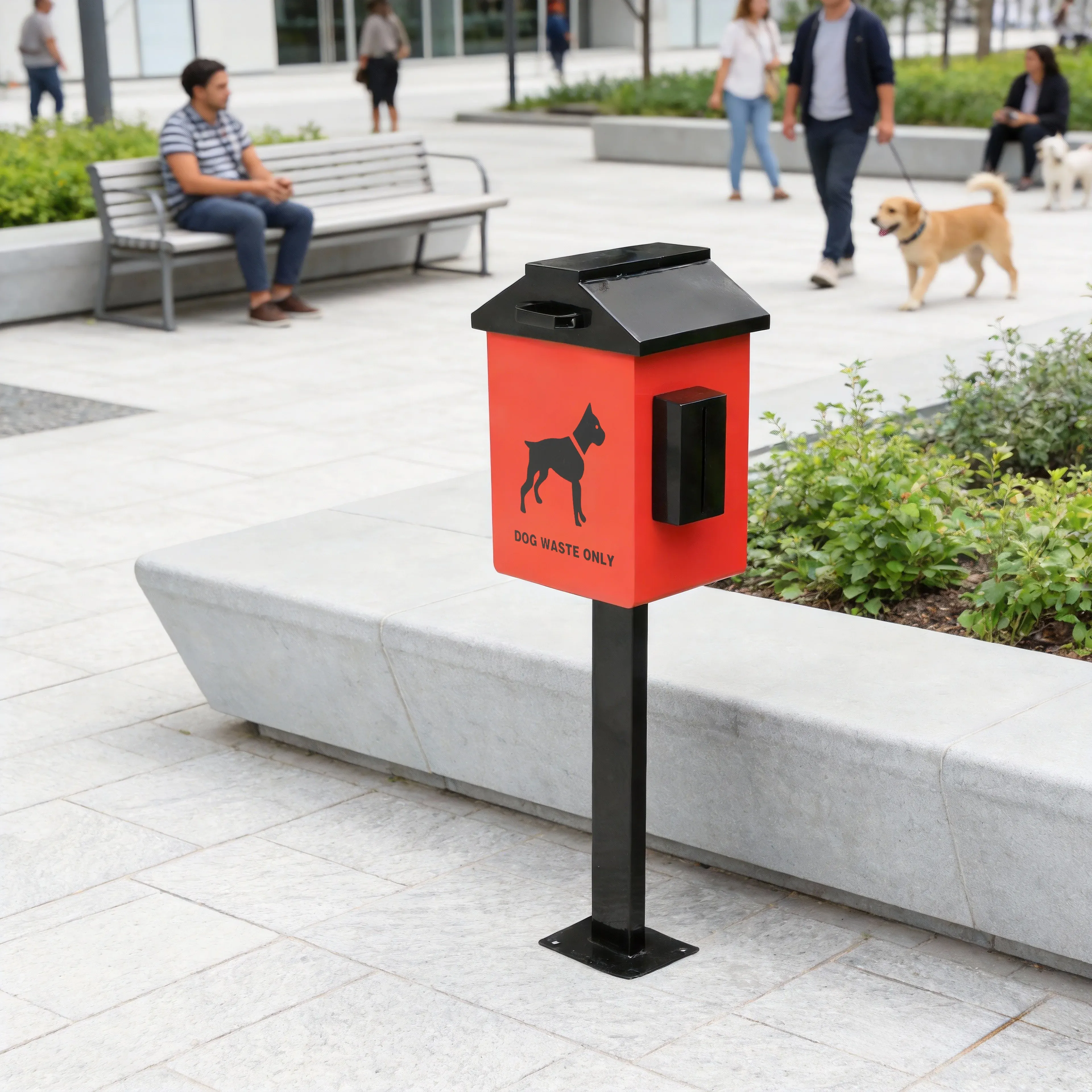
A station must remain stable and accessible throughout its service life.
Common installation methods include:
In-ground installation
The post is placed in an excavated hole and secured with concrete. This provides strong resistance to movement and may be suitable for lawns, parks and trail areas.
Before digging, confirm the location of underground services and follow local site requirements.
Surface mounting
A base plate is fixed to an existing concrete surface using suitable anchor bolts.
This approach may be used for:
① Paved community entrances;
② Concrete dog park areas;
③ Commercial developments;
④ Locations where excavation is restricted.
The concrete condition and anchor specification must match the load and post design.
Wall or fence mounting
A dispenser can be attached to a suitable wall, fence or existing structure when a separate post is unnecessary.
The supporting surface must be able to withstand repeated pulling force.
Accessibility considerations
The station should not create an obstacle on the path. Buyers and installers should consider:
① Approach space;
② Dispenser reach;
③ Receptacle opening height;
④ Sidewalk clearance;
⑤ Ground stability;
⑥ Door-opening space for maintenance;
⑦ Visibility of the sign;
⑧ Local accessibility regulations.
Because requirements vary by country and municipality, installation height and clearance should be checked against applicable local standards.
Dog Waste Station Maintenance Schedule
Even the best station will fail to improve the site if bags are unavailable or the receptacle is overflowing.
A basic maintenance plan may include:
Maintenance task | Suggested starting frequency | Purpose |
Check bag supply | One to three times per week | Prevent empty dispensers |
Empty the dog waste bin | Based on actual use | Prevent overflow and odor |
Replace the liner | During each collection | Keep the receptacle clean |
Wipe and clean the station | Weekly or as needed | Remove dirt and contamination |
Inspect locks and hinges | Monthly | Maintain normal operation |
Check the post and anchors | Monthly | Confirm structural stability |
Inspect coating and corrosion | Monthly or seasonally | Identify early damage |
Review location performance | Quarterly | Improve station placement |
Review annual bag consumption | Annually | Plan purchasing and budgets |
High-traffic dog parks and apartment communities may require more frequent checks. Lower-traffic paths may need less frequent service.
Maintenance frequency should be based on actual use rather than a fixed schedule alone.
Who Should Be Responsible for Maintenance?
Responsibility should be assigned before installation.
The plan should identify who will:
1.Refill bags;
2.Purchase replacement bags;
3.Empty the waste receptacle;
4.Replace liners;
5.Clean the station;
6.Inspect locks and hinges;
7.Keep spare keys;
8.Report damage;
9.Order replacement parts;
10.Record supply use.
For HOAs and residential communities, responsibility may sit with an internal maintenance team, landscape contractor or specialized pet waste service.
A station should also have a clear reporting method. A small identification label or QR code can help users and staff report an empty dispenser or damaged receptacle without confusion.
How to Calculate Total Dog Waste Station Cost?
The initial equipment price is only one part of the total cost.
Use the following calculation:
Total ownership cost = equipment + shipping + installation + refill bags + liners + maintenance labor + repairs + replacement
Initial project costs
These may include:
① Dog waste station purchase;
② Freight;
③ Customs or import costs;
④ Site preparation;
⑤ Concrete and anchor hardware;
⑥ Installation labor;
⑦ Custom signs and branding.
Ongoing operating costs
These may include:
① Dog waste bags;
② Trash liners;
③ Staff time;
④ Waste collection;
⑤ Cleaning;
⑥ Replacement locks and keys;
⑦ Coating repairs;
⑧ Replacement dispensers or receptacles.
A lower-priced station may cost more over time when it uses proprietary refill bags, lacks replaceable components or requires frequent repairs.
When comparing quotations, ask each supplier to confirm exactly which components, mounting hardware, spare parts and bags are included.
Dog Waste Station Buying Checklist
Before requesting a quotation, prepare the following information.
Site information
① Park, HOA, apartment community or commercial site;
② Number of entrances;
③ Main walking routes;
④ Estimated dog traffic;
⑤ Existing outdoor trash receptacles;
⑥ Installation surface;
⑦ Climate and corrosion exposure;
⑧ Maintenance route.
Product configuration
① Full station or dispenser-only;
② Required number of stations;
③ Waste receptacle capacity;
④ Bag dispenser type;
⑤ Sign requirements;
⑥ Locking requirements;
⑦ Ground or surface mounting;
⑧ Custom color or logo.
Technical specifications
① Post material and dimensions;
② Metal thickness;
③ Dispenser material;
④ Receptacle material;
⑤ Surface pretreatment;
⑥ Powder-coating specification;
⑦ Hinge and fastener materials;
⑧ Liner holder;
⑨ Rain protection;
⑩ Drainage;
⑪ Replacement-part availability.
Bag specifications
① Roll, header or tissue-style format;
② Bag dimensions;
③ Bag thickness;
④ Number of bags per refill;
⑤ Dispenser capacity;
⑥ Future refill availability;
⑦ Estimated annual consumption.
Project and supply requirements
① Order quantity;
② Sample requirements;
③ Drawings;
④ Assembly instructions;
⑤ Export packaging;
⑥ Spare keys;
⑦ Spare dispensers or liners;
⑧ Required delivery date.
Common Dog Waste Station Buying Mistakes
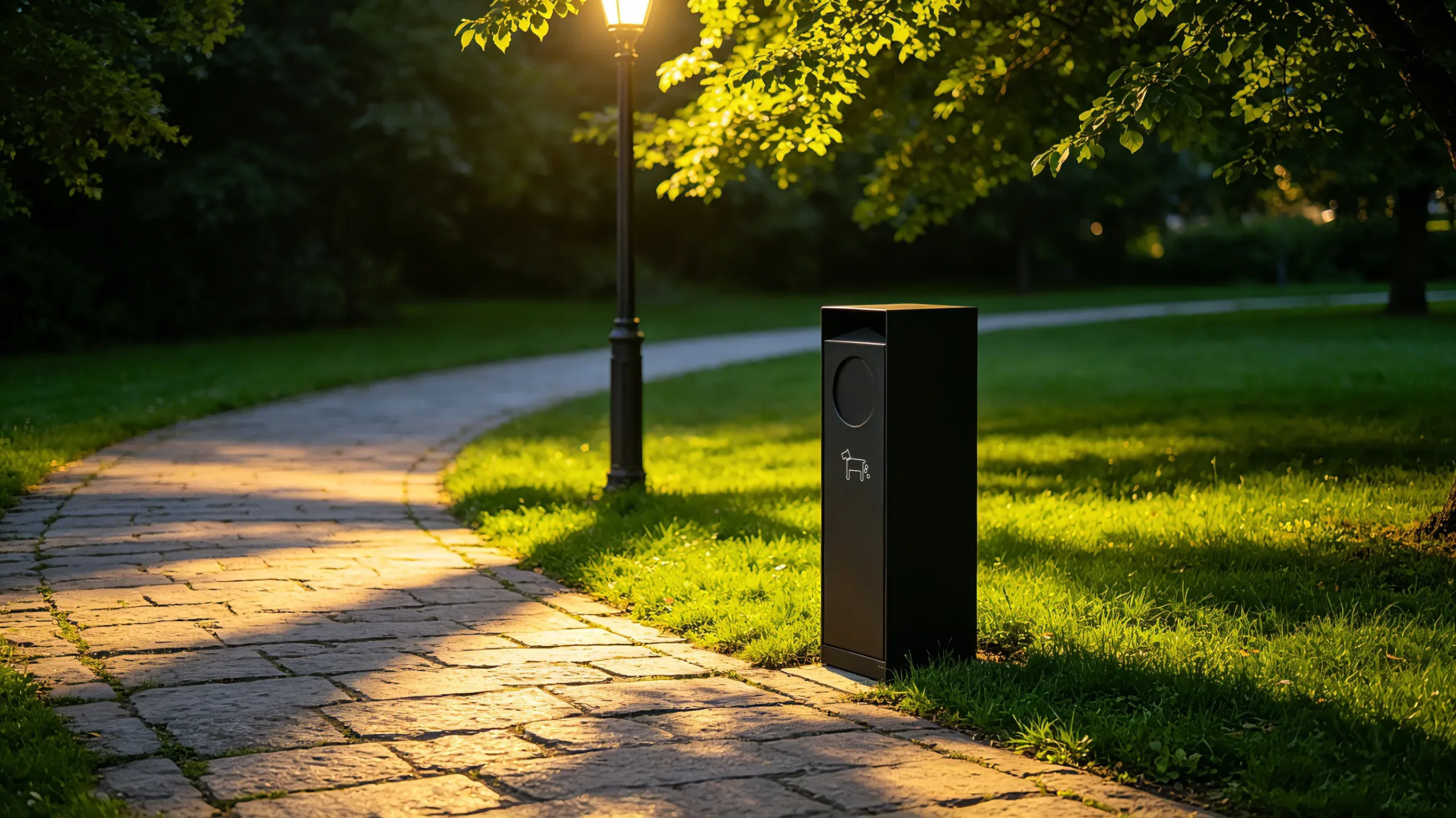
Buying only by unit price
A low unit price may hide thinner materials, limited refill compatibility, weak locks or non-replaceable parts.
Compare total ownership cost instead of equipment price alone.
Installing too few stations
A dog waste station will not be useful when users must walk far away from their normal route to find it.
Start with real user movement and adjust the layout according to bag consumption and complaints.
Installing stations where maintenance is convenient but users rarely walk
The best location for a maintenance vehicle is not always the best location for a dog owner.
The station should be convenient for both groups.
Ignoring bag compatibility
A dispenser is only useful when compatible refills remain easy to source.
Confirm all dimensions and avoid relying only on descriptions such as “standard dog waste bags.”
Using an open waste receptacle
An uncovered dog waste bin may collect rainwater, leaves and unrelated litter. A covered receptacle with a controlled opening can improve cleanliness.
Failing to assign maintenance responsibility
An empty dispenser or overflowing bin can create more dissatisfaction than having no station at all.
Set the maintenance process before installation.
Mixing too many bag systems
Using several incompatible bag types across one community complicates stock management and increases the risk of incorrect refills.
Standardize the dispenser and bag format where possible.
Selecting equipment without replaceable parts
A modular station allows damaged dispensers, signs, locks or receptacles to be replaced separately. This can extend the useful life of the complete system.
How Parks, HOAs and Communities Should Make the Final Choice?
The best dog waste station is not necessarily the largest, most expensive or most visually complex model.
Choose the station that matches:
1.Real dog-walking routes;
2.Existing waste infrastructure;
3.Expected usage;
4.Outdoor climate;
5.Maintenance resources;
6.Refill availability;
7.Installation conditions;
8.Long-term operating budget.
A full pet waste station is usually appropriate where no disposal point exists. A dispenser-only configuration may be more efficient beside a suitable public waste bin. High-traffic areas need larger bag capacity and more frequent collection, while premium communities may also require custom colors, branding and coordinated outdoor public furniture.
Most importantly, treat the station as an operating system rather than a one-time product purchase. Equipment, location, bags and maintenance must work together.
Custom Dog Waste Station Solutions for Outdoor Projects
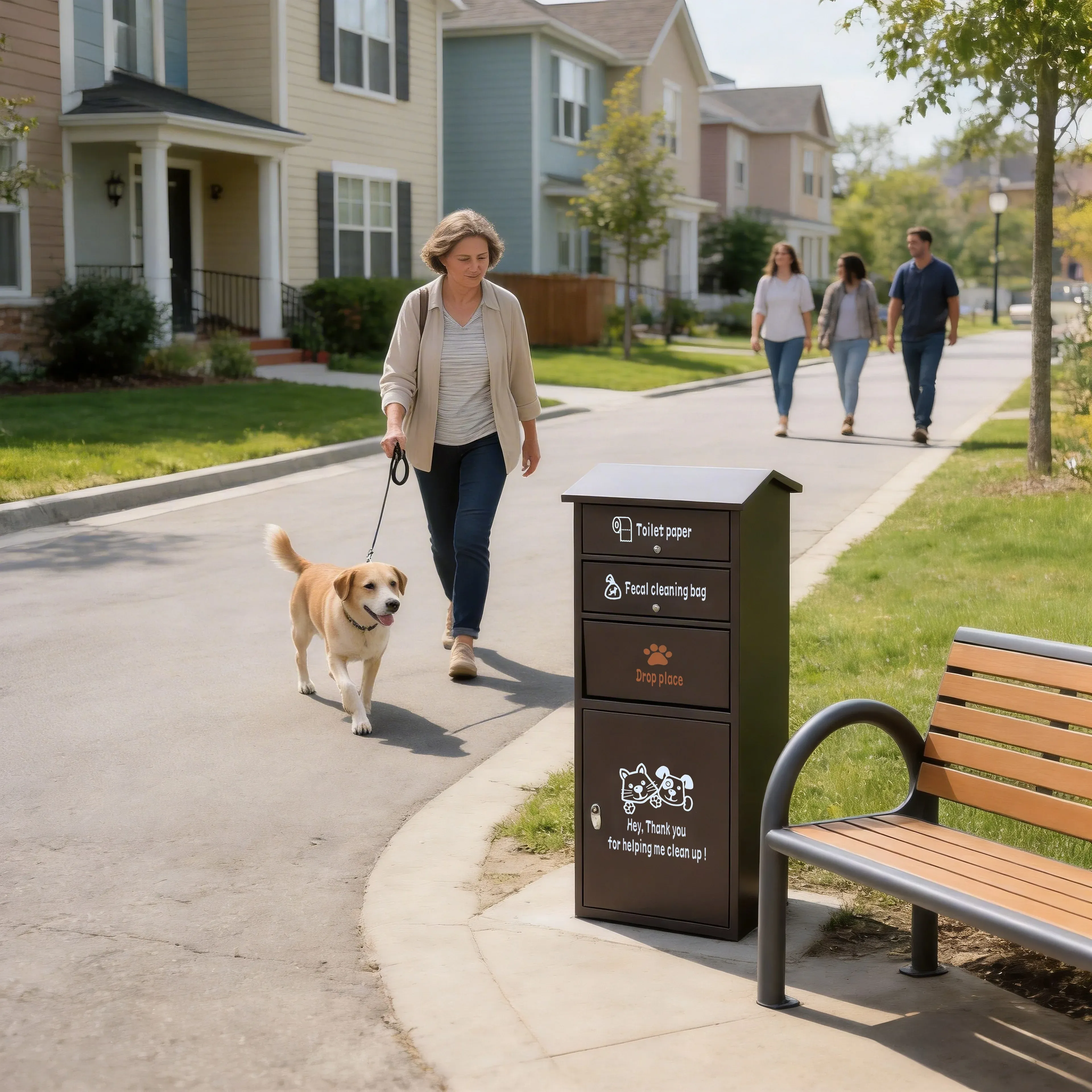
Dog waste stations can be developed to coordinate with park trash cans, commercial trash bins and other outdoor site furnishings used in a public-space project.
Depending on project requirements, customization may include:
1.Post dimensions and structure;
2.Waste receptacle capacity;
3.Bag dispenser configuration;
4.Covered disposal openings;
5.Locks and liner holders;
6.Ground-fixing methods;
7.Powder-coated colors;
8.Community, HOA or municipal logos;
9.Custom signs;
10.Modular replacement components;
11.Export packaging and assembly instructions.
LVEN has experience in the design and manufacturing of metal outdoor public furniture, including material selection, metal fabrication, welding, surface treatment, assembly and project customization.
For projects requiring a custom dog waste station, buyers can provide the intended application, quantity, installation environment and preferred configuration for technical evaluation.
Frequently Asked Questions
What should a dog waste station include?
A complete dog waste station generally includes a post, sign, bag dispenser, compatible bags, covered waste receptacle, liner holder, lock and mounting hardware.
What is the difference between a dog waste station and a dog waste bin?
A dog waste bin is only the disposal receptacle. A dog waste station normally combines a bag dispenser, sign and disposal bin in one outdoor system.
How many dog waste stations does an HOA need?
The number depends on community size, entrances, walking routes, dog population, existing trash cans and maintenance frequency. Begin with a site audit and adjust the quantity using actual bag consumption and overflow data.
Where should dog waste stations be placed?
Recommended locations include community entrances, park entrances, trailheads, path intersections, dog park gates and known pet-waste hotspots. Stations should be visible and located along real walking routes.
Should I buy a full station or a dispenser only?
Choose a full station when no suitable disposal bin is nearby. A dispenser-only model may be sufficient when an existing commercial outdoor trash receptacle is easy to see and reach.
What material is best for an outdoor dog waste station?
Galvanized steel offers a practical balance of strength and cost. Aluminum can work well for dispensers, while stainless steel may be suitable for humid or coastal conditions. The correct choice depends on climate, impact risk and budget.
Are dog waste station bags universal?
No. Roll width, diameter, core size, bag dimensions, header holes and dispenser openings can vary. Confirm compatibility before purchasing replacement bags.
How often should a dog waste station be emptied?
Emptying frequency should be based on real use. High-traffic parks may require several checks per week, while lower-traffic areas may need less frequent service. The bin should be emptied before it becomes full or develops odor.
Do dog waste stations need to be installed in concrete?
Many post-mounted stations use concrete for stable in-ground installation. Surface-mounted models can be fixed to a suitable concrete base, while some dispensers can be mounted on walls or fences.
Can a dog waste station be customized with an HOA or city logo?
Yes. The sign, color, wording and logo can be customized when supported by the manufacturer. Buyers should provide approved artwork and color references before production.
Can compostable bags be used in a pet waste station?
They can be used when their dimensions match the dispenser. Buyers should also verify certification, storage conditions and whether the local waste-processing method provides an appropriate disposal route.
What maintenance does an outdoor dog waste bin require?
Maintenance includes replacing liners, emptying waste, cleaning surfaces, checking locks and hinges, inspecting the coating, tightening fasteners and confirming that the post remains stable.
Contents