Wood vs WPC Outdoor Trash Bins for Commercial Spaces
 12
12  Share
Share
Choosing between wood and wood-plastic composite is not simply a question of which material is more durable. For commercial spaces, the right choice also depends on the visual character of the site, local climate, cleaning frequency, maintenance resources and expected service conditions.
Natural wood usually provides a more authentic appearance and may be preferred for resorts, landscaped parks and premium commercial developments. WPC, or wood-plastic composite, is generally easier to maintain and offers more consistent performance in outdoor areas exposed to moisture, frequent cleaning and heavy public use.
However, the exterior panel is only one part of an outdoor trash bin. The metal frame, surface treatment, inner liner, fasteners, access door and anchoring system can have just as much influence on long-term performance.
This guide compares wood and WPC outdoor trash bins from the perspective of commercial buyers, landscape designers, contractors, distributors and facility managers.
Wood vs WPC Outdoor Trash Bins at a Glance
Comparison factor | Natural wood | WPC |
Appearance | Authentic grain with natural variation | Consistent wood-look finish |
Moisture resistance | Depends on wood species and treatment | Generally resistant to moisture absorption |
Maintenance | Requires periodic inspection and refinishing | Usually requires routine cleaning only |
UV exposure | May fade, dry or crack without protection | May experience gradual fading depending on formulation |
Rot and insects | Possible without proper treatment | Not normally affected by rot or wood-boring insects |
Cleaning | Requires controlled cleaning methods | Generally suitable for frequent surface cleaning |
Repair | Individual wood slats can often be refinished or replaced | Damaged panels are usually replaced |
Batch consistency | Natural differences between boards | More uniform color and dimensions |
Design value | Strong natural and premium character | Modern, controlled and repeatable appearance |
Best suited for | Design-led sites with planned maintenance | High-traffic, low-maintenance commercial projects |
In general, wood is more suitable when natural material authenticity is a priority. WPC is usually more practical when a project requires stable appearance, lower maintenance and consistent repeat orders.
What Are Wood and WPC Outdoor Trash Bins?
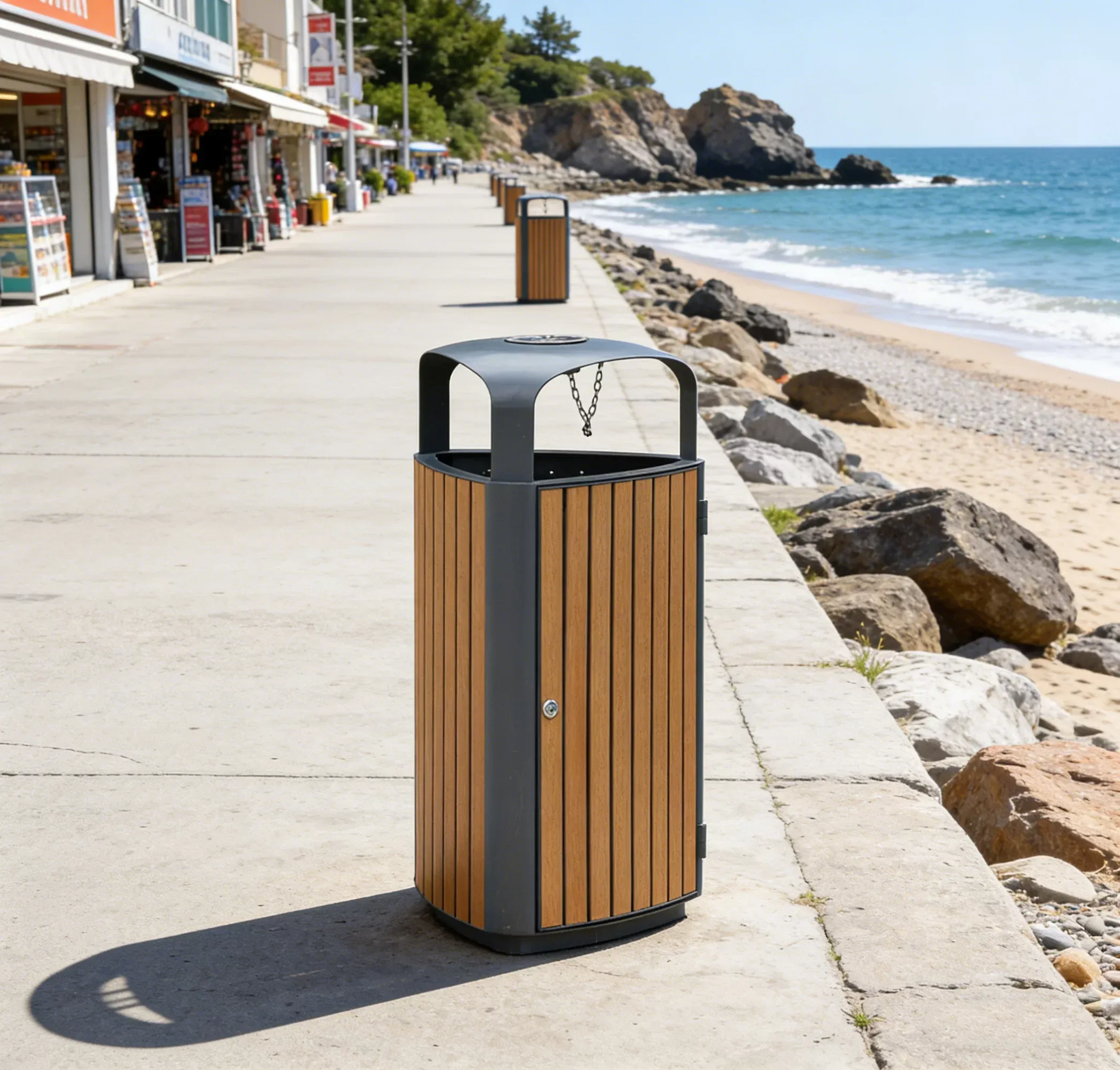
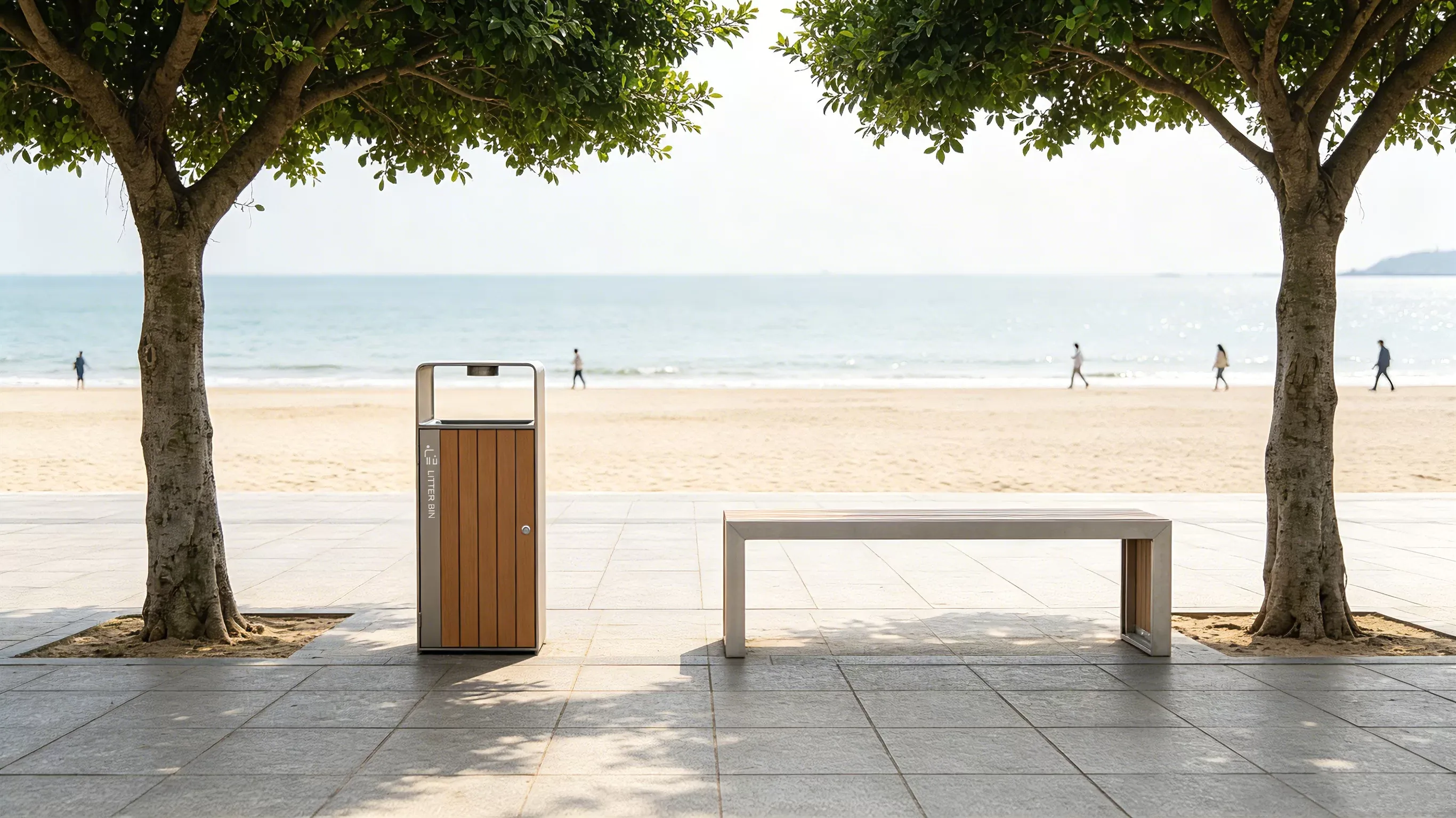
A wooden outdoor trash bin is rarely constructed entirely from wood. Most commercial models use a load-bearing metal frame with wood slats or panels installed around the exterior.
This structure combines the appearance of wood with the strength of galvanized steel, stainless steel or another structural metal. The removable inner liner, hinges, locks and base are also normally made from metal.
The wood may be hardwood, softwood, thermally modified wood or another species treated for outdoor use. Its performance depends heavily on moisture content, drying, coating, sealing and installation details.
WPC is a composite material typically produced from wood fibers or wood flour combined with thermoplastic material and additives. It is designed to create a wood-like surface while reducing some of the maintenance requirements associated with natural timber.
Buyers should not assume that all materials described as “plastic wood” are WPC. Commercial outdoor trash bins may use several different products, including:
① Wood-plastic composite;
② PS plastic wood;
③ HDPE plastic lumber;
④ Recycled plastic lumber;
⑤ PVC-based composite profiles;
⑥ Wood-look metal panels.
These materials have different structures, weathering characteristics and price levels. Before ordering, buyers should ask the supplier to identify the exact panel material instead of relying only on general terms such as composite wood or plastic wood.
Appearance and Commercial Space Integration
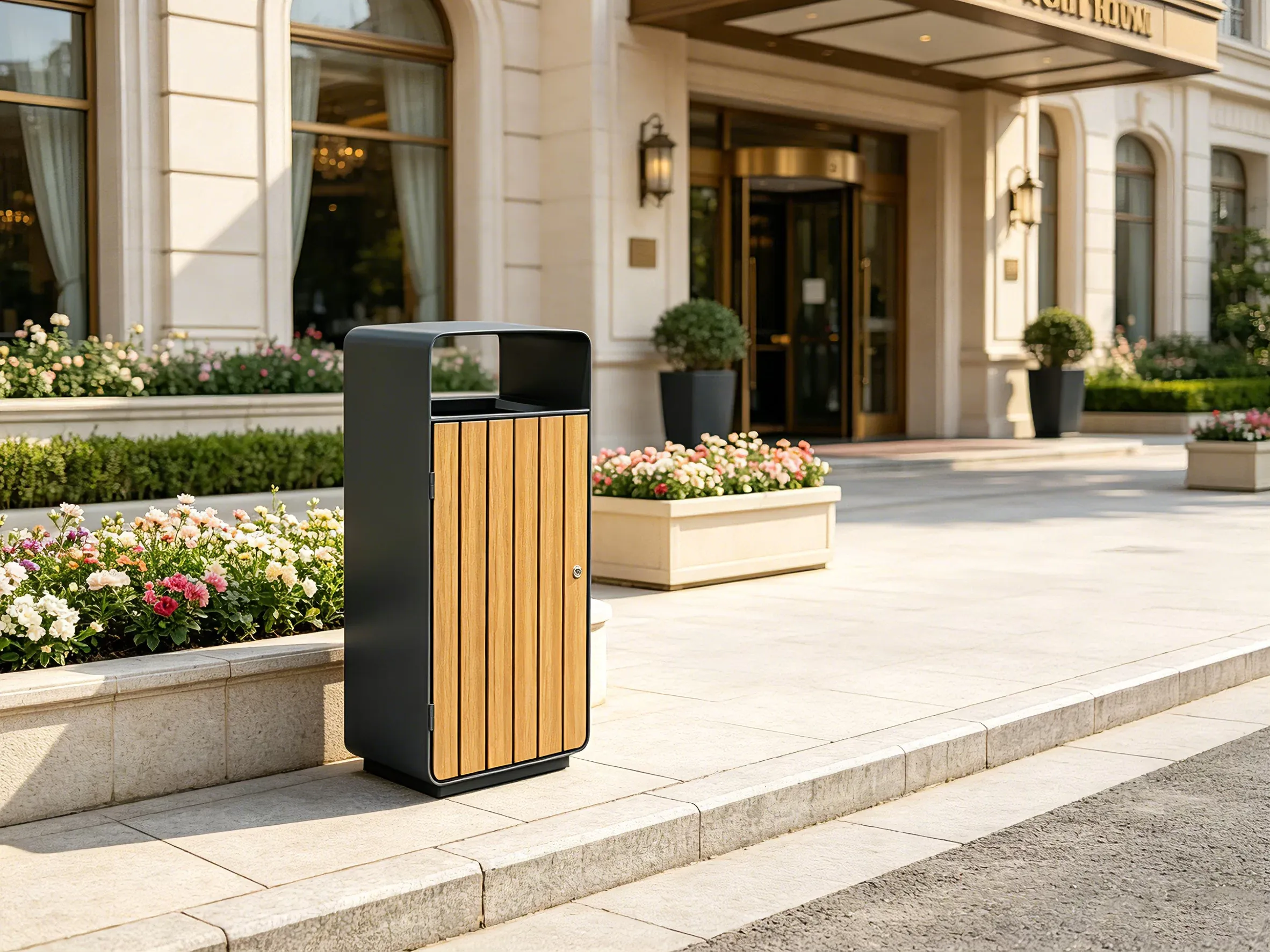
The appearance of an outdoor trash bin influences how well it fits into the surrounding architecture and landscape.
Natural wood provides authentic material character
Every piece of natural wood has its own grain, texture and color variation. This can make wooden outdoor trash bins especially suitable for:
① Resorts and hotels;
② Scenic destinations;
③ Landscaped parks;
④ Outdoor restaurants;
⑤ Heritage-style commercial streets;
⑥ Nature-focused visitor centers.
The natural variation helps the trash receptacle feel like part of the landscape rather than an isolated utility product.
For high-end projects, real wood can also coordinate with timber benches, pergolas, decking, planters and other outdoor site furnishings.
However, natural variation can make exact color consistency more difficult across a large order. Replacement slats installed several years later may not perfectly match the original material.
WPC creates a more consistent visual system
WPC outdoor trash bins are available in controlled colors, profiles and wood-grain textures. This makes it easier to maintain a unified appearance across multiple locations.
WPC may be preferred for:
① Shopping centers;
② Office campuses;
③ Schools and universities;
④ Commercial streets;
⑤ Transportation areas;
⑥ Large residential developments;
⑦ Multi-phase public projects.
For distributors and contractors, consistent profiles can also make repeat purchasing and spare-part replacement easier.
WPC does not fully reproduce the natural variation and tactile quality of real timber. Buyers should review physical samples rather than making a decision based only on catalog images.
Weather Resistance and Outdoor Durability
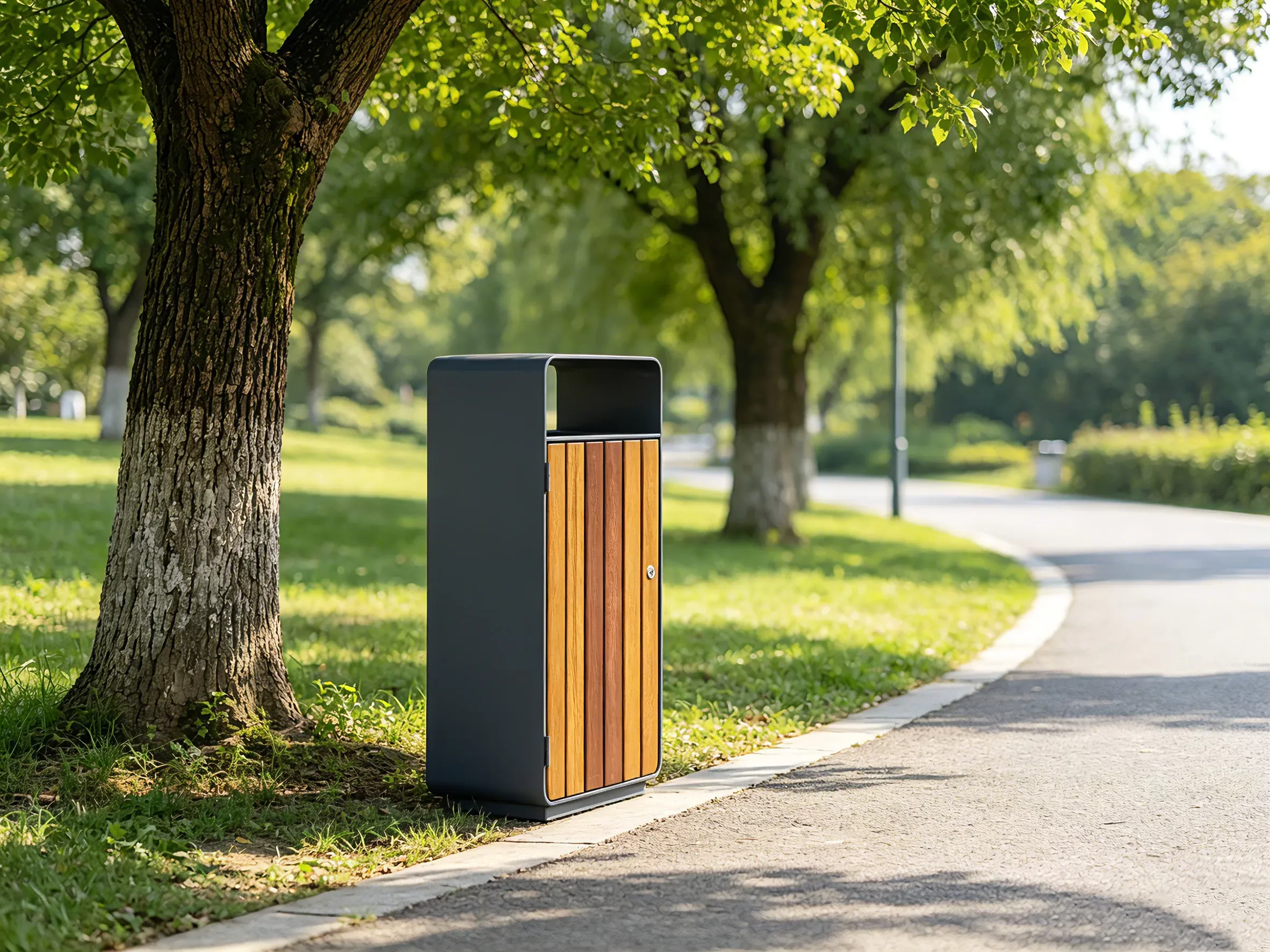
Outdoor trash bins may be exposed to rain, ultraviolet radiation, temperature changes, humidity, wind, dust and cleaning chemicals. Both the exterior panel and the supporting structure must be evaluated.
How natural wood performs outdoors?
Natural wood can perform well outdoors when the correct species, moisture level, drying method and protective treatment are used.
Possible problems include:
① Moisture absorption;
② Swelling or dimensional movement;
③ Surface cracking;
④ Fading;
⑤ Coating deterioration;
⑥ Fungal decay;
⑦ Insect damage;
⑧ Loose fasteners around moving boards.
These risks are higher when untreated or poorly dried wood is used.
Commercial wooden outdoor trash bins should therefore be designed with drainage gaps and sufficient ventilation. The ends of the wood should be protected, and water should not remain trapped between the panel and metal frame.
A quality coating system can slow weathering, but it does not eliminate the need for inspection and maintenance.
How WPC performs outdoors?
WPC generally absorbs less moisture than untreated natural wood and does not rot in the same way. It is also not normally affected by wood-boring insects.
This makes it suitable for commercial outdoor trash cans exposed to:
① Frequent rain;
② High humidity;
③ Irrigation systems;
④ Routine washing;
⑤ Food and beverage waste;
⑥ Year-round outdoor placement.
However, WPC quality varies by formulation and manufacturing process. Lower-quality products may experience noticeable fading, surface chalking, deformation or brittleness.
WPC also expands and contracts as temperatures change. Panel lengths, fastening methods and installation gaps should therefore be considered during product design.
Buyers should ask about UV stabilization, impact resistance and recommended operating conditions, especially for projects in very hot climates.
The Metal Structure Is as Important as the Panel
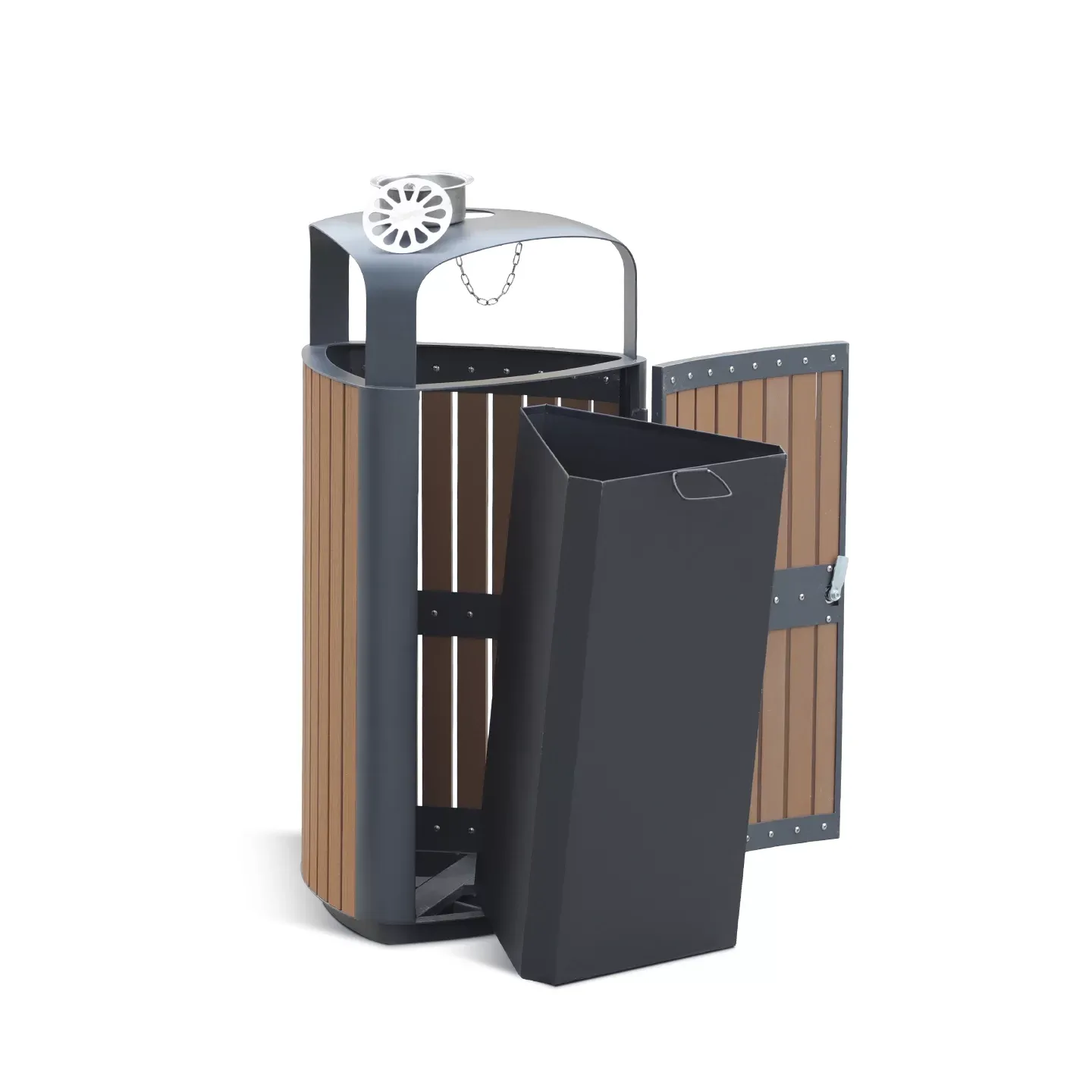
A wood or WPC panel does not determine the durability of the complete trash receptacle.
Commercial trash bins normally include:
① A metal support frame;
② Welded joints;
③ Hinges and locks;
④ A removable inner liner;
⑤ A top cover or rain hood;
⑥ Base plates and anchor points;
⑦ Screws and other fasteners;
⑧ A powder-coated or stainless steel surface.
If the frame corrodes, the door deforms or the hinges fail, a durable exterior panel will not prevent the product from becoming difficult to use.
Galvanized steel is commonly selected for commercial projects because it offers a balance between structural strength and cost. Stainless steel may be more appropriate for coastal, humid or chemically demanding environments.
The metal should be properly cut, formed, welded, ground and pretreated before powder coating. Critical joints and exposed edges require particular attention because these areas are more vulnerable to corrosion.
For commercial outdoor trash receptacles, buyers should evaluate the complete construction rather than selecting a product based only on the visible wood-like surface.
Cleaning and Maintenance Requirements
Maintenance requirements are one of the biggest differences between wood and WPC.
Maintaining wooden outdoor trash bins
A wooden trash bin may require:
① Routine dust and dirt removal;
② Washing with an appropriate cleaner;
③ Inspection for cracks and loose slats;
④ Examination of coating damage;
⑤ Periodic resealing or refinishing;
⑥ Replacement of damaged wood sections;
⑦ Inspection for trapped moisture;
⑧ Tightening of fasteners.
The maintenance frequency depends on the wood species, coating system, climate and level of exposure.
Wooden park trash cans installed under covered areas will normally require less maintenance than bins exposed to strong sunlight, rainfall or irrigation every day.
Facility managers should include wood treatment in the annual maintenance plan rather than waiting for visible deterioration.
Maintaining WPC outdoor trash bins
WPC usually requires fewer surface treatments. Maintenance normally involves:
① Removing dust and loose debris;
② Washing with water and mild cleaning products;
③ Cleaning food, oil or beverage stains promptly;
④ Checking panel fasteners;
⑤ Inspecting scratches or impact damage;
⑥ Replacing badly damaged panels when necessary.
WPC normally does not require regular painting, staining or sealing. This can reduce labor requirements across projects containing many outdoor trash bins.
However, WPC should not be treated as maintenance-free. The inner liner, metal frame, door, locks and anchoring system still need regular inspection.
Initial Cost vs Lifecycle Cost
The lowest purchase price does not always result in the lowest project cost.
Commercial buyers should consider total ownership cost:
Total ownership cost = product cost + installation + maintenance labor + surface treatment + replacement parts + operational downtime + final replacement
Natural wood may have a competitive initial price, depending on the species and treatment. Premium hardwoods and thermally modified materials can be more expensive.
The main long-term cost of wood is periodic maintenance. For a small project, this may be manageable. For a commercial development containing dozens or hundreds of trash receptacles, refinishing labor can become a significant expense.
WPC may have a higher initial material cost than basic softwood, but it can reduce regular coating and sealing work. This may produce better value in locations where maintenance labor is expensive or difficult to organize.
The comparison should be made at project level rather than per unit. Buyers should consider:
① Number of trash bins;
② Expected installation period;
③ Local labor cost;
④ Frequency of cleaning;
⑤ Availability of maintenance staff;
⑥ Cost of replacement panels;
⑦ Required visual standard;
⑧ Possibility of future repeat orders.
Which Material Is Better for Different Commercial Spaces?
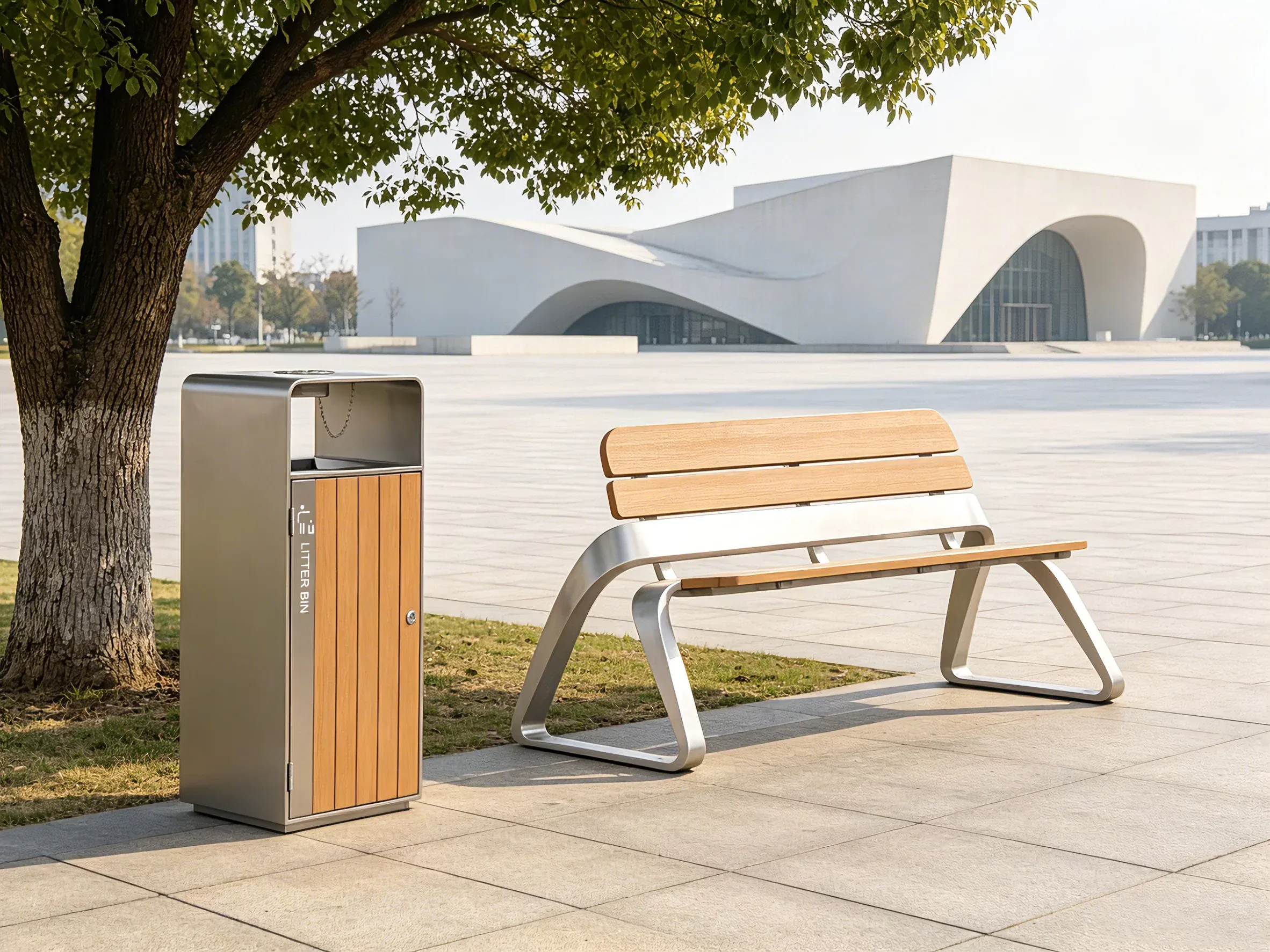
There is no single material that is best for every project.
Parks and scenic areas
Both materials can work in parks.
Natural wood is often selected when the design needs to blend into vegetation, timber structures or traditional landscape features. WPC is suitable when the park authority wants a wood-like appearance without regular refinishing.
For trash receptacles for parks, also consider rain protection, anchoring, litter capacity and the distance between collection points.
Hotels and resorts
Natural wood can reinforce a premium or nature-inspired environment. It may be especially suitable for protected courtyards, landscaped entrances and resort walkways.
WPC may be more practical around swimming pools, outdoor dining areas and other locations that experience frequent moisture or cleaning.
Shopping centers and commercial streets
WPC is often the more practical choice for high-traffic commercial spaces because it provides consistent appearance and relatively simple maintenance.
Commercial outdoor trash cans in these locations should also have durable doors, secure locks, removable inner bins and surfaces that can be cleaned frequently.
Schools and office campuses
WPC works well for campuses where maintenance teams need predictable cleaning procedures and consistent products across multiple buildings.
Where waste separation is required, the same material can be used for single-stream units and commercial recycling bins to create a unified system.
Restaurants and outdoor dining areas
Food waste, drinks and grease can create difficult stains. Easy-clean WPC panels may reduce routine maintenance, although the exact surface texture should be checked because deep wood-grain patterns can trap dirt.
The inner liner should be easy to remove and wash, and the opening should be designed to reduce direct rain entry.
Coastal and humid environments
WPC may reduce concerns about rot and repeated wood refinishing, but the metal structure becomes especially important.
Buyers should specify an appropriate grade of stainless steel or a properly protected metal structure, together with corrosion-resistant fasteners. Using WPC panels on a poorly protected frame will not create a durable coastal product.
Premium architectural projects
Natural wood may still be the better choice when material authenticity and architectural value are more important than minimum maintenance.
The project should include a clear maintenance plan and a method for replacing individual wood slats without replacing the entire bin.
What Should Commercial Buyers Confirm Before Ordering?
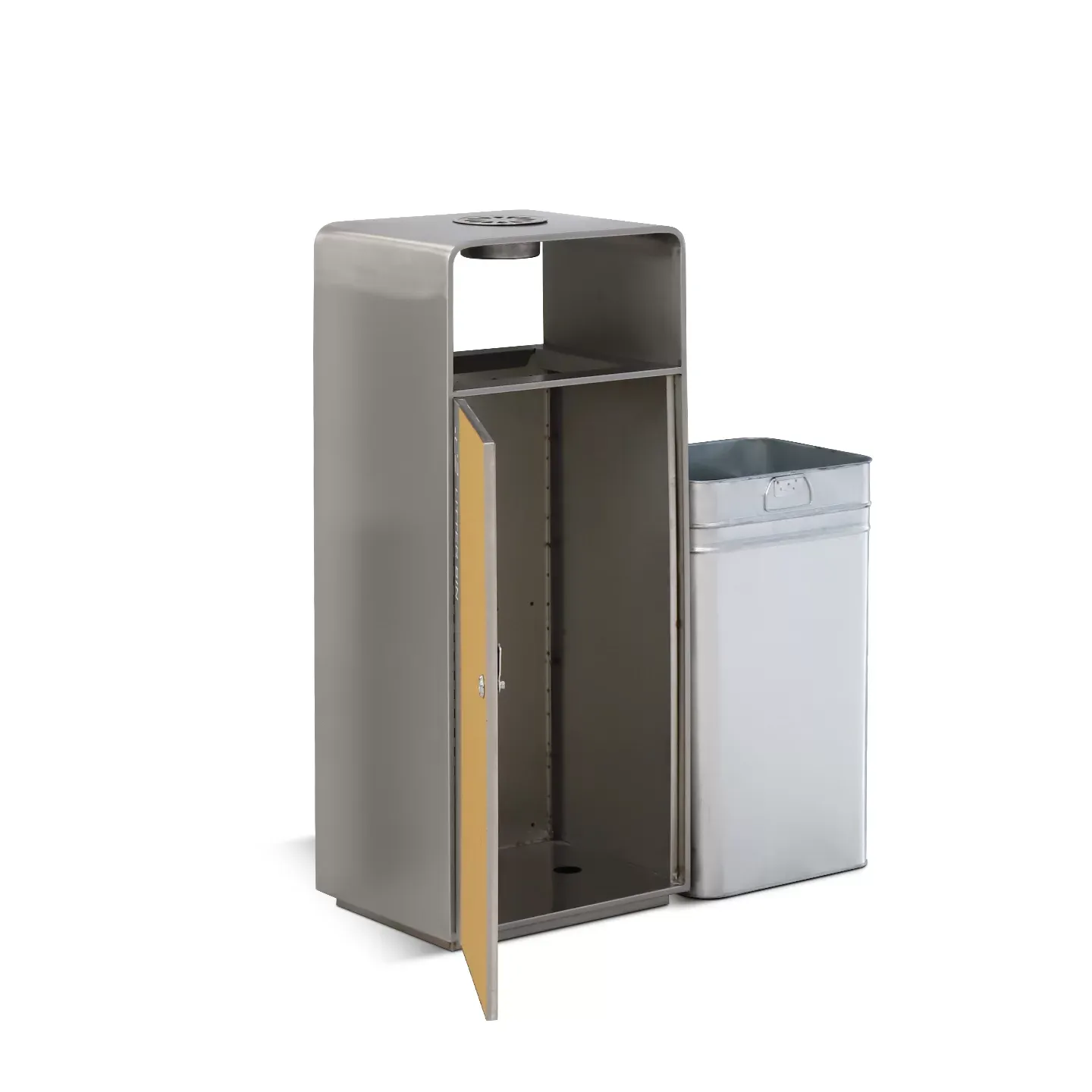
Before purchasing wood or WPC outdoor trash bins, confirm the following specifications.
Panel material
① Exact wood species or composite formulation;
② Panel thickness;
③ Profile dimensions;
④ Moisture treatment for natural wood;
⑤ UV stabilization for composite panels;
⑥ Color and grain sample;
⑦ Expected color variation;
⑧ Panel replacement method.
Metal construction
① Galvanized steel or stainless steel grade;
② Steel sheet and tube thickness;
③ Welding method;
④ Surface pretreatment;
⑤ Powder-coating system;
⑥ Fastener material;
⑦ Corrosion protection at cut edges and joints.
Operational design
① Overall capacity;
② Inner liner material;
③ Side-door or top-removal design;
④ Bag-retaining system;
⑤ Lock type;
⑥ Opening size;
⑦ Rain protection;
⑧ Drainage;
⑨ Ashtray option;
⑩ Recycling compartments.
Installation and project requirements
① Freestanding or ground-fixed installation;
② Anchor-bolt positions;
③ Product dimensions;
④ Local accessibility requirements;
⑤ Logo and signage;
⑥ Color matching;
⑦ Spare panels and replacement parts;
⑧ Export packaging;
⑨ Assembly instructions.
For custom outdoor trash bins, buyers should approve material samples, drawings, dimensions and surface finishes before mass production.
When Should You Choose Wood?
Choose natural wood when:
1.Authentic wood grain is an important design requirement;
2.The project has a premium, resort or nature-focused identity;
3.The site already uses natural wood outdoor furniture;
4.Maintenance staff can inspect and refinish the material;
5.Individual slats can be replaced easily;
6.Natural variation is considered part of the design;
7.The bin will be installed in a partially protected location.
Wood is not automatically unsuitable for commercial spaces. Correct species selection, drying, coating, ventilation and maintenance can produce a durable and visually distinctive product.
When Should You Choose WPC?
Choose WPC when:
1.Low routine maintenance is a priority;
2.The product will be exposed to frequent rain or washing;
3.A large project requires consistent color and dimensions;
4.Maintenance staff and budgets are limited;
5.The same model will be reordered over several project phases;
6.The site has high pedestrian traffic;
7.Easy panel replacement is required;
8.A wood-like appearance is preferred without regular refinishing.
WPC is generally a practical choice for commercial outdoor trash receptacles, but the formulation, panel structure and fastening method still need to be verified.
Wood or WPC: Which Is Better?
For most high-traffic commercial spaces, WPC offers a practical combination of wood-like appearance, moisture resistance and reduced maintenance.
Natural wood remains valuable for projects where authentic material character and landscape integration are more important than minimum maintenance.
The final decision should not be based on the panel material alone. A reliable outdoor trash bin also requires:
1.A strong metal frame;
2.Appropriate corrosion protection;
3.Safe and consistent welding;
4.A removable inner liner;
5.Secure access;
6.Reliable ground fixing;
7.Replaceable components;
8.Quality control throughout production.
The best commercial trash bins are not simply made from the most expensive material. They are designed around the actual environment, cleaning process, user traffic and long-term maintenance plan.
Custom Outdoor Trash Bins for Commercial Projects
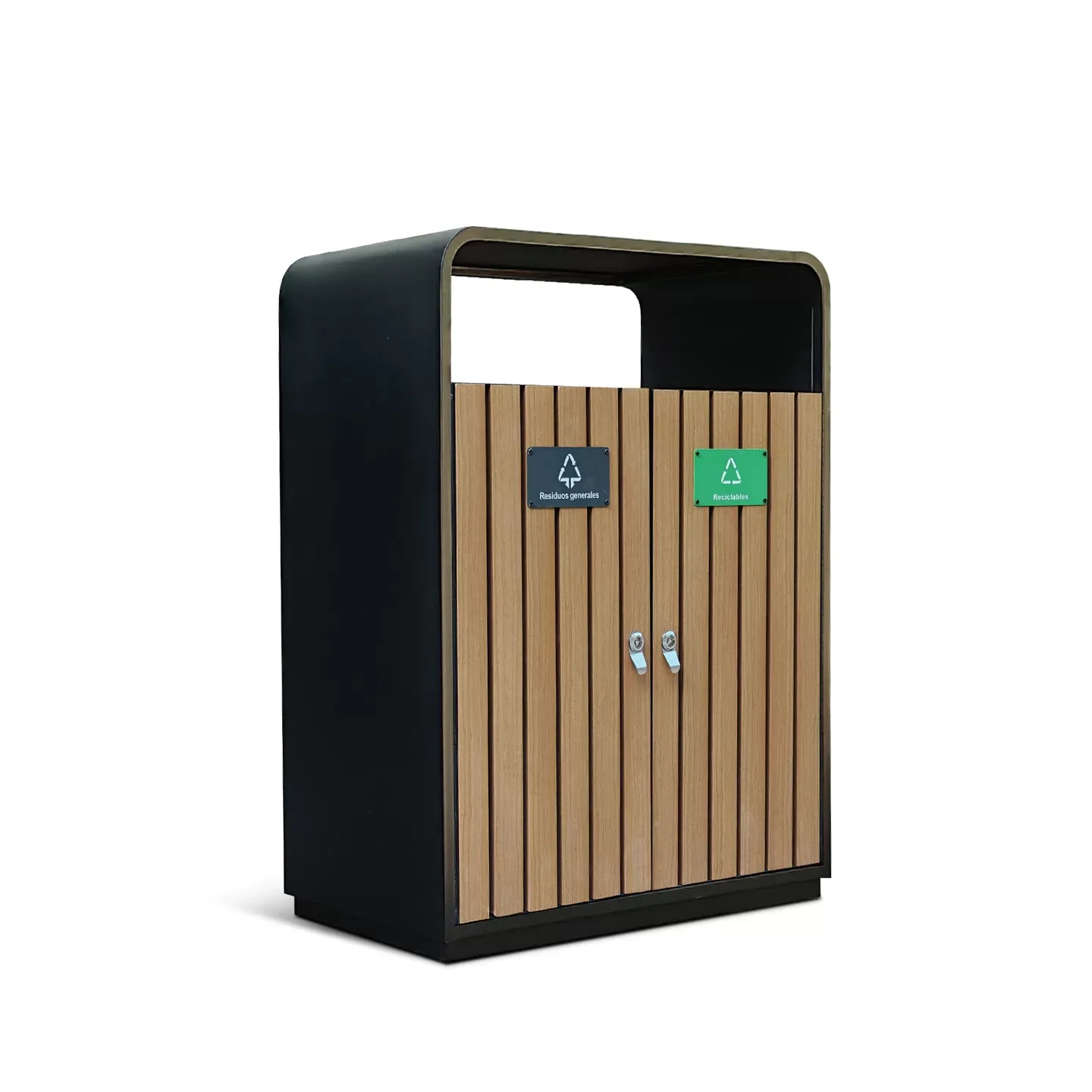
LVEN supports outdoor trash bin projects for parks, streets, commercial developments, hotels, campuses and other public spaces.
Available project support includes:
1.Material and structure recommendations;
2.Galvanized steel and stainless steel construction;
3.Natural wood and plastic wood panel options;
4.Custom dimensions and capacities;
5.Single or multi-compartment configurations;
6.Custom colors and powder-coated finishes;
7.Logo and signage customization;
8.Ashtray and rain-cover options;
9.Sample development;
10.Batch production and quality inspection;
11.Export packaging and project coordination.
Because WPC, PS plastic wood and other composite materials are not identical, our team can help buyers confirm the appropriate material specification according to the installation environment, design requirements and maintenance expectations.
Frequently Asked Questions
Is WPC better than wood for outdoor trash bins?
WPC is generally better for projects that prioritize moisture resistance, color consistency and reduced maintenance. Natural wood may be better for premium projects that require authentic grain and material character.
Do wooden outdoor trash bins need regular sealing?
Most outdoor wood requires periodic inspection and protective maintenance. The exact schedule depends on the wood species, coating system, weather exposure and cleaning conditions.
Does WPC fade in direct sunlight?
Some color change may occur after long-term UV exposure. The degree of fading depends on the WPC formulation, pigments, additives and local climate. Buyers should request a physical color sample and relevant material information.
Are WPC and PS plastic wood the same?
No. WPC commonly contains wood fiber combined with thermoplastic material, while PS plastic wood is generally based on polystyrene. Suppliers should identify the exact material rather than using “plastic wood” as a general description.
Which material is easier to clean?
WPC is usually easier to clean because it does not require regular sealing or repainting. Surface texture still matters, as deep grooves may collect dust and stains.
Which material is better for park trash cans?
Both can be suitable. Natural wood provides stronger landscape integration, while WPC offers lower maintenance. The choice should also consider rainfall, irrigation, public traffic and the available maintenance team.
Can damaged wood or WPC panels be replaced separately?
They can be replaced separately when the trash bin uses a modular panel structure. Buyers should confirm the fastening method and availability of spare panels before ordering.
What frame material is best for a wood-look outdoor trash bin?
Galvanized steel provides a practical balance of cost and durability for many commercial projects. Stainless steel may be preferred in coastal, humid or highly corrosive environments.
Can wood or WPC trash bins be customized?
Yes. Commercial buyers can customize dimensions, colors, openings, capacity, inner liners, logos, recycling compartments, ashtrays and installation methods. Material options should be confirmed during the drawing and sample stage.
Contents