
What types of galvanized steel are commonly used for outdoor trash cans?
 128
128  Share
Share
Common galvanized sheets for outdoor trash cans include zero spangle and spangled galvanized steel. So what are the differences between them?
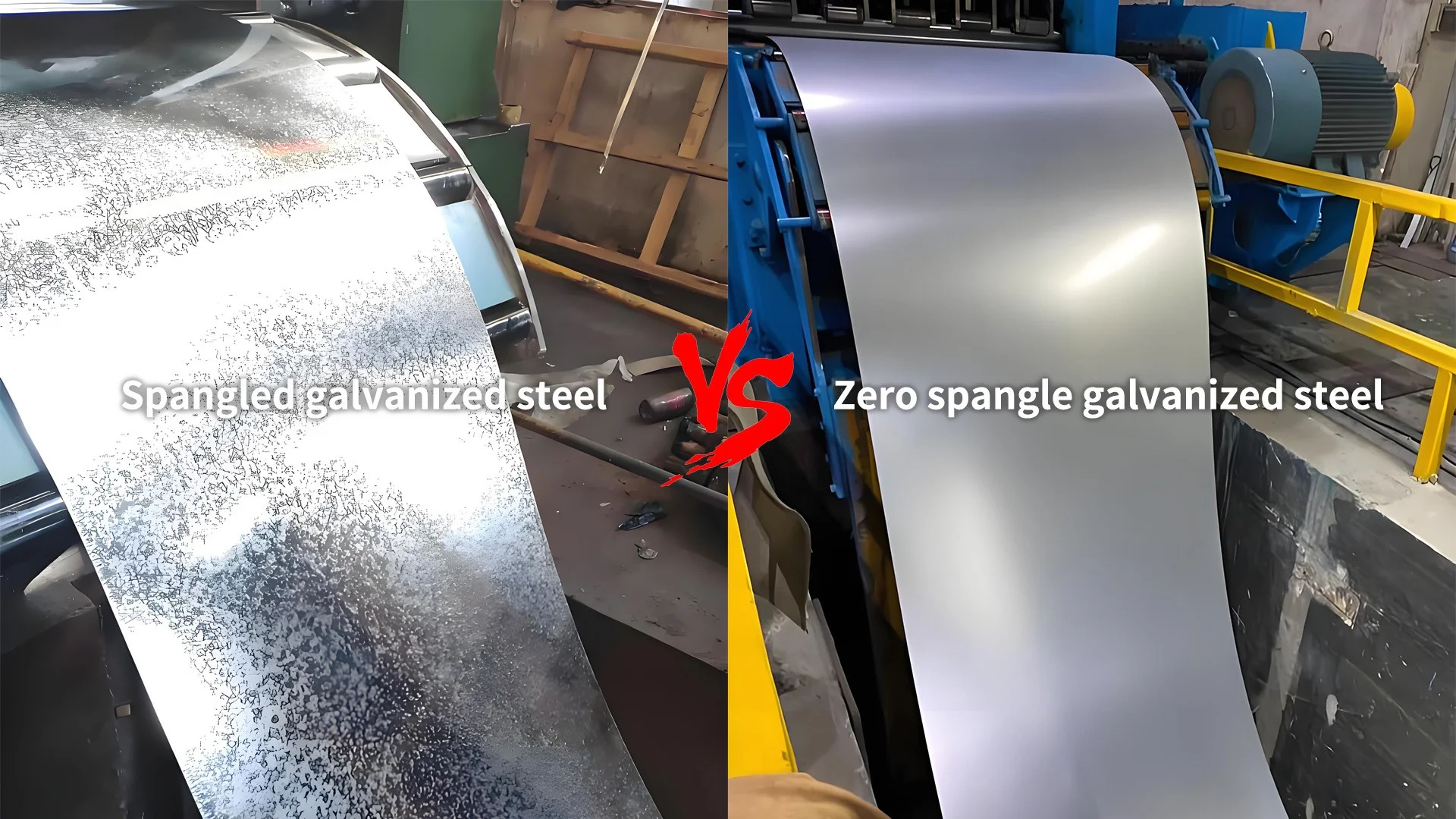
1. Appearance and microstructure
Spangled galvanized steel has obvious fish scale or snowflake like crystalline patterns. Microscopically, the surface is uneven with tiny gaps where the alloy layer is exposed. Zero spangle galvanized steel has a uniform silver gray or matte finish. The surface is flat and dense, formed by air knife wiping.
2. Paint adhesion
Spangled galvanized steel has poor adhesion. Due to the spangle crystal texture and surface tension issues, direct painting easily causes bubbling or peeling. If coating is required, phosphating or sanding must be added. Zero spangle galvanized steel has excellent adhesion. With uniform surface roughness, it can be directly powder coated or painted without special pretreatment, making it the preferred substrate for home appliances and automotive painting.
3. Corrosion resistance
Spangled galvanized steel performs well in dry indoor environments. However, in humid or salt spray conditions, the edges of spangles are prone to galvanic effects, leading to early blackening or white rust. Zero spangle galvanized steel is generally better. It is passivated (e.g., chromate or chromium free passivation) with a more uniform film, and its salt spray resistance is generally stronger than that of spangled steel of the same thickness.
4. Cost
Spangled galvanized steel is lower in cost. Its production process has lower technical barriers, making it a cost effective option on the market. Zero spangle galvanized steel is higher in cost. It requires strict control over the air knife, cooling, and substrate flatness, and is typically 5% to 10% more expensive than spangled steel.
Both spangled and zero spangle galvanized steel belong to hot dipped galvanized steel. Most outdoor trash cans from LVEN use zero spangle galvanized steel.
Contents


