
Circular Tree Bench Buying Guide for Parks and Public Spaces
 89
89  Share
Share
A circular tree bench turns the area around a tree into a shaded, functional and social seating space. For parks, campuses, commercial plazas, scenic areas and public gardens, it can provide more than a place to sit. It helps organize pedestrian flow, improves the use of tree shade, protects planted areas and adds a finished look to the landscape.
However, choosing a circular tree bench is different from selecting a standard park bench. Buyers need to consider the tree trunk size, future tree growth, root protection, available space, seating capacity, material durability, installation method and long-term maintenance.
A bench around tree should not fit tightly around the trunk just because it looks neat at installation. Trees continue to grow, roots need oxygen and water, and public seating must remain safe and stable under frequent use. This guide explains how to choose the right tree bench for parks and public spaces from a practical project and procurement perspective.
What Is a Circular Tree Bench?
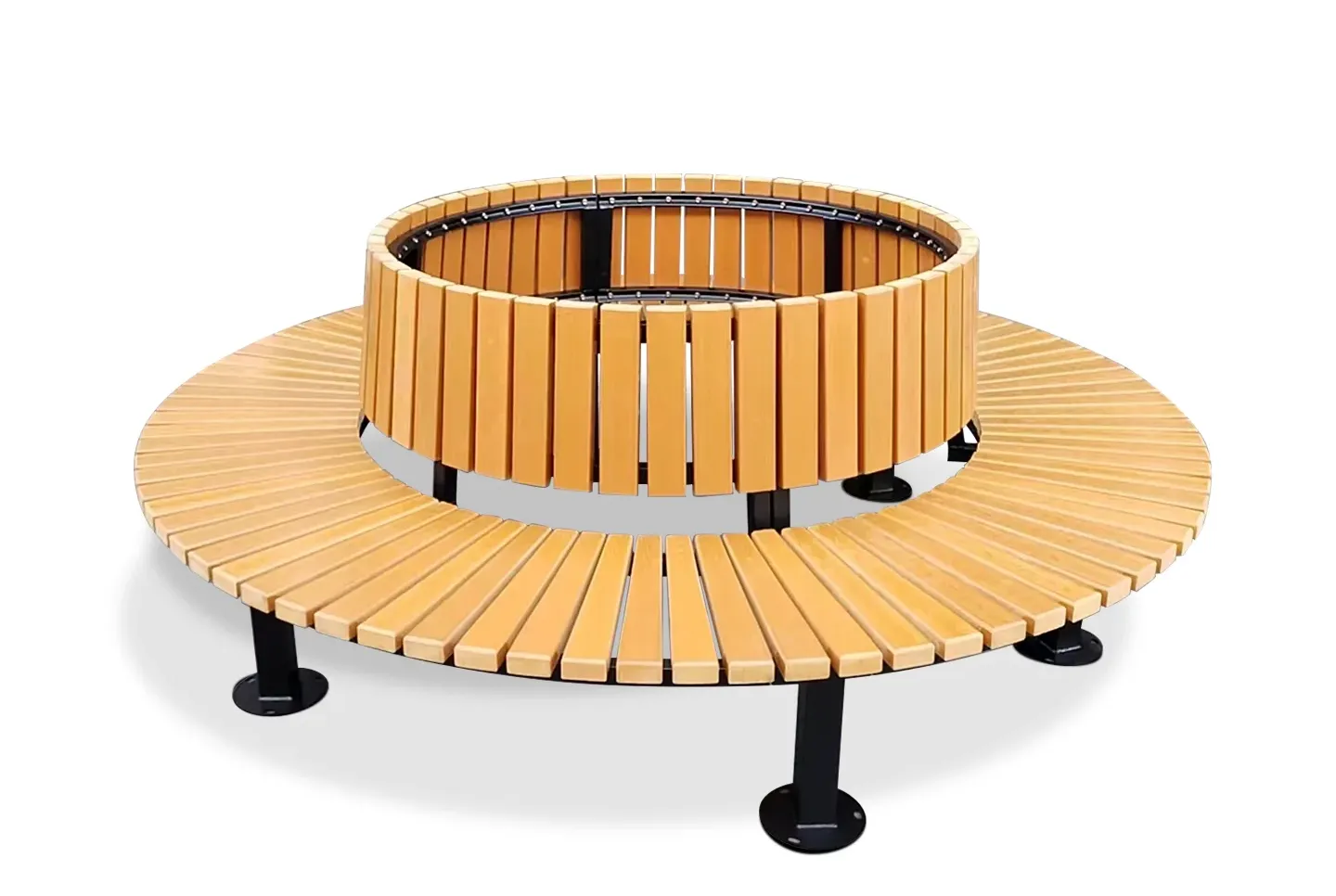
A circular tree bench is a type of outdoor bench designed to surround a tree, planter or central landscape feature. It may form a full circle, a half circle, a hexagonal shape or a modular curved layout.
Common terms include:
· Circular tree bench;
· Round tree bench;
· Tree bench;
· Tree seat;
· Bench around tree;
· Wrap-around tree bench;
· Circular public seating.
In public projects, tree benches are usually not made as one single piece. They are often built from several modular sections that can be assembled around the tree. This makes transportation easier, improves installation flexibility and allows damaged sections to be replaced more easily.
A well-designed tree bench should balance three goals: protect the tree, provide comfortable public seating and fit naturally into the surrounding outdoor site furnishings.
Why Use Circular Tree Benches in Public Spaces?
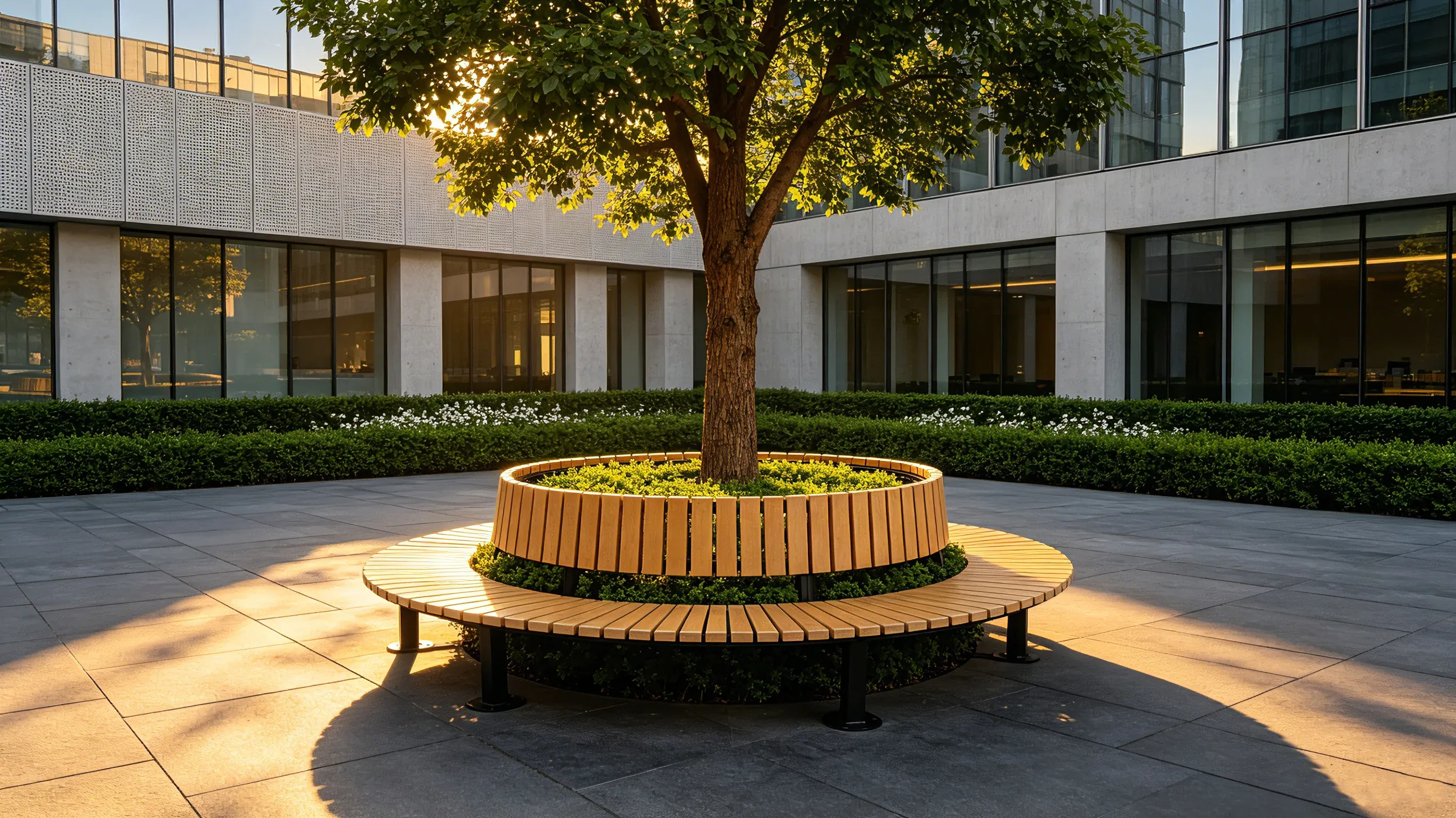
Circular tree benches are commonly used in parks and public spaces because they make better use of areas that might otherwise remain empty or underused.
Use natural shade
Trees already provide shade. A tree bench allows visitors to sit under that shade without requiring additional shelter structures. This is especially useful in parks, school campuses, public gardens and outdoor commercial spaces.
Add seating without taking extra space
A standard outdoor bench normally needs a separate location along a path or open area. A circular tree bench uses the area around the tree, helping project designers add seating while keeping the overall layout clean.
Create a social gathering point
A round tree bench supports seating in different directions. People can sit, rest, wait, talk or watch activities around the space. In plazas, campuses and community parks, this can make the tree area feel more active and welcoming.
Improve landscape appearance
Tree benches can make a planted area look more complete. They help connect greenery, seating and pedestrian space into one coordinated design. When matched with park trash cans, planters, bicycle racks and other street furniture products, they can improve the overall quality of the public environment.
Protect the planted area
When properly designed, a tree bench can discourage people from stepping directly on the soil around the tree. This may help reduce soil compaction in some public areas. The bench design must still leave enough space for water, air and tree growth.
Circular, Semi-Circular, Hexagonal or Modular: Which Type Should You Choose?
Not every public space needs a full circular tree bench. The right structure depends on space, tree location, pedestrian flow and project style.
Type | Best suited for | Main advantages | Points to consider |
Full circular tree bench | Open parks, campuses, plazas, large courtyards | 360-degree seating, strong visual center, high seating capacity | Requires enough space around the tree |
Semi-circular tree bench | Path edges, streetscapes, narrow public areas | Saves space, keeps one side open for circulation | Lower seating capacity than full circle |
Hexagonal tree bench | Schools, parks, residential communities | Simple structure, easier production and installation | More geometric appearance |
Modular curved tree bench | Custom public spaces, planters, irregular layouts | Flexible shape, suitable for custom tree bench projects | Requires accurate site dimensions |
Straight benches around planter/tree area | Commercial spaces and urban streets | Easy to combine with other furniture | Less complete wrap-around effect |
For large parks or campus lawns, a full circular tree bench can create a strong focal point. For sidewalks, commercial streets or narrow paths, a semi-circular or modular curved bench may be more practical because it reduces obstruction and keeps pedestrian movement clear.
How to Measure the Tree Before Buying?
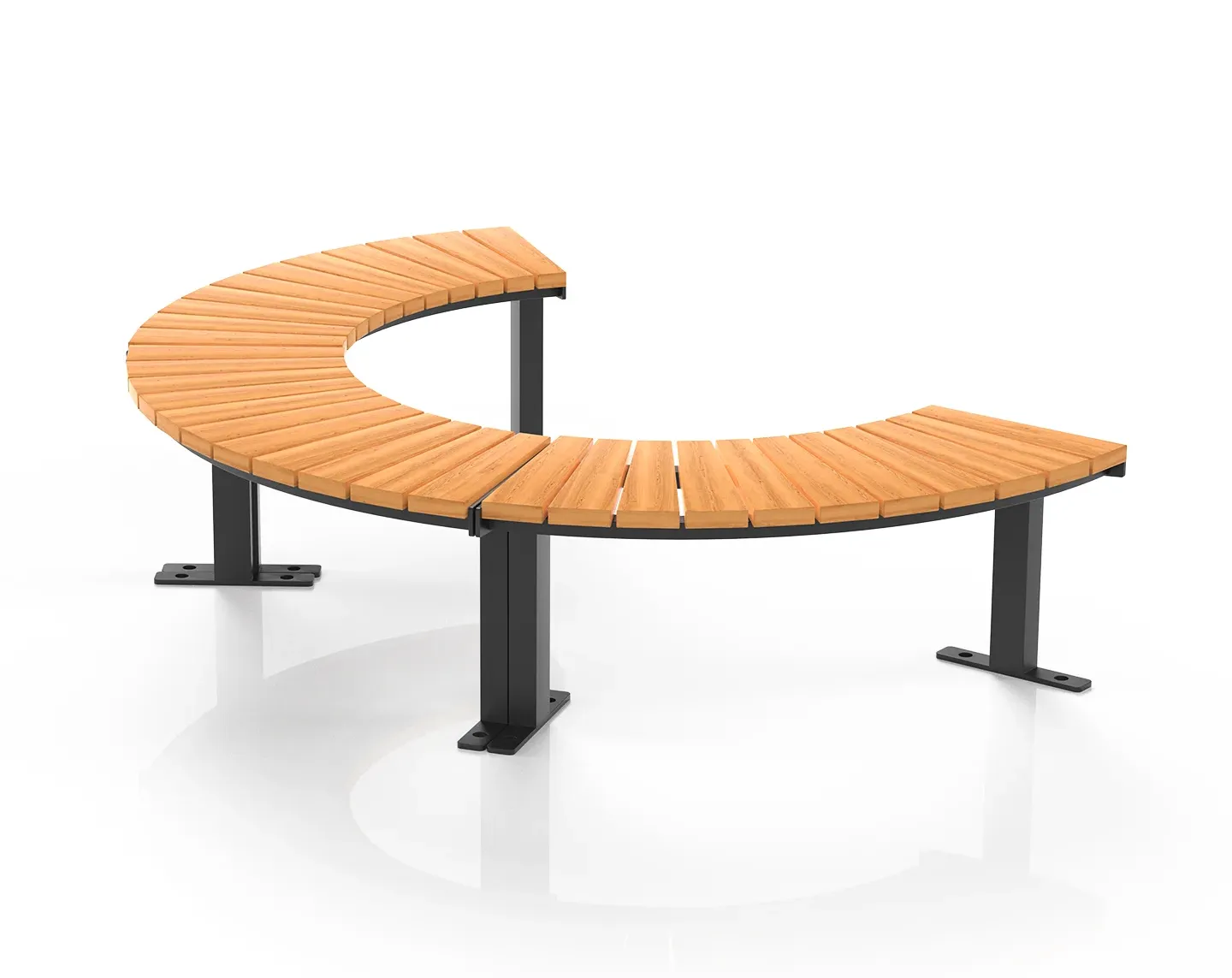
Correct measurement is one of the most important steps when choosing a bench for around tree installation.
Measure the trunk diameter
Start by measuring the trunk diameter at the height where the bench opening will surround the tree. If you measure the circumference, divide it by 3.14 to estimate the diameter.
For example:
· Tree circumference: 600 mm;
· Estimated trunk diameter: about 191 mm.
This is only the current size. It should not be used as the final inner opening size.
Leave clearance for growth
The inner diameter of the circular tree bench must allow enough space around the trunk. Trees continue to grow, so the opening should not be too tight.
The required clearance depends on the tree species, age, expected growth rate and project life cycle. For public projects, it is better to confirm the expected growth allowance with the landscape designer, arborist or project owner before production.
Check the root flare
The root flare is the area where the trunk widens near the ground. A bench should not press against this area. If the seat structure is too close to the root flare, it may interfere with tree growth or create maintenance problems.
Check ground level
A circular tree bench needs a stable and level installation surface. If the ground around the tree is uneven, the bench may shake, tilt or create safety risks. Ground preparation may be required before installation.
Confirm available outer space
Do not only measure the tree. Also measure the full available space around it.
Confirm:
· Distance to nearby paths;
· Distance to curbs or walls;
· Space for wheelchair and stroller movement;
· Space for people sitting and standing;
· Maintenance access;
· Drainage direction;
· Nearby lighting, trash receptacles or planters.
A round tree bench should improve public use, not block movement.
Tree Health and Root Protection Considerations
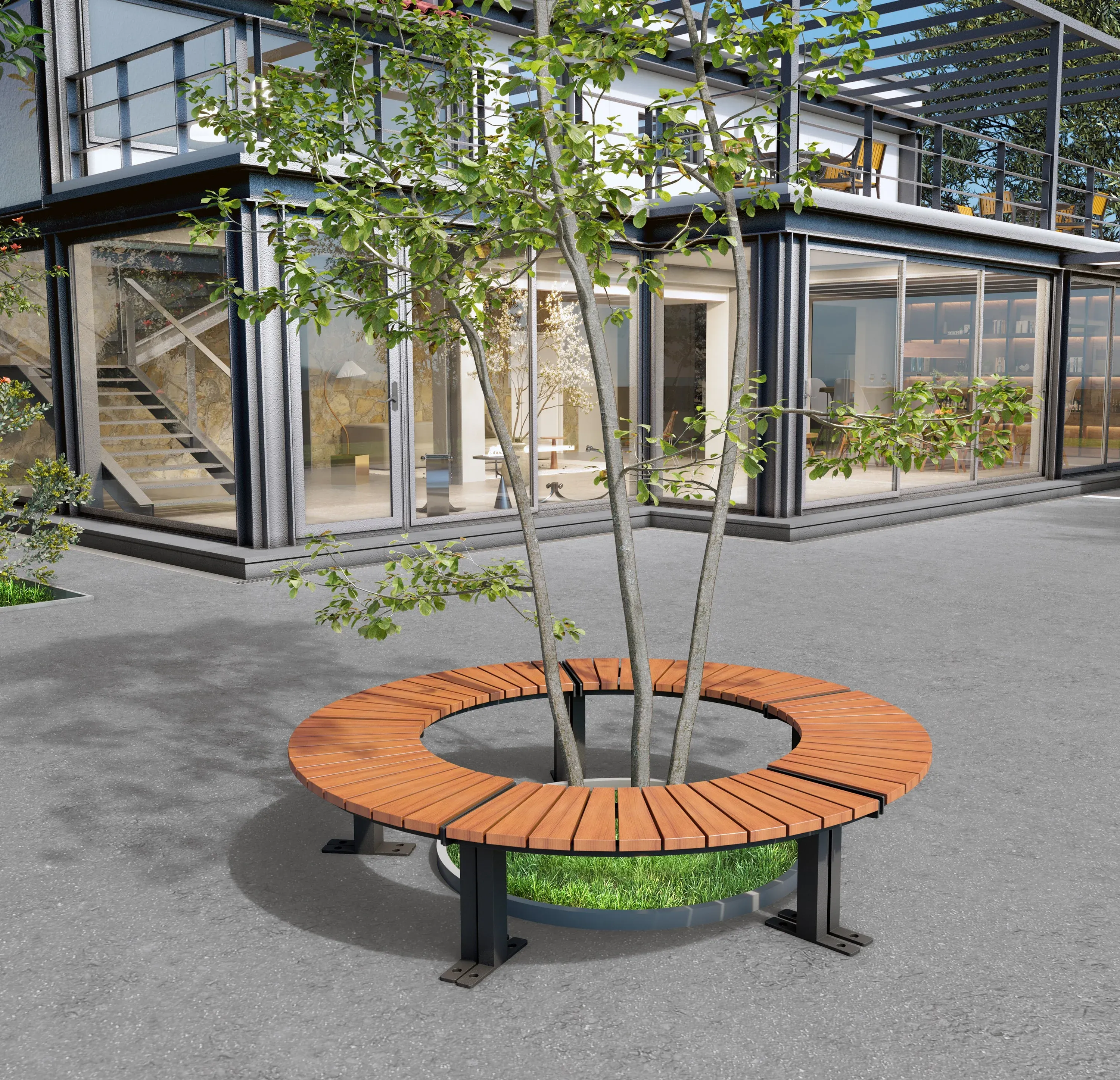
Tree health should be considered before choosing the bench structure, foundation or fixing method.
Avoid tight-fitting designs
A tree bench that is too close to the trunk may look attractive at first, but it can become a problem as the tree grows. The opening should allow future trunk expansion and easy inspection.
Protect the root zone
Tree roots may extend far beyond the visible trunk area. Heavy foundations, deep fixing points or repeated soil compaction can affect root health. For mature trees, site teams should avoid unnecessary excavation near major roots.
Keep soil breathable
Trees need water and oxygen. If the bench structure covers too much of the soil surface or prevents water from reaching the root zone, the tree may be affected over time.
A good public tree seating design should allow drainage, ventilation and maintenance access.
Consider mature trees and new trees differently
For mature trees, the design should adapt to the existing trunk, roots and site condition.
For newly planted trees, the bench, tree pit, drainage and root protection can be planned together from the beginning. This often makes the final installation cleaner and more stable.
Best Materials for Circular Tree Benches
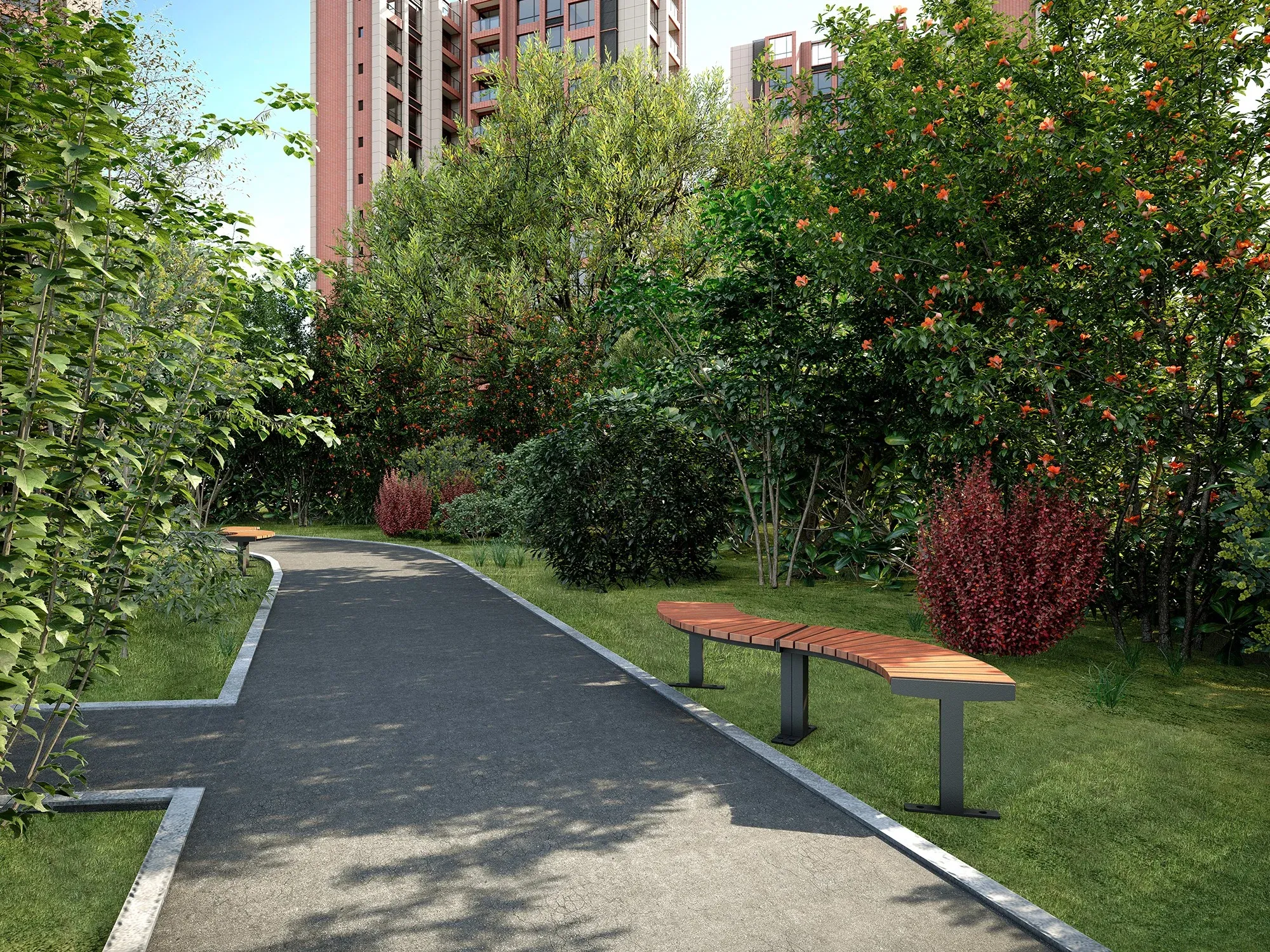
Material selection affects appearance, comfort, durability, maintenance and project cost. The best material depends on the public space environment.
Timber or Hardwood
Wood is one of the most popular materials for tree benches because it creates a natural appearance and feels comfortable to sit on.
It is suitable for:
· Parks;
· Scenic areas;
· Resort gardens;
· Public gardens;
· Heritage-style spaces;
· Natural landscape projects.
Wooden tree benches can blend well with trees and greenery. However, outdoor wood requires proper drying, treatment, coating and maintenance. Without suitable protection, wood may crack, fade, absorb moisture or require more frequent repair.
For public projects, wood is often combined with a metal frame to improve structural strength.
Steel and Wood Combination
A steel frame with wooden seat slats is a practical structure for commercial park benches and public tree seating. The metal frame provides strength, while the wood surface creates a warmer seating experience.
This option works well for:
· Municipal parks;
· Campuses;
· Community spaces;
· Commercial plazas;
· Outdoor public seating areas.
Buyers should confirm the steel thickness, welding quality, surface treatment and wood coating system.
Galvanized Steel
Galvanized steel is widely used for outdoor public furniture because it offers strength and cost control. It is suitable for the frame or support structure of tree benches.
When combined with outdoor powder coating, galvanized steel can provide good weather resistance for high-traffic public environments.
Important points to confirm include:
· Sheet or tube thickness;
· Welding method;
· Surface pretreatment;
· Powder coating quality;
· Anti-corrosion details at joints and edges.
Stainless Steel
Stainless steel may be used in coastal, humid or premium public spaces. It offers strong corrosion resistance and a clean appearance.
It is especially suitable for:
· Coastal parks;
· High-humidity regions;
· Modern commercial spaces;
· Premium public landscapes.
The correct stainless steel grade should be selected based on the environment. In many projects, stainless steel may be used for exposed fasteners or key structural components rather than the entire bench.
WPC, Plastic Wood or Recycled Plastic
WPC, plastic wood and recycled plastic materials are often selected when low maintenance is a priority.
They can be suitable for:
· Schools;
· Communities;
· Public parks;
· High-use pedestrian spaces;
· Areas where regular wood maintenance is difficult.
These materials usually require less repainting or sealing than natural wood. They also offer more consistent color and profile dimensions. However, buyers should confirm the exact material type, UV resistance, surface texture, color stability and strength.
Not all “plastic wood” materials are the same. WPC, PS plastic wood and recycled plastic lumber may have different properties, so the exact material specification should be confirmed before ordering.
Aluminum
Aluminum is lightweight and corrosion-resistant, but it may not be the best choice for every structural part. It can be useful in certain design elements or light-duty applications, but the thickness and strength must be checked carefully for public seating.
Comfort, Accessibility and Seating Capacity
A circular tree bench must be comfortable and usable for different visitors.
Seat height
A common public seating height is usually around standard bench height, but the final value should match local project requirements and user groups.
For schools or children’s areas, seat height may differ from seating designed for adult public spaces.
Seat depth
Seat depth affects comfort. A seat that is too narrow may feel uncomfortable, while a seat that is too deep may not suit all users.
Backrest or backless design
A backrest improves comfort for longer sitting. A backless tree bench allows people to sit from either side and may suit flexible public spaces.
For parks and scenic areas, a backrest can improve rest comfort. For plazas and campuses, a backless design may allow more flexible use and easier movement.
Armrests
Armrests can improve support for elderly users and help define seating positions. They may also reduce lying down in some public spaces. However, too many armrests can limit flexible group seating.
Seating capacity
Seating capacity depends on:
· Inner diameter;
· Outer diameter;
· Seat width;
· Module shape;
· Whether a backrest is included;
· Whether the bench is circular or semi-circular.
When planning public seating, consider actual user behavior rather than only the theoretical number of people who can sit.
Accessibility and circulation
A tree bench should not block wheelchair access, stroller movement or pedestrian flow. In many public spaces, circular tree benches should be combined with standard outdoor benches to provide different seating options.
Installation Options for Public Projects
Installation method affects stability, safety, maintenance and future replacement.
Freestanding installation
A freestanding tree bench is placed on the ground without permanent fixing. It is easier to move or adjust, but it may not be suitable for high-traffic public areas where stability or anti-theft requirements are important.
Surface-mounted installation
Surface-mounted benches are fixed to concrete or paved surfaces with anchor bolts. This method is common for plazas, sidewalks and commercial spaces.
Before installation, confirm:
· Surface strength;
· Anchor position;
· Bolt type;
· Bench base plate design;
· Drainage;
· Whether the fixing points avoid major roots.
In-ground fixing
In-ground fixing may provide strong stability, but excavation around trees must be handled carefully. It is important to avoid damaging roots or affecting soil conditions.
Modular assembly
Many circular tree benches are delivered in sections and assembled on site. Modular assembly helps with transportation and makes it easier to install the bench around an existing tree.
For export or large public projects, confirm:
· Number of modules;
· Assembly method;
· Required tools;
· Fastener type;
· Packaging;
· Installation instructions;
· Spare parts.
Maintenance and Lifecycle Cost
The maintenance cost of a tree bench depends on the material, environment and public usage level.
Wooden tree benches
Wooden tree benches may need:
· Regular cleaning;
· Coating inspection;
· Repainting or resealing;
· Replacement of cracked slats;
· Fastener tightening;
· Surface sanding if needed.
Wood gives a natural appearance, but buyers should include maintenance work in the project plan.
Metal tree benches
Metal structures need inspection for:
· Coating damage;
· Rust at joints and edges;
· Loose bolts;
· Welded areas;
· Impact damage;
· Drainage around the base.
Powder-coated galvanized steel is often selected for public outdoor furniture because it balances strength, appearance and maintenance.
WPC or recycled plastic tree benches
WPC and recycled plastic materials are usually easier to clean and do not require regular painting like natural wood. Maintenance mainly includes washing, checking fasteners and replacing damaged sections if needed.
Lifecycle cost
Do not compare only the initial unit price.
For public-space projects, total cost includes:
· Product cost;
· Shipping;
· Installation;
· Surface maintenance;
· Replacement parts;
· Cleaning labor;
· Repair frequency;
· Expected service life.
A modular tree bench with replaceable slats or sections may reduce long-term repair cost, especially in high-use public spaces.
Where Circular Tree Benches Work Best?
Public parks
Circular tree benches are ideal for shaded park areas, open lawns and rest points near walking paths. They can create a natural gathering point without adding a separate shelter.
School campuses
Tree benches can provide informal seating for students in courtyards, gardens and outdoor learning areas. Materials should be safe, durable and easy to maintain.
Commercial plazas
In commercial outdoor spaces, a round tree bench can add seating while improving the visual quality of the landscape. It should coordinate with other outdoor site furnishings, such as trash receptacles, planters and bicycle racks.
Residential communities
A tree seat can make shared green areas more useful for residents. For communities, low-maintenance materials and stable installation are usually important.
Scenic areas and public gardens
Natural wood or wood-look materials may be preferred in scenic areas because they blend with the landscape. The design should avoid damaging trees and should be easy to clean during peak visitor seasons.
Streetscapes
Full circular benches may not fit narrow streets. Semi-circular or modular curved benches are often more suitable because they provide seating while maintaining pedestrian movement.
Circular Tree Bench Buying Checklist
Before requesting a quotation, prepare the following information:
· Project type: park, campus, community, plaza or scenic area;
· Tree trunk diameter;
· Expected tree growth allowance;
· Required inner diameter;
· Required outer diameter;
· Seat height;
· Seat depth;
· Full circular, semi-circular, hexagonal or modular design;
· Backrest or backless design;
· Armrests or no armrests;
· Material preference;
· Frame structure;
· Surface treatment;
· Installation method;
· Ground condition;
· Drainage condition;
· Color requirement;
· Quantity;
· Packaging requirement;
· Delivery schedule;
· Site drawings or photos;
· Maintenance expectations.
For custom tree bench projects, site drawings and accurate dimensions are especially important. If the bench is designed for an existing mature tree, photos of the trunk, roots and surrounding pavement can help the supplier evaluate the structure more accurately.
Common Buying Mistakes
Only measuring the current trunk size
A tree bench should allow future growth. If the inner opening is too small, the bench may need to be modified or removed later.
Ignoring root protection
Installation should avoid unnecessary excavation or heavy pressure near important roots. Tree health is part of the project’s long-term success.
Choosing a full circular bench for a narrow path
A full circular bench needs space. In narrow streetscapes or walkway edges, a semi-circular or modular bench may be safer and more practical.
Using indoor-grade materials outdoors
Outdoor public seating must withstand sunlight, rain, temperature changes and frequent use. Materials, coatings and fasteners should be suitable for exterior environments.
Not checking ground level
Uneven ground can cause shaking, poor alignment and safety risks. Ground preparation should be considered before installation.
Forgetting maintenance access
Maintenance teams need space to clean the bench, inspect fasteners and manage the tree area. A design that looks good but is difficult to maintain may create long-term problems.
Comparing only unit price
A cheaper bench may require more repair, repainting or replacement. Buyers should compare lifecycle cost and component quality.
Custom Circular Tree Bench Solutions for Public Spaces
For public projects, a circular tree bench should be selected based on both site conditions and user needs. Standard models may work for some projects, while others require customized dimensions, materials and installation details.
LVEN supports outdoor public furniture projects with manufacturing, material selection, metal fabrication, surface treatment and customization capabilities. For tree bench projects, buyers can confirm the required structure, materials, dimensions, colors and installation method according to the actual public space.
Customization may include:
· Circular, semi-circular or modular curved structures;
· Custom inner and outer diameters;
· Galvanized steel or stainless steel frames;
· Wood, plastic wood or WPC seating surfaces;
· Powder-coated colors;
· Backrest or backless configurations;
· Ground-fixed or freestanding installation;
· Project-specific packaging;
· Coordination with park benches, outdoor trash bins, planters and other street furniture.
A well-planned circular tree bench can improve comfort, protect landscape value and create a more inviting public space.
Conclusion
A circular tree bench is more than a decorative park bench. It must work with the tree, the site, the users and the maintenance plan.
For parks and public spaces, the best choice should balance tree growth, root protection, seating comfort, pedestrian flow, material durability, installation stability and long-term maintenance.
Wood provides natural warmth and landscape character. Metal frames improve structural strength. WPC, plastic wood and recycled materials can reduce maintenance. Modular structures help with transport, installation and future replacement.
Before purchasing, buyers should measure the tree, understand the site, confirm the material, choose the right structure and prepare a clear specification list. This approach helps avoid design mistakes and ensures the tree bench remains useful, safe and visually consistent for years of public use.
Frequently Asked Questions
What is a circular tree bench?
A circular tree bench is an outdoor bench designed to surround a tree, planter or central landscape feature. It can be fully circular, semi-circular, hexagonal or built from modular curved sections.
What is the difference between a circular tree bench and a semi-circular tree bench?
A circular tree bench surrounds the tree from all sides and provides 360-degree seating. A semi-circular tree bench covers only part of the tree area and is better for narrow paths, streetscapes or locations where one side must remain open.
How much clearance should a tree bench leave around the trunk?
The clearance depends on the tree species, age and expected growth. Buyers should not design the bench tightly around the current trunk size. For public projects, the required growth allowance should be confirmed with the project designer or arborist.
Can a circular tree bench damage tree roots?
It can cause problems if the foundation, fixing method or installation process damages roots or compacts the soil. Proper design should protect the root zone, allow drainage and avoid unnecessary excavation near the tree.
What material is best for public tree benches?
There is no single best material. Wood offers a natural appearance, galvanized steel provides strength, stainless steel suits humid or coastal environments, and WPC or plastic wood can reduce maintenance. The best material depends on the project environment and maintenance plan.
Are wooden tree benches suitable for outdoor parks?
Yes, wooden tree benches can be suitable for parks when the wood is properly treated and maintained. They are often used in natural or scenic environments, but they usually require more maintenance than metal or plastic wood options.
Is a modular tree bench better for public spaces?
A modular tree bench is often more practical for public spaces because it is easier to transport, install and repair. Damaged sections can sometimes be replaced without removing the entire bench.
Should a circular tree bench be fixed to the ground?
For high-traffic public areas, ground fixing is often recommended for stability and safety. Freestanding designs may be suitable for lower-risk locations, but the project should evaluate user traffic, theft risk and surface conditions.
Can circular tree benches be customized?
Yes. Tree benches can be customized in diameter, shape, material, color, backrest style, armrest design and installation method. Accurate tree and site measurements are needed before production.
Where are circular tree benches most suitable?
They are suitable for public parks, school campuses, commercial plazas, residential communities, public gardens, scenic areas and other outdoor public spaces where trees can provide shade and a natural seating focus.
Contents


