
Recycling Bins for Schools: 2, 3 and 4-Stream Setup Guide
 73
73  Share
Share
Recycling bins for schools need to be simple enough for students to use quickly, but structured enough to keep recyclable materials, food waste and trash separated. A good school recycling system is not only about placing more bins around campus. It depends on choosing the right stream setup, using clear signage, placing bins in the right locations and making sure custodial teams can maintain the system every day.
For most schools, a 2-stream recycling bin setup works well in classrooms and hallways. A 3-stream recycling station is more suitable for cafeterias, staff rooms and shared activity areas. A 4-stream setup can support high-diversion programs, but it requires clear student guidance, consistent collection and a maintenance process that prevents materials from being mixed after disposal.
This guide explains how to choose 2, 3 and 4-stream school recycling bins for classrooms, cafeterias, corridors, outdoor spaces and public campus areas.
What Does 2, 3 and 4-Stream Recycling Mean?
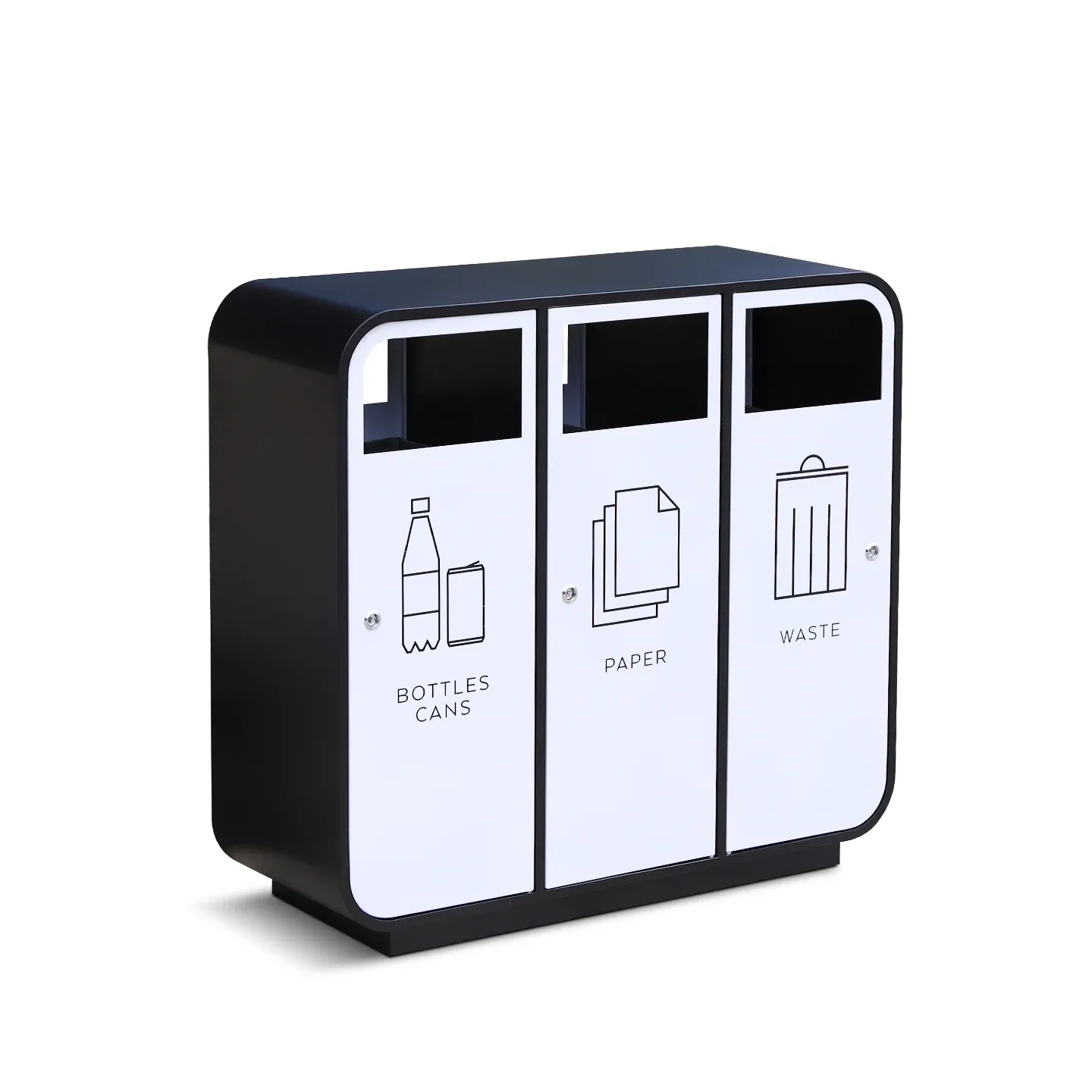
A recycling “stream” refers to one separated waste category. In a school, each stream normally has its own opening, label, color or compartment.
A 2-stream setup is the simplest system. It usually includes:
· Trash / landfill waste;
· Mixed recycling.
This is often suitable for classrooms, offices, libraries and low-complexity hallway areas.
A 3-stream setup usually includes:
· Trash;
· Mixed recycling;
· Compost / food waste.
In some schools, the three streams may instead be:
· Paper;
· Bottles and cans;
· Trash.
The exact setup depends on what the local recycling collector accepts.
A 4-stream setup is more detailed. It may include:
· Liquids;
· Mixed recycling;
· Trash;
· Compost / food waste.
Another 4-stream version may separate:
· Paper;
· Bottles and cans;
· Compost;
· Trash.
Before buying a multi compartment recycling bin, schools should first confirm local recycling rules, available collection services and whether composting or liquid collection is actually supported.
Which Stream Setup Is Best for Each School Area?
Different areas of a school generate different types of waste. A classroom does not need the same recycling station as a cafeteria.
School Area | Recommended Setup | Common Streams | Why It Works |
Classrooms | 2-stream | Trash + mixed recycling or paper recycling | Simple, easy for students and teachers |
Hallways | 2-stream or 3-stream | Trash + recycling, or trash + recycling + paper | Good for high-traffic movement areas |
Cafeterias | 3-stream or 4-stream | Recycling + trash + compost, or liquids + recycling + trash + compost | Handles food waste, drink containers and lunch packaging |
Libraries | 2-stream | Paper recycling + trash | Paper is usually the main recyclable material |
Offices | 2-stream or 3-stream | Paper + recycling + trash | Supports staff paper and packaging waste |
Staff Rooms | 3-stream | Recycling + trash + food waste | Food packaging and drink containers are common |
Outdoor Courtyards | 2-stream or 3-stream | Trash + recycling, or trash + recycling + compost | Requires weather-resistant bins |
Sports Fields | 2-stream | Bottles/cans + trash | Simple and fast during events |
Campus Entrances | 2-stream | Trash + recycling | Works as a public-facing recycling point |
The goal is not to use the maximum number of streams everywhere. The goal is to create a system that students can understand and custodial teams can collect without confusion.
2-Stream Recycling Bin Setup for Classrooms and Hallways
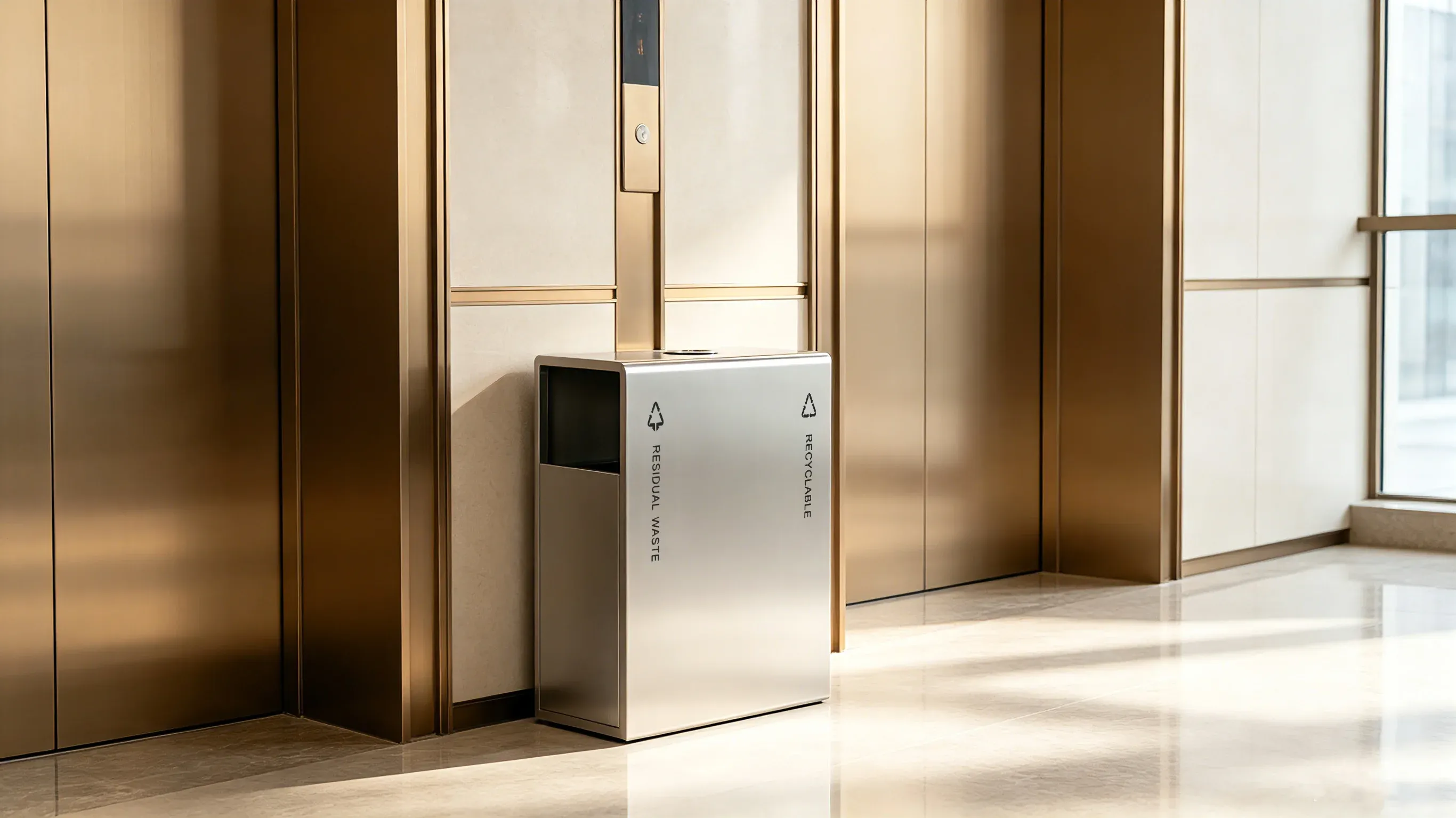
A 2-stream system is often the best starting point for schools. It is simple, affordable and easier to maintain than more complex setups.
A typical 2-stream recycling bin for schools includes:
· One compartment for mixed recycling;
· One compartment for trash.
In classrooms, recycling usually includes clean paper, notebooks, worksheets and sometimes clean bottles or cans. In hallways, recycling may include bottles, cans, paper and light packaging.
Best Practices for 2-Stream School Recycling Bins
Place recycling bins next to trash bins. If a recycling bin is placed alone, students may use it for trash. If a trash bin is placed alone, recyclable items will often go into landfill waste.
Use consistent colors across the school. For example, blue can represent recycling and black or gray can represent trash. The specific color system should match local or school district guidance.
Use simple graphics. A label that only says “Recycling” may not be enough for younger students. Show common school items such as paper, empty bottles and clean cans.
Avoid overloading classrooms with too many bins. In many classrooms, one compact 2-stream recycling station is more effective than several separate containers.
For corridors, use more durable commercial recycling bins with larger capacity and stable bases. Hallway bins may experience more impact, movement and unsupervised use than classroom bins.
3-Stream Recycling Station for Cafeterias and Common Areas
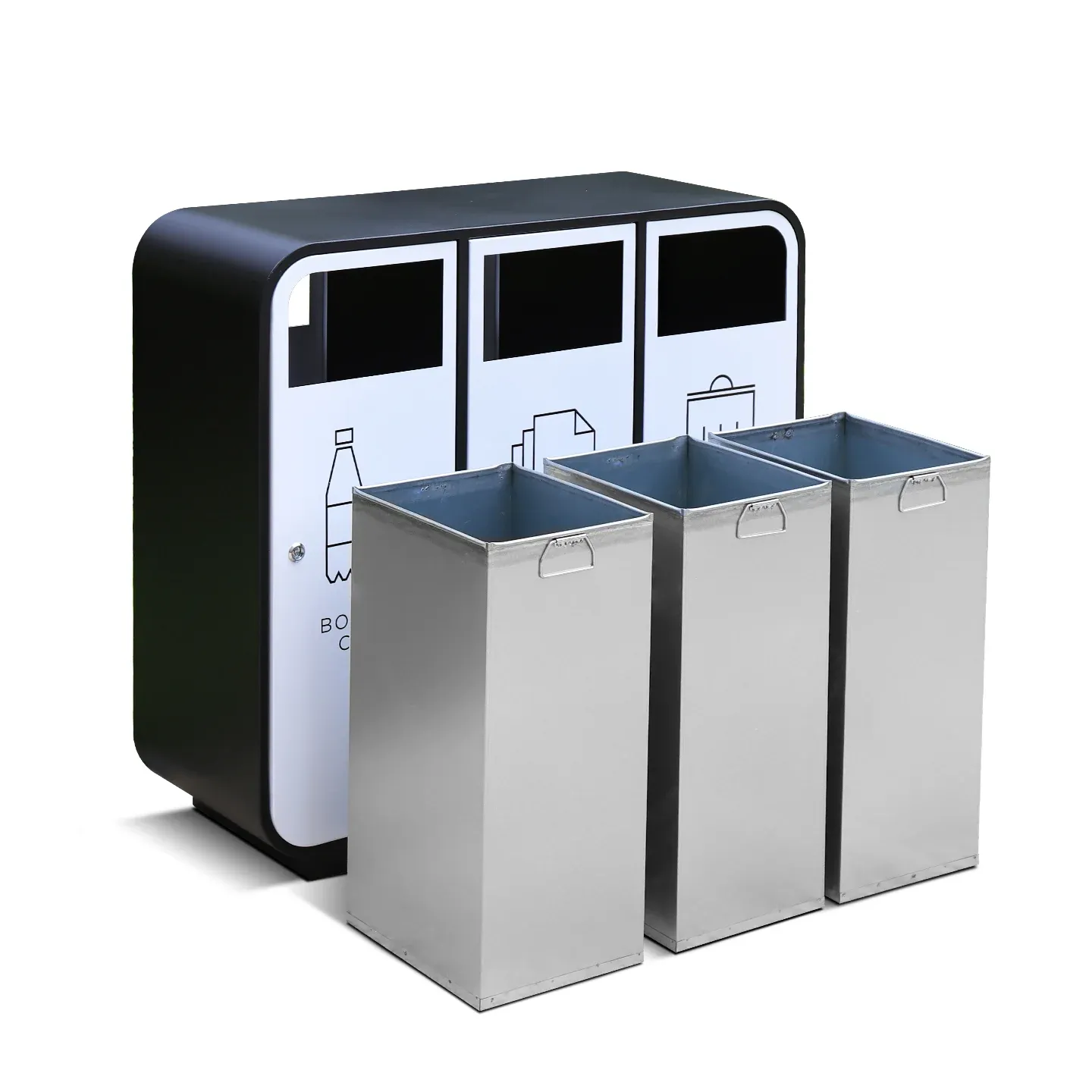
A 3-stream recycling station is useful where students dispose of food packaging, drink containers and general waste at the same time.
A common 3-stream school recycling station includes:
· Mixed recycling;
· Trash;
· Compost or food waste.
This setup is suitable for:
· Cafeterias;
· Staff rooms;
· Lunch areas;
· School event areas;
· High-use indoor common spaces.
In schools without composting service, a 3-stream station may separate paper, bottles/cans and trash instead. The correct stream structure should follow local collection rules.
How to Make a 3-Stream Station Work?
Use connected or visually grouped bins. Three separate bins placed far apart will increase contamination. A multi compartment recycling bin keeps the streams together and helps students make a quick choice.
Match the opening shape to the material when possible. A round opening can suggest bottles and cans. A narrow slot can suggest paper. A larger flap or open top may be used for trash or compost, depending on the design.
Put the most common waste stream in the easiest position. In a cafeteria, this often means arranging the station according to the student tray return process.
Include large, image-based signage above the bins. Students should be able to understand where each item goes before they reach the station.
4-Stream Setup for Cafeterias and High-Diversion Schools
A 4-stream setup is more advanced. It can help schools reduce contamination and divert more material from landfill, but it only works when the school has the staff, signage and collection process to support it.
A common 4-stream cafeteria setup includes:
· Liquids;
· Recycling;
· Trash;
· Compost / food waste.
This system works especially well in cafeterias where students frequently discard unfinished drinks, empty cartons, bottles, cans, trays, napkins and food scraps.
Why Liquids Matter?
Liquid waste can contaminate recycling and make trash bags heavier or messier. Placing a liquid collection stream first allows students to empty bottles, cups or cartons before sorting the container.
After liquids, the student can place the empty container into recycling, then sort food scraps or remaining trash.
When 4-Stream Recycling Bins Are Suitable?
A 4-stream setup is suitable when:
· The school has a cafeteria sorting area;
· Students follow a consistent disposal route;
· Staff or Green Team members can guide students at lunch time;
· Custodial teams can collect each stream separately;
· Local collection supports compost or separated food waste;
· The school has strong environmental or zero-waste goals.
A 4-stream system is not recommended if the school cannot maintain it. A poorly managed 4-stream station may create more contamination than a well-designed 2-stream or 3-stream setup.
How to Design Cafeteria Sorting Stations?
Cafeterias are usually the most important area for school recycling bins because they generate mixed materials in a short time.
A good cafeteria sorting station should follow the student’s natural disposal sequence.
A practical order is:
1. Liquids;
2. Recycling;
3. Trash;
4. Compost / food waste.
This order may change depending on lunch tray design and local recycling rules, but the principle remains the same: students should not need to step backward, cross traffic or stop for too long to decide.
Cafeteria Setup Tips
Place stations near tray return areas or exit routes. Students should encounter the sorting station before leaving the cafeteria.
Use large overhead signage. At lunch time, the station may be crowded. Labels should be visible even when students are standing in line.
Use real examples from the cafeteria. Show milk cartons, drink bottles, food trays, napkins, wrappers or packaging used by the school.
Make bag changes easy. Cafeteria bins fill quickly, so inner bins, liners and access doors should allow fast cleaning.
Avoid hidden bins. If trash cans are available in other corners of the cafeteria without recycling or compost options, students may bypass the sorting station.
Signage and Color Coding for School Recycling Bins
Signage is one of the most important parts of a successful school recycling system. Students make disposal decisions quickly, especially in hallways and cafeterias.
Good signage should be:
· Large enough to see from a short distance;
· Color-coded;
· Consistent across the school;
· Image-based;
· Located near the opening;
· Matched to local recycling rules;
· Easy for younger students to understand.
Use Images, Not Only Words
A sign that says “Recycling” is not as clear as a sign that shows empty bottles, cans and clean paper. For cafeterias, use images of actual items students use every day.
For example:
· “Empty bottles and cans”;
· “Clean paper”;
· “Food scraps”;
· “Liquids only”;
· “Landfill trash”.
If the school has multilingual students, multilingual labels can also reduce confusion.
Keep Colors Consistent
Color consistency helps students learn the system. Once students associate a color with a stream, changing colors in different buildings can increase mistakes.
For example:
· Blue: recycling;
· Green: compost;
· Gray or black: trash;
· Yellow or white: liquids or special streams.
The color system should match local hauler or district requirements when applicable.
Capacity and Material Selection
School recycling bins must be durable, easy to clean and suitable for the area where they are used.
Classrooms
Classroom bins can be compact and easy to move. A smaller 2-stream setup is usually enough.
Recommended features:
· Compact size;
· Lightweight structure;
· Easy-to-read labels;
· Smooth surfaces;
· Simple liner replacement.
Hallways
Hallway bins require more durability because of higher traffic.
Recommended features:
· Medium capacity;
· Stable base;
· Impact-resistant structure;
· Clear front-facing labels;
· Matched recycling and trash compartments.
Cafeterias
Cafeteria recycling stations need larger capacity and faster maintenance access.
Recommended features:
· 3-stream or 4-stream configuration;
· Large inner bins;
· Easy liner replacement;
· Clear openings;
· Food-waste compatible compartments;
· Washable surfaces;
· Odor-control design where needed.
Outdoor School Areas
Outdoor recycling bins need weather resistance and stronger construction.
Recommended features:
· Powder-coated metal structure;
· Galvanized steel or stainless steel options;
· Rain-resistant lids;
· Stable or fixed base;
· UV-resistant labels;
· Large capacity for events or breaks;
· Easy-clean inner liners.
For outdoor school spaces, durable outdoor recycling bins and commercial outdoor trash receptacles are usually more suitable than lightweight indoor containers.
Placement Rules That Reduce Contamination
Bin placement has a direct impact on recycling accuracy.
Always Pair Recycling and Trash
A recycling bin should not stand alone. A trash bin should not stand alone. Every disposal point should give users the correct options at the same moment.
Place Bins Where Waste Is Created
Common locations include:
· Classroom exits;
· Hallway intersections;
· Cafeteria tray return areas;
· Library printer areas;
· Staff rooms;
· Outdoor seating areas;
· Sports field entrances;
· Campus event zones.
Avoid Too Many Different Layouts
If every building uses a different bin design, students must relearn the system repeatedly. A consistent recycling station design across the school makes sorting easier.
Use Centralized Stations in High-Traffic Areas
In hallways and cafeterias, centralized recycling stations often work better than many small scattered bins. They are easier to monitor, clean and maintain.
Maintenance and Custodial Workflow
The recycling system must continue after students place items into bins. If different streams are mixed during collection, the front-end sorting effort is wasted.
Before installing school recycling bins, confirm:
· Who empties each stream;
· Which bags or liners are used;
· Whether each stream is collected separately;
· Where materials are stored before pickup;
· How often each bin is emptied;
· Who cleans the bin surfaces;
· How contamination is reported;
· Who replaces damaged labels.
Custodial staff should be involved before the final bin layout is selected. They understand collection routes, bag changes, cleaning time and problem areas.
Schools should also review the system regularly. A simple waste audit once or twice per year can show whether streams are working, which bins fill too fast and which labels need improvement.
School Recycling Bin Buying Checklist
Before requesting a quote for recycling bins for schools, prepare a clear specification list.
Key items to confirm include:
· Number of streams;
· Indoor or outdoor use;
· Area of use: classroom, hallway, cafeteria, courtyard or sports field;
· Capacity per compartment;
· Overall bin dimensions;
· Inner bin or liner size;
· Lid and opening type;
· Stream labels;
· Color coding;
· Signage size;
· Body material;
· Surface treatment;
· Wheels or fixed base;
· Locking or access doors;
· Rain protection for outdoor use;
· Cleaning access;
· Custom school logo;
· Packaging and assembly method;
· Order quantity;
· Delivery schedule.
For custom recycling bins, schools should also provide the required stream names, accepted materials, preferred colors and any local recycling rules that must appear on the labels.
Common Mistakes to Avoid
Making the System Too Complicated
More streams do not automatically improve recycling. A simple 2-stream setup may perform better than a confusing 4-stream station if students cannot understand the categories.
Separating Trash and Recycling Bins
If recycling bins and trash bins are not placed together, students will use whichever bin is closest.
Using Text-Only Labels
Students respond better to clear images, color coding and examples of real items.
Ignoring Cafeteria Liquids
Liquids can contaminate recycling and make waste handling harder. Cafeterias should consider a liquid stream when drink waste is common.
Choosing Indoor Bins for Outdoor Areas
Outdoor school recycling bins need weather-resistant materials, stable bases and durable labels.
Forgetting the Custodial Process
A front-end sorting station only works when the back-end collection process keeps materials separated.
Buying by Price Only
Low-cost bins may have weak lids, small capacity, poor labels or difficult liner access. Schools should compare lifecycle cost, not only unit price.
Custom Recycling Bins for School Projects
Schools may need standard recycling stations or customized waste sorting bins depending on campus layout, collection rules and design requirements.
Customization may include:
· 2, 3 or 4-stream structures;
· Custom compartment sizes;
· Paper, bottles, cans, trash, liquids and compost labels;
· School colors;
· Custom logos;
· Indoor and outdoor models;
· Weather-resistant outdoor structures;
· Powder-coated metal finishes;
· Different lid openings;
· Removable inner bins;
· Fixed or movable bases;
· Large-capacity cafeteria stations.
LVEN supports the production and customization of outdoor public furniture and waste sorting products for schools, parks, communities and commercial public spaces. For school recycling projects, buyers can confirm the required stream setup, site conditions, capacity, color, labeling and installation requirements before production.
Conclusion
The best school recycling bin setup is not the one with the most compartments. It is the one students can understand, teachers can support, custodial teams can maintain and local collectors can process correctly.
A 2-stream recycling bin works well in classrooms and hallways. A 3-stream recycling station is useful for cafeterias, staff rooms and shared areas. A 4-stream setup can support advanced cafeteria or zero-waste programs, especially when liquids, recycling, trash and compost need to be separated.
To make the system work, schools should place recycling and trash together, use clear image-based signage, match bin capacity to each area, choose durable materials and maintain separated collection after disposal.
With the right planning, recycling bins for schools can reduce contamination, improve campus cleanliness and support long-term environmental education.
Frequently Asked Questions
What is a 2-stream recycling bin for schools?
A 2-stream recycling bin usually separates trash and mixed recycling. It is commonly used in classrooms, offices, hallways and libraries where waste categories are simple.
What is a 3-stream recycling station?
A 3-stream recycling station separates three categories, such as recycling, trash and compost. It is often used in cafeterias, staff rooms and shared school areas.
When should a school use a 4-stream recycling setup?
A 4-stream setup is suitable when the school can manage liquids, recycling, trash and compost separately. It works best in cafeterias or high-diversion school programs with clear signage and staff support.
What recycling bin setup is best for school cafeterias?
A 3-stream or 4-stream station is usually best for cafeterias because students dispose of food waste, drink containers, packaging and liquids in the same area.
Should recycling bins be placed next to trash bins?
Yes. Recycling bins and trash bins should be placed together so students can choose the correct stream at the point of disposal.
How many recycling bins does a school need?
The number depends on school size, building layout, waste volume, cafeteria operations and outdoor areas. A waste audit can help determine the right quantity and placement.
What size recycling bins are best for classrooms?
Classrooms usually need compact 2-stream bins. Larger bins may not be necessary unless the classroom generates a high volume of paper or packaging waste.
What material is best for outdoor school recycling bins?
Outdoor school recycling bins should use weather-resistant materials such as powder-coated metal, galvanized steel, stainless steel or durable plastic. Labels should also be UV-resistant and weatherproof.
How can schools reduce recycling contamination?
Schools can reduce contamination by using clear signage, placing trash and recycling together, matching colors across campus, using simple stream categories and regularly checking bin contents.
Can school recycling bins be customized?
Yes. School recycling bins can be customized by stream number, capacity, color, logo, label design, lid opening, indoor or outdoor structure and material selection.
Contents


