Stadium Waste Bin Planning for Sports and Exhibition Venues
 20
 Share
Effective stadium waste bin planning starts with where and when visitors discard items, followed by how staff will remove them. Map entrances, concourses, food areas and exits; identify the busiest disposal periods; then select containers and collection arrangements for each zone. Attendance alone is not enough to determine the layout.
The same approach applies to exhibition venues, where public opening hours, conference breaks and exhibitor move-out create different demands. A useful plan connects each collection point to a waste stream, a service window and a route to the collection area. That gives facilities managers and project buyers a practical basis for choosing equipment.
Map Commercial Trash Bins by Event Phase
Start with the event timetable and a marked floor plan. At a stadium, arrivals, food purchases, intervals and departures can concentrate disposal in different places. At an exhibition, registration, catering breaks and closing time may create separate peaks. Ask operations staff where bags accumulate and where cleaning teams lose access when the venue fills.
Walk the site with the cleaning contractor, catering team and event manager. Follow a visitor carrying a drink or food tray, then follow the worker who must remove the resulting waste. A convenient visitor location can still be difficult to service if the only route crosses a queue. Record both journeys before deciding where commercial trash bins belong.
Keep public disposal separate from operational waste. Beverage containers and snack packaging call for a different collection arrangement from flattened delivery boxes or bulky stand materials. The EPA's sports-venue recycling guide, published in 2011, identifies distinct waste-generating areas within a venue. Its assessment approach is useful, while accepted materials must be checked with the current collection provider.
Turn those observations into a zone schedule. Give each proposed station an ID and record its event phase, intended materials, collection responsibility and service route. Include existing containers so that new purchases address an identified gap rather than duplicating equipment already available.
Where to Place Commercial Outdoor Trash Cans
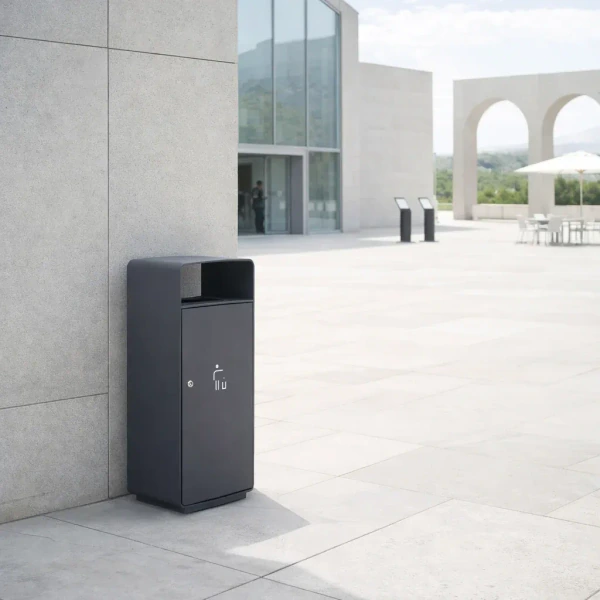
Place commercial outdoor trash cans where people are ready to discard something and can recognize the correct destination before reaching it. Suitable locations may be beside food-area departure routes, between seating sections and concourses, or along approaches to entrances. Confirm the exact position against queues, pedestrian movement and the space needed to use the container.
An entrance needs particular attention. Security screening may cause visitors to discard items before admission, while the same area later becomes an exit route. Locate stations where they serve those tasks without narrowing access. A bin visible on an empty forecourt may disappear behind temporary barriers, merchandise stands or waiting crowds.
The following schedule is a planning template, not a fixed layout or quantity standard:
| Venue zone | Disposal pattern to check | Placement and servicing decision |
|---|---|---|
| Entrance or screening approach | Items discarded before admission | Provide a visible station outside the queue's working space; confirm security requirements |
| Concourse near concessions | Food and drink disposal during breaks | Position along the route away from purchases, with room to stop and sort |
| Outdoor seating or food area | Packaging left after eating | Serve the area's departure points and preserve access for bag changes |
| Exhibition hall entrance | Disposal between halls and sessions | Check station visibility after signs, booths and barriers are installed |
| Exit and transport approach | Concentrated disposal after closing | Check departure flow and arrange a suitable collection window |
| Exhibitor service area | Delivery packaging and stand waste | Arrange separate operational collection suited to those materials |
Check the layout in its event configuration. Doors, temporary installations and cleaning carts change the usable space. Confirm accessible approaches and required clearances with the venue team before approving locations or fixing containers to the ground.
Match Outdoor Trash Receptacles to Peak Service Windows
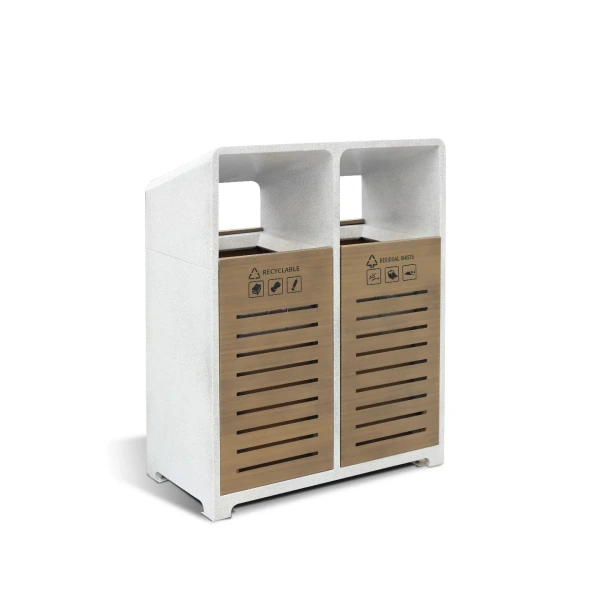
A container must hold the waste generated until the next workable collection. That interval may be longer than the cleaning schedule suggests. Staff could be assigned a round during halftime yet be unable to reach a station because the concourse is crowded. Buying larger outdoor trash receptacles without checking that access problem can leave the underlying bottleneck unresolved.
Observe representative events and record when individual stations approach their operating fill limit. Note whether the problem is total waste volume, one busy location, an obstructed opening or a delayed collection. A partly empty inner container can still become unusable when bulky cups or packaging bridge across the inlet.
Choose a response that addresses the observed cause. Extra containers can help a busy location, but increasing cabinet size will not resolve every overflow problem. Use the following observations to decide what to trial before changing the specification.
| Observation during the event | Issue to investigate | Adjustment to trial |
|---|---|---|
| The liner reaches its working fill limit before the next feasible round | Capacity relative to the collection interval | Trial additional capacity or an earlier collection window |
| Cups or packaging obstruct the opening while the liner still has room | Opening size and shape relative to typical discarded items | Check the inlet using actual concession packaging |
| A full station cannot be serviced during an interval or departure peak | Crowds or a blocked transfer route | Review the service route or timing with venue operations |
Agree who can authorize an extra collection round or an additional station during a busy event. The person watching a filling container needs a defined contact and somewhere for the collected waste to go. Without that handoff, monitoring may identify overflow without producing a timely response.
Build a log around station ID, event phase, fill condition, bags changed and access delays. Bag counts help describe collection workload; they should not be treated as measured waste weight or used alone to claim a diversion percentage. For a new venue, begin with a provisional layout and revise it after representative events.
When a station is emptied, keep the collection point understandable throughout the change. Replace the liner promptly, or use a clearly marked temporary equivalent where permitted, so visitors retain the intended disposal choices. Include that handover in the trial rather than timing only the moment a full bag is lifted.
The procurement decision should therefore include the service conditions as well as nominal liters. Buyers needing a broader size comparison can use LVEN's outdoor trash bin capacity guide, then apply those options to the specific collection windows identified on site.
Configure Commercial Recycling Bins Around Accepted Materials
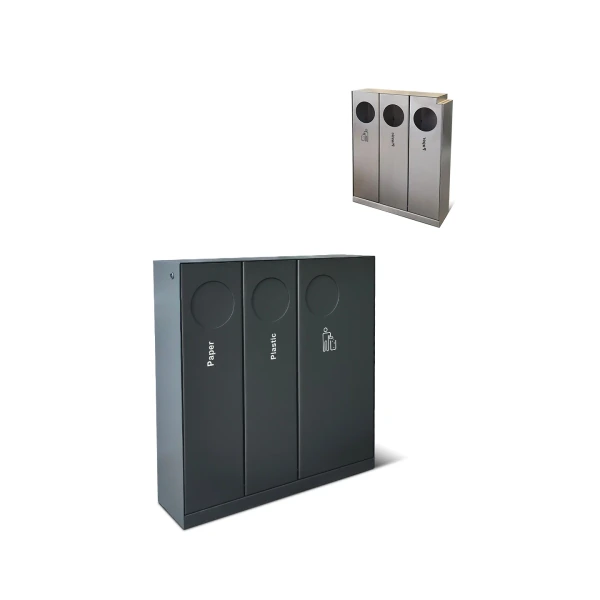
Confirm what the collection provider accepts before deciding how many waste streams to offer. A recycling symbol on packaging does not establish that the local service will process it. Food scraps, compostable serviceware, beverage containers and soiled packaging may require different handling. Only introduce a separate stream when the venue has an agreed route for collecting and processing it.
Keep the relevant disposal choices together. Portland's event recycling station guide recommends pairing garbage and recycling containers and using clear words and icons. For a venue, this means checking the full station rather than placing isolated commercial recycling bins wherever spare floor space remains.
Match the examples on signs to items actually used at the event. Ask concessionaires for representative cups, bottles and food containers before producing labels. Keep the order of streams and the meaning of colors consistent across the venue, using the conventions agreed for that location. Branding should leave the disposal instructions easy to recognize.
Follow each stream beyond the public station. Cleaning crews need to know which bag or inner container belongs to which destination, where it is transferred and who handles a contaminated load. A well-labeled public station cannot maintain separation if its contents are mixed during collection.
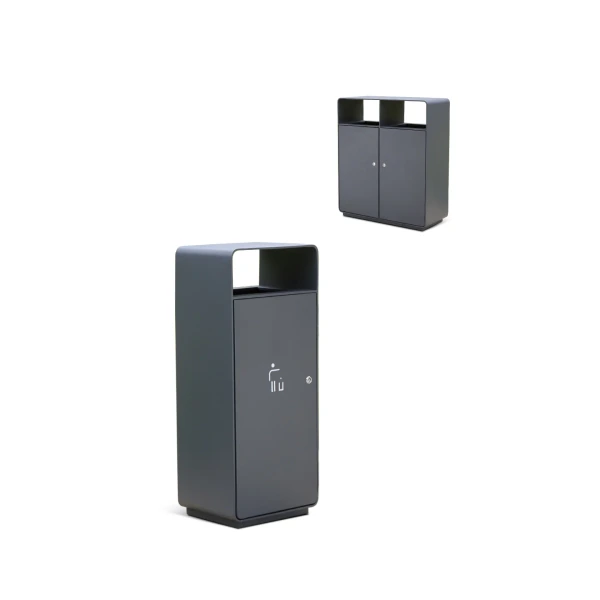
Compare LVEN's commercial recycling bin configurations against those confirmed streams. The relevant choice is the configuration that matches the venue's collection system, rather than the greatest possible number of compartments.
Specify Custom Trash Bins for Venue Operations
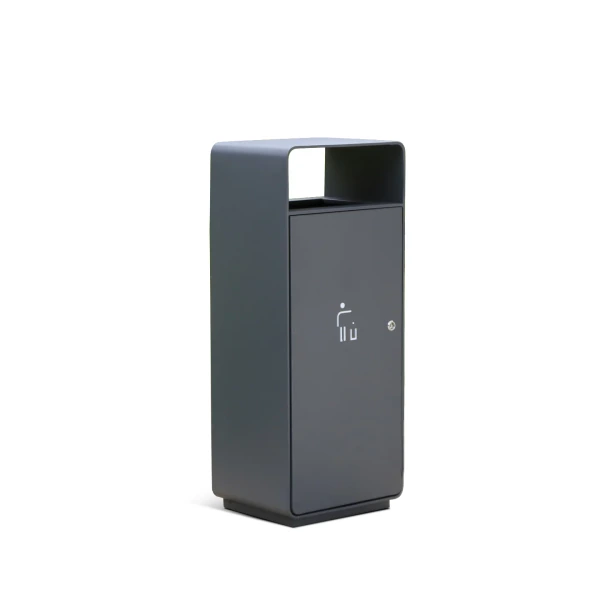
Translate the zone schedule into requirements a manufacturer can assess. Describe the installation position, available footprint, intended materials, expected servicing arrangement and indoor or outdoor exposure. Where an event uses temporary barriers or changes its circulation layout, identify whether the station is intended to remain fixed or be relocated.
For custom trash bins, operational details deserve as much attention as appearance. Check the opening with the largest typical item visitors will discard. Confirm that staff can unlock the door, remove the inner container, replace the bag and close the unit in the space available. Review the full task with the proposed liner and cleaning equipment before approving a sample.
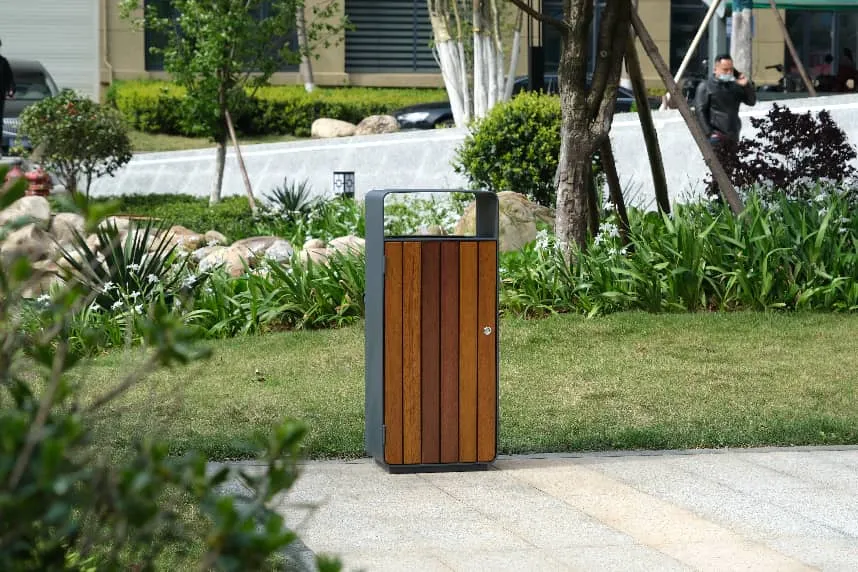
Outdoor positions also require a location-specific assessment. Rain exposure, wind, cleaning methods and the installation surface should inform the selected structure, finish and fixing arrangement. A covered opening does not by itself establish suitability for every exposed forecourt, and an outdoor model should not automatically be specified throughout an indoor exhibition hall.
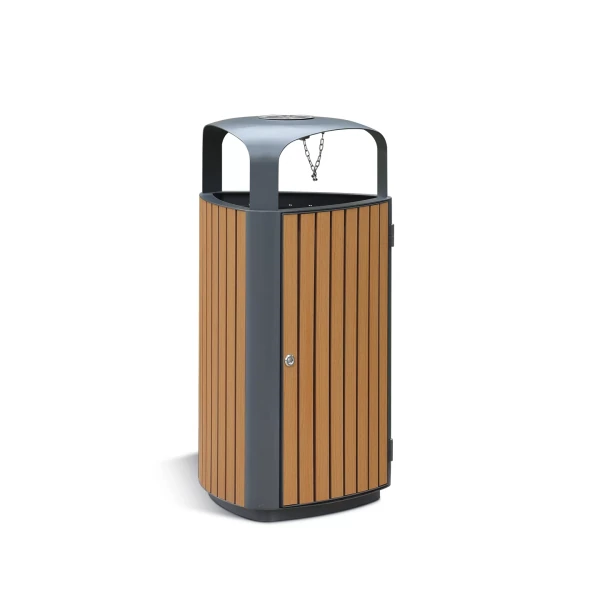
As one product reference, LVEN's OTB-04 commercial outdoor trash can is listed with a 55L single configuration, a lockable front door and a removable metal inner liner. Its separate paired configuration is listed at 60L per compartment. These are distinct specifications to assess against the zone schedule; neither is a universal recommendation for peak event locations.
Buyers sourcing custom stadium trash cans for outdoor use should distinguish a permanent venue specification from event-specific graphics. Container identification can remain consistent while temporary signs show the packaging used at a particular event. Agree how those signs will attach and be replaced without covering waste instructions or obstructing access. This helps accommodate changing events without assuming that every change requires a new cabinet.
LVEN's project process supports model selection, technical confirmation and sampling before production. Use that stage to resolve the dimensions, service access, labels and fixing details that affect daily operation, alongside the agreed appearance.
Outdoor Litter Bins at the Canton Fair Complex
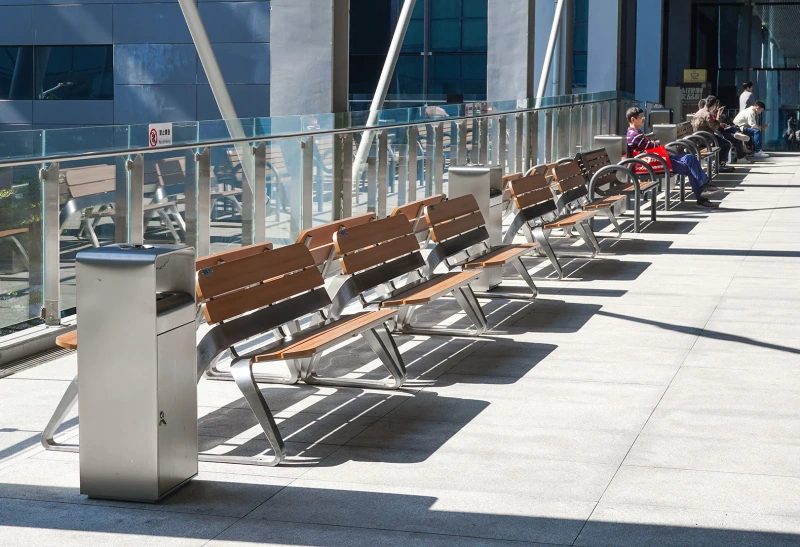
LVEN's published Canton Fair Complex furniture project provides a relevant exhibition-venue reference. The page lists completion in March 2025 and records more than 500 sets of furniture supplied across indoor and outdoor areas. That total includes trash bins, benches, planters and ashtrays.
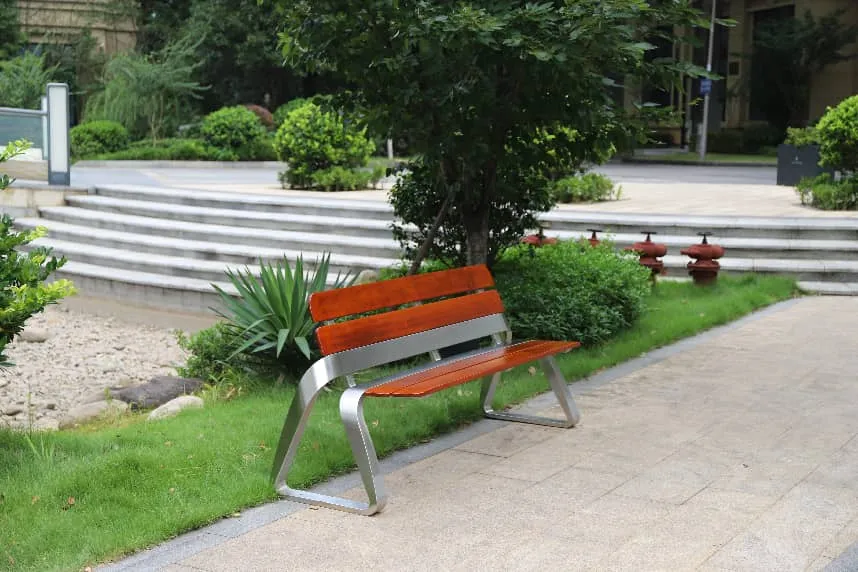
Create one procurement schedule linking each location to its product configuration, dimensions, finish, waste labels and maintenance access. This allows outdoor litter bins and indoor stations to share a visual identity while retaining the different capacities, openings and service arrangements that each zone needs. Confirm those differences on the drawings before approving the order.
Before a bulk order, test a representative station with the venue's actual waste items and cleaning routine. Check whether visitors recognize its purpose, whether bulky items pass through the opening and whether staff can complete a bag change within the available space. Record corrections against the drawing or sample approval.
Stadium Waste Bin Planning FAQs
Can a stadium use the same waste bin layout for every event
It can retain a permanent base layout, but should review the operating plan when the event changes. A concert may use different entrances, food vendors and standing areas from a sporting fixture. Exhibition booths can alter sightlines and circulation again. Check temporary obstacles, disposal materials and collection access before reusing the previous station plan.
How should exhibition setup waste be collected
Public venue waste bins should not be the default route for bulky stand packaging or dismantling materials. Agree on exhibitor collection arrangements before move-in, including where materials are held and who removes them. Keep those arrangements distinct from visitor-facing stations so that public containers remain available when the venue opens.
When should a venue add bins instead of more collection rounds
Add or reposition stations when disposal demand is concentrated beyond the practical reach or capacity of the existing points. Additional rounds help only if staff can reach, empty and transfer the waste in time. Review fill observations and access delays together: the same overflow symptom can require a different response at two locations.
Start with LVEN's outdoor trash bin range, then identify the locations requiring further specification. Send your venue plan to LVEN with the event timetable, indoor and outdoor zones, confirmed waste streams and collection arrangements. These details provide a practical basis for model selection, technical review and a project quotation.
Contents