What Capacity Outdoor Trash Bin Should You Choose for Public Projects?
 26
26  Share
Share
Summary
Choosing the right outdoor trash bin capacity is one of the most practical decisions in a public space project. If the bin is too small, it overflows before the next collection. If it is too large, it may take up too much space, look bulky, cost more than needed, or become harder for maintenance teams to handle.
For parks, streets, commercial centers, schools, hotels, scenic areas, and municipal projects, the best capacity depends on foot traffic, waste type, user behavior, collection frequency, available space, and whether the project needs single-bin, dual-bin, or multi-compartment recycling structures. This guide explains how to choose the right public trash bin size for different scenarios and how to prepare capacity requirements before purchasing outdoor waste bins in bulk.
Why Outdoor Trash Bin Capacity Matters?
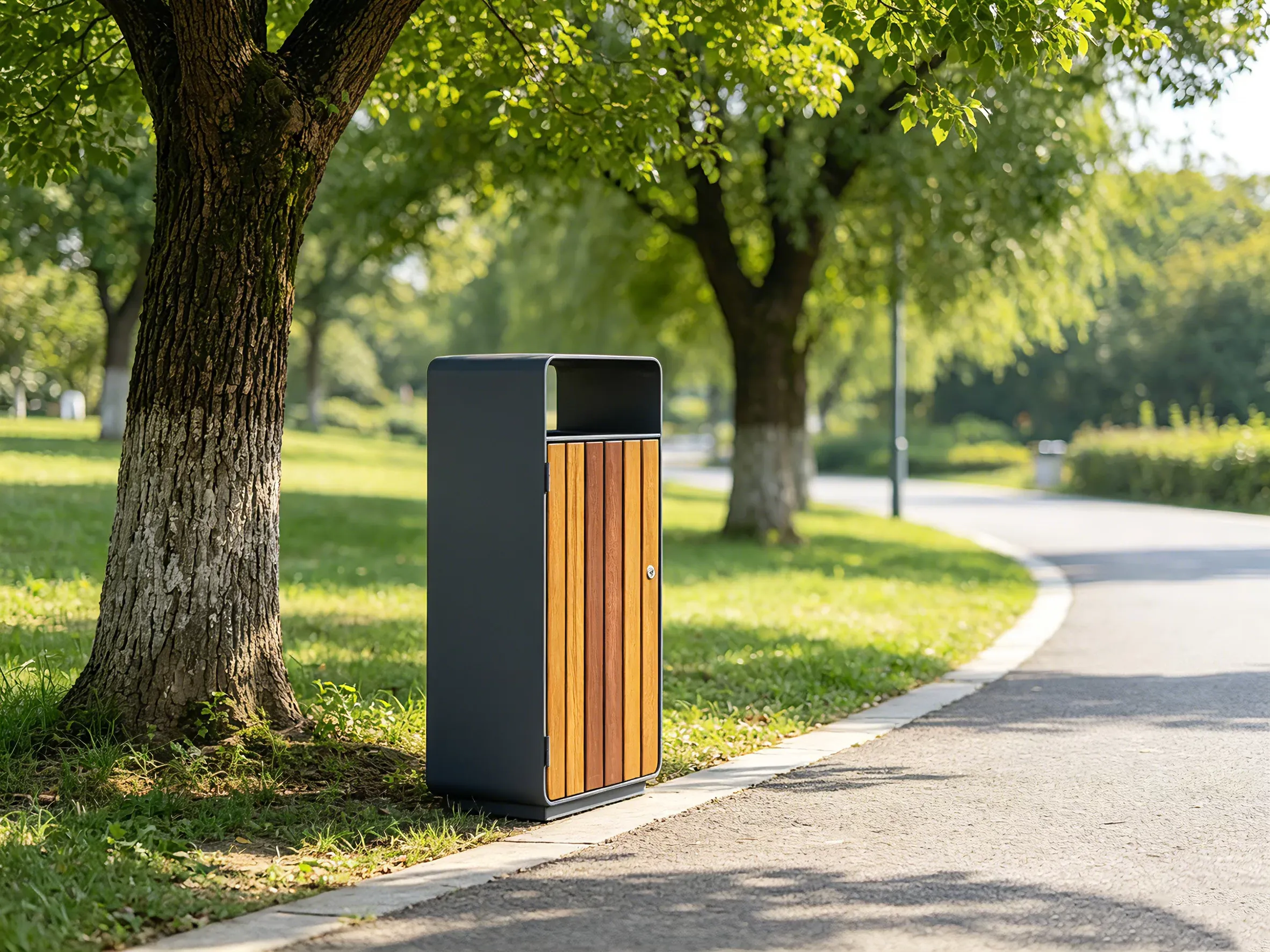
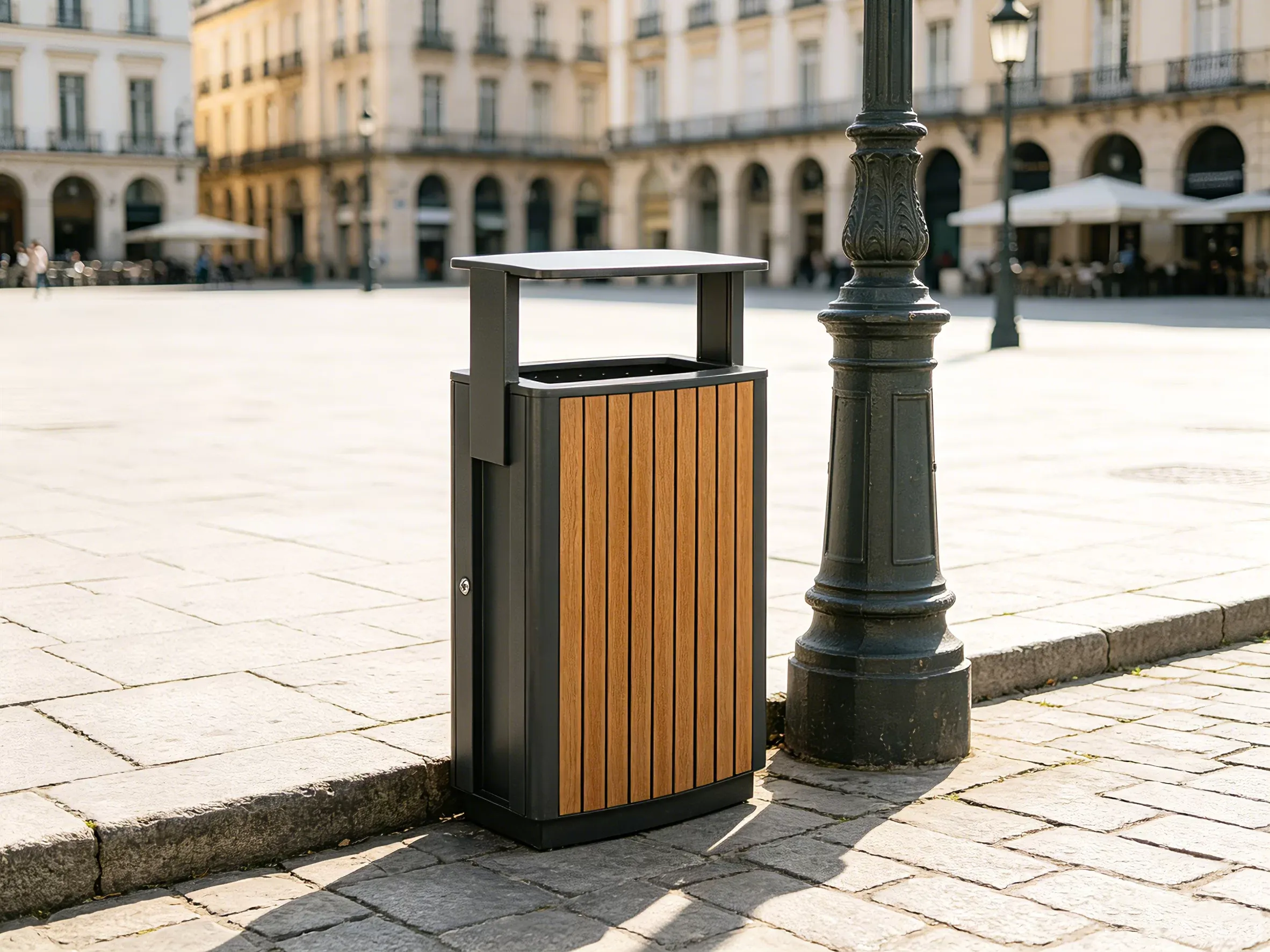
Outdoor trash bin capacity affects more than how much waste a bin can hold. It also influences cleanliness, maintenance workload, pedestrian flow, waste sorting behavior, and the overall image of a public space.
In a park or scenic area, a small bin may work on weekdays but overflow during weekends or holidays. In a commercial area, food packaging and drink cups can fill bins quickly during lunch and evening peaks. In schools, waste volume may rise sharply during breaks, lunch periods, or events. In hotel and resort environments, bins must be functional but also visually discreet.
The U.S. EPA notes that commercial and institutional buildings such as schools, hotels, restaurants, stores, and offices generate significant amounts of materials and waste, and better waste management can help reduce costs and improve sustainability. For buyers, this means outdoor trash bin capacity should be planned as part of a waste management system, not treated as a minor product detail.
A good capacity plan should answer four questions:
① How much waste will the site generate during peak hours?
② How often can maintenance teams empty the bins?
③ What type of waste will users throw away?
④ Does the bin need to support recycling or multi-category sorting?
Common Outdoor Waste Bin Size Ranges
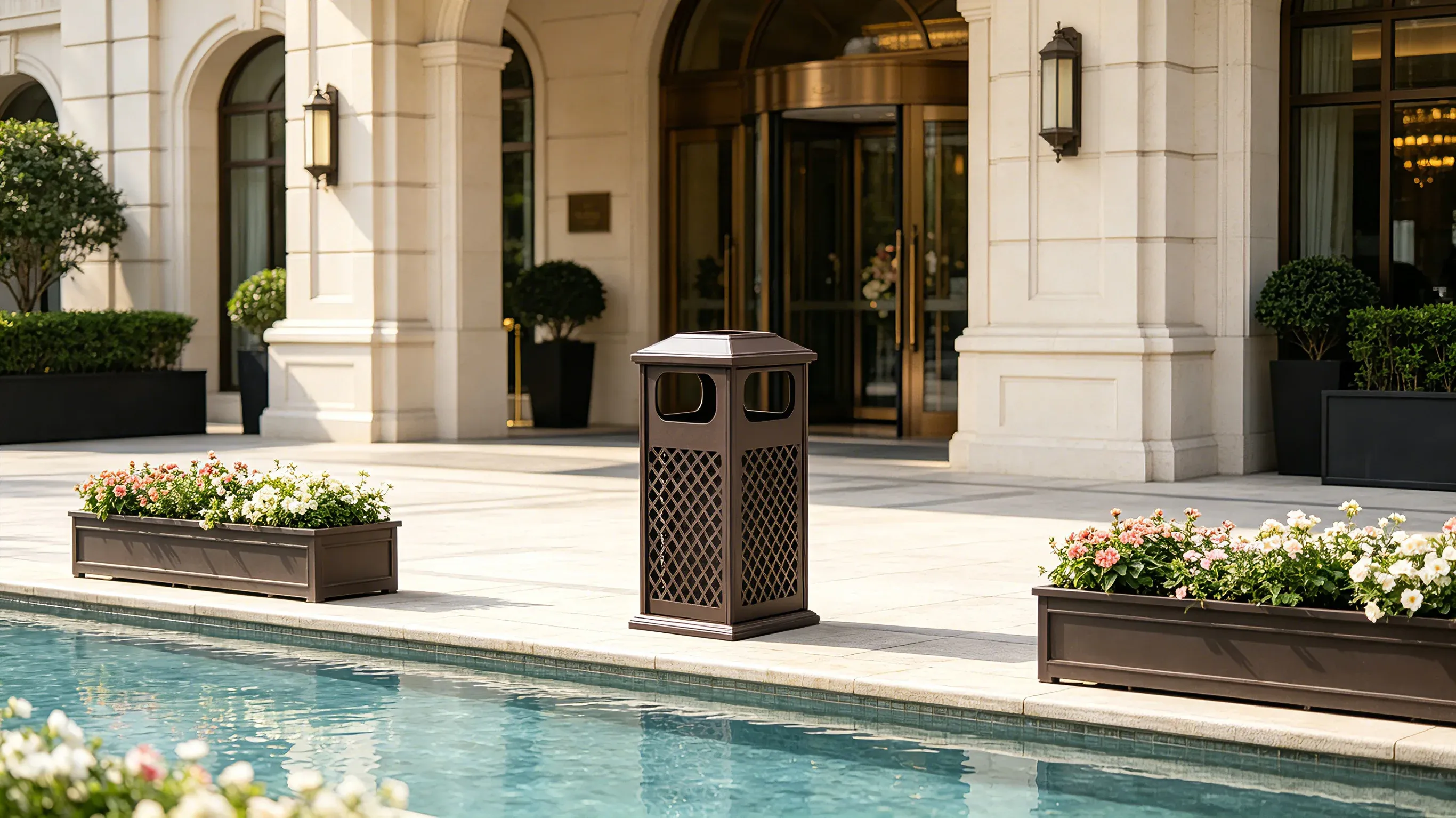
Outdoor waste bin size is usually measured in liters. For public space projects, common capacities range from compact 25L bins to larger 120L outdoor bins or multi-compartment recycling systems.
Capacity Range | Typical Use | Suitable Scenario |
25–35L | Compact waste collection | Hotel entrances, small gardens, indoor-outdoor transition areas |
40–50L | Standard public use | Park paths, schools, residential communities, low-to-medium traffic spaces |
55–65L | Medium public traffic | Streets, commercial walkways, scenic rest areas |
80–100L | High-traffic spaces | Commercial centers, transport areas, tourist routes |
120L+ | Heavy waste volume | Event spaces, scenic entrances, high-flow public areas |
2×30L / 2×40L / 2×60L | Dual sorting | General waste + recycling, street or school projects |
3×30L / 3×40L / 4×40L | Multi-category sorting | Campuses, commercial buildings, municipal recycling points |
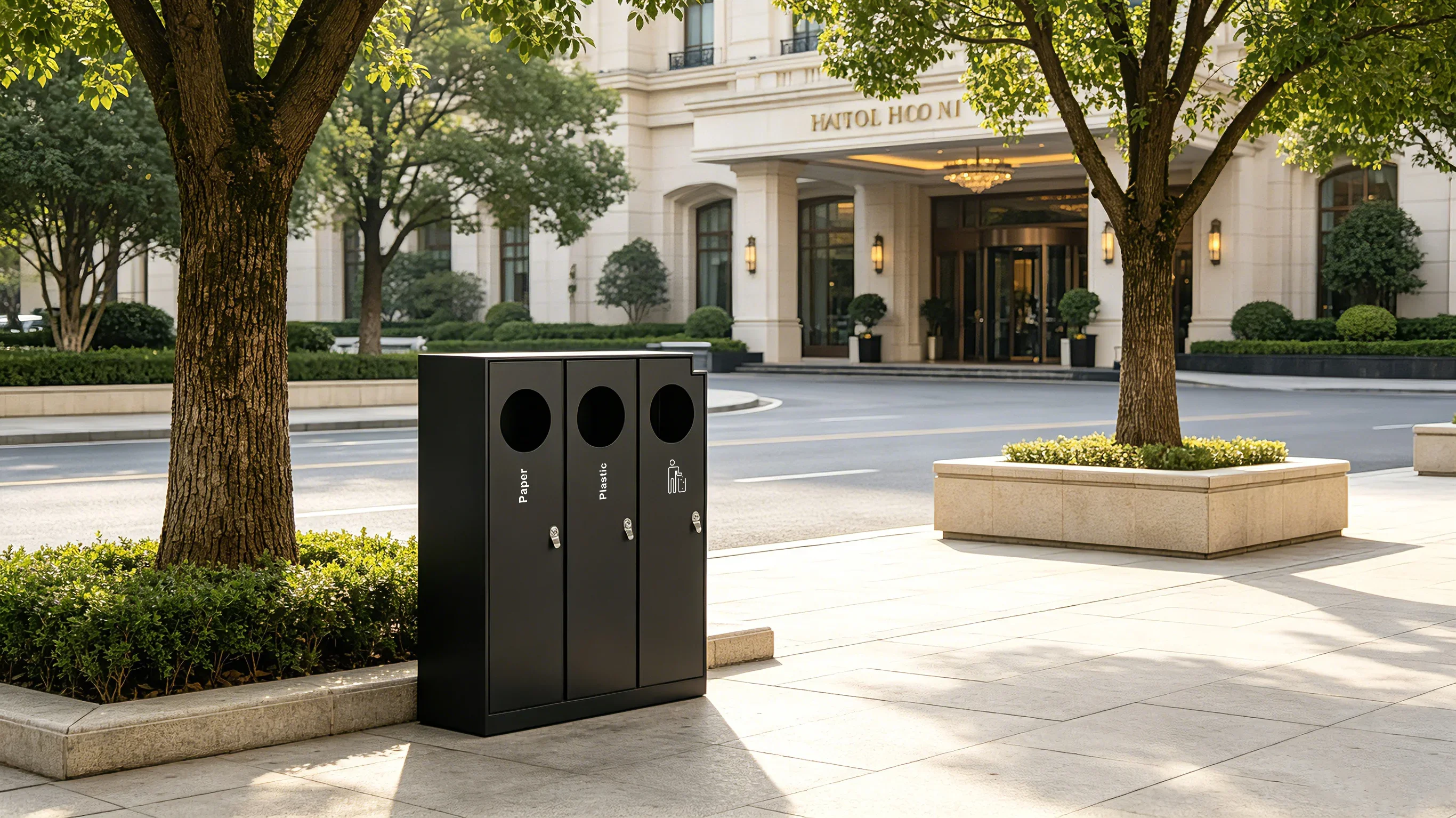
LVEN’s product catalog includes outdoor trash bin options ranging from compact 25L models to 120L bins, as well as dual and multi-compartment structures such as 40L×2, 35L×3, 45L×3, and 40L×4 configurations, which are useful for projects requiring different waste sorting capacities.
The main point is not to select the largest bin by default. The right capacity should match the site’s waste generation and cleaning schedule.
How to Choose Outdoor Trash Bin Capacity by Scenario?
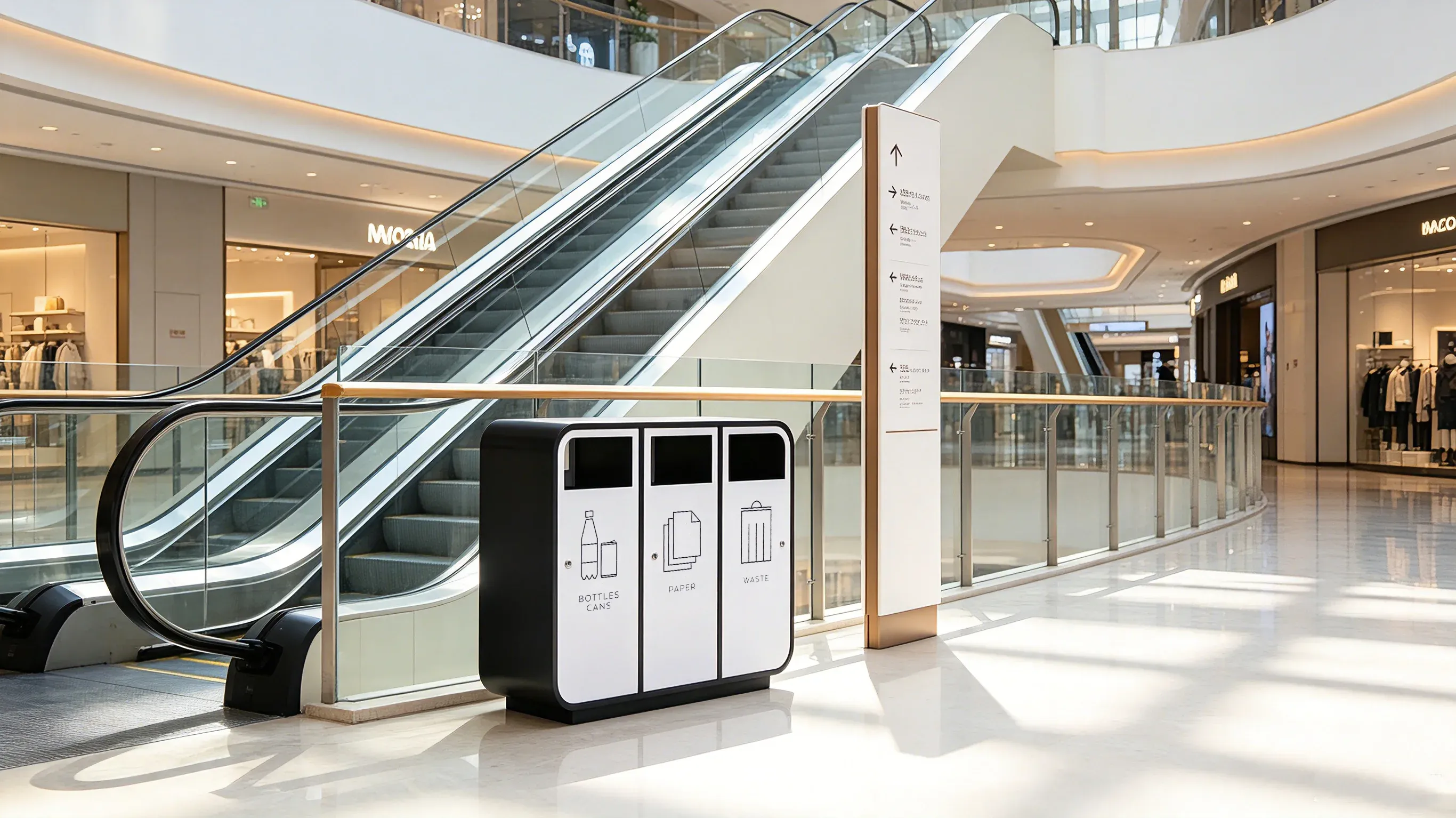
Different public spaces create different waste patterns. A public trash bin for a park path is not the same as a bin for a shopping mall entrance or a school dining area.
Parks and Green Spaces
For general park paths, 40–60L bins are often practical. They are large enough for daily visitor waste but not too bulky for natural landscapes. For picnic areas, playgrounds, and weekend-heavy zones, 60–100L bins may be better because food packaging, bottles, and snack waste increase quickly.
Recommended capacity:
Park Area | Suggested Capacity |
Quiet walking path | 40–50L |
Playground or rest area | 50–65L |
Picnic area | 60–100L |
Park entrance | 80–120L |
Pet-friendly area | Separate dog waste bin or small dedicated bin |
For park projects, the bin should not only have enough capacity. It should also match benches, planters, picnic tables, and the landscape style.
Streets and Sidewalks
Street bins are usually placed along sidewalks, bus stops, crosswalks, commercial streets, and municipal roads. A 40–60L public waste bin is often suitable for regular sidewalk use. For busy pedestrian streets or food-service zones, 60–100L may be more realistic.
NACTO describes the street furniture zone as the sidewalk area between the curb and pedestrian through zone where amenities such as benches, bicycle parking, and street furniture can be placed. For outdoor trash bins, this means capacity should not be increased at the expense of pedestrian clearance. A larger bin is not better if it blocks circulation or creates sidewalk clutter.
Recommended capacity:
Street Area | Suggested Capacity |
Low-traffic sidewalk | 40–50L |
Bus stop or intersection | 50–65L |
Commercial street | 60–100L |
Street food or café area | 80–120L or multiple bins |
Commercial Centers and Shopping Streets
Commercial outdoor trash cans need to handle fluctuating waste volume. Lunch hours, weekends, events, and holiday shopping can create sudden peaks. For shopping centers, outdoor dining zones, office parks, and mixed-use developments, 60–100L bins are often a good starting point. Larger entrances or food-heavy areas may need 100–120L bins or a group of several bins.
Commercial buyers should also consider visual design. A large bin placed in a premium plaza should still look refined, clean, and consistent with other public furniture.
Schools and Campuses
Schools generate waste in concentrated time periods, especially around cafeterias, sports fields, dormitory areas, and outdoor seating zones. For walkways and general campus areas, 40–60L bins may be enough. For dining areas or event zones, 80–120L bins or multi-compartment recycling receptacles are more suitable.
Schools may also benefit from recycling stations because users can be educated through clear labels and repeated daily behavior. However, the categories should remain simple.
Hotels and Resorts
Hotels, resorts, and scenic accommodation areas usually require a balance between capacity and appearance. At entrances, poolside areas, garden paths, and outdoor dining zones, 25–50L bins may be enough if cleaning is frequent. For back-of-house or service areas, larger bins may be needed.
Recommended capacity:
Hotel Area | Suggested Capacity |
Lobby entrance | 25–40L |
Garden walkway | 40–50L |
Outdoor dining area | 60–100L |
Service or collection point | 100L+ |
Scenic Areas and Tourist Attractions
Scenic spots often have uneven visitor flow. A weekday may be quiet, while weekends and holidays may bring heavy traffic. Entrances, ticketing areas, viewpoints, rest zones, and food areas should use larger bins or multiple bins.
Recommended capacity:
Scenic Area | Suggested Capacity |
Walking trail | 40–60L |
Viewing platform | 50–80L |
Food and beverage area | 80–120L |
Main entrance or exit | 100–120L+ |
Recycling point | Dual or multi-compartment bins |
Single, Dual or Multi-Compartment Public Trash Bin?
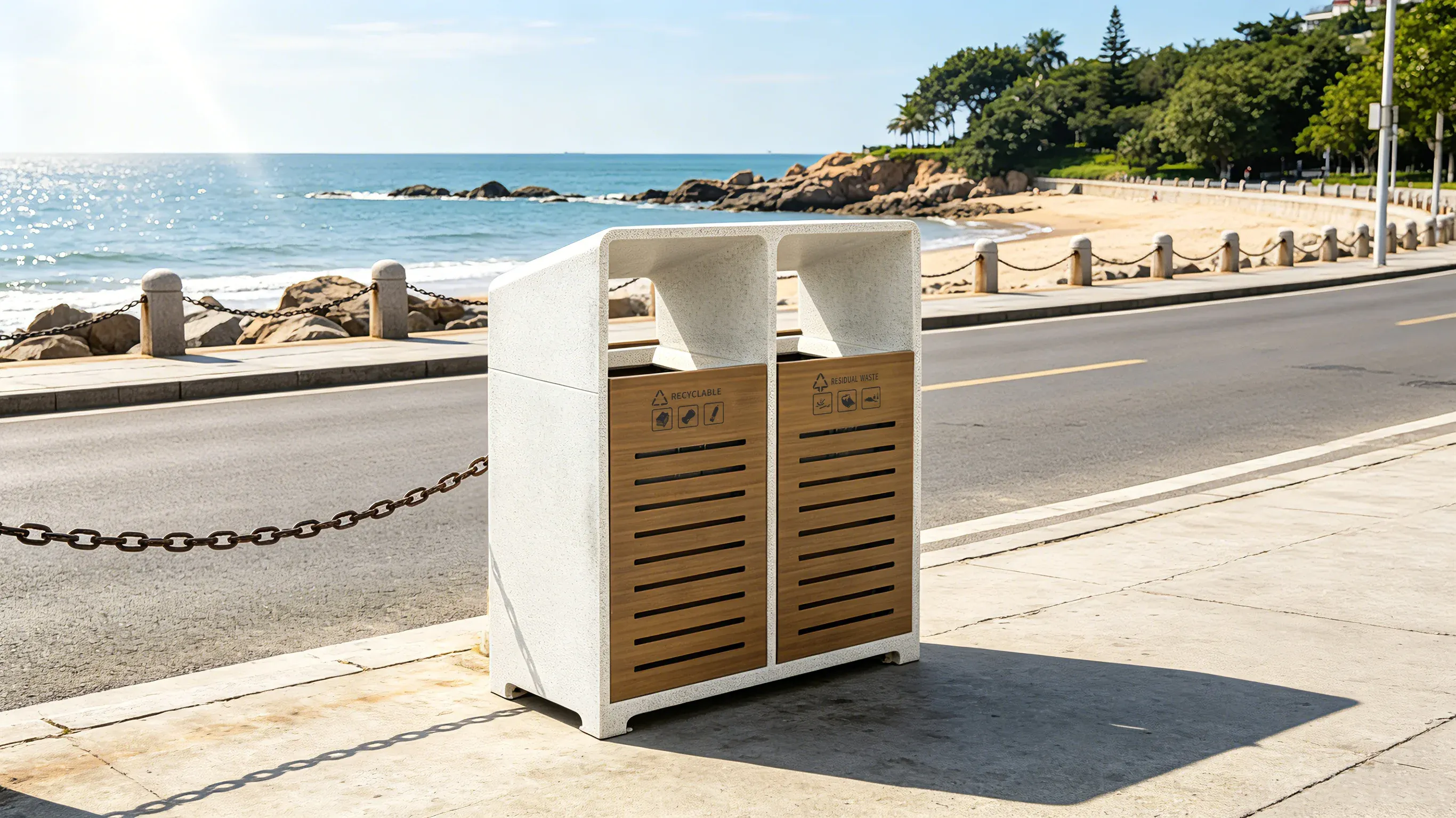
Capacity planning is not only about total liters. It is also about how the capacity is divided.
Structure | Example Capacity | Best Use |
Single bin | 40L, 50L, 60L, 80L, 100L | General waste collection |
Dual bin | 2×30L, 2×40L, 2×60L | General waste + recyclables |
Three-compartment bin | 3×30L, 3×40L | General waste, recyclables, paper or bottles |
Four-compartment bin | 4×40L | High-control sorting areas |
Separate specialty bin | Dog waste bin, ashtray bin | Pet areas or smoking zones |
A single 80L bin is not the same as a dual 40L×2 bin. The total capacity may be similar, but the user behavior and maintenance logic are different. A dual-bin structure helps sorting, but each compartment may fill at a different speed. If the recycling side fills quickly while the general waste side remains half empty, the maintenance team still needs to empty the whole unit.
For this reason, buyers should estimate waste composition, not just total volume.
What Is a Recycling Receptacle?
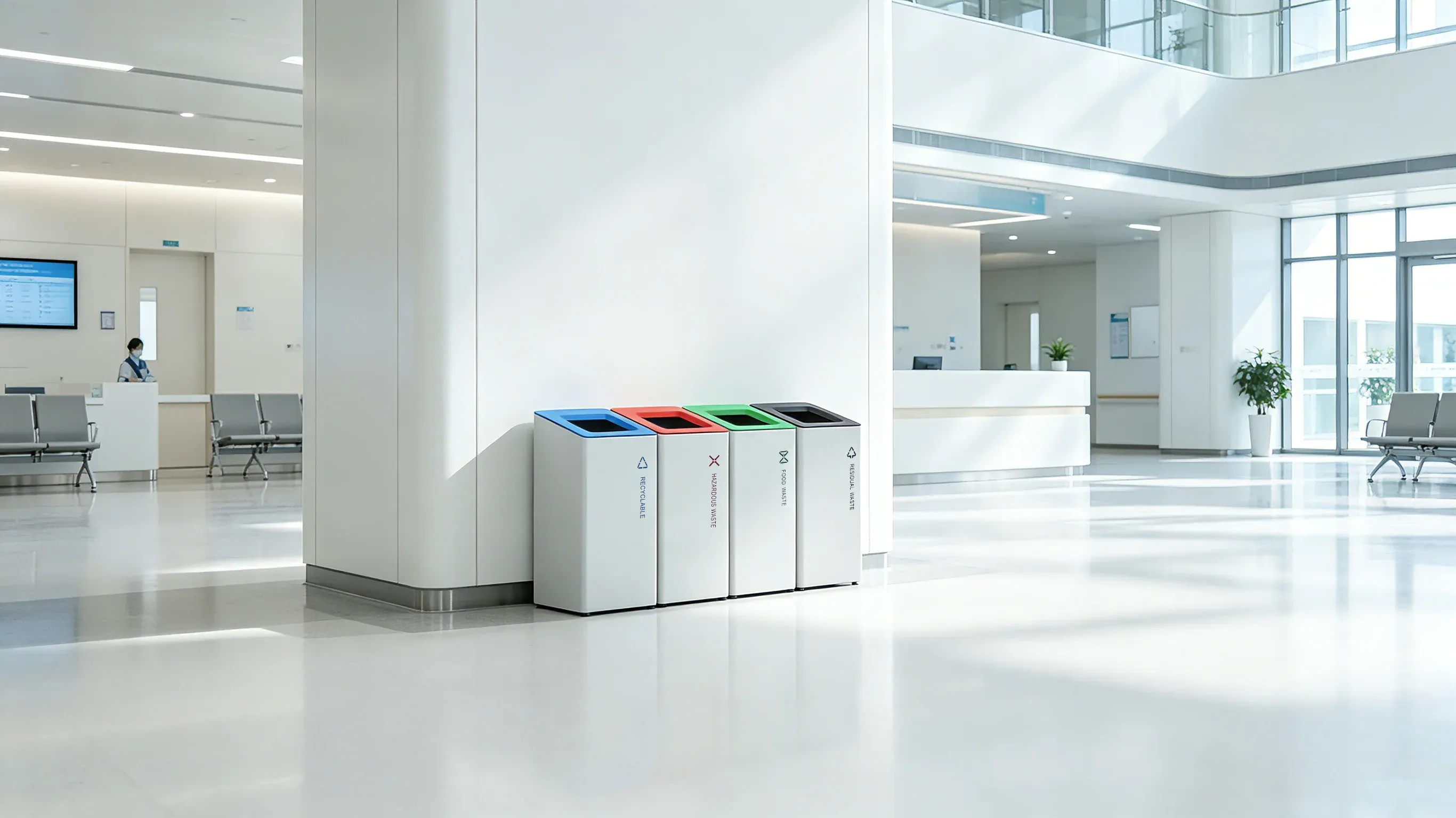
A recycling receptacle is a bin or container designed to collect recyclable materials separately from general waste. It may have one compartment for mixed recyclables or multiple compartments for paper, plastic bottles, cans, glass, food waste, or general trash.
The U.S. EPA defines recycling as collecting and processing materials that would otherwise be thrown away as trash and turning them into new products. EPA also places recycling within a broader waste management hierarchy, where reducing and reusing come before recycling.
For public projects, this means recycling receptacles should not be selected only for appearance. They need clear labels, appropriate capacity, durable signage, simple categories, and a maintenance plan that prevents contamination.
Good recycling receptacles should include:
① Clear sorting labels
② Simple color coding
③ Durable icons or pictograms
④ Openings that match waste type
⑤ Balanced compartment capacity
⑥ Easy-access inner buckets
⑦ Weather-resistant label panels
⑧ A cleaning process that matches local recycling rules
For schools, commercial buildings, transport areas, and municipal projects, recycling bins can support sustainability goals. But too many categories may confuse users. In most public spaces, fewer, clearer categories usually perform better.
Collection Frequency and Capacity Planning
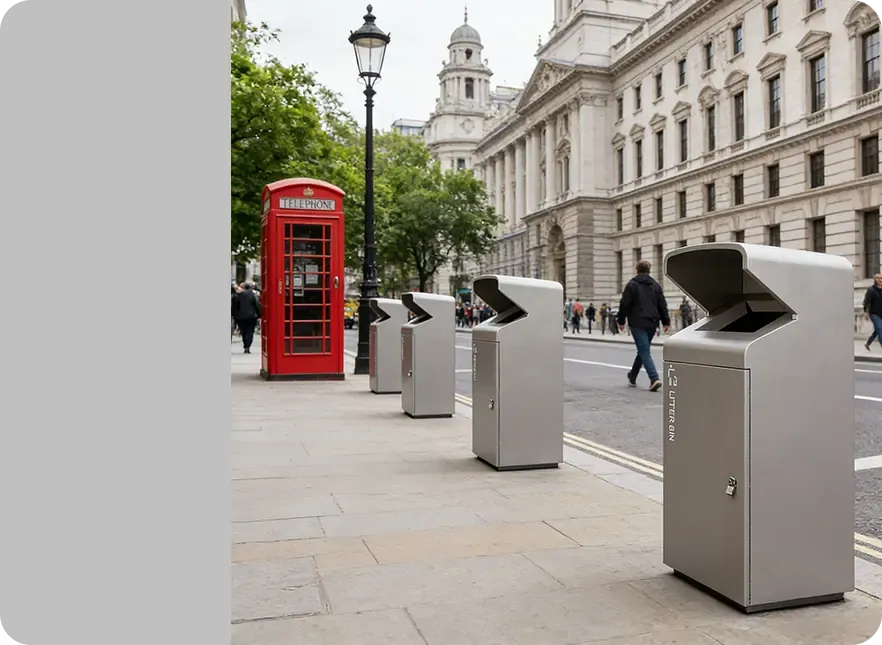
Capacity and maintenance frequency must be planned together. A small bin can work well if it is emptied often. A large bin can still overflow if it is placed in the wrong location or ignored during peak hours.
Collection Frequency | Capacity Strategy |
Multiple times per day | Smaller 25–50L bins may work in visible areas |
Once per day | 50–80L bins are safer for regular public use |
Every 2–3 days | 80–120L bins or multiple bins may be needed |
Event-based collection | Temporary extra bins should be added |
Seasonal tourist flow | Use flexible bin placement and larger entrance bins |
Buyers should ask maintenance teams how often bins can realistically be emptied. If the collection schedule is fixed, capacity must adapt to the schedule. If the site has peak periods, bin placement and quantity may matter more than simply increasing each bin size.
Placement Density: One Large Bin or Several Smaller Bins?
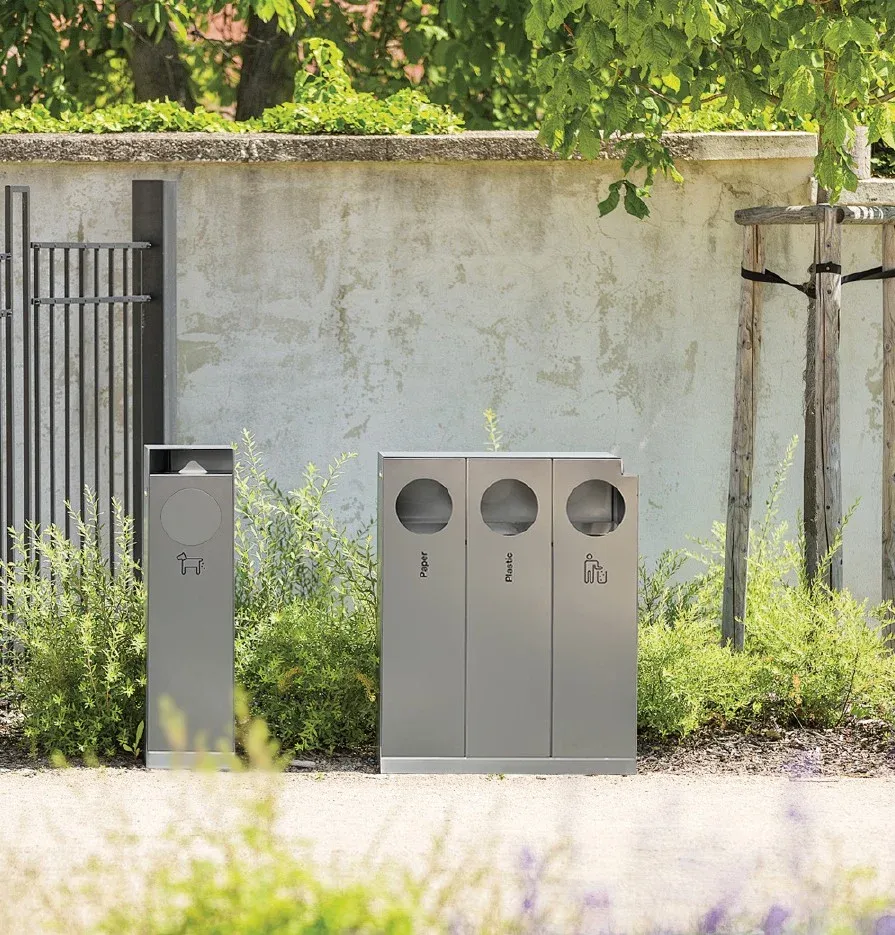
In many public projects, several medium-capacity bins perform better than one very large bin. Large bins reduce emptying frequency, but they can also create visual bulk and longer walking distances for users. If people cannot easily find a bin, they may leave waste on benches, planters, lawns, or walkway edges.
Use this planning logic:
Project Need | Better Choice |
Clean appearance in premium spaces | Several medium bins with coordinated design |
Heavy waste at one collection point | One large bin or grouped bins |
Long park path | Multiple 40–60L bins at intervals |
Outdoor dining zone | Several 60–100L bins near exits and food areas |
Recycling education | Grouped dual or multi-compartment bins |
Narrow sidewalk | Slim 40–60L bins placed carefully |
The U.S. Access Board’s Public Right-of-Way Accessibility Guidelines state that pedestrian access routes should provide a minimum continuous clear width of 48 inches. While exact standards depend on country and project type, the principle is useful for global buyers: public trash bins should be visible and convenient, but should not block accessible movement.
Materials, Structure and Capacity Relationship
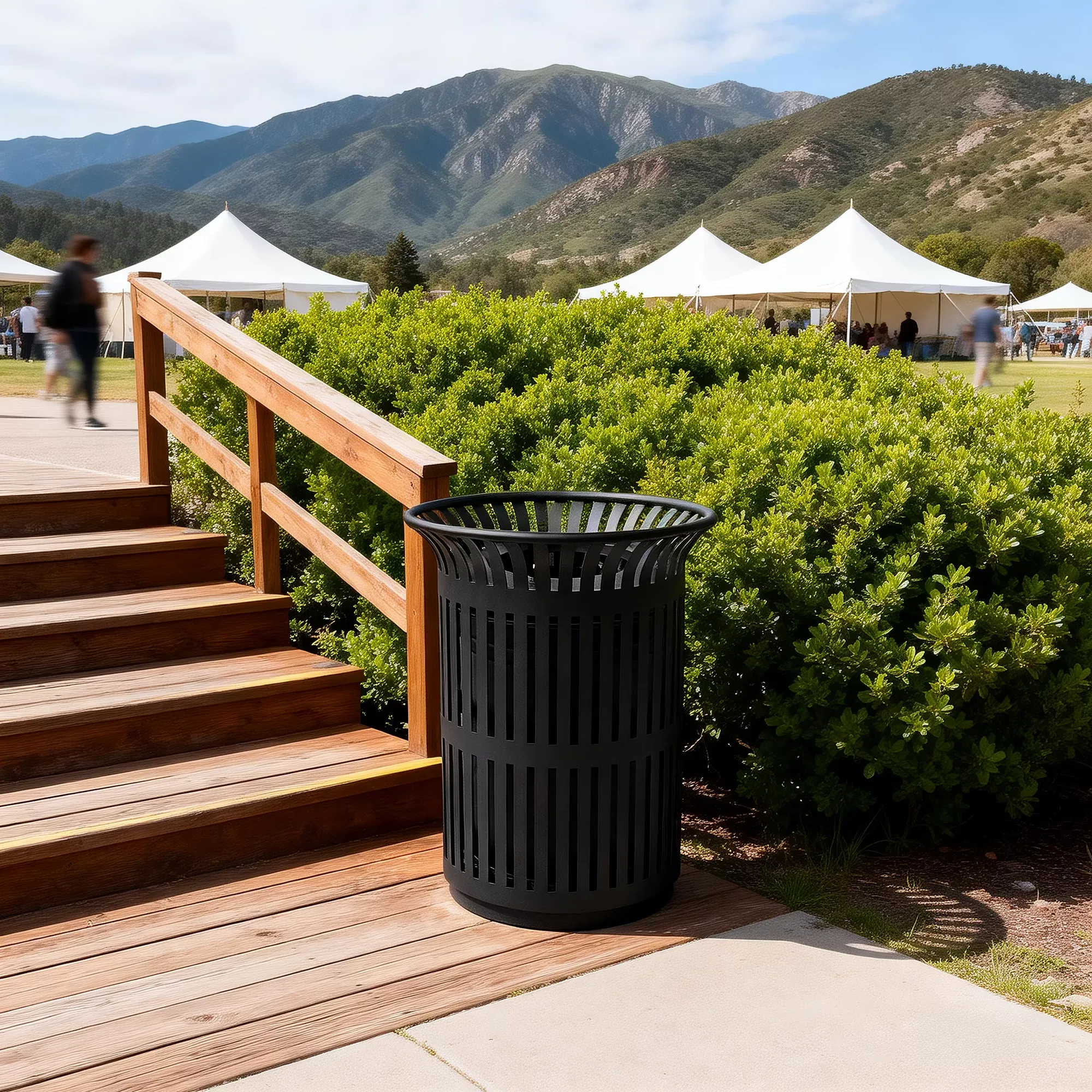
Larger capacity requires stronger structure. An 80L or 120L outdoor trash bin carries more waste weight, puts more pressure on the base, and may need stronger doors, hinges, liners, and frames.
Buyers should check:
① Steel thickness
② Inner bucket material
③ Door and hinge strength
④ Base stability
⑤ Drainage design
⑥ Lock quality
⑦ Anti-corrosion treatment
⑧ Installation holes or fixing method
⑨ Whether the liner is easy to remove when full
For long-term outdoor use, LVEN’s manufacturing materials highlight metal cutting, bending, welding, grinding, modular assembly, powder coating, and anti-corrosion surface treatment. Its process documents also emphasize galvanized steel for municipal and commercial projects, stainless steel 304/316 for humid or coastal environments, and outdoor powder coating to reduce rust, fading, and maintenance needs.
For high-capacity bins, structure matters as much as volume. A large bin with weak hinges or poor inner bucket design can create more maintenance problems than a smaller but better-built unit.
Buyer’s Checklist for Outdoor Trash Bin Capacity
Use this checklist before requesting a quote.
Buying Item | What to Confirm |
Project type | Park, street, school, hotel, scenic area, commercial center, municipal project |
User flow | Low, medium, high, seasonal, event-based |
Waste type | General waste, food packaging, bottles, paper, pet waste, cigarette waste |
Suggested capacity | 25L, 40L, 50L, 60L, 80L, 100L, 120L or custom |
Structure | Single bin, dual bin, three-compartment, four-compartment |
Collection frequency | Multiple times per day, daily, every few days, event-based |
Placement method | Entrance, path, rest area, dining area, service zone |
Material | Galvanized steel, stainless steel, aluminum, plastic wood combination |
Installation | Freestanding, surface-mounted, embedded, movable |
Maintenance | Inner liner, lock, door, hinge, drainage, bag holder |
Customization | Color, logo, sorting label, size, opening, ashtray |
Bulk order support | Sample, drawings, packaging, delivery time, quality control |
A complete inquiry should include project scenario, quantity, preferred capacity, waste category, material, color, installation method, and destination. This helps suppliers recommend suitable outdoor trash bin capacity instead of guessing from limited information.
How LVEN Supports Public Trash Bin Projects?
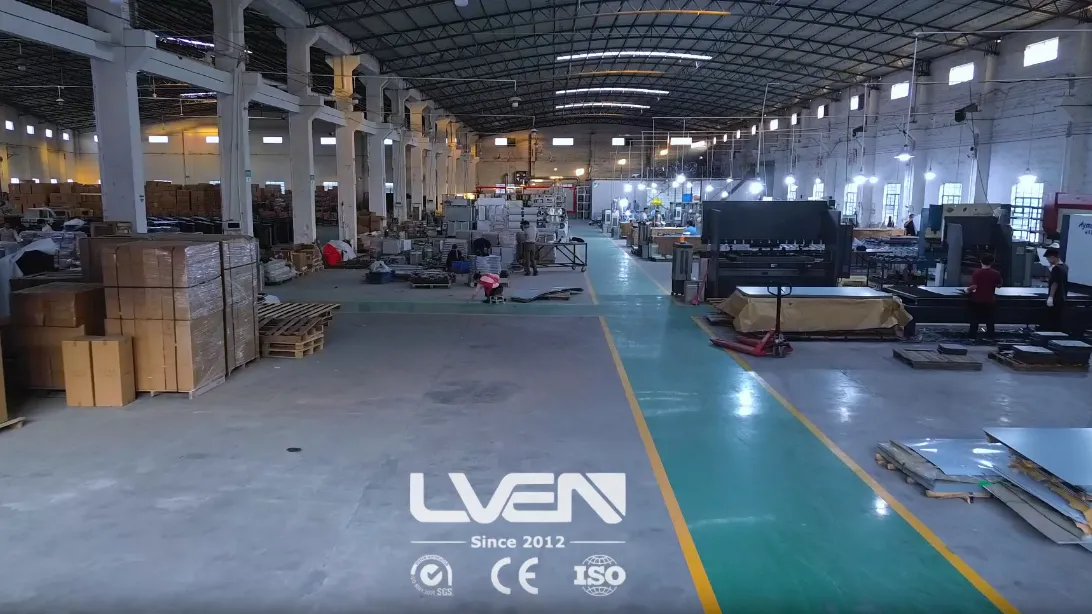
LVEN is a China-based urban furniture manufacturer with product categories including outdoor trash bins, park benches, planters, bicycle racks, picnic tables, ashtrays, and related public furniture. The company supports standard and customized products, OEM/ODM manufacturing, project coordination, material selection, sampling, production, export packaging, and after-sales service.
For outdoor trash bin projects, LVEN can support:
① Standard and custom outdoor waste bin sizes
② Single-bin, dual-bin, and multi-compartment structures
③ Capacity options for parks, streets, schools, hotels, scenic areas, and commercial spaces
④ Material recommendations based on climate and budget
⑤ Custom color, logo, sorting label, opening, ashtray, and installation options
⑥ Coordination with benches, planters, bicycle racks, and other urban furniture
⑦ Bulk production and quality control for project orders
LVEN’s quality control system covers raw material inspection, production process checks, surface treatment inspection, finished product inspection, packaging checks, and traceable batch records, which is especially important when buyers need consistent quality across large public trash bin orders.
FAQ About Outdoor Waste Bin Size
What capacity outdoor trash bin is best for parks?
For regular park paths, 40–60L bins are usually suitable. For picnic areas, playgrounds, entrances, and high-traffic scenic zones, 60–120L bins or multiple bins may be better.
What size public trash bin should be used on streets?
For normal sidewalks and streets, 40–60L bins are practical. For commercial streets, bus stops, food areas, or busy intersections, 60–100L bins may be more suitable.
Is a 120L outdoor trash bin always better?
No. A 120L bin can be useful in high-traffic areas, but it may be too bulky for narrow sidewalks, hotel entrances, or refined commercial spaces. Several medium-capacity bins may perform better in many projects.
What is the difference between a single bin and a dual recycling bin?
A single bin collects one waste stream, usually general waste. A dual recycling bin separates waste into two categories, such as general waste and recyclables. The total capacity may be similar, but the maintenance and user behavior are different.
How many outdoor trash bins does a public project need?
The number depends on site area, foot traffic, waste type, walking distance, and collection frequency. A long park path usually needs multiple medium bins, while an entrance or food zone may need larger grouped bins.
What is a recycling receptacle?
A recycling receptacle is a bin designed to collect recyclable materials separately from general waste. It may have one recycling compartment or multiple compartments for paper, plastic, cans, glass, or other categories.
Can outdoor trash bin capacity be customized?
Yes. Outdoor trash bin capacity can often be customized by adjusting the size, inner liner, number of compartments, opening structure, and overall design. Buyers should provide project requirements, target capacity, quantity, and usage scenario before requesting a quote.
Conclusion
The right outdoor trash bin capacity depends on more than a simple liter number. Parks, streets, commercial centers, schools, hotels, and scenic areas all generate waste differently. A successful public project should match bin capacity with user flow, waste type, collection frequency, placement density, recycling needs, and maintenance capability.
For low-traffic areas, 25–50L bins may be enough. For regular public spaces, 40–65L bins are often practical. For commercial streets, tourist areas, schools, and food zones, 80–120L bins or grouped recycling receptacles may be better. Dual-bin and multi-compartment structures are useful when waste sorting is clear and maintenance teams can support it.
LVEN supports public trash bin projects with multiple capacity options, custom sizes, single and multi-compartment designs, material selection, logo and label customization, OEM/ODM service, bulk production, and coordinated public furniture solutions.
Contents