
What is Urban Street Furniture? A Buyer’s Guide for Public Space Projects
 161
161  Share
Share
Summary
Urban street furniture refers to the outdoor products and small public facilities installed in streets, parks, plazas, campuses, commercial areas, transport spaces, and other shared environments. It includes benches, trash bins, recycling bins, planters, bicycle racks, picnic tables, ashtrays, tree benches, bollards, shelters, and other site furnishings.
For public space projects, these products are not only decorative. They support seating, waste collection, bicycle parking, pedestrian movement, landscape organization, accessibility, safety, and the long-term image of a place. For buyers, the real question is not simply “which product looks good?” A better question is: which furniture system can match the site, withstand outdoor use, reduce maintenance pressure, and keep the project visually consistent over time?
What is Urban Street Furniture? A Clear Definition for Buyers
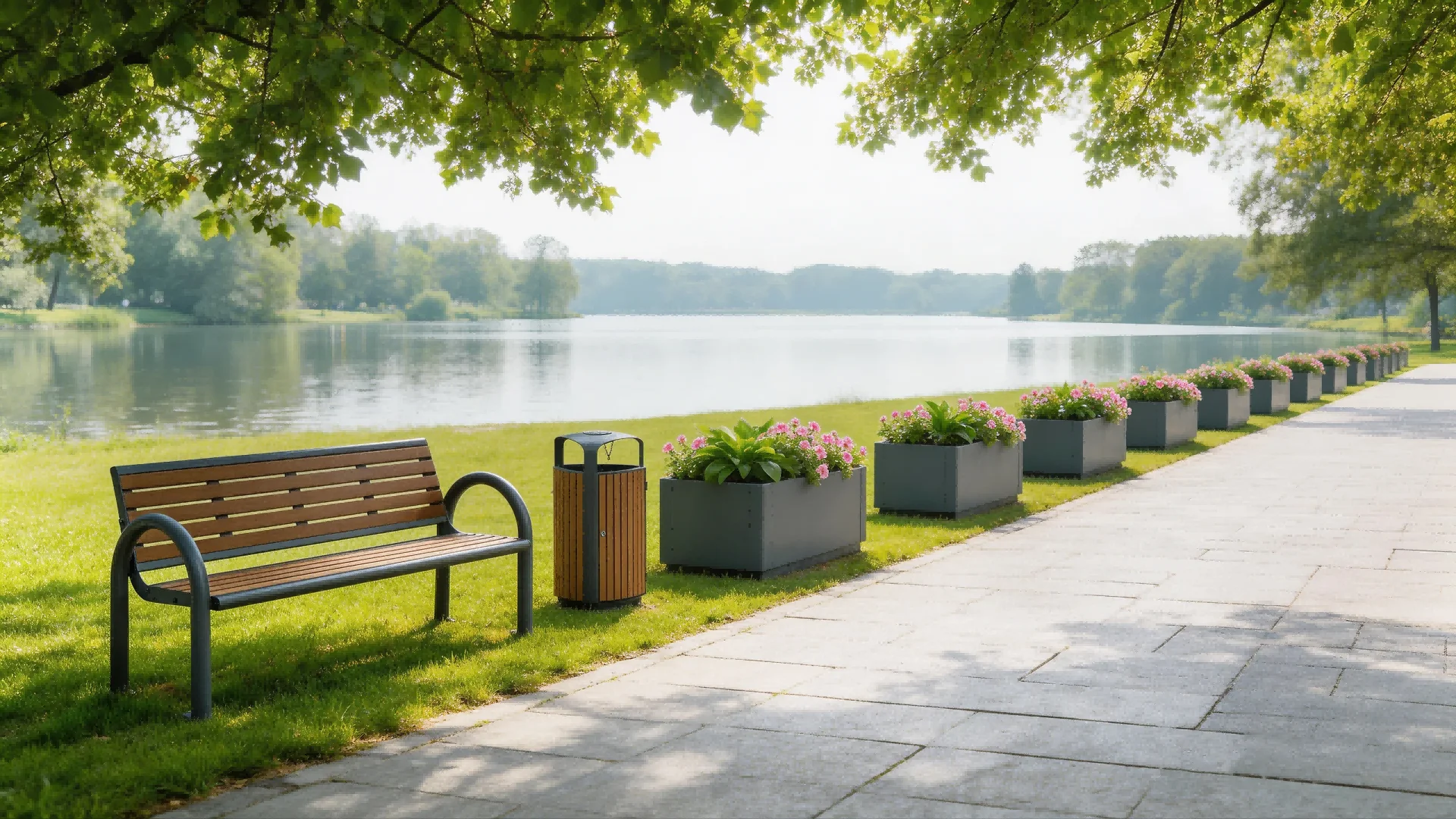
Urban street furniture is a group of fixed or movable outdoor products used to make public spaces more functional, comfortable, organized, and visually complete. It includes the human-scale facilities people sit on, walk past, park bicycles at, throw waste into, use for gathering, or rely on for orientation in daily urban life.
A simple definition is:
Urban street furniture is the practical and visual equipment installed in outdoor public spaces to support public use, improve pedestrian comfort, organize space, and strengthen the identity of a place.
This definition matters because project-grade street furniture is different from ordinary outdoor furniture. A chair in a private garden may only need to look attractive and feel comfortable. A park bench on a public walkway must also handle repeated use, weather exposure, cleaning routines, installation rules, vandalism risk, and long-term replacement planning.
In real procurement, urban street furniture is usually selected by municipalities, landscape designers, contractors, developers, distributors, schools, parks, hotels, commercial complexes, and public institutions. These buyers care about more than appearance. They also need clear product categories, suitable materials, reliable structure, installation safety, delivery stability, and after-sales support.
Street Furniture vs. Urban Furniture: How the Terms Connect?
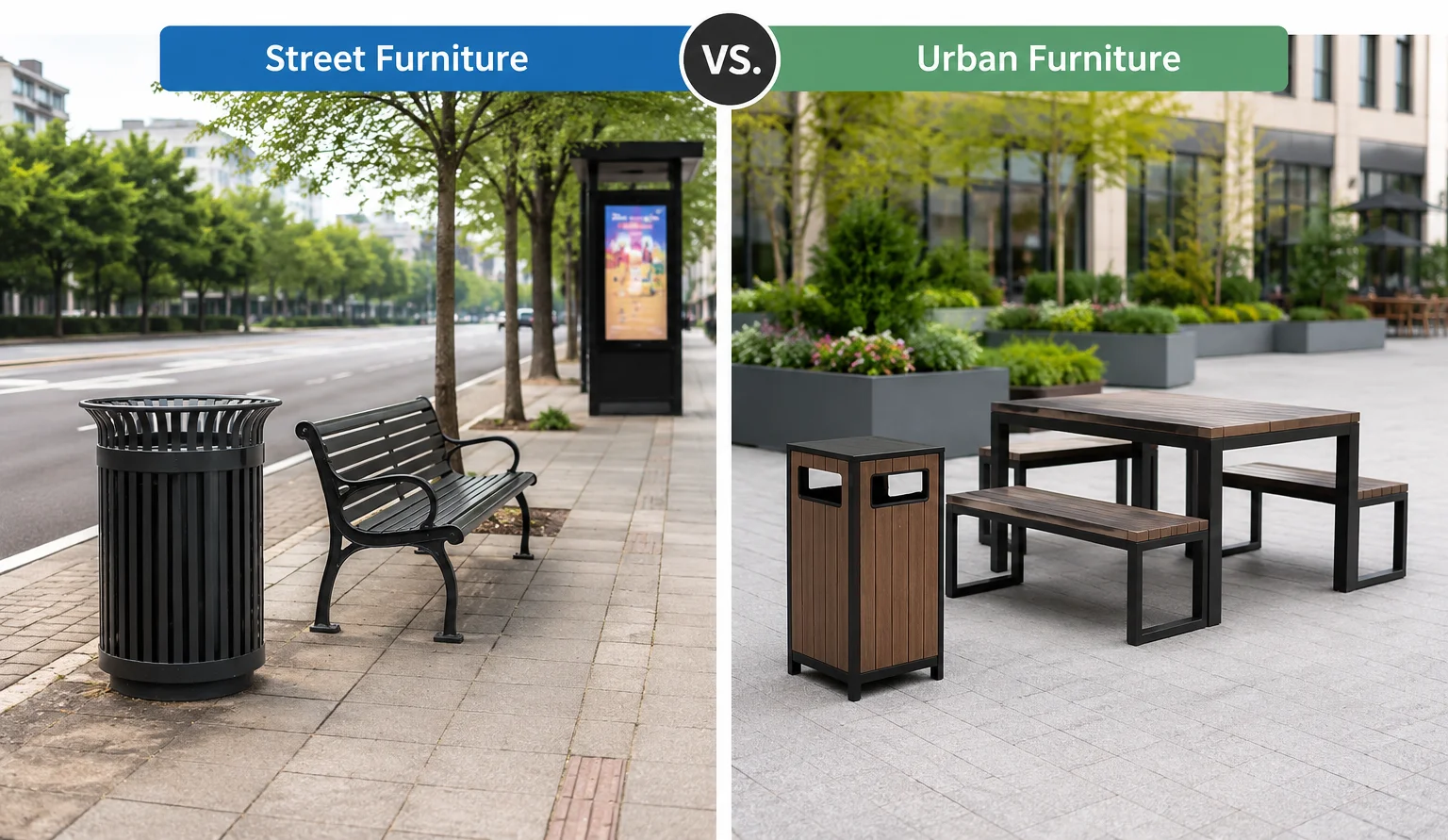
What Is Street Furniture?
Street furniture usually refers to products placed along streets, sidewalks, pedestrian zones, bus stops, plazas, and streetscape areas. It is closely connected with the pedestrian experience. Common examples include benches, trash receptacles, bicycle racks, planters, lighting poles, signage, bollards, bus shelters, and other sidewalk amenities.
The NACTO Urban Street Design Guide describes the street furniture zone as the sidewalk area between the curb and the pedestrian through zone, where amenities such as lighting, benches, tree pits, bicycle parking, kiosks, and planters may be placed. This shows that street furniture is not just about adding objects to a street. It should be planned in a way that supports public use without blocking pedestrian movement.
What Is Urban Furniture?
Urban furniture is a broader term. It can include street furniture, park furniture, outdoor public furniture, commercial outdoor furnishings, and site furnishings used across different city environments. While street furniture often focuses on sidewalks and roadsides, urban furniture may also cover parks, campuses, scenic areas, residential communities, waterfronts, hotels, shopping districts, and public buildings.
For buyers, the two terms often overlap. The difference is mainly in scope:
Term | Common Meaning | Typical Buyer Intent |
Street furniture | Furniture and amenities used along streets, sidewalks, and roadsides | Looking for products for pedestrian areas and streetscape projects |
Urban furniture | Broader furniture category for streets, parks, plazas, campuses, and public environments | Looking for a complete outdoor public furniture system |
Public space furniture | Furniture used in shared outdoor or semi-public environments | Looking for project planning and product selection guidance |
Site furnishings | Architectural and landscape term for benches, bins, racks, planters, and related elements | Often used by architects, contractors, and landscape designers |
Outdoor public furniture | Durable furniture used outside in public or commercial spaces | Looking for weather-resistant and project-grade products |
For a buyer, the more important point is not the vocabulary itself. It is whether the supplier can provide products that fit the real project environment, usage frequency, installation method, maintenance plan, and visual style.
Common Types of Public Space Furniture and Site Furnishings
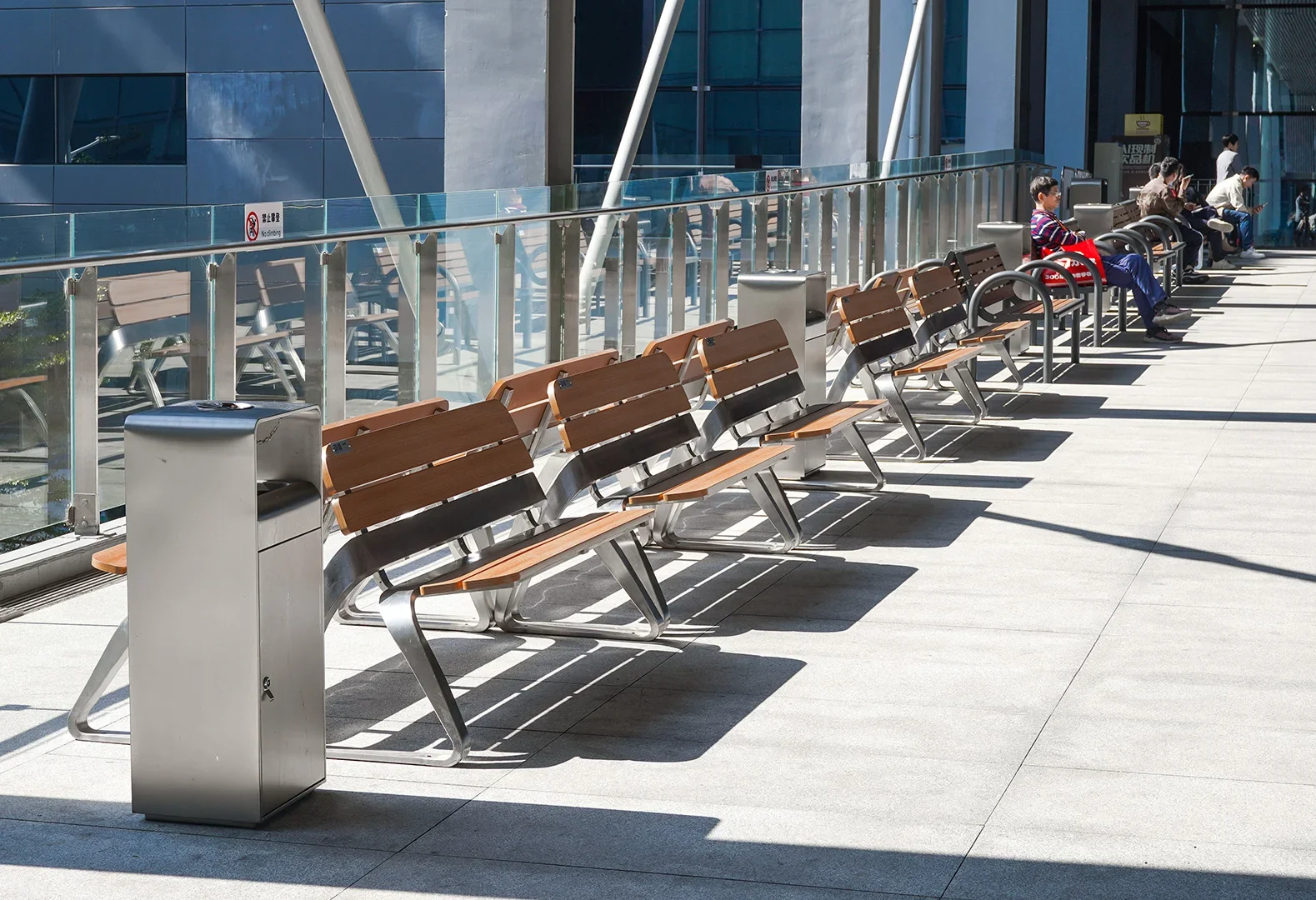
Public space furniture can be grouped by function. This helps buyers avoid treating every item as a separate product and start thinking in terms of a complete project system.
Category | Common Products | Main Function | Buyer’s Key Concern |
Public seating | Park benches, backless benches, tree benches, outdoor seating modules | Resting, waiting, social interaction | Comfort, frame strength, anti-corrosion, installation method |
Waste management | Outdoor trash bins, recycling bins, dog waste bins, cigarette receptacles | Waste collection and cleaner spaces | Capacity, liner access, lock design, cleaning efficiency |
Landscape support | Planters, planter benches, tree grates, landscape dividers | Greening, space separation, visual improvement | Material, drainage, weight, surface finish |
Mobility support | Bicycle racks, cycle stands, bike parking rails | Organized bicycle parking | Security, spacing, fixing method, corrosion resistance |
Social activity | Picnic tables, outdoor tables, seating sets | Eating, gathering, recreation | Stability, surface durability, maintenance |
Safety and order | Bollards, barriers, railings, planter dividers | Boundary control and pedestrian guidance | Visibility, layout, fixing method, impact resistance |
Information and service | Wayfinding signs, kiosks, shelters, smart furniture | Guidance, shelter, digital or service functions | Power supply, maintenance, user needs, long-term operation |
Not every project needs every category. A municipal streetscape may focus on benches, bins, bike racks, planters, and bollards. A park may need picnic tables, tree benches, pet waste bins, and large planters. A commercial plaza may care more about visual consistency, brand color, seating comfort, and easy maintenance.
The key is to plan different products as one coordinated outdoor furniture system, instead of purchasing isolated items with different materials, colors, and proportions.
Where Urban Outdoor Furniture is Used in Public Projects?
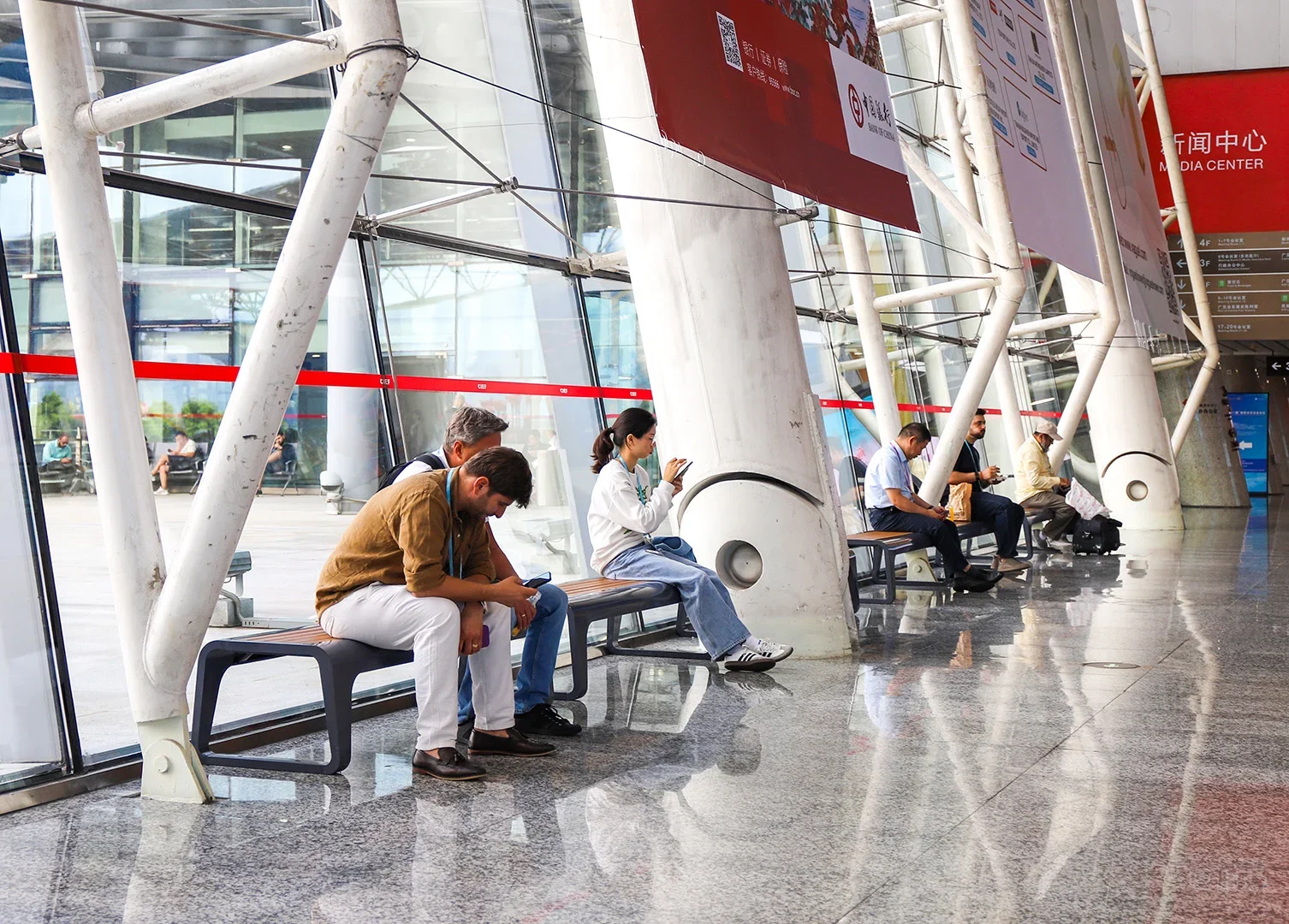
Municipal Streets and Sidewalks
Municipal projects usually require durability, safety, standardized installation, and consistent appearance across multiple locations. Outdoor trash receptacles, benches, bicycle racks, and planters must be easy to maintain and suitable for repeated public use.
The NYC Street Design Manual emphasizes that street furnishings should generally be positioned within the furnishing zone and must maintain clear pedestrian movement. This is important for buyers because product selection should consider not only the product itself, but also how it affects walking space, accessibility, and overall sidewalk order.
Parks, Scenic Areas, and Recreation Spaces
Parks and scenic areas place more emphasis on comfort, natural integration, and visitor experience. Benches, picnic tables, tree benches, planters, and waste bins should match the landscape rather than appear like industrial equipment.
For these projects, wood-look materials, PS plastic wood, WPC, powder-coated metal, stainless steel, and cast aluminum are often considered depending on the site style, climate, maintenance budget, and visitor flow.
Commercial Streets, Plazas, and Mixed-Use Developments
In commercial areas, outdoor furniture must support both function and place identity. A bench is not just seating; it affects how long people stay. A planter is not just decoration; it can guide movement and create soft separation. A trash bin is not just a container; it influences cleanliness and brand perception.
For commercial projects, visual consistency across product categories is especially important. Benches, bins, planters, bike racks, and ashtrays should look like they belong to the same space, even if they perform different functions.
Campuses, Hospitals, Hotels, and Public Institutions
These sites often need a balance between safety, comfort, and organized circulation. Buyers may prefer rounded corners, stable fixing methods, weather-resistant finishes, easy-clean surfaces, and designs that do not feel too municipal or too decorative.
For schools and hospitals, maintenance efficiency and user safety should be considered early. For hotels and scenic areas, the product appearance should also match the brand environment and visitor expectations.
Accessibility and Pedestrian-Friendly Public Space Furniture
Accessibility is becoming a more important consideration in public space furniture projects. Buyers should not only ask whether a bench, bin, or planter looks suitable, but also whether its placement may affect pedestrian circulation, wheelchair access, visibility, or safe movement.
The U.S. Access Board’s Public Right-of-Way Accessibility Guidelines state that pedestrian access routes should provide a continuous clear width of at least 48 inches. While local standards may vary by country or project type, the principle is useful for global buyers: public furniture should support access, not create barriers.
For project planning, this means buyers should consider:
Whether benches, bins, planters, and bicycle racks leave enough walking space
Whether product edges, legs, or overhanging parts may create hazards
Whether fixed furniture blocks entrances, ramps, crossings, or tactile paths
Whether products are placed in a logical furnishing zone rather than scattered randomly
Whether maintenance teams can clean or replace products without disrupting public access
Good public space furniture should improve the user experience for more people, not only for those who sit down or use the product directly.
Smart Street Furniture and Current Project Trends
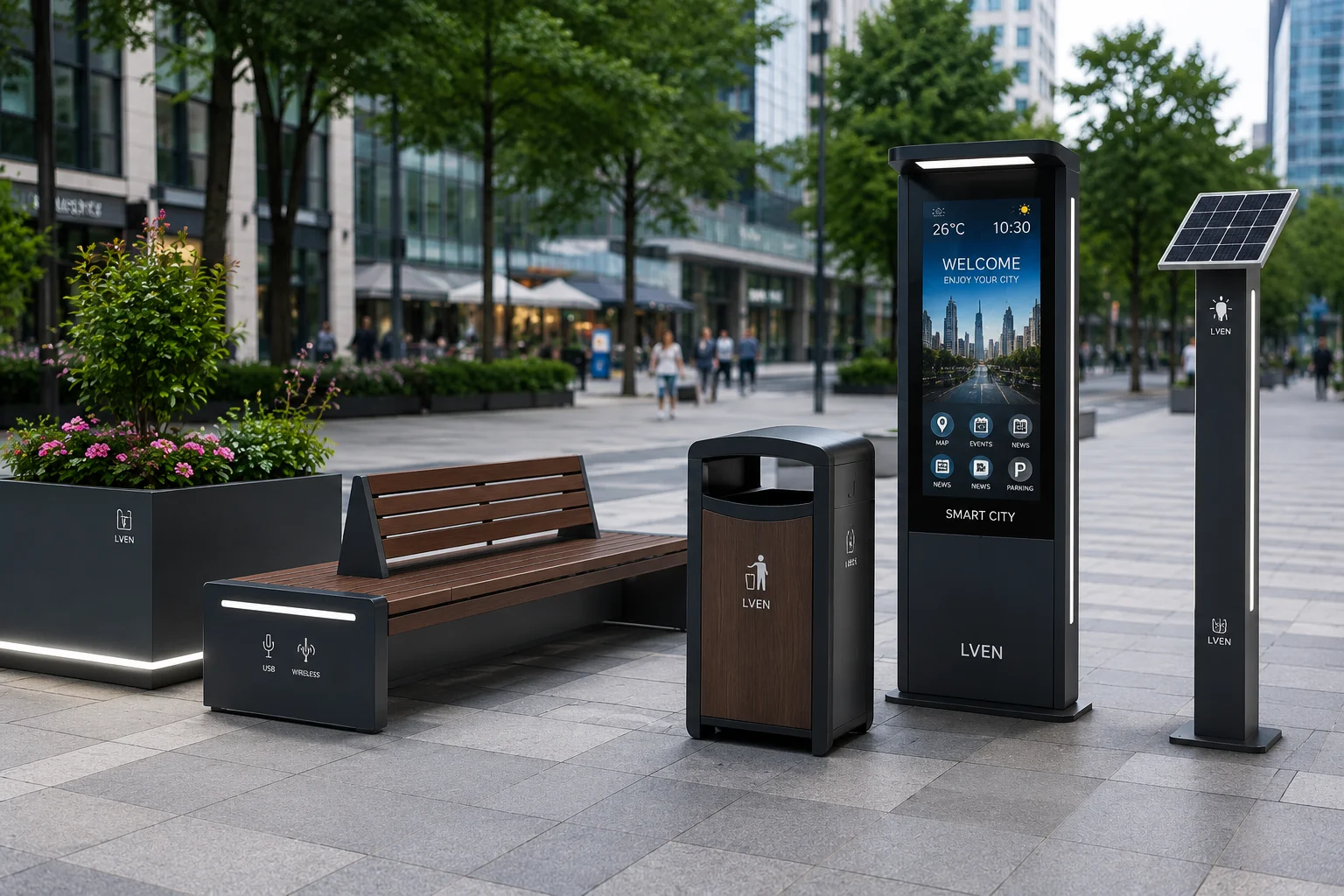
Smart street furniture is one of the current trends in public space design. It may include benches with charging functions, solar-powered products, smart bins, sensor-enabled lighting, Wi-Fi access points, interactive information boards, or environmental monitoring features.
The idea is attractive because cities and commercial spaces want furniture that can do more than one job. A smart bench may provide seating, charging, lighting, and data collection. A smart bin may help optimize waste collection. A connected public space can support convenience, management, and user engagement.
However, smart street furniture should not be added only because it sounds modern. Recent research on smart street furniture discusses both its potential value and the need to understand user acceptance, public-space management, and whether smart functions truly improve the relationship between people and place.
Before specifying smart furniture, buyers should ask:
Does the site really need this function?
Who will maintain the electrical or digital system?
Is there a power source, solar exposure, or connectivity plan?
What happens if the smart function fails?
Can the product still work as basic furniture without technology?
Are privacy, data, and user acceptance properly considered?
For many public projects, the better approach is not “smart everywhere.” It is “smart where the function is clear.” In high-traffic commercial areas, transport hubs, campuses, and smart city demonstration zones, technology-enabled furniture may add real value. In parks, residential communities, or budget-sensitive municipal projects, durable and well-designed standard furniture may deliver better long-term results.
How to Choose Outdoor Public Furniture for Long-Term Projects?
Start with the Site, Not the Product Catalog
A common procurement mistake is choosing products only from images. A bench that looks good in a catalog may not fit the site’s climate, user behavior, installation method, or maintenance schedule.
Before selecting outdoor public furniture, clarify:
Is the project located in a street, park, commercial plaza, campus, hotel, or scenic area?
Is the environment coastal, humid, hot, dry, snowy, or high-UV?
Will the furniture face heavy public use or lighter private-community use?
Does the project require fixed installation, movable placement, or modular replacement?
Are there local requirements for accessibility, fire safety, material, or public procurement?
Is the goal low-cost supply, coordinated visual style, or customized project design?
A good supplier should be able to recommend materials, structure, surface treatment, and product combinations based on these conditions.
Match Materials to the Environment
Material choice affects price, appearance, life span, and maintenance cost. For project buyers, material decisions should be made from a life-cycle view rather than only unit price.
Material | Suitable Use | Advantages | Notes for Buyers |
Galvanized steel | Municipal bins, benches, planters, commercial site furnishings | Cost-effective, strong, suitable for many public projects | Needs proper surface treatment for outdoor durability |
Stainless steel 304 | Humid or higher-end public spaces | Better corrosion resistance and clean appearance | Higher cost than standard steel |
Stainless steel 316 | Coastal, high-humidity, or more corrosive environments | Stronger corrosion resistance | Good for demanding environments |
Aluminum | Planters, bins, lightweight outdoor products | Rust-resistant, lighter, modern appearance | Structure and thickness should be confirmed |
Cast aluminum | Decorative benches and classic outdoor seating | Good shaping ability, weather resistance | Mold and casting quality matter |
PS plastic wood / WPC | Bench slats, picnic tables, bin panels, planter seating | Wood-like look, lower maintenance than natural wood | Color, UV resistance, and structure should be reviewed |
Natural wood | Premium parks, scenic areas, landscape seating | Warm appearance and natural texture | Needs maintenance and proper finishing |
The best material is not always the most expensive one. For example, galvanized steel with proper powder coating may be practical for many municipal and commercial projects. Stainless steel may be more suitable for coastal or high-humidity environments. Plastic wood can reduce maintenance pressure while still creating a warmer visual effect.
Check Structure Before Surface Appearance
Outdoor public furniture fails when structure is ignored. Buyers should look beyond color and shape and ask about load-bearing design, welding, reinforcement, anti-loosening parts, anchoring, drainage, and replaceable components.
For benches and picnic tables, the key points include frame thickness, seat support, welding quality, and anti-rust treatment. For trash bins, buyers should check inner liner access, door hinges, lock structure, drainage, and stability. For planters, drainage, base reinforcement, soil load, and transportation issues should be reviewed early.
A strong product is not only one that survives delivery. It should remain stable after years of public use, cleaning, weather exposure, and occasional impact.
Balance Design Consistency and Product Function
In many projects, products are purchased from different suppliers: one for benches, another for bins, another for planters, and another for bike racks. This may reduce the price of individual items, but it often creates a weak final result. Colors may not match. Metal finishes may differ. Product proportions may look inconsistent. Installation details may vary. After-sales communication also becomes more complex.
A better approach is to plan public space furniture as a coordinated system. This does not mean every product must look identical. It means the design language, material palette, color, surface finish, and installation logic should feel consistent across the project.
For streetscapes, commercial plazas, parks, and municipal renewal projects, this coordinated approach can improve both visual quality and procurement efficiency.
Consider Maintenance Cost from the Beginning
The cheapest product can become expensive if it rusts, fades, cracks, loosens, or requires frequent replacement. Project buyers should consider:
How easy is the product to clean?
Can damaged parts be replaced?
Is the coating suitable for outdoor exposure?
Are the hinges, locks, bolts, liners, and feet easy to maintain?
Can the supplier support future repeat orders or spare parts?
Is the product design simple enough for local maintenance teams?
Good urban furniture should help reduce future workload, not create hidden maintenance pressure.
Buyer’s Checklist for Commercial Site Furnishings
Use this checklist before confirming specifications or requesting a quote.
Buying Stage | Questions to Confirm | Why It Matters |
Project scope | Which products are needed: bins, benches, planters, racks, tables, ashtrays, tree benches? | Helps build a complete procurement list |
Site condition | Outdoor, coastal, humid, hot, high-traffic, commercial, municipal, campus? | Determines material and coating requirements |
Design style | Modern, classic, municipal, commercial, natural, industrial? | Ensures visual consistency |
Material | Galvanized steel, stainless steel, aluminum, cast aluminum, WPC, PS plastic wood, natural wood? | Affects durability, cost, and appearance |
Surface finish | Powder coating, wood grain finish, stainless steel finish, custom color? | Affects weather resistance and brand matching |
Installation | Freestanding, surface-mounted, embedded, wall-mounted, movable? | Affects safety and site preparation |
Customization | Size, color, logo, capacity, structure, packaging, brand label? | Helps match project and distributor needs |
Quantity and lead time | Standard items or custom production? Sample needed? | Controls delivery risk |
Quality control | Material inspection, welding inspection, coating inspection, final inspection? | Reduces batch inconsistency |
After-sales | Spare parts, installation guidance, repeat order files, issue response? | Supports long-term cooperation |
This table is useful because it shifts the buying process from “product comparison” to “project suitability.” For public environments, this is usually where better procurement decisions happen.
How LVEN Supports Public Space Furniture Projects?
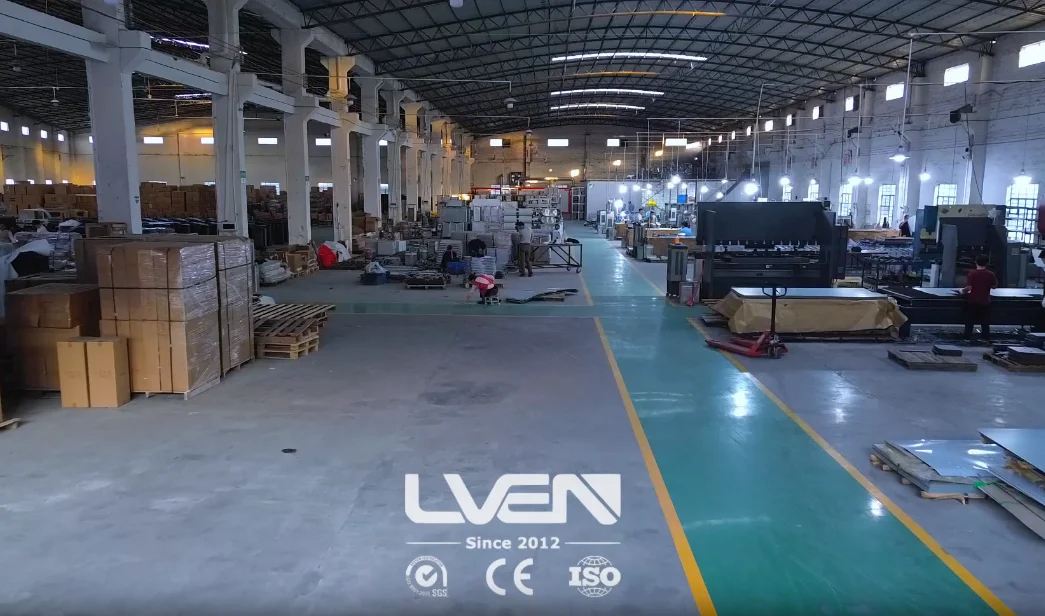
LVEN is a China-based manufacturer specializing in urban furniture and outdoor public facilities. Its core products include outdoor trash bins, park benches, picnic tables, flower planters, bicycle racks, hotel supplies, and related urban public facilities.
For buyers, LVEN’s value is not limited to individual products. The stronger fit is project-based supply: helping distributors, contractors, municipal buyers, commercial developers, and public space project teams source multiple product categories with a coordinated design direction.
Complete Product Range for Project Matching
A public space project rarely needs only one product. LVEN’s product range allows buyers to combine benches, bins, planters, bicycle racks, picnic tables, ashtrays, and other site furnishings into one coordinated procurement plan.
This is useful for parks, streets, commercial areas, schools, hotels, scenic areas, and municipal projects where different products need to work together in both function and appearance.
Custom and Standard Product Supply
Some projects need fast delivery from standard models. Others need custom dimensions, colors, surface finishes, materials, capacity, structure, or branding. LVEN supports both standard and customized outdoor public furniture, which helps buyers manage different budget and timeline needs.
This is especially useful for distributors and project contractors who may need ready-to-supply models for regular demand, while also requiring customized details for specific tenders or project designs.
Design and Manufacturing Support
Project-grade furniture needs a link between design and production. LVEN supports product appearance design, structure adjustment, material selection, surface treatment, sampling, and mass production coordination.
This matters because a custom bench, planter, or trash bin should not only look good in a drawing. It also needs to be safe, durable, manufacturable, and stable in batch production.
Materials, Surface Treatment, and Quality Control
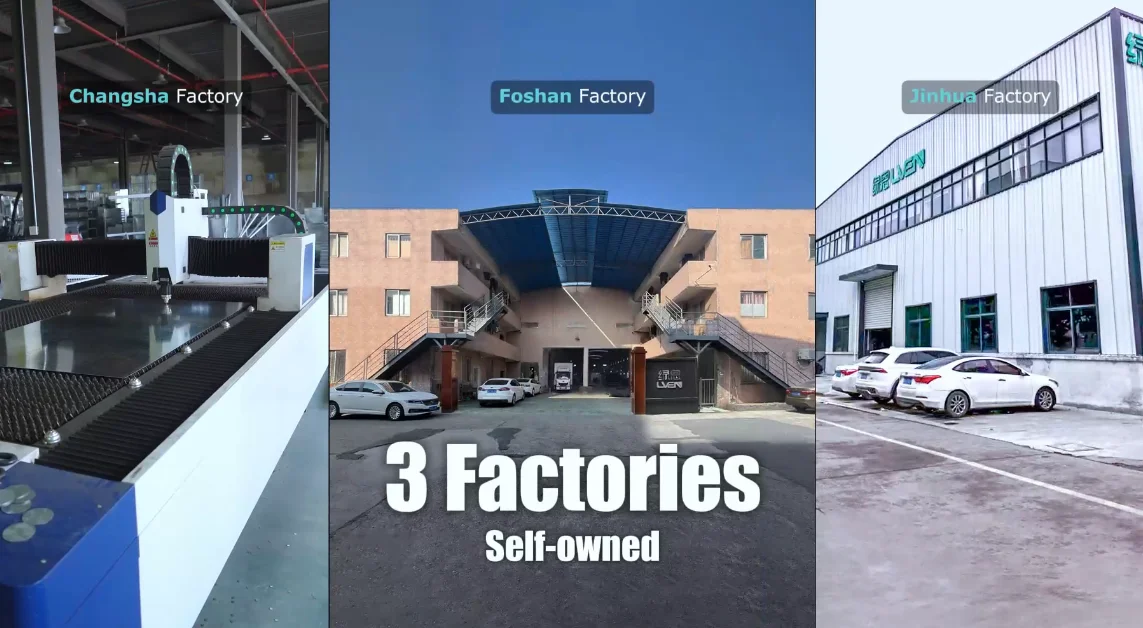
For outdoor public furniture, durability depends on both material and process. LVEN’s manufacturing capabilities cover metal cutting, bending, welding, grinding, surface treatment, powder coating, assembly, packaging, and product inspection.
For long-term project cooperation, this is important because buyers are not only purchasing the first batch. They may need consistent repeat orders, replacement parts, future project extensions, and stable product quality across different phases of a project.
One-Stop Outdoor Furniture Solutions
For project buyers and distributors, one-stop supply can reduce sourcing complexity. Instead of managing several suppliers for different product categories, buyers can work with one manufacturer to coordinate product selection, customization, sampling, packaging, export, and after-sales communication.
This is especially valuable when the project requires a unified visual style across benches, trash bins, planters, bicycle racks, and other public space furniture.
FAQ About Urban Street Furniture
What is urban street furniture?
Urban street furniture refers to outdoor furniture and small public facilities installed in streets, parks, plazas, campuses, commercial areas, and other public spaces. It includes benches, trash bins, planters, bicycle racks, picnic tables, ashtrays, tree benches, bollards, shelters, signs, and other products that support public use and improve the urban environment.
What is classified as street furniture?
Street furniture can include benches, bins, recycling receptacles, bike racks, planters, bollards, bus shelters, lighting, signage, parking meters, drinking fountains, kiosks, and other public amenities placed along streets or sidewalks. In project procurement, the exact classification may depend on the site type and local design standards.
What is the difference between street furniture and urban furniture?
Street furniture usually refers to amenities along streets, sidewalks, and roadsides. Urban furniture is broader and may include outdoor furniture for parks, plazas, campuses, scenic areas, commercial spaces, and municipal environments. In many buying situations, the two terms overlap.
Why is public space furniture important?
Public space furniture makes outdoor areas more usable, comfortable, organized, and attractive. It provides places to sit, dispose of waste, park bicycles, guide movement, support landscape design, and create a stronger sense of place. Well-selected furniture can also reduce maintenance pressure and improve the long-term image of a project.
What materials are best for outdoor public furniture?
Common materials include galvanized steel, stainless steel, aluminum, cast aluminum, PS plastic wood, WPC, and natural wood. The best option depends on climate, budget, design style, maintenance expectations, and usage intensity. For coastal or humid environments, stainless steel or well-protected metal structures may be preferred. For cost-sensitive municipal projects, galvanized steel with proper outdoor powder coating can be practical.
What is smart street furniture?
Smart street furniture refers to public furniture integrated with technology, such as charging, solar power, sensors, Wi-Fi, lighting, digital information, or environmental monitoring. It can be useful in transport hubs, commercial plazas, smart city projects, and high-traffic public spaces, but it should be selected based on real user needs and maintenance capability.
How should buyers choose urban furniture for a public project?
Buyers should begin with the site condition, user behavior, project style, climate, installation method, safety requirements, maintenance plan, budget, and delivery schedule. After that, they can compare materials, structure, coating, product design, customization options, quality control, and supplier project support.
Can urban street furniture be customized?
Yes. Many project-grade products can be customized in size, material, color, surface finish, capacity, structure, installation method, packaging, and logo. For more complex designs, buyers should confirm drawings, samples, production feasibility, lead time, and cost before mass production.
Conclusion
Urban street furniture is more than a category of outdoor products. It is part of how public spaces function, feel, and perform over time. Good street furniture helps people rest, move, gather, dispose of waste, park bicycles, understand space, and enjoy outdoor environments.
For project buyers, the right choice should balance design, durability, material, installation, maintenance, budget, and supplier reliability. Whether the project is a municipal street, park, commercial plaza, campus, hotel, scenic area, or residential community, buyers should think in systems rather than isolated products.
Benches, trash bins, planters, bicycle racks, picnic tables, ashtrays, and other site furnishings should work together in both appearance and function.
LVEN supports public space projects with standard and customized urban furniture, covering product selection, material advice, design coordination, OEM/ODM customization, production, quality control, export support, and after-sales service.
Contents


