
What hardware accessories are commonly used for outdoor trash cans?
 139
139  Share
Share
Outdoor trash can hardware is easy to overlook because hinges, locks, liners and anchors occupy far less visual space than the body panels. In daily operation, however, these components determine whether a bin opens smoothly, remains secure, drains correctly and can be serviced without improvised repairs. Hardware failure can take an otherwise sound receptacle out of service long before the main body reaches the end of its life.
For a commercial or municipal project, hardware should be selected as a coordinated system. The opening style affects rain protection; the door size affects liner removal; the base plate affects anchoring; and the lock must allow authorized access without slowing every collection. This guide explains the main trash can hardware accessories and the questions buyers should resolve before an RFQ.
Why Trash Can Hardware Accessories Affect Service Life?
Outdoor hardware works in a difficult environment. Moisture, de-icing salt, coastal air, dust and repeated impacts can corrode or loosen small components. At the same time, service crews may open a door or lid hundreds of times each year. A hinge that is too light, a latch without adjustment or an exposed fastener can turn routine collection into a recurring maintenance problem.
The best specification is not simply “stainless steel hardware.” Buyers should confirm material grade where exposure is severe, fastener type, load capacity, replaceability and compatibility with the body material. Contact between dissimilar metals also deserves attention because it can accelerate corrosion in wet environments. Hardware should be accessible for inspection but protected from casual tampering.

Outdoor Trash Can Liners and Bag Retention Systems
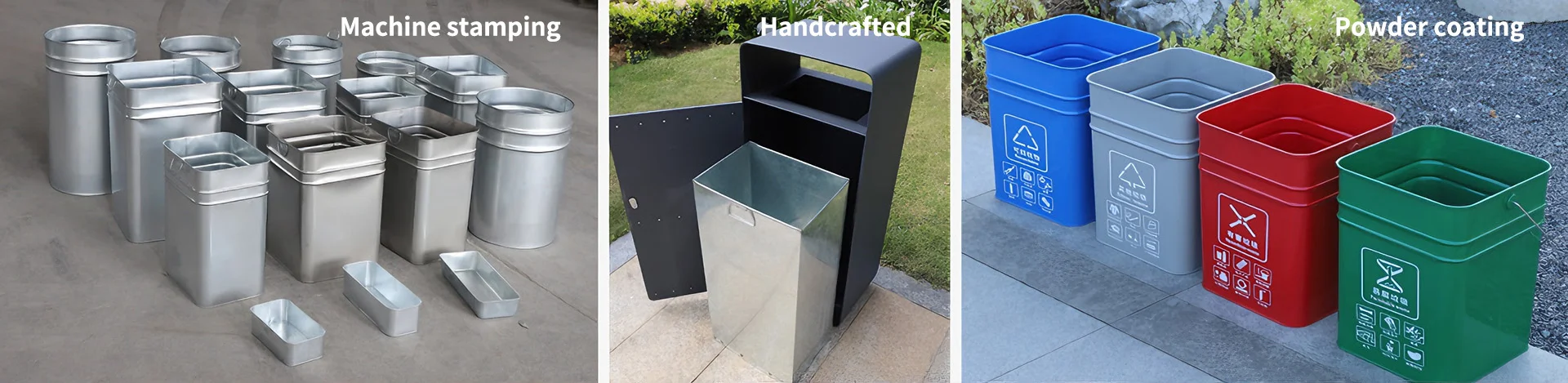
The inner liner is the component that staff handle most often. Common options include galvanized-steel liners, stainless-steel liners, rigid plastic containers and bag-retention rings. Steel liners offer shape stability and fire resistance; plastic liners reduce weight and resist many forms of corrosion. The correct choice depends on waste type, fire policy, cleaning method and the distance a full liner must be moved.
A liner should slide out without catching on hinges, door frames or internal bolts. Rounded edges reduce bag tearing, while drainage and a washable interior help control residue. The nominal body volume and actual liner volume should be stated separately, especially in tapered or decorative bins. In an RFQ, ask whether the liner is included, whether replacement units are standardized and what bag size fits without excessive overhang.
Some bins use a small removable ash receptacle rather than treating the entire inner bucket as an ashtray. Where smoking waste is expected, hot material should be isolated from general waste and the local fire requirements should be checked. A cigarette aperture, sand tray or snuffer plate is a functional accessory, not a substitute for a suitable fire-management design.
Trash Can Locks, Latches, Hinges and Door Hardware
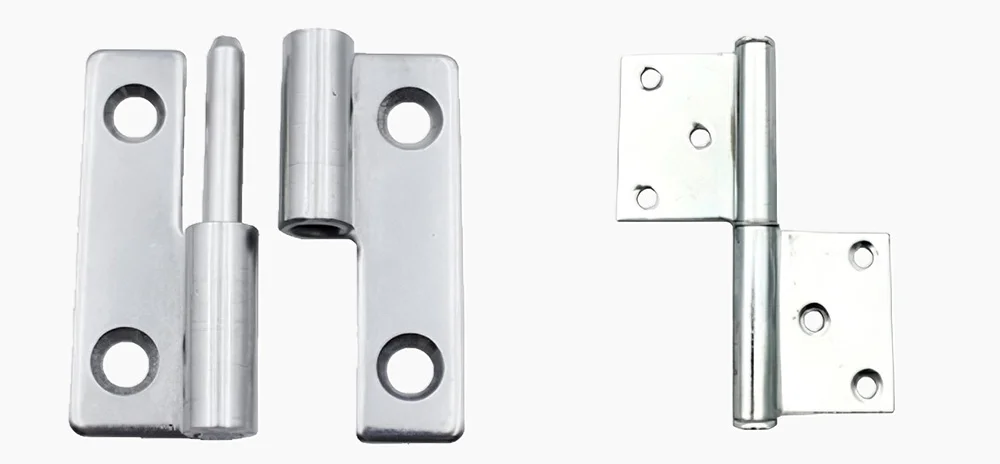
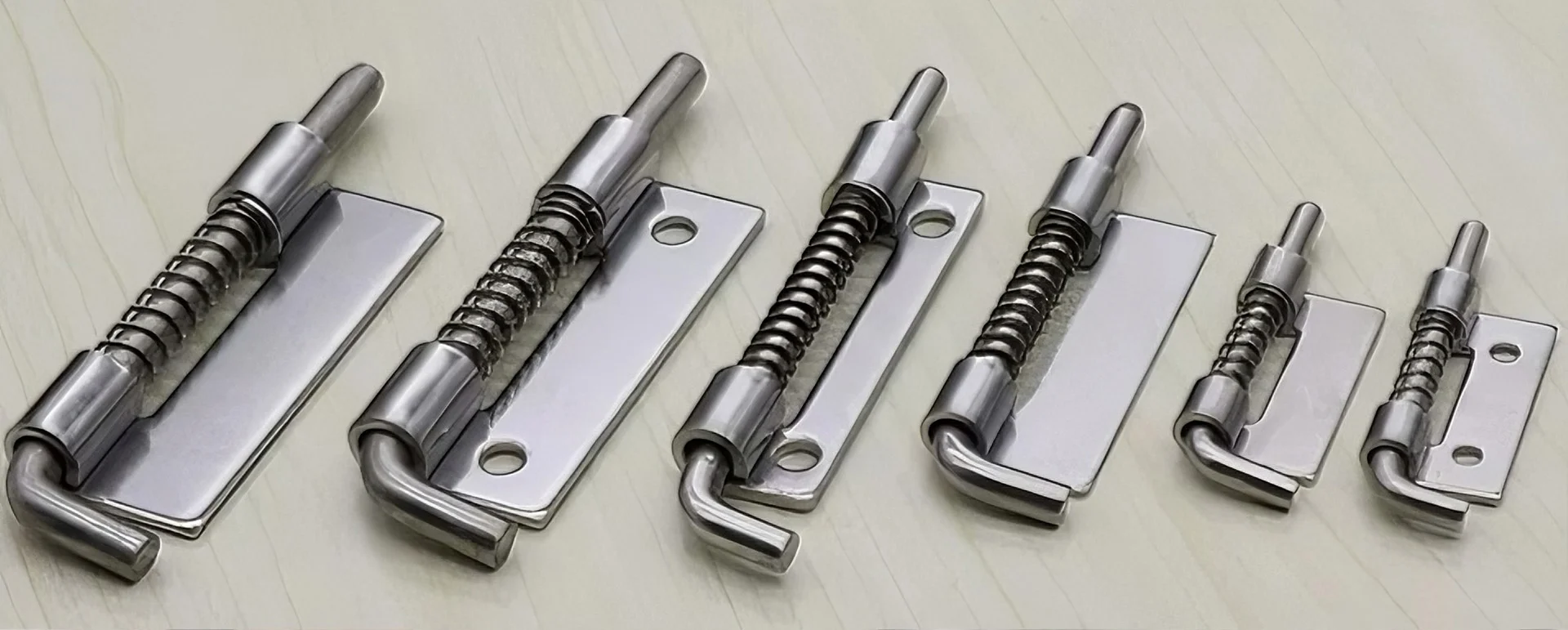
Hinges carry repeated loads and keep access doors aligned. Concealed or internally protected hinges reduce tampering and weather exposure, while robust external hinges may be easier to inspect and replace. Stainless-steel pins, corrosion-resistant leaves and adequate attachment points are more important than decorative appearance. For large side doors, hinge strength should be assessed with the door fully open and under repeated service cycles.
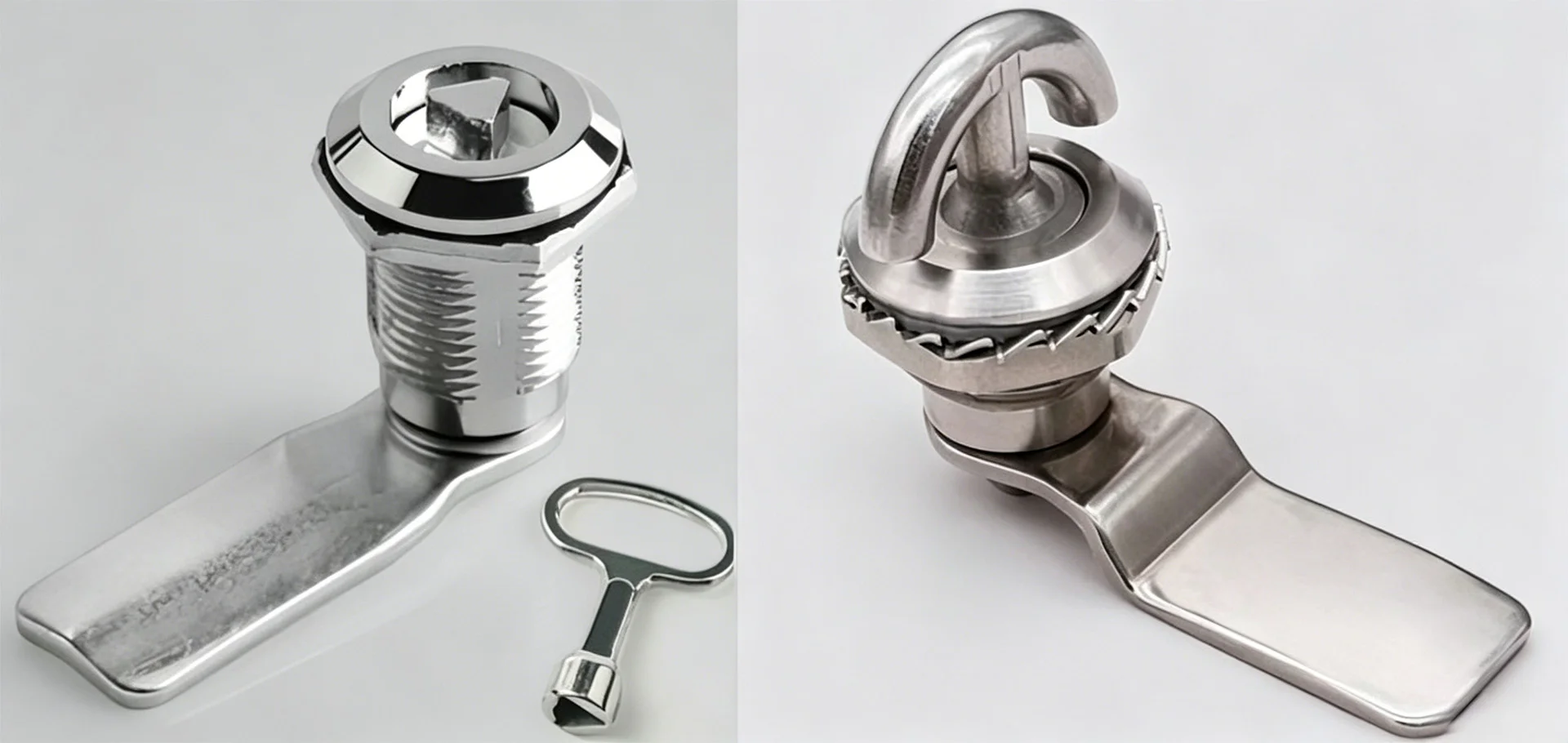
Latches hold the door or lid closed during wind and normal public use. A simple draw latch may be sufficient in a supervised location, whereas a keyed lock or quarter-turn compression lock may be appropriate where illegal dumping, animal access or vandalism is a concern. Compression can also reduce rattling, but the seal should not trap water inside the body.
Locking systems should balance security and service speed. Project owners need a key-control plan, spare keys and a decision on whether multiple bins use the same key. A lock plate reinforces the area around the mechanism and can reduce deformation after repeated use. Buyers should ask whether locks, cylinders and latches can be replaced from inside the cabinet without removing welded panels.
Trash Can Anchors, Base Plates and Mounting Hardware
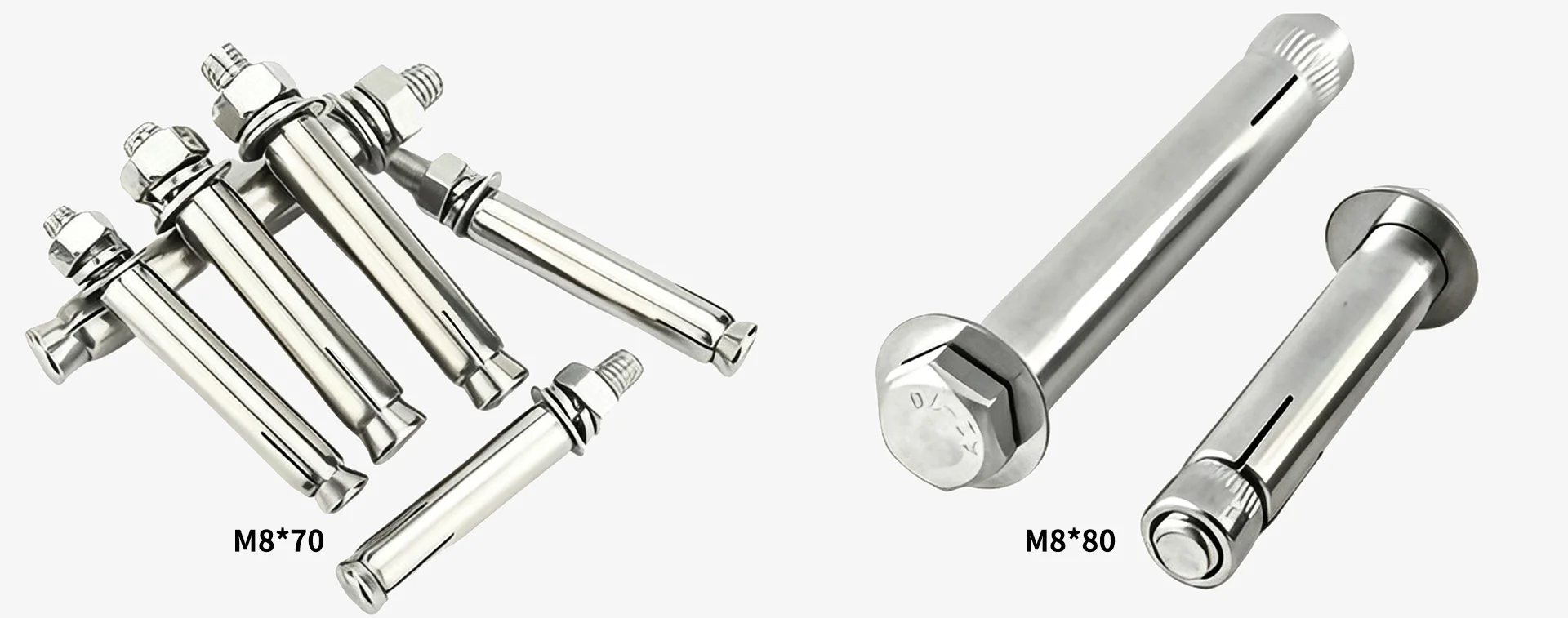
Anchoring prevents a receptacle from tipping, shifting or being removed, but the correct hardware depends on the substrate and site risks. Expansion anchors are commonly used on sound concrete. Chemical anchors may suit projects that require higher pull-out performance or must work near an edge, subject to the anchor manufacturer’s instructions and structural review. Bolts into pavers alone are rarely equivalent to anchoring into a designed concrete foundation.
The base plate or internal mounting flange transfers loads from the bin into the anchors. Hole diameter, edge distance, plate thickness and access for tightening all affect installation quality. Fasteners should be compatible with the plate and protected against corrosion. Exposed threads can create a snag point, so concealed fixing or tamper-resistant caps may be preferable in public areas.
In-ground posts and embedded frames are alternatives where surface mounting is unsuitable, but they require coordinated excavation, drainage and final levels. Installation choices are covered in How to Secure Outdoor Trash Cans: Surface Mount, Anchors and In-Ground Options. The product supplier should provide the mounting-hole pattern and foundation guidance before concrete work begins.
Rain Hoods, Lids and Opening Hardware for Outdoor Trash Cans
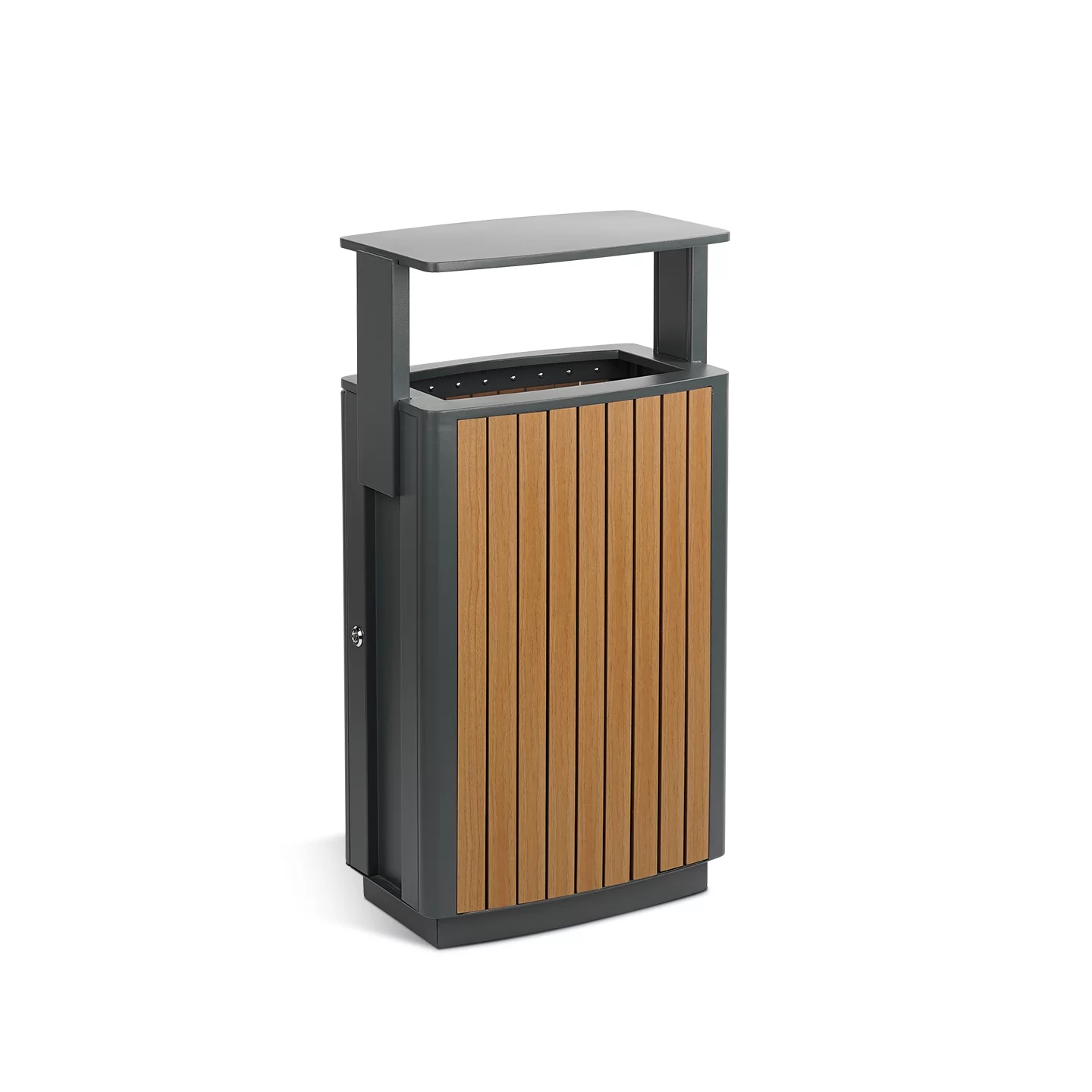
A rain hood shields the opening and reduces water entering the liner, which helps control waste weight, leakage and corrosion. It is particularly useful in exposed parks and streets, though the hood must leave enough clearance for expected waste. Side openings provide weather protection and can discourage oversized bags; open tops offer fast, intuitive disposal but need careful drainage and may be less suitable in heavy rain.
Lids and hoods introduce additional hardware. Pivot points, stays, soft-close devices and stops must tolerate repeated movement and wind loads. A lid that can slam creates noise and a pinch hazard, while a weak stay can allow the lid to fall during servicing. Fixed rain hoods avoid moving parts but can restrict access, so their opening height should be checked against the waste stream.
The existing comparison article Outdoor Trash Can Lid Types: Rain Hood, Side Opening or Open Top? explains the user-facing trade-offs in more detail. Hardware selection should follow that opening decision rather than being added after the body design is complete.
Trash Can Hardware Accessories Decision Table
Component | Main function | Best-fit considerations | Confirm before ordering |
Inner liner | Contains waste and supports bag changes | Waste type, lifting weight, washing and corrosion exposure | Material, usable volume, bag size and replacement availability |
Bag ring or holder | Keeps the bag hidden and secure | Fast servicing and clean appearance | Ring diameter, sharp edges and access method |
Hinges | Supports lids and service doors | Door weight, wind and service cycles | Material, pin design, load and replaceability |
Latch or lock | Controls access and prevents opening | Vandalism risk, animals and key management | Keying, compression, spare parts and emergency access |
Anchors and base plate | Transfers loads to the foundation | Concrete quality, wind, impact and theft risk | Hole pattern, anchor specification, edge distance and cover caps |
Rain hood or lid hardware | Limits water and controls moving parts | Climate, opening size and user safety | Stops, stays, drainage, pinch points and replacement parts |
Labels and fasteners | Communicates waste stream | UV exposure, cleaning and language needs | Attachment method and replaceable graphics |
This table should be read as a coordination checklist, not a universal specification. For example, a locked door may be necessary in a transit station but unnecessary in a controlled courtyard. The objective is to use only the components that improve safety, servicing or durability in the intended environment.
Matching Trash Can Hardware to the Site
Coastal and winter-maintenance locations need greater corrosion attention than sheltered courtyards. Stainless components, protected fasteners and isolation between dissimilar metals may justify a higher initial cost because small seized parts can make the entire bin difficult to service. In dry climates, UV-stable labels, dust-resistant locks and protected pivot points may be more important.
High-vandalism sites benefit from concealed hinges, internal fasteners, reinforced lock plates and limited external leverage points. Food-service areas need smooth washable surfaces, leak management and liners that can be removed without tipping. Accessible public routes require hardware that does not protrude into the path and openings that can be used without excessive force or reach.
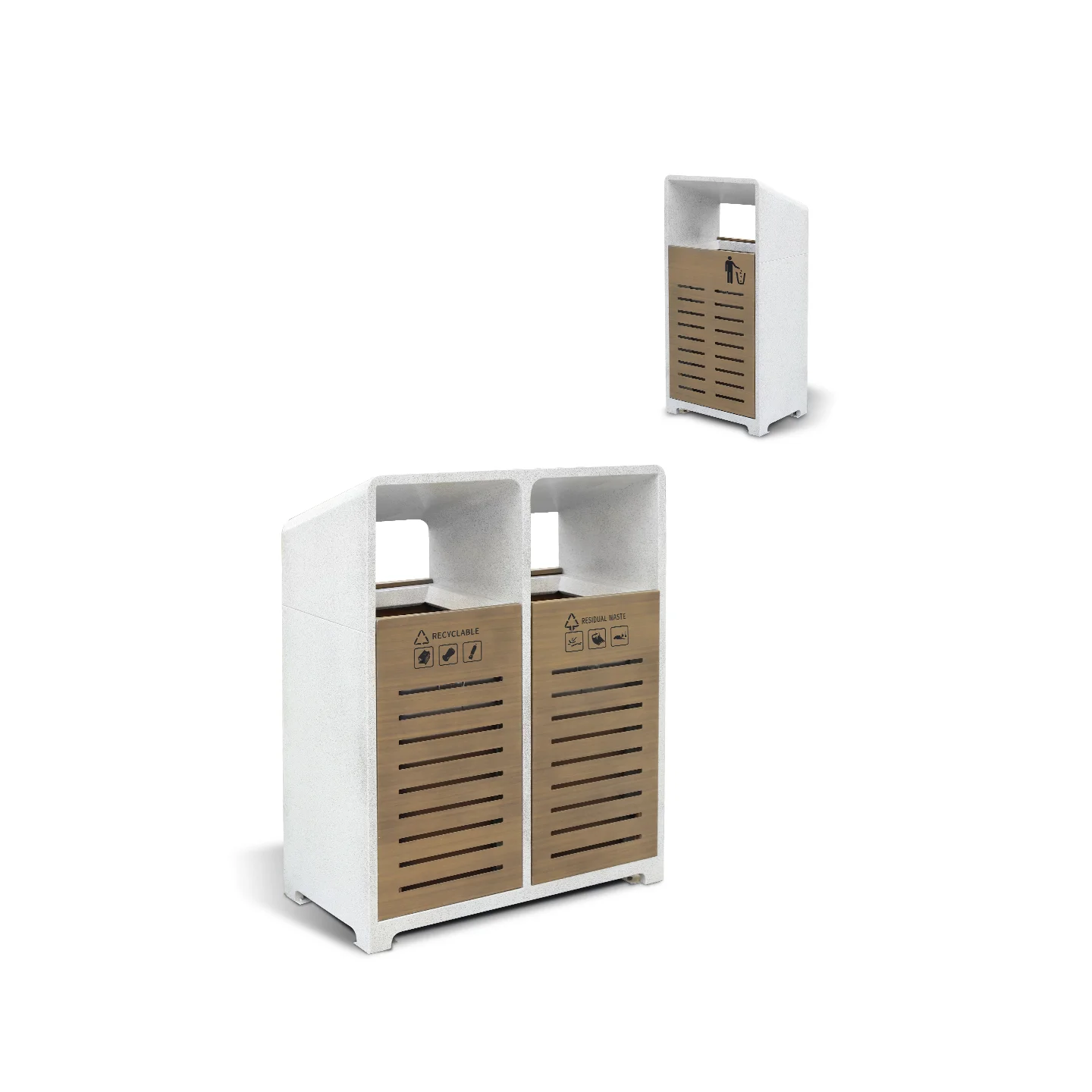
Product architecture also changes the hardware package. The OTB-04 commercial trash can is a useful reference for comparing single and separated configurations, while the OTB-422 outdoor trash bin illustrates a higher-capacity format. Use the outdoor trash bin collection to shortlist body styles, then confirm the exact liner, lock and mounting provisions for the selected model.
Spare Parts and Maintenance for Outdoor Trash Can Hardware
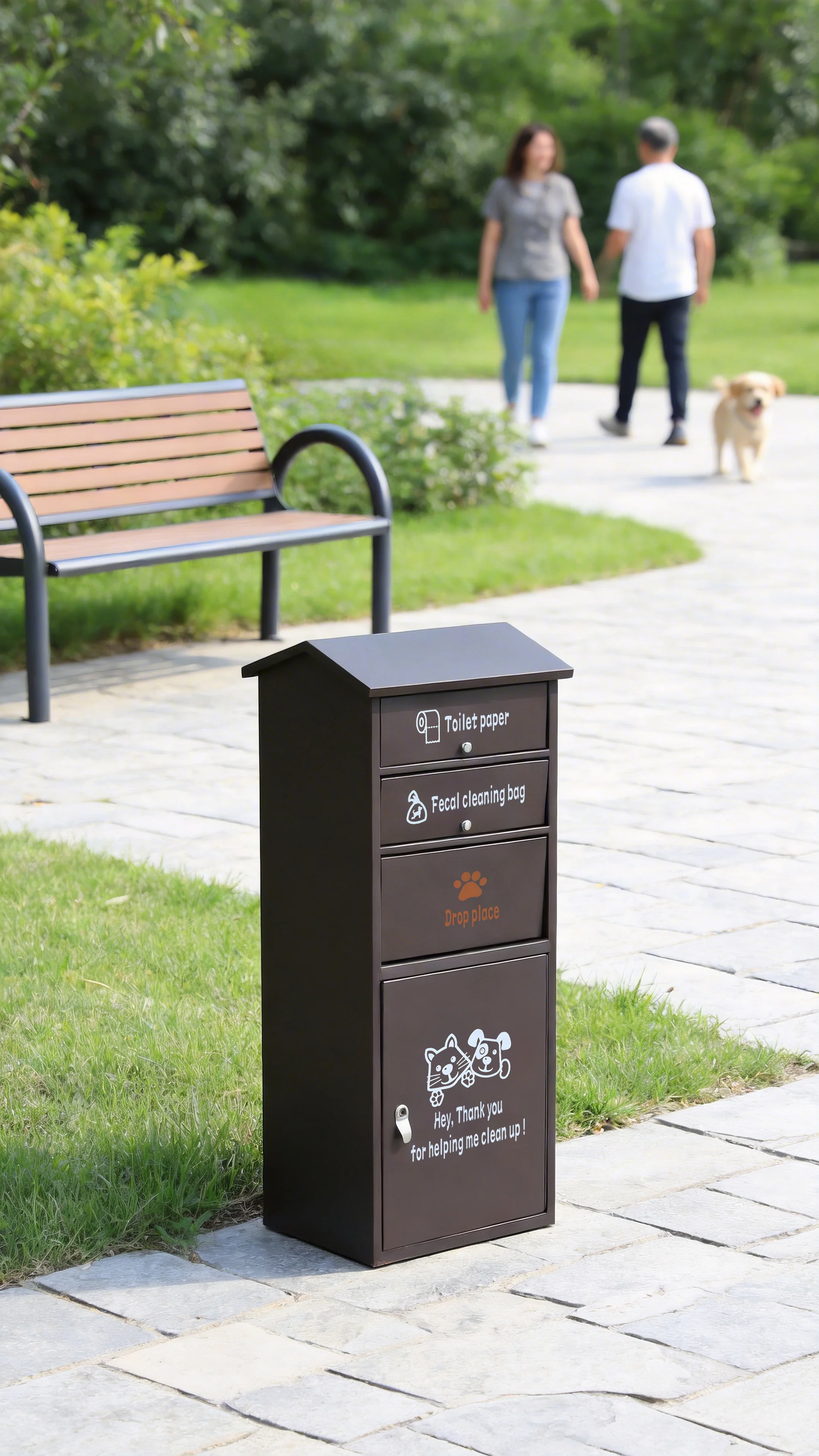
Hardware becomes easier to manage when replacement is planned at procurement. The operator should receive a parts list that identifies hinges, latch or lock type, keys, liner dimensions, anchor covers and any lid stays. Standardized parts across several models reduce inventory and prevent a minor failure from leaving a bin open or out of service for weeks.
Routine inspection can be incorporated into collection rounds. Staff should look for loose fasteners, door misalignment, sharp liner edges, blocked drainage and early corrosion. Moving parts can be cleaned and maintained according to the manufacturer’s instructions; indiscriminate lubricant can attract dust or damage some finishes. Damaged anchors or distorted base plates require investigation of the substrate and impact history, not simply another round of tightening.
Maintenance records also improve future specifications. If locks fail because keys are lost, the solution may be better key control. If hinges deform, the door load or opening stop may be the real cause. Recording the failure mode helps buyers correct the system instead of repeatedly replacing the same component.
Hardware Information to Include in a Trash Can RFQ
An RFQ should identify the installation environment, body material, required capacity, opening and access style, liner preference and mounting substrate. State whether the bin needs a keyed lock, shared keying across the project, concealed hinges, a rain hood, an ash receptacle or separated-waste labels. Where specific hardware materials or corrosion classes are required, cite the applicable project standard rather than using vague terms such as “weatherproof.”
Ask the supplier to show the included hardware, recommended anchors, mounting-hole drawing and replacement-parts policy. Confirm which components are shipped loose, which are factory installed and what tools are needed for routine servicing. For projects with custom finishes or dimensions, request a sample or shop drawing review before production so that doors, liners and locks can be tested as one system.
FAQ About Trash Can Hardware Accessories
Which hardware fails most often on an outdoor trash can?
The answer depends on use and exposure, but hinges, latches, locks and bag-retention parts receive frequent handling and deserve the closest inspection. Loose anchors and corroded fasteners can be less visible yet create a greater safety risk.
Are stainless-steel hinges and locks always required?
Not always. They are valuable in wet, coastal or high-service environments, but material grade, finish and contact with the bin body all matter. A project-specific corrosion assessment is more useful than specifying stainless steel without further detail.
Should outdoor trash cans be locked?
Locks are appropriate when access control, animal resistance or vandalism is a concern. In low-risk sites, a simple latch may make collection faster. If locks are used, keying and spare-part availability should be planned across the entire site.
Are expansion bolts included with outdoor trash cans?
This varies by supplier and project. The correct anchor also depends on the concrete, edge distance and expected loads. Confirm the anchor schedule and base-plate drawing before installation rather than assuming generic bolts are suitable.
What spare parts should be ordered with a commercial trash can project?
Useful spares often include keys or cylinders, latches, hinge pins or complete hinge sets, bag rings, replacement liners, label sets and proprietary anchor covers. The quantity should reflect the number of bins, lead time and operating environment.
Specify Hardware as a Serviceable System
Good outdoor trash can hardware is not a collection of isolated accessories. Liners, hinges, locks, anchors and rain protection must work together with the body, foundation and collection routine. A clear specification reduces downtime, supports safer servicing and makes replacement parts easier to manage over the life of the project.
To review hardware options for a planned order, contact LVEN with the model, quantity, site environment, mounting surface and preferred access method. Requesting those details at quotation stage is more reliable than correcting incompatible hardware after installation.
Contents


